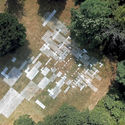
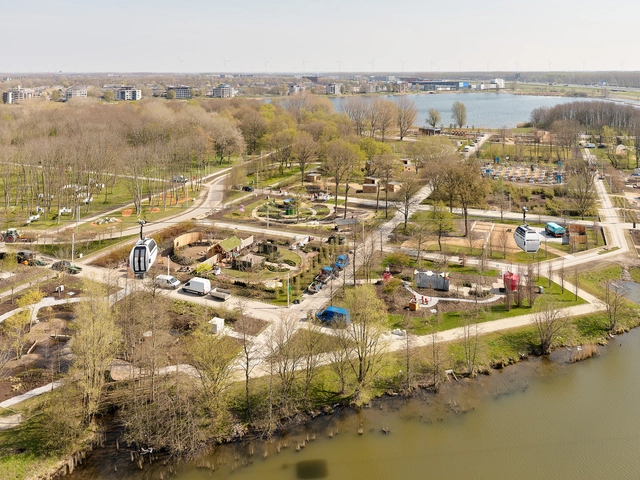
The international horticultural exhibition Floriade Expo 2022 opened to the public yesterday on the site of MVRDV's arboretum masterplan in Almere. The concept features an alphabetical library of trees and plants arranged into lots on a rigorous grid across the 60-hectare site. The masterplan was conceived as a framework for the Expo, and at the same time, as a blueprint for a sustainable city district, given that the park will be transformed into a new residential area after the event. Held every ten years and running for six months, the Expo showcases the latest innovations in the field, from nature-inclusive agriculture to a sustainable pilot home made from 93 per cent recycled plastic.
Paris City Council granted final approval to Gustafson Porter + Bowman's landscape design for the Eiffel Tower site. The project is the result of a 2019 international competition that sought to redesign the 2-kilometre axis leading up to the Eiffel Tower, connecting Place du Trocadéro, Palais de Chaillot, Pont d'Iéna, Champ de Mars and the Military Academy. The landscape plan redefines this iconic green space in Paris by increasing green areas by 35% and adding over 200 new trees, in addition to pedestrianizing the Iena bridge.
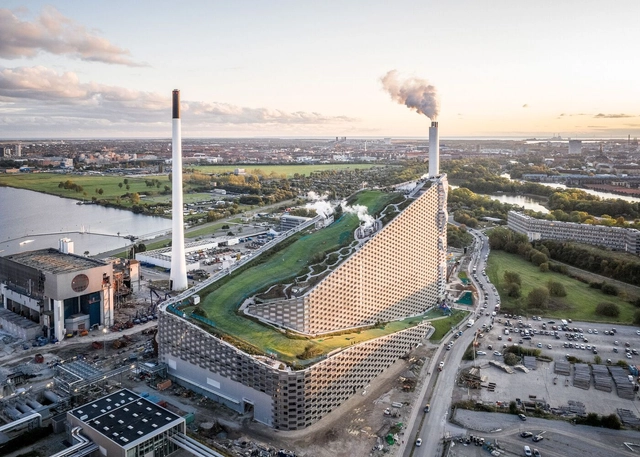
World Architecture Festival has revealed the winners for this year’s categories, highlighting buildings and landscapes completed across the world between 2019 and 2021. Chosen from almost 500 shortlisted projects from 62 countries, the winning projects showcase exemplary contributions to the built environment reflecting this edition’s theme: ‘Resetting the City: Greening, Health and Urbanism’. In addition to the completed buildings categories, the annual award also announced Copenhill, designed by Bjarke Ingels Group, as the 2021 World Building, while SLA was awarded Landscape of the Year for its design of Al Fay Park.
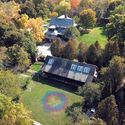
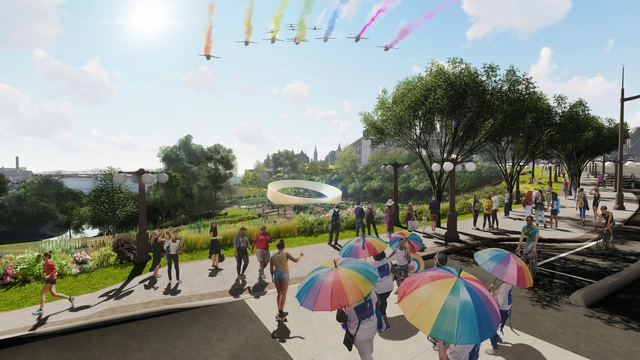
Canada’s Department of National Heritage has announced the five finalists for the LGBTQ2+ National Monument competition, a project meant to tell the story of generations of people who have been persecuted, specifically during the LGBT Purge period. Among the shortlisted designs is The Lens, a proposal that turns a symbol of oppression into an identity element and uses the landscape to express the community’s reverberation into society. Designed by a team comprising Canadian office Fathom studio, MVRDV and Two Row Architect, the proposal seeks to express resiliency, creating a space for memorialization and education while providing an inclusive space for the 2SLGBTQQIA+ community.
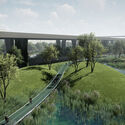
A new masterplan along the central Pailao River in Shenzhen proposes a climate-proof regeneration of the area, using nature and water retention ecological zones to mitigate the risk of flooding. Created by urban design and architecture practice VenhoevenCS, with landscape vision by Hope Design and water management plan by Huadong Engineering, the Pailao River Blueway Project capitalizes on the coexistence of the urban and the natural environment, ensuring resilience and enhancing the economic growth of the city district.
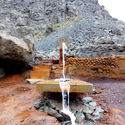
Within the Andes Mountains, the San Pedro Hot Springs is a place to press pause and contemplate, which interrupts a transnational highway between Chile and Argentina. Although these natural pools became a public landmark within the route, they eventually fell over time into a state of abandonment and deterioration as a result of the constant seismic movements in the region.
In response to this situation, Chilean architect Pia Montero sought to highlight the baths for her built-project thesis at the University of Talca in order to consolidate it as a landmark of tourist potential and symbol of the territorial identity of the Maule Region. Moreover, the project is a wake-up call to rediscover and rescue the value of the natural and cultural heritage of the area from the gradual abandonment into which it fell over the years.
Henning Larsen has been creating projects that address cross-cultural design, tackle diverse climatic zones, and try to achieve ambitious sustainability objectives. All of this wouldn’t be possible without the use of technology and specially crafted digital and generative design tools that allow architects to treat any element as a parameter in design.
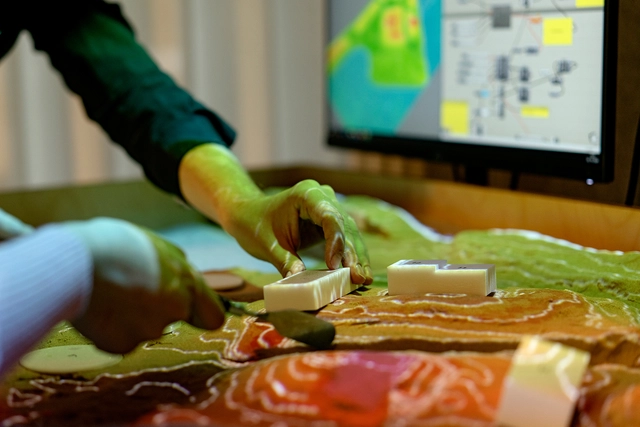
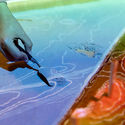
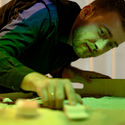
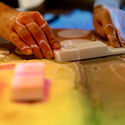
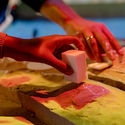
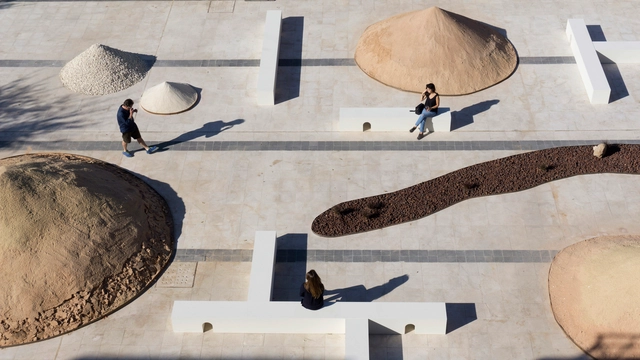
In a special interview with ArchDaily, Jakob Strømann-Andersen, Partner and Director of Henning Larsen’s Innovation and Sustainability Department talks about digital tools and their incorporation in the design process. Focusing specifically in this conversation on Sandworm, a new modeling program that uses sandboxes, Anderson explains how they have achieved to scan and directly transfer manipulated landscapes into a 3D model.
This week's curated selection of Best Unbuilt Architecture highlights different competition-winning designs submitted by the ArchDaily Community. From large scale urban developments to small interventions in the landscape, from commercial projects to public spaces and urban planning strategies with an environmental focus, this article showcases a variety of design approaches, programs and scales. The proposals featured are the results of local and international competitions, either creative concepts or projects currently in progress.
The award-winning entries include a range of different projects, designed by both young architects and established firms. An adaptive reuse project for office towers in New York, the redevelopment of an industrial site in China, an abstract installation for a Russian festival, or a masterplan focused on climate resilience and ecosystems protection are a few of this week's highlights.
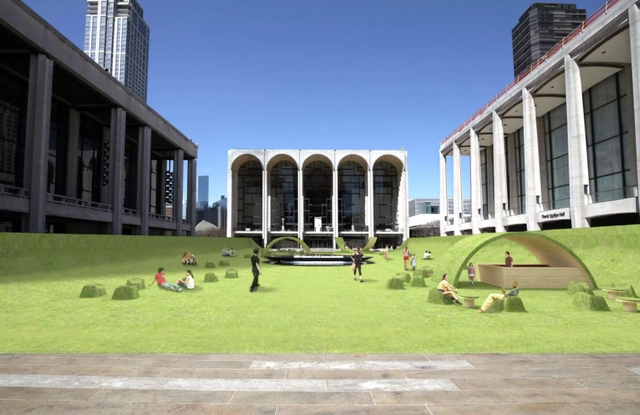
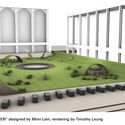
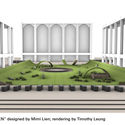
The Green. Image Courtesy of Mimi Lien/Rendering by Timothy Leung
After several event cancellations due to the pandemic, Manhattan’s Lincoln Center for the Performing Arts complex have transformed their outdoor plaza into a green park and outdoor performance venue called The Green. As of May 10, the Restart Stagesinitiative will add fake grass across the 14,000-square-foot (1,300 sqm) Josie Robertson Plaza. The plaza, which was originally designed by Philip Johnson, Wallace K. Harrison, and Max Abramovitz, and renovated by award-winning architecture firm DS+R in 2010, will transform into a public urban space of gathering, leisure, and entertainment.
What elements and qualities does space need for a well-balanced physical and spiritual recovery? How to design spaces that are healthy for both our minds and our bodies? What makes an environment livable and sustainable in the long term?
These are the questions we need to address in the era of the rapidly developing real estate market. Why do we tend to inhabit more and more high-density residential towers? Are we necessarily more mentally secure? If not, what are the spatial solutions or cures for the current urbanites’ anxiety? In this article, we will explore ways of unwinding and finding cures in space.
FOUN’TA’SY. Image Courtesy of Public Housing Enterprise J.S.C
Looking at the urban environment, this week’s curated selection of the Best Unbuilt Architecture highlights interventions in public spaces, submitted by the ArchDaily Community. Suitable for this monthly topic, the article underlines worldwide approaches that tackle the challenges of these areas through the introduction of innovative solutions.
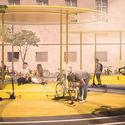
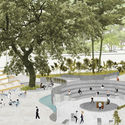
Exploring a multitude of methods fitting for different contexts, this feature presents a tactical urban strategy implemented in a neighborhood in Kosovo and micro-mobility measures in Italy. Other projects evoke public approaches in private developments and enhanced historical and cultural connections between parks, buildings, and cities. In addition, this roundup showcases conceptual interventions that tackle social distancing and the challenges of the pandemic, in order to allow people to move freely and safely across space.
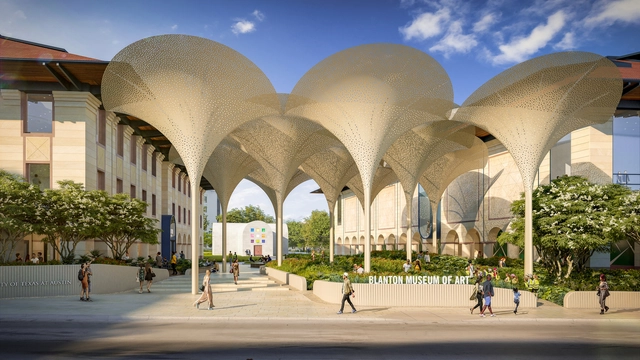
Transforming the typical artistic experience, Snøhetta proposed a design to renovate the Blanton Museum of Art at The University of Texas at Austin. The comprehensive grounds remodeling seeks to “unify and revitalize the museum campus, […] through architectural and landscape improvements”. Construction is scheduled to begin in early 2021 and conclude by late 2022.
Being in confinement has produced unconventional means of exploring architectural spaces and installations. Instead of putting everything on hold until life goes back to normal, designers and curators found inspiration from practices like performance arts and theatre, breaking down the walls between the subject and viewers but from a distance.
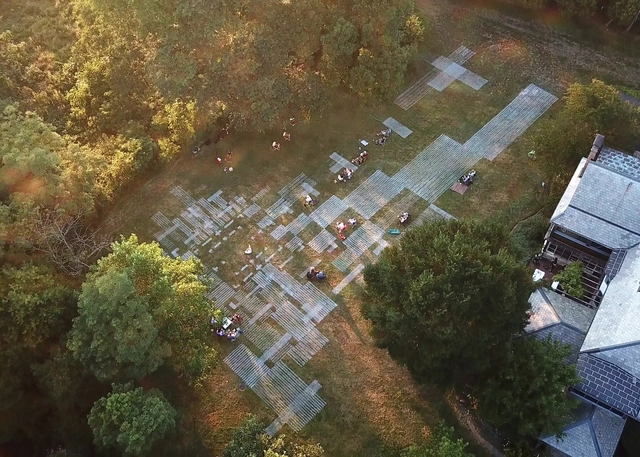
Ashley Bigham and Erik Herrmann of Outpost Office reimagined the theme of "mobility" by creating 1:1 scale drawings on the Ragdale campus using GPS-controlled field marking robots. Their unique urban installation, which addressed modern-day concerns such as public spaces, how we are engaging with them, and physicality, won first place in the 2020 Ragdale Ring competition.
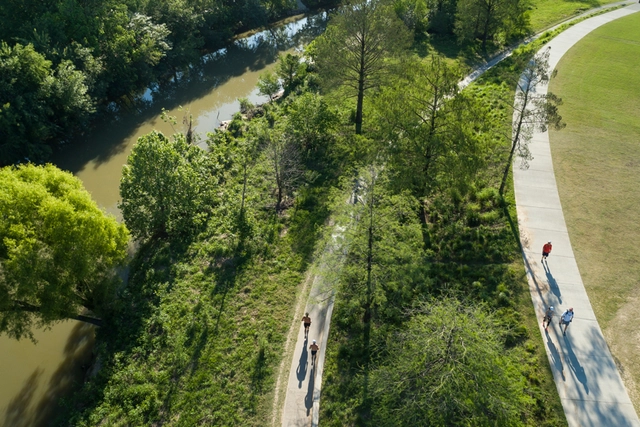
Buffalo Bayou Park in Houston, by SWA. Courtesy Jonnu Singleton
The urban crisis brings many challenges, but also presents opportunities for landscape architects to help build more equitable green spaces and cities.
As a Los Angeles resident who doesn’t drive, navigating the city on foot and bike has always made me feel like I have the whole place to myself.
But over the last two months, Angelenos have been freckling the streets—it’s like they’ve all discovered for the first time that they’re capable of exploring this city without a car. While most beaches and trails in the city were shuttered (they have since re-opened), I noticed the LA River becoming the city’s new “it spot” for socially distant hangouts. And in a city that lacks adequate public parks, people are turning any patch of grass or sidewalk—whether it’s an elementary school yard, a traffic median, or a bit of concrete next to a parking lot—into a bit of respite from the madness.
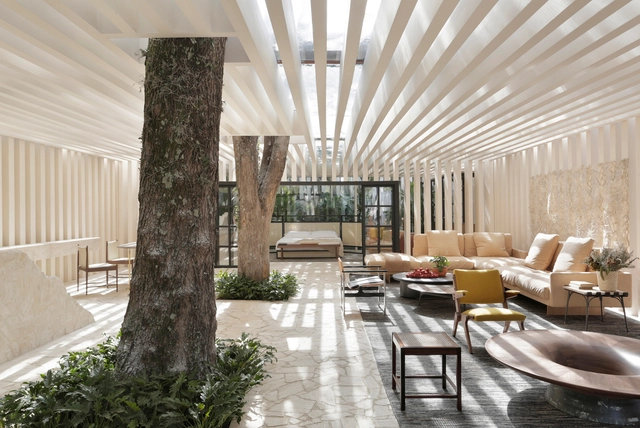
Introducing elements of nature - such as water, vegetation, natural light, stones or even the use of wood - into interior design can provide richer and more complex compositions in the built environment. In these landscaping projects, the textures, silhouettes and, especially, the generated sensations, can establish new relationships of well-being and comfort for the user.
In all its multiple meanings the word heritage refers to what we inherit from the past, both in material and immaterial sense.
Some authors speak about heritage as a sense of past, meant as a form of past self-awareness, as a collective experience and as an essential dimension of a culture. Some other authors believe that the idea of heritage deals with the ability to put the contemporary human signs into an historical perspective, so developing a sense of place, that is the place’s value and meaning. Therefore, heritage can be intended as sense of past and sense of place together. The heritage’s
Canada's Capital Region - National Capital Commission
The NCC’s Urban Design Challenge 2020: Student Ideas Competition for Canada’s Capital is now on.
Urban Design Challenge 2020 is a competition that invites students from across the country to come up with design concepts for important sites in Canada’s Capital Region. The competition is organized by the National Capital Commission (NCC), the federal Crown corporation dedicated to ensuring that Canada’s Capital is a dynamic and inspiring source of pride for all Canadians, and building a legacy for generations to come.
The NCC is challenging students to propose innovative planning and design ideas for two important destinations in the Capital Region. • SITE









.jpg?1634086433&format=webp&width=640&height=580)
.jpg?1634086531 "© Edgard Torres")
.jpg?1634086419 "© Edgard Torres")
.jpg?1634086290 "© Gustavo Burgos")
.jpg?1634086433)







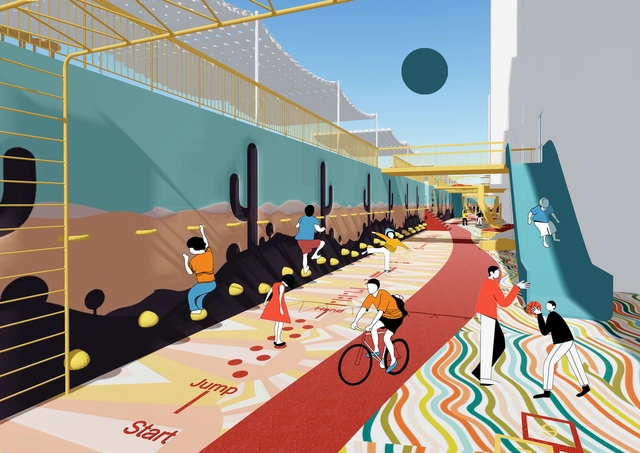
(%C2%A9minorormajor).jpg?1612954566 "Oasis-Playground. Image Courtesy of Studio Minorormajor")