1. ArchDaily
  2. Kenzo Tange

Kenzo Tange: The Latest Architecture and News

Tokyo Architecture City Guide: 35 Iconic Buildings to Visit in Japan's Capital City

Subscriber Access | 

One of the world's leading metropolises, Tokyo is home to extraordinary architecture that fascinates through its blend of traditional values and high-tech expression. The 1923 earthquake and the bombardments of World War II dramatically influenced the image of the city and its architecture, giving rise to modern urban environments with complex infrastructure.

The Japanese capital constitutes the most populated metropolitan area in the world, housing 33 million inhabitants. Divided into 23 wards and numerous neighbourhoods, the city features a diverse blend of atmospheres and urban fabrics that support an amalgamation of architectural typologies.

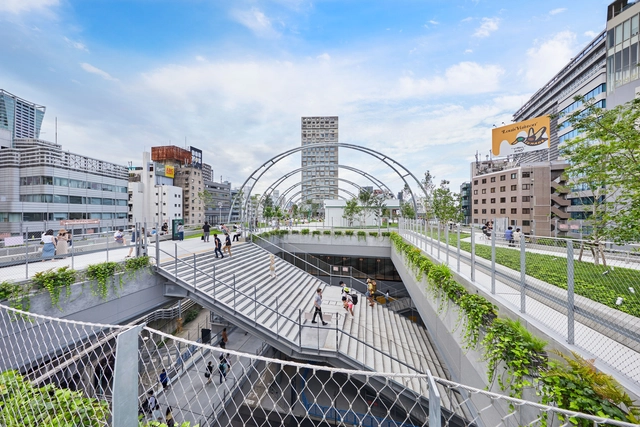
Tokyo Architecture City Guide: 35 Iconic Buildings to Visit in Japan's Capital City - Image 1 of 4Tokyo Architecture City Guide: 35 Iconic Buildings to Visit in Japan's Capital City - Image 2 of 4Tokyo Architecture City Guide: 35 Iconic Buildings to Visit in Japan's Capital City - Image 5 of 4Tokyo Architecture City Guide: 35 Iconic Buildings to Visit in Japan's Capital City - Image 3 of 4Tokyo Architecture City Guide: 35 Iconic Buildings to Visit in Japan's Capital City - More Images+ 35

"I Am Always Inside the Architecture that I Design": In Conversation with Toyo Ito

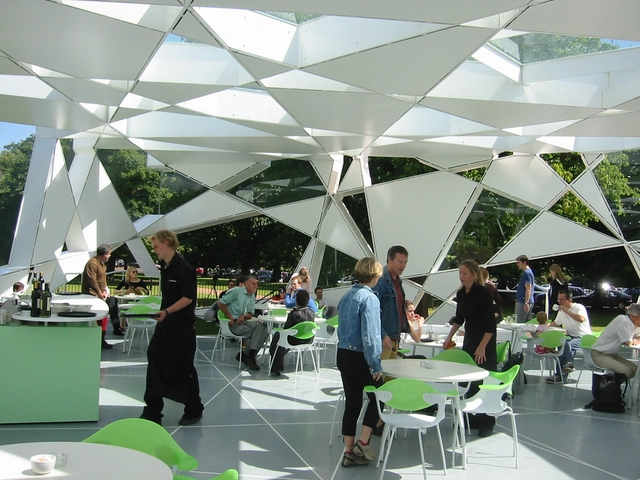
Examining the work of Tokyo architect Toyo Ito (b. 1941) – particularly his now seminal Sendai Mediatheque (1995-2001), Serpentine Gallery (London, 2002, with Cecil Balmond), TOD's Omotesando Building (Tokyo, 2004), Tama Art University Library (Tokyo, 2007), and National Taichung Theater (2009-16) – will immediately become apparent these buildings’ structural innovations and spatial, non-hierarchical organizations. Although these structures all seem to be quite diverse, there is one unifying theme – the architect’s consistent commitment to erasing fixed boundaries between inside and outside and relaxing spatial divisions between various programs within. There is continuity in how these buildings are explored. They are conceived as systems rather than objects and they never really end; one could imagine their formations and patterns to continue to evolve and expand pretty much endlessly.

"I Am Always Inside the Architecture that I Design": In Conversation with Toyo Ito - Image 1 of 4"I Am Always Inside the Architecture that I Design": In Conversation with Toyo Ito - Image 2 of 4"I Am Always Inside the Architecture that I Design": In Conversation with Toyo Ito - Image 3 of 4"I Am Always Inside the Architecture that I Design": In Conversation with Toyo Ito - Image 4 of 4I Am Always Inside the Architecture that I Design: In Conversation with Toyo Ito - More Images+ 8

Spotlight: Kenzō Tange

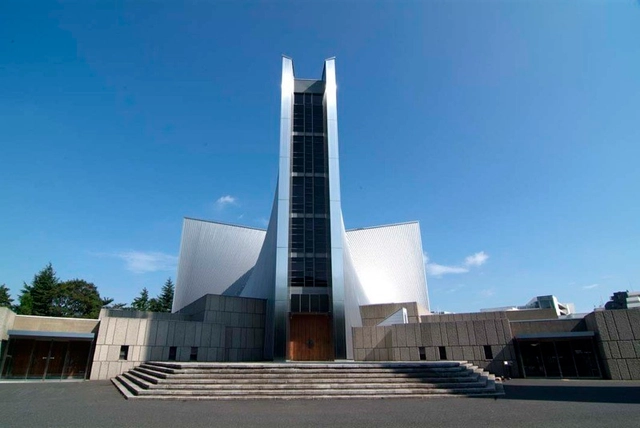
As one of the eldest in a long line of architects that have made Japan one of the most revered countries in architecture, Pritzker-Prize winning architect Kenzō Tange (4 September 1913 – 22 March 2005) helped define Japan’s post-WWII emergence into Modernism. Though he was trained as an architect, Tange was equally as influential as an urban planner giving him significant influence in Japan and around the world at both large and small scales.

Spotlight: Kenzō Tange - Image 1 of 4Spotlight: Kenzō Tange - Image 2 of 4Spotlight: Kenzō Tange - Image 3 of 4Spotlight: Kenzō Tange - Image 4 of 4Spotlight: Kenzō Tange - More Images+ 8

Kenzo Tange Gymnasium and 7 Other Threatened Sites Receive $1M in Preservation Funding

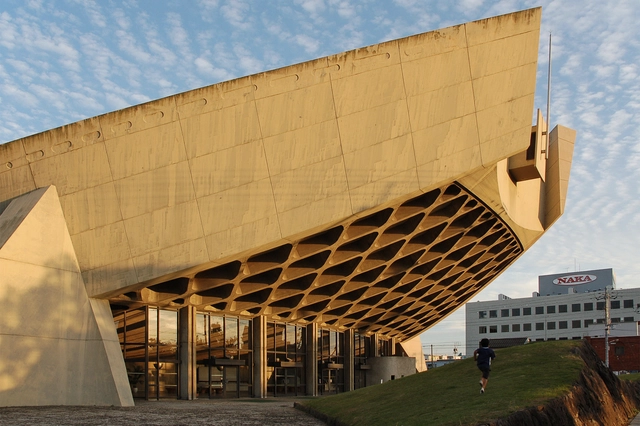
Eight sites from the World Monuments Fund’s 2018 World Monuments Watch list have been awarded $1 million in funding from American Express to support much-needed preservation and restoration initiatives. The sites were selected based on their vulnerability to specific threats like natural disasters, climate change or social forces like urbanization that have left them neglected.

2018 World Monuments Watch Lists 50 Cultural Sites at Risk from Human and Natural Threats

The World Monuments Fund has announced their 2018 World Monuments Watch, highlighting 25 cultural sites from across the globe currently at risk due to economic, political or natural threats. Covering more than 30 countries and territories, these monuments represent sites of exceptional cultural value dating from prehistory to the 20th century.

2018 World Monuments Watch Lists 50 Cultural Sites at Risk from Human and Natural Threats - Image 1 of 42018 World Monuments Watch Lists 50 Cultural Sites at Risk from Human and Natural Threats - Image 2 of 42018 World Monuments Watch Lists 50 Cultural Sites at Risk from Human and Natural Threats - Image 3 of 42018 World Monuments Watch Lists 50 Cultural Sites at Risk from Human and Natural Threats - Image 4 of 42018 World Monuments Watch Lists 50 Cultural Sites at Risk from Human and Natural Threats - More Images+ 24

How to Pronounce the Names of 22 Notable Architects

Subscriber Access | 

There’s no doubt that one of the best things about architecture is its universality. Wherever you come from, whatever you do, however you speak, architecture has somehow touched your life. However, when one unexpectedly has to pronounce a foreign architect’s name... things can get a little tricky. This is especially the case when mispronunciation could end up making you look less knowledgeable than you really are. (If you're really unlucky, it could end up making you look stupid in front of your children and the whole world.)

To help you out, we’ve compiled a list of 22 architects with names that are a little difficult to pronounce, and paired them with a recording in which their names are said impeccably. Listen and repeat as many times as it takes to get it right, and you’ll be prepared for any intellectual architectural conversation that comes your way. 

"Baby Rems" and the Small World of Architecture Internships

The world of architecture is small. So small in fact, that Rem Koolhaas has been credited with the creation of over forty practices worldwide, led by the likes of Zaha Hadid and Bjarke Ingels. Dubbed “Baby Rems” by Metropolis Magazine, this Koolhaas effect is hardly an isolated pattern, with manifestations far beyond the walls of OMA. The phenomenon has dominated the world of architecture, assisted by the prevalence and increasing necessity of internships for burgeoning architects.

In a recent article for Curbed, Patrick Sisson dug into the storied history of internships to uncover some unexpected connections between the world's most prolific architects. With the help of Sisson's list, we've compiled a record of the humble beginnings of the household names of architecture. Where did Frank Gehry get his start? Find out after the break.

"Baby Rems" and the Small World of Architecture Internships - Image 1 of 4"Baby Rems" and the Small World of Architecture Internships - Image 2 of 4"Baby Rems" and the Small World of Architecture Internships - Image 3 of 4"Baby Rems" and the Small World of Architecture Internships - Image 4 of 4Baby Rems and the Small World of Architecture Internships - More Images+ 3

"Classic Japan" Episode 1: Yoyogi National Gymnasium / Kenzo Tange

Subscriber Access | 

From Tokyo-based French architect and film maker Vincent Hecht comes "Classic Japan," a series of short films focussed on Japanese architecture from between the 1950s and 80s.

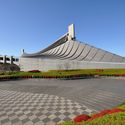
The first installment takes viewers into Kenzo Tange's 1964 Yoyogi National Gymnasium in Shibuya, built to house the swimming and diving events of the 1964 Summer Olympics. Completed in less than two years and seating upwards of 15,000 spectators, the Gymnasium is renowned for its suspension roof, and will host the handball competitions during Tokyo's 2020 Summer Olympics.

Video: Wang Shu, “Geometry and Narrative of Natural Form”

Subscriber Access | 

Founder of Amateur Architecture Studio and Head of Architecture at the China Academy of Art, Wang Shu was the first Chinese architect to hold Harvards Graduate School of Design (GSD) Kenzo Tange professorship. The Harvard lecture honors architect Kenzo Tange by bringing distinguished architects from around the globe to the GSD.