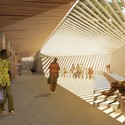
Inspired by the theme of Expo 2015 – “Feeding the Planet, Energy for Life” – the idea behind the design by Ternulomello + Nuno Marcos of recreating a greenhouse for the Service Areas seemed natural and spontaneous This construction method reminded them of the Crystal Palace, designed and built for the 1851 Universal Exhibition in London. The intervention is based on the application of passive technologies, to achieve a complete identification between energetic device and structure. Thermo-hygrometric comfort is achieved through natural ventilation, natural lighting and selective shading. More images and architects’ description after the break.
Late last month the AIA announced that it is in support of the International Green Construction Code (lgCC) which will be a guide and model that helps architects and builders design buildings that conserve energy and move to a sustainable design strategy. The AIA is part of a long list of supporters which include ASHRAE, the US Green Building Council and the Illuminating Engineering Society. For architecture and engineering, this is a step in the right direction. This provides designers with a tool that makes responsible design less cryptic by offering solutions for energy saving strategies.
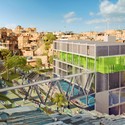
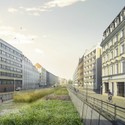
A secondary school project in Gando, Burkina Faso, a community center project in São Paulo, Brazil, and an urban renewal plan in Berlin, Germany are the winners of the Global Holcim Awards for 2012. These leading sustainable construction projects were selected from 15 finalist submissions by a jury of independent experts led by Enrique Norten. The finalists were the regional Holcim Awards 2011 winning projects that had been selected from more than 6,000 entries in 146 countries.
All 53 prize-winning projects at the regional level also competed for further prizes based on their contributions to sustainable construction through innovative building materials and construction technologies. The Global Holcim Innovation prizes conferred by a jury of materials and industry experts led by Harry Gugger went to projects in Switzerland, Germany and the United Kingdom.
Continue after the break to view the winning proposals!
Koen Olthuis’s Dutch practice, Waterstudio, has been preparing for the environmental impacts on architecture for ten years now – building a practice on the assumption that a new solution for inhabitation is on the water. Having lived in Amsterdam, Olthuis has intimate experience with the battle against water that people have posed for themselves. In an interview with Jill Fehrenbacher for Inhabitat, Olthuis describes how Amsterdam was settled, what it means to have a city built upon water and the maintenance required. Olthuis’ desire to colonize the oceans is not new, but his techniques, which he touches upon in this TEDx Talk in Warwick, focus on a refined and innovative way of approaching this strategy that is progressive in that it requires far less maintenance.
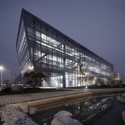
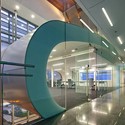
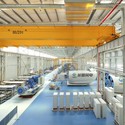
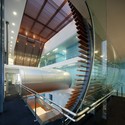
The Envision Energy Headquarters, designed by AECOM, is located in Jiangyin, Jiangsu Province, China. Envision Energy is the leading Chinese wind turbine manufacturer that emphasizes in research, development, manufacturing, sales and maintenance. The new 3-story 3,000 square meter facility is a mixed use, multi-layered space which includes program of offices, dining facilities, galleries and exhibition spaces, an employee recreation lounge with karaoke room, theater, gym, massage room and game room. The facility supports all employees from skilled laborers to executive directors and encompasses the attitiude of the company, celebrating wind energy as the fastest growing clean alternative energy solution. The architects were asked to design the facility to express this technology.
Walk into the cafeteria at the Googleplex and you are nudged into the “right” choice. Sweets? Color-coded red and placed on the bottom shelf to make them just a bit harder to reach. “Instead of that chocolate bar, sir, wouldn’t you much rather consume this oh-so-conveniently-located apple? It’s good for you! Look, we labelled it green!”
Like the Google cafeteria guides you to take responsibility of your health, Google wants to transform the construction industry to take responsibility of the “health” of its buildings. They have been leveraging for transparency in the content of building materials, so that, like consumers who read what’s in a Snickers bar before eating it, they’ll know the “ingredients” of materials to choose the greenest, what they call “healthiest,” options.[2]
These examples illustrate the trend of “medicalization” in our increasingly health-obsessed society: when ordinary problems (such as construction, productivity, etc.) are defined and understood in medical terms. In their book Imperfect Health, Borasi and Zardini argue that through this process, architecture and design has been mistakenly burdened with the normalizing, moralistic function of “curing” the human body. [3]
While I find the idea that design should “force” healthiness somewhat paternalistic and ultimately limited, I don’t think this “medicalized” language is all bad – especially if we can use it in new and revitalizing ways. Allow me to prescribe two examples: the most popular and the (potentially) most ambitious urban renewal projects in New York City today, the High Line and the Delancey Underground (or the Low Line).
More on “curative” spaces after the break. (Trust me, it’s good for you.)
Perkins+Will‘s VanDusen Botanical Garden Visitor Centre in Vancouver, BC is designed to meet the Living Building Challenge, the most rigorous set of requirements of sustainability. Formally and functionally, it encompasses the goals of environmentally and socially conscious design. The building is an undulating landscape of interior and exterior spaces rising from ground to roof level and providing a vast surface area on which vegetation could grow, thus reoccupying the land on which the building sits with the landscape. The building also features numerous passive and active systems that reuse the site’s renewable resources and the building’s own waste.
More photos after the break, including a video about the project!
Studio E Architectsfaced a compelling challenge when designing the first phase UC Davis West Village, which opened last October in California’s upper Central Valley. Experiencing moderate winters, warm summers, prevailing winds and moderate rainfall within the heart of former agricultural fields, the new addition to UC Davis was to be a net-zero facility. Serving as the largest of its kind and a model for campus communities and environmentally conscious urbanism. That is sustainable and community oriented. The program required 123 units of student apartments in one, two and three-bedroom configurations, 45,000 square feet of ground level commercial space all of which would emulate the central park space in downtown Davis and become the heart of West Village.
Follow us after the break to see the sustainable solutions that Studio E Architects came up with!
Beijing-born architect Ma Yansong has become an important, emerging voice to a new generation of architects. Shortly after establishing MAD architectsin 2004, his practice earned worldwide attention (2006) by winning an international competition to design a residential tower near Toronto, expected to be completed in the summer of 2012. In this interview with Studio Banana TV, Yansong discusses a few of his latest works, including MAD’s first museum completed last year in Ordos, Inner Mongolia. Continue reading for more information.
Oasia Downtown, designed by WOHA, sets out to create an alternative imagery for commercial high-rise developments. It combines innovative ways to intensify land use with a tropical approach that showcases a perforated, permeable, furry, verdant tower of green in the heart of Singapore’s Central Business District (CBD). More images and architects’ description after the break.
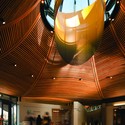
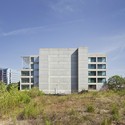
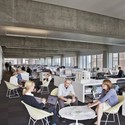
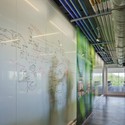
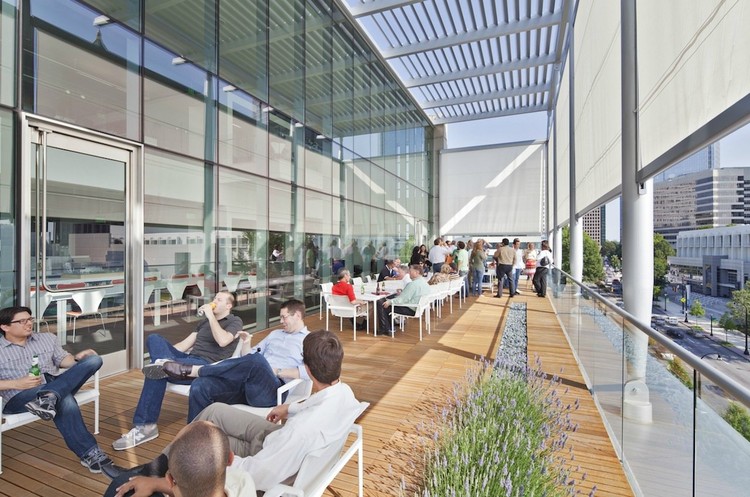
Understanding that environmental responsibility is an integral part of design excellence, Perkins + Will’s new Atlantic office, known as 1315 Peachtree, serves as an example on how current technologies can be used to achieve LEED Platinum Certification, meet the 2030 Challenge and help reduce toxic materials from our building products.
1315 Peachtree is an adaptive reuse of a 1985 office structure transformed into a high performance civic-focused building. Located in the heart of Midtown Atlanta across from the High Museum of Art, the new building continues to house the Peachtree Branch of the Atlanta-Fulton County Public Library and introduces a new street-level tenant space occupied by the Museum of Design Atlanta (MODA). The Perkins+Will Atlanta office occupies the top four floors with office space for up to 240 employees. Continue reading for more information on the highest LEED score building in the Northern Hemisphere.
In this interview by Jan Schevers and Esther Schevers, Stephen Bates of Sergison Bates architects discusses how education is tied to exploration and research. As a professor at TU Munich, each semester offers an opportunity to take on new themes in architecture that allow him to break conventions that come up in practice and are oftentimes associated with the ways in which his students have been taught. More discussion after the break.
After Mayor Bloomberg, Cornell President Skorton and Technion President Lavie announced Cornell’s victory over Stanford to build an eleven acre state-of-the-art tech campus on Roosevelt Island in New York City, the team has now tackled their next step in choosing six high-profile architecture firms competing to design the schools first academic facility.
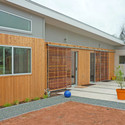
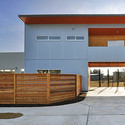
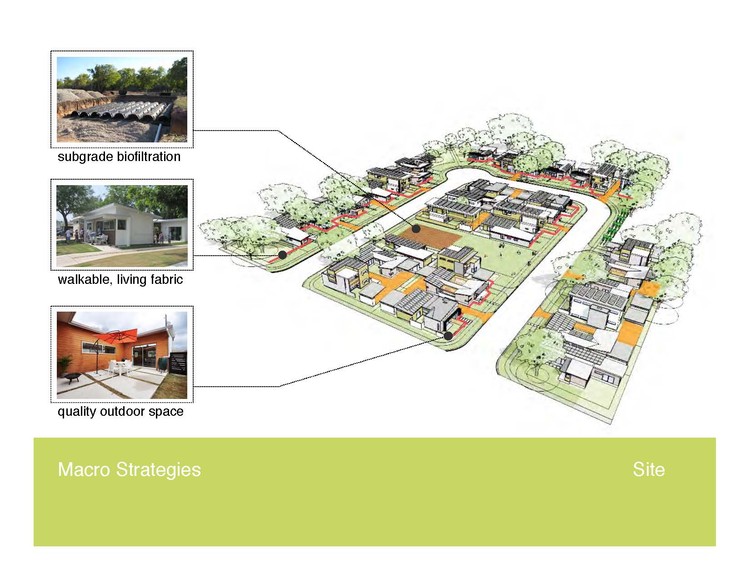
SOL Austin - Solutions Oriented Living – is a model development of a sustainable community that integrates social, economic and ecological components to create a “holistic community”. The project was a result of a partnership between KRDB Architects, Beck-Reit contractors, the Guadalupe Neighborhood Development Corporation (GNDC) and the Austin Housing Finance Corporation. The medium density, single-family in-fill project in central east Austin, just three miles from downtown incorporates a significant portion of low-income and affordable housing, sustainable practices and consideration for the kind of future that developments like this can create.
Read on for photos, plans and more information about this project, considered for the AIA 2011 Design Awards in Urban Design.