

A few months ago I had the chance to visit and interview Architecture Research Office (ARO), just after they were announced as the recipients of the prestigious 2011 Cooper-Hewitt National Design Award for Architecture.
Interviews: The Latest Architecture and News
AD Interviews: ARO - Architecture Research Office
https://www.archdaily.com/198723/ad-interviews-aro-architecture-research-officeDavid Basulto
USGBC and AIA announce second Architecture for Humanity Sustainability Design Fellow

The United States Green Building Council (USGBC) and the American Institute of Architects (AIA) announce Burtland Granvil, AIA, LEED AP as the new Architecture for Humanity Sustainability Design Fellow. Succeeding the first Sustainability Design Fellow, Stacey McMahan, AIA, LEED AP, Granvil will be working directly with the Haitian community at the Architecture for Humanity’s rebuilding center based in Port-au-Prince.
“The earthquake didn’t take as many lives as the poor quality of construction did,” said Granvil. “Architecture for Humanity’s Rebuilding Center in Haiti will help educate and build together with local current and future builders of Haiti…this is the main reason why I joined Architecture for Humanity. I am here with others to work on the long-term approach. Haiti, as well as other post disaster areas, can benefit from this kind of transitional office with this mindset.”
https://www.archdaily.com/199649/usgbc-and-aia-announce-second-architecture-for-humanity-sustainability-design-fellowKarissa Rosenfield
USGBC partners with HOK to design Haiti Orphanage and Children’s Center

Marking the two year anniversary of the devastating 7.0 earthquake in Haiti, we would like to share with you the important efforts of Project Haiti – a LEED Platinum orphanage and children’s center that is planned to be built in Port au Prince, Haiti. The project is lead by the United States Green Building Council (USGBC) and their official pro-bono design partner, HOK. Project Haiti not only focuses on the children, but also aims to create a “replicable, resilient model for rebuilding” that may serve as a practical teaching tool for the local community. The USGBC motto states, “Every story about green building is a story about people.”
https://www.archdaily.com/199327/usgbc-partners-with-hok-to-design-haiti-orphanage-and-children%25e2%2580%2599s-centerKarissa Rosenfield
“Shobuj Pata” (Green Leaf) Eco Community Development / JET, JCI, and Terraplan

JET Design Group was invited by JCI Architects along with Terraplan Landscape Architects, to joint venture in the design of the Green Leaf project. After winning the commission earlier in 2011, in December, the final negotiations were completed to enable the project to move forward quickly. The team will be working together, helping Bangladesh to design a sustainable community with an innovative green concept. Green Leaf is green landscape architecture and built form which takes full advantages of the local natural resources to create a hybrid habitable space combining architecture and nature. The concept is inspired by adopting current and green innovative technology to make the design construction economic and feasible. More images and architects’ description after the break.
https://www.archdaily.com/198749/percent-e2-percent-80-percent-9cshobuj-pata-percent-e2-percent-80-percent-9d-green-leaf-eco-community-development-jet-jci-and-terraplanAlison Furuto
CANMET Material Technology Laboratory / Diamond Schmitt Architects
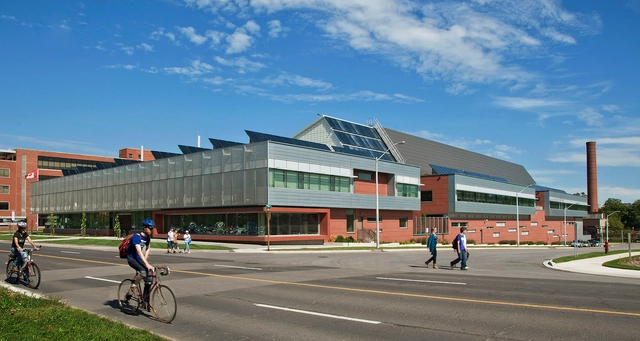
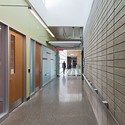
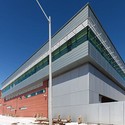
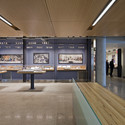

https://www.archdaily.com/196785/canmet-material-technology-laboratory-diamond-schmitt-architectsBrian Pagnotta
Edward Mazria, Founder and CEO of Architecture 2030, Wins This Year’s Purpose Prize
Edward Mazria, architect, founder and CEO of Architecture 2030 was awarded this year’s Purpose Prize. His work over the past eight years, after founding Architecture 2030, has set numerous environmental goals for the building industry. It has also brought many issues of sustainable design to the forefront of conversations and policies about buildings and their construction. Watch the video for more information!
More about Edward Mazria and Architecture 2030 after the break.
https://www.archdaily.com/193580/edward-mazria-founder-and-ceo-of-architecture-2030-wins-this-year%25e2%2580%2599s-purpose-prizeIrina Vinnitskaya
Green Roofs

Implementing green roofs into architecture is rapidly becoming a design principle for buildings at every scale. There are many benefits to a green roof including a decrease in heating and cooling costs, which in turn mitigates the urban heat island effect. Other benefits include a natural filter for rain water, an increase in the life span of the roof, a natural habitat for animals and plants and a reduction in dust and smog levels. In this post are four highlighted projects where a green roof is emphasized to produce successful sustainable architectural works.
https://www.archdaily.com/193552/green-roofsAlison Furuto
TOPOS Eco-Retail Development Proposal / Shift Architecture Urbanism

Dutch firm Shift Architecture Urbanism is the winner of a first prize, two second prizes and a third prize in the competition for an eco-retail development, the Groene Kamer, in Tilburg, the Netherlands. The aim of the development is to create a new type of country estate where eco-retail, nature and recreation are brought together in an innovative way; A place where city and countryside meet, both physically and programmatically. The competition’s goal was to select the designers of four different building typologies which will populate the masterplan designed by Fabric and Lola landscape architects. Shift’s design, Topos, makes use of a topographic approach that allows for a profound integration of architecture and landscape. More images and architects’ description after the break.
https://www.archdaily.com/193966/topos-eco-retail-development-proposal-shift-architecture-urbanismAlison Furuto
Sustainable Office Buildings

In more recent times, the importance of the changing climate and its effects on the environment are being given more attention in regard to design practices. As a result, sustainable work spaces are becoming more prominent and some may even argue that a more energy efficient building correlates to a more efficient and productive work environment. With a growing demand for energy efficient buildings comes a greater responsibility of architects today and in the future. In turn, officer owners and managers are also placed under increasing obligations to be focused on cutting down on productivity costs and to find more sustainable ways of going about their business endeavors. Companies are coming to the realization that investing in ‘green’ principles is more profitable in the long run.
In this post we are going to present to you office buildings that offer sustainable techniques through innovative architecture.
https://www.archdaily.com/191841/sustainable-office-buildingsAlison Furuto
Green Buildings Save Green

The Department of Energy’s Pacific Northwest National Laboratory (PNNL) was commissioned by the Government Services Administration (GSA) to conduct a post-occupancy evaluation of 22 “green” federal buildings from across the United States. The report stats reveal that not only does these “green” buildings emit 34 percent less carbon dioxide and are using 11 percent less water, they cost on average 19 percent less to maintain. In addition to the environmental and economical savings, the evaluation reports that the occupants are more satisfied in the “green” buildings by 27 percent.
Continue reading for more information.
https://www.archdaily.com/192909/green-buildings-save-greenKarissa Rosenfield
Green Hotel in Williamsburg / Oppenheim Architecture + Design

Oppenheim Architecture + Design recently won the international competition to design a new hotel in Brooklyn, NY. A third pillar of the Williamsburg Bridge to emerge after 108 years. Their design of the Williamsburg hotel attempts to capture the essence of this vibrant neighborhood. Adjacent to both the Williamsburg Bridge and the historic Williamsburg Savings Bank, the building expresses itself as three dramatically proportioned, rectilinear volumes of varied height and materiality. Soaring high above the neighborhood, the hotel becomes the third pillar of the bridge, while serving as an archetypical tower to the domed basilica of the historical bank.
Sustainability was once again an important issue for Oppenheim Architecture + Design. The hotel will have geothermal, wind, and solar power generation, along with other resource saving strategies, for which they achieved Platinum LEED rating. More images and architects’ description after the break.
https://www.archdaily.com/191293/green-hotel-in-williamsburg-oppenheim-architecture-designAlison Furuto
Greening Schools: Future Proofing Schools Competition award goes to CMA+U

The University of Melbourne together with partners including the Department of Education and Early Childhood Development have just announced CMA+U and Team winners of the Sustainability Award ʻFuture Proofing Schools Competitionʼ Australia. The competition explores design ideas for next generation relocatable 21st century learning spaces as part of Australia’s research program for Building the Education Revolution. More images and information on the awarded project after the break.
https://www.archdaily.com/189307/greening-schools-future-proofing-schools-competition-award-goes-to-cmauAlison Furuto
Rebuilding Japan: Lessons in Architectural Response Conference

The Masters of International Cooperation Sustainable Emergency Architecture at the ESARQ-UIC in Barcelona is excited to present this year’s open conference on December 12th titled, Rebuilding Japan: Lessons in architectural response, featuring talks and a roundtable discussion with Japanese architects involved in the reconstruction of Japan during its recent history of devastating earthquakes. How can architects respond in the aftermath of a natural disaster? What lessons can be learned from the last three major earthquakes in Japan? How does the context of a natural disaster affect the role of the architect and the reconstruction process? More information on the conference after the break.
https://www.archdaily.com/189908/rebuilding-japan-lessons-in-architectural-response-conferenceAlison Furuto
HUD Grants assist Communities towards Sustainability

The U.S. Department of Housing and Urban Development (HUD) has awarded $97 million dollars to 27 regions and 29 communities across 32 states with the 2011 Sustainable Communities Grants. HUD Secretary Shaun Donovan stated, “These grants will be leveraged with local funds more than doubling the investment and, helping to create new visions for how communities and regions plan for housing, transportation, workforce development and the quality of life of their residents for generations to come. When more than half of the average working family’s income is devoted to housing and transportation costs alone, we know that we have a responsibility to fix that and to provide housing and transportation options that can improve their quality of life and economic stability.”
https://www.archdaily.com/189702/hud-grants-assist-communities-towards-sustainabilityKarissa Rosenfield
AD Interview: Philip Freelon / The Freelon Group Architects
During the 2009 AIA Convention in San Francisco, I had the chance to see a very interesting group of architects, Emerging Voices. That group, in my opinion, represented the new generation of US architects who are advancing the profession with new ideas and innovative projects. Several of those architects have already been interviewed and featured on ArchDaily, but it took me a while to finally meet one of them: Philip G. Freelon. We met during the 2011 AIA Convention in New Orleans, where I had the opportunity to interview him. I really liked this interview, where Philip shares valuable insights on running a firm and his views on the role of the architect.
https://www.archdaily.com/181766/ad-interview-philip-freelon-the-freelon-group-architectsDavid Basulto
The Holcim Awards 2011 for Asia Pacific Winners

The Asia Pacific winners of the Holcim Awards for sustainable construction were recently announced in Singapore. The Holcim Awards is an international competition that recognizes innovative projects and future-oriented concepts on regional and global levels. The competition is designed to encourage architects, planners, engineers and project owners to go beyond conventional notions of sustainable construction in their work and to harmonize ecological, social and economic concerns. Projects and concepts in the fields of architecture, landscape architecture, urban design, civil engineering, mechanical engineering and related fields are eligible for entry in the competition. More images and information on the winning competition proposals after the break.
https://www.archdaily.com/187548/the-holcim-awards-2011-for-asia-pacific-winnersAlison Furuto
Interview: Tony Fretton, by Hugo Oliveira

We are sharing with you an interview of architect Tony Fretton of Tony Fretton Architects conducted by Hugo Oliveira, as seen in Jornal Arquitectos. Prior to founding his firm in 1982, Fretton was Principal Designer at Arup Associates. He is deeply committed to architectural education and has experience teaching worldwide, from the Architectural Association School of Architecture in London to Harvard University in Cambridge. He currently serves as a Professor of Architectural Design and Interiors at TU Delft in the Netherlands.
The complete interview following the break.
https://www.archdaily.com/187699/interview-tony-fretton-by-hugo-oliveiraKarissa Rosenfield
Interview: Michael Pawlyn on Biomimicry

The Economist featured an interview with Michael Pawlyn discussing sustainable architecture inspired by nature. Michael Pawlyn is known for his passionate investigations of the unique, efficient structures of natural organisms and how they may translate through design. Biomimicry has been an important topic amongst the innovators and educators who are learning from the 3.8 billion years invested into the design of our natural world.
The shell of an abalone is “twice as strong as the toughest man-made ceramic.”
Continue reading for the complete interview.
https://www.archdaily.com/185128/interview-michael-pawlyn-on-biomimicryKarissa Rosenfield