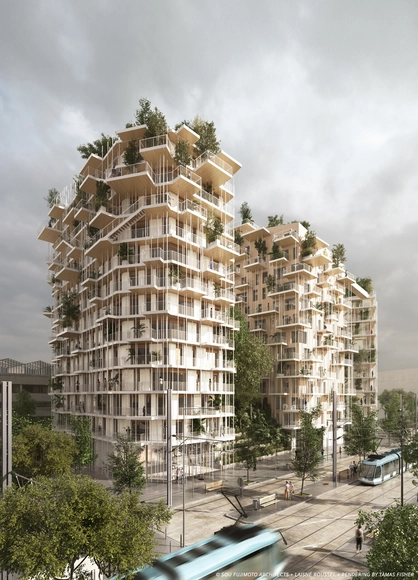
Nowadays the main building materials used in the construction industry are concrete, steel and timber. From the point of view of ecological sustainability, there are four important differences between these three materials: first, timber is the only material of the three that is renewable; second, timber needs only a small amount of energy to be extracted and recycled compared to steel and concrete (but the implementation of its potential is not as developed yet); third, timber does not produce waste by the end of its life since it can be reused many times in several products before decomposing or being used as fuel and; and fourth, timber traps huge amounts of carbon from the atmosphere – a tree can contain a ton of CO2 [1] – and the carbon absorbed remains embedded as long as the wood is in use.
Considering the fact that 36 percent of total carbon emissions in Europe during the last decade came from the building industry,[2] as well as 39 percent of total carbon emissions in the United States,[3] the materiality of construction should be a priority for governments’ regulations in the future as measurements against global warming. The amount of CO2 in the atmosphere and the level of carbon emissions of the big economies across the globe are big issues that need to be solved with urgency in order to avoid larger, more frequent climate catastrophes in the future. The current regulation in several countries of the EU, which is incentivizing the use of renewable materials in buildings, is showing the direction the building industry in many other parts of the world should follow. And if these measures are adopted across the EU and beyond – if other countries start to follow this tendency as well – there will be significantly more wood in cities.
Kjellander + Sjöberg. Image Courtesy of Kjellander + Sjöberg
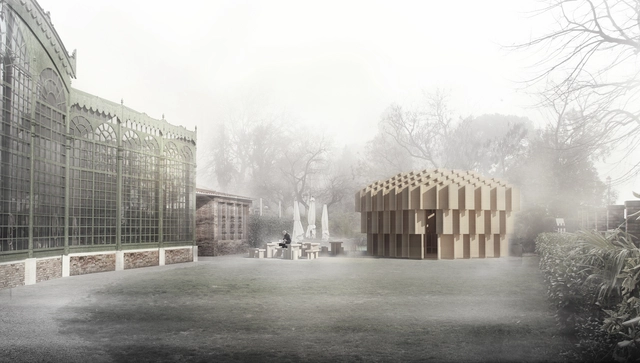
The Swedish exhibition, “The Forests of Venice,” has been selected as a Collateral Event for the 2016 Venice Biennale. Initiated by Kjellander + Sjöberg and Folkhem; and curated by Jan Åman, the exhibit highlights wood as a sustainable material, while looking at "the interaction between nature and the man-made human habitat in order to respond to climate change and limited resources."
Located in the arid desert of the San Rafael Valley, Arizona, Casa Caldera by DUST is a unique object in the vast landscape. In this video, architects Jesus Robles and Cade Hayes explain their project as viewers are taken on a vivid tour of the building and site. The camera moves through the desert, unveiling the house gradually, as one would truly experience it.
“One of the unique things about Casa Caldera is the experience of the approach,” Hayes says. “Two hours of travel are actually part of the experience of arriving. It isn’t until you are 20, 30 feet from the house that you get a good look.”
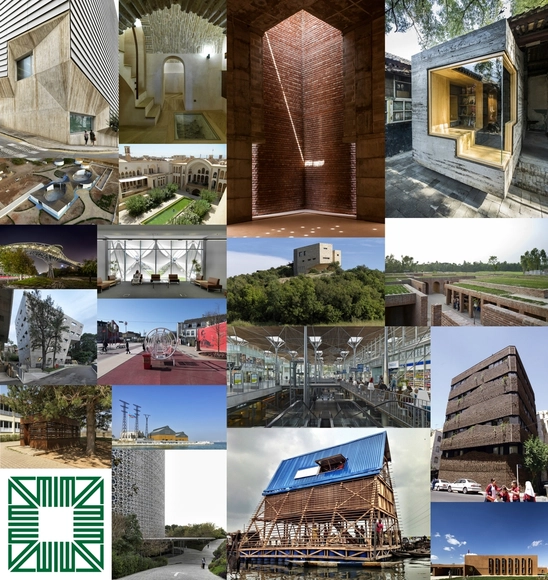
The Aga Khan Award for Architecture has announced a shortlist of 19 projects selected from 348 entries received from 69 countries. Presented once every three years, the award honors new standards of excellence in contemporary design, social housing, community improvement and development, historic preservation, reuse and area conservation, as well as landscape design and improvement of the environment. The basis for the Aga Khan Award is “to identify and encourage building concepts that successfully address the needs and aspirations of communities in which Muslims have a significant presence.” Selected by a Master Jury, the shortlisted projects will compete for $1 million dollars in prize money. Since its establishment in 1977, over 110 projects have received the award and more than 9,000 building projects have been documented.
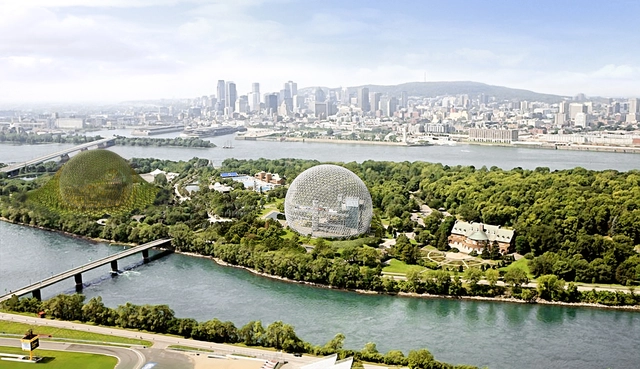
In anticipation of the upcoming 50th anniversary of Expo 67, Studio Dror has proposed a 150-meter-wide vegetated dome for Park Jean Drapeau, the original site of the World Fair. The new dome would complement Buckminster Fuller’s Biosphere, which was built as the US pavilion for Expo 67.
MVRDV’s design for the Dutch exhibition “Hola Holanda” at the Book Fair of Bogotá (FILBO) features a modular system of crates that will be repurposed as neighbourhood libraries after the Book Fair ends. Avoiding the waste of resources created by one-time pavilions, the Dutch firm has introduced a playful element of sustainability to the fair, maintaining its spirit even after the event ends.
Now in its 20th year, the COTE Top Ten Awards program honors projects that protect and enhance the environment through an integrated approach to architecture, natural systems, and technology.
A recently released study, entitled Lessons from the Leading Edge, reports that design projects recognized through this program are “outpacing the industry by virtually every standard of performance.”
Zhang Ke is the founder and partner of standardarchitecture, an architecture firm based in China. Still relatively new, the firm has roughly 40 staff members, half of which are from China. Despite their status as a fledgling office, standardarchitecture has already completed a varied range of projects, including urban interventions in the iconic hutongs of Beijing and tourism infrastructure in the Nepal region. In 2015, Zhang Ke and his firm were the focus of an exhibition at the AEDES Gallery in Berlin, titled “Contemplating Basics.” In this interview, Zhang Ke talks about the importance of learning at different schools, as well as his own beliefs about the duty of an architect, the importance of context and his desire to tell stories in architecture.
A year of controversies over water-related projects like Thomas Heatherwick’s Garden Bridge in London, or Frank Gehry’s LA River master plan in Los Angeles, can paint a fraught portrait of the relationship between design and one of our most precious resources. But in honor of World Water Day, we have rounded up some of the projects that represent the most strategic, innovative, and unexpected intersections of design and H2O that have been featured on ArchDaily.
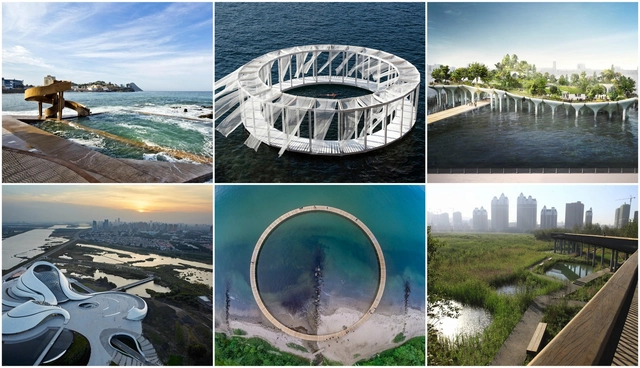
Architecture and water have a long history of intersection, from the aqueducts engineered by the Romans to Frank Lloyd Wright’s Fallingwater, and the relationship holds new value in an age of climate change coupled with evolving modes of thinking about the relationship between humans and ecology. An ever-broadening understanding of the human need for water—from health and hygiene to recreation and wonder—has ensured that new ways to incorporate this classic element into vanguard designs has flourished. The following projects feature water in a variety of ways, from proximity to bodies of water, to designs literally shaped or formed by their relationship to moisture, to projects that are physically immersed in the liquid, and finally other projects which are only visions of a yet-unbuilt future.
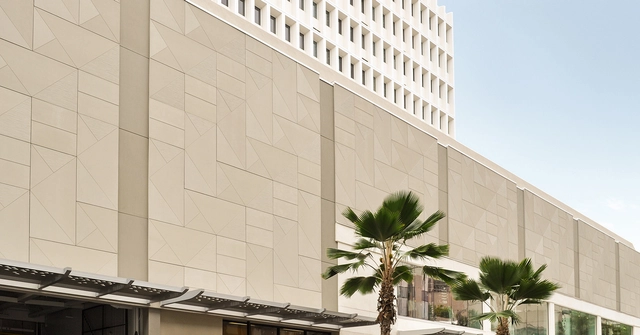
TAKTL's ultra-high-performance concrete panels on the Waikiki Business Plaza by MGA Architecture. Image Courtesy of TAKTL
It's no secret that among the architecture profession's biggest sources of guilt is our reliance on concrete in a huge number of the buildings that we have a hand in creating. Architects are more likely than most to be aware of the environmental implications of the material, and yet we continue to use it at an alarming rate. But what alternatives are there in order to do our job? In an article for Forbes, Laurie Winkless runs down a list of three alternatives that stand a good chance of changing the face of concrete construction.
The Department of Spatial and Sustainable Design, Vienna University of Technology, and the Society of Architecture and Spatial Design is organizing the BLUE AWARD, an international student competition for sustainable architecture. The prize is overseen by the UIA, International Union of Architects, represented by its former President Albert Dubler.
The competition is open to university students of Bachelor’s and Master’s Degree programs as well as for students working on a diploma thesis or dissertation in the academic fields of architecture, urbanism or regional planning and civil engineering. The submitted project must be part of a supervised coursework, having taken place during one of the following semesters: Summer Semester 2014, Winter Semester 2014/15, Summer Semester 2015, Winter Semester 2015/16 and Summer Semester 2016.
The advancement of contemporary technology is changing the way we study the world around us. The way we describe and understand cities is being radically transformed, along with the tools we use to envision and impact their physical form.
These new technologies allow us to understand the built environment differently. The city is no longer a static collection of built objects, but can instead be understood as a series of social, environmental, and informational networks. Can we this new knowledge to positively impact the city of the future? Can these technologies allow us to rectify the mistakes of the past? What new possibilities exist within their creative use?
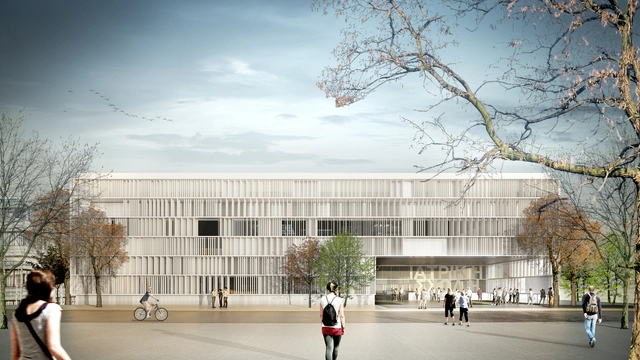
A proposal by Miba Architects and Calderon‐Folch‐Sarsanedas Architects has received 2nd prize in an international competition to design the new medical school for the University of Cyprus. The project proposes a “campus within a campus,” combining the strict bio-climatic regulations of a research lab with a social space for learning. Read more after the break.
BEE / HOUSE / LAB, is an international design competition open to students and designers in the field of environmental design, architecture, landscape architecture, industrial design, and other related fields. The competition calls for a design of a bee house prototype that can be fabricated and deployed for field testing. Up to ten designs selected by the Design Jury will be fabricated (30 prototypes per design) and deployed (300 houses), to study their space-form-habitat performances.
In the face of global doomsday predictions, sustainability has become one of the most crucial aspects of the 21st century, now playing a huge role in everything from politics to the way you dispose of your trash. Fortunately, most architects understand sustainability implicitly, and have adopted it into their lives and work. Or have they? In this article, originally published on Common Edge as "Why Architects Don't Get It," green building expert Lance Hosey highlights the failures of the architecture community in reaching their stated sustainability goals, and argues for a new conception of architecture in which good design and sustainable design are integrated.
A few years ago, the American Institute of Architects, the self-declared “voice of the architecture profession,” announced that "AIA members will no longer need to complete the sustainable design requirement to fulfill their AIA continuing education." Why? Because “sustainable design practices have become a mainstream design intention.” Hooray! If sustainability is “mainstream” now, and knowledge about it is no longer necessary “to maintain competency” and “to advance and improve the profession”—the purpose of continuing education, according to the AIA—then the profession must have met its environmental goals, and there’s nothing left to improve. Mission accomplished.
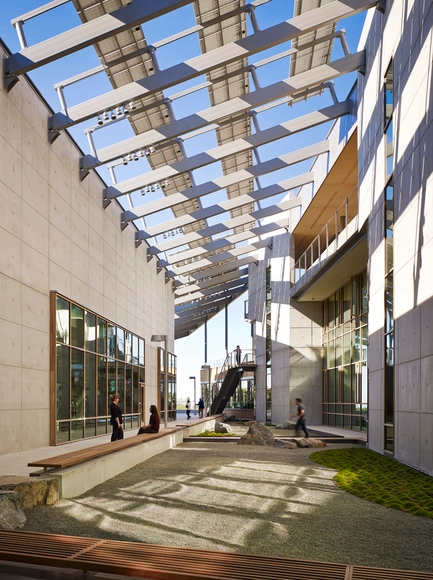
A three-day Building Energy Modeling workshop in Delhi for architects that equips them with knowledge related to building science, software training to design energy efficient and sustainably cooled buildings that save money for their clients, enhance energy access for underprivileged sections of our society, and reduce carbon emissions.
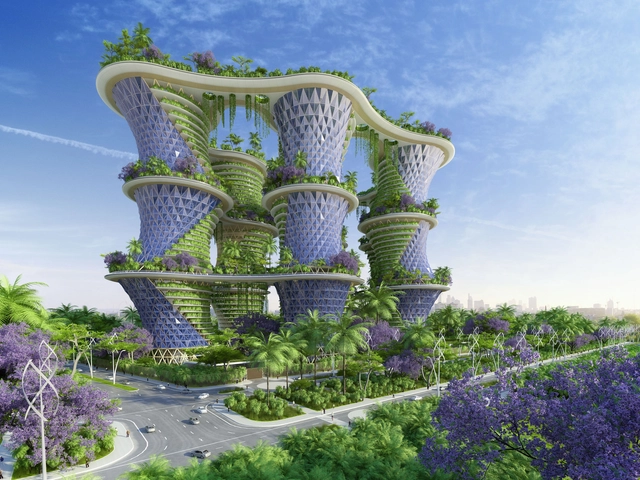
Agroecologist Amlankusum, together with Paris-based Vincent Callebaut Architectures, has created Hyperions, a vertical, energy positive eco-neighborhood proposed for Jaypee Green Sports City in the Delhi National Capital Region (NCR) in India. Aiming to “reconcile urban renaturation and small-scale farming with environment protection and biodiversity,” the project combines low-tech and high-tech elements with the “objective of energy decentralization and food deindustrialization.”
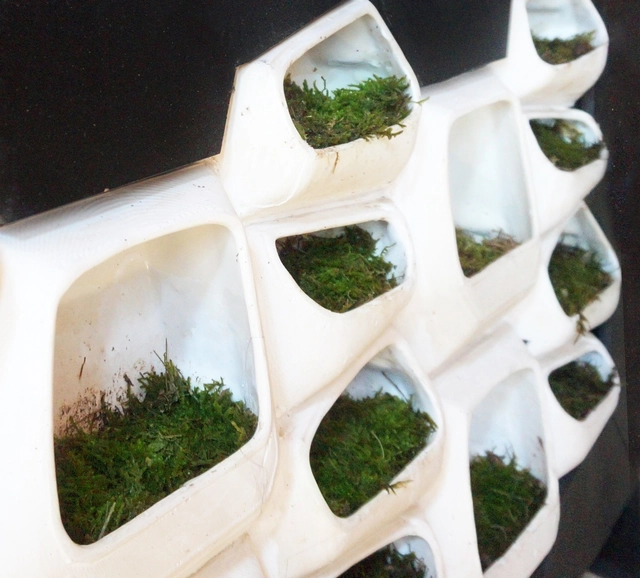
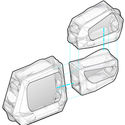
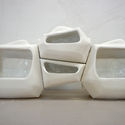
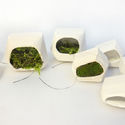
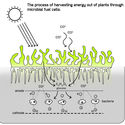
IaaC Student Elena Mitrofanova, working alongside biochemist Paolo Bombelli has created a proposal for a facade system that utilizes the natural electricity-generating power of plants. Consisting of a series of hollow, modular clay "bricks" containing moss, the system takes advantage of new scientific advances in the emerging field of biophotovoltaics (BPV) which Mitrofanova says "would be cheaper to produce, self-repairing, self-replicating, biodegradable and much more sustainable" than standard photovoltaics.





.jpg?1461865719&format=webp&width=640&height=580)