1. ArchDaily
  2. Infrastructures

Infrastructures: The Latest Architecture and News

Replacing Asphalt Can Build a More Sustainable and Open City

Subscriber Access | 

The City Prosperity Index, CPI, set by UN-Habitat, evaluates urban prosperity according to five parameters as productivity, infrastructure development, environmental sustainability, quality of life, and equity/social inclusion. To a greater or lesser extent, these five factors are represented in the street pattern of every city in the world. Streets have multiple functions as the mobility of people and goods, the supply of energy, water, and information, the collection of waste, the growth of trees, plants, insects or birds, the shadow and sun radiation, the bench where to sit, the place to salute and talk with your neighbors, a playground, or the access to the bakery where you buy the bread. In this sense, streets are public and vibrant spaces, which can perform multiple functions and activities.
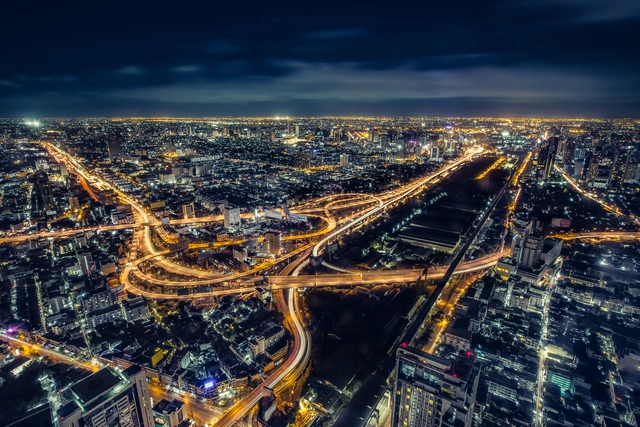
In Transit: Large-Scale Road Infrastructures Seen from Above

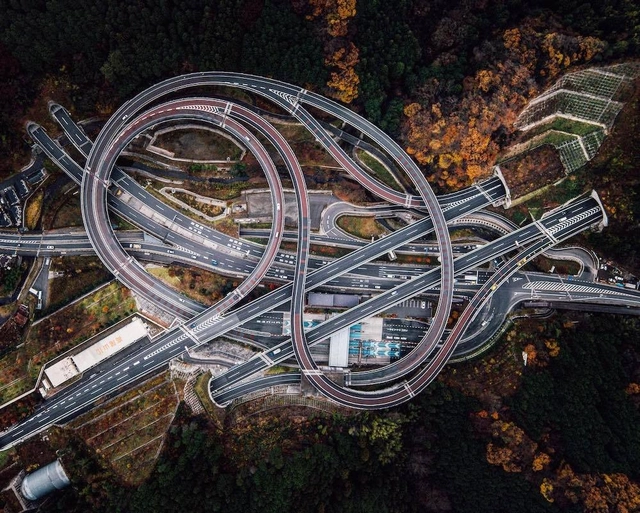
We live in a tangled web of flows – of capital, information, technology, images, structures, in constant momentum dominating all aspects of our lives. The large-scale road infrastructures shown here are products of this powerful desire for movement, which for many years was also synonymous with development, as portrayed by the famous Goethean character Faust in his endless quest for a (false) sense of progress.
From these tangles of concrete and steel, at multiple levels and in different directions, emerges a geometrically organized chaos that tears the urban fabrics in a relentless effort to prioritize the flows with the fewest obstacles and the highest capacity possible.

In Transit: Large-Scale Road Infrastructures Seen from Above - Image 5 of 4In Transit: Large-Scale Road Infrastructures Seen from Above - Image 2 of 4In Transit: Large-Scale Road Infrastructures Seen from Above - Image 4 of 4In Transit: Large-Scale Road Infrastructures Seen from Above - Image 11 of 4In Transit: Large-Scale Road Infrastructures Seen from Above - More Images+ 7

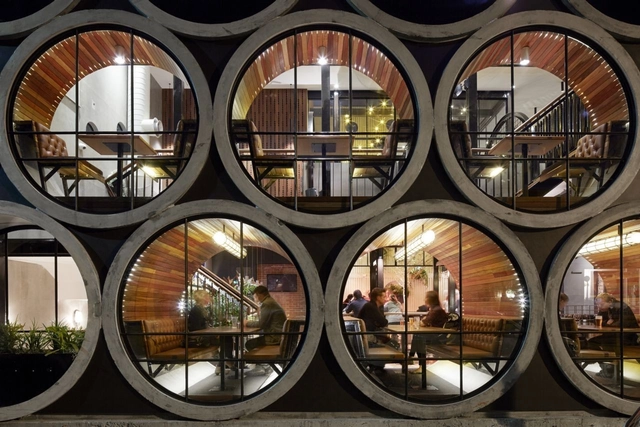
Concrete Pipes Transformed Into Architectural Elements and Living Spaces

Subscriber Access | 

Urban infrastructures provide comfort to inhabitants and mitigate the risks of disasters such as flooding. Underground systems specifically conceal urban infrastructures from public view and are configured as real mazes under the streets. The distribution of drinking water, urban drainage, sewage, and even electrical wiring and fiber optics in some cases, pass under our feet without us noticing. To this end, the industry developed precast concrete parts for about 100 years that provided construction speed, adequate resistance to force, and durability against time. Concrete pipes with circular sections, in many diverse diameters, are perhaps the most used conduits and are ubiquitous around the world. But there are also those who use these apparently functional elements in creative architectural contexts as well.

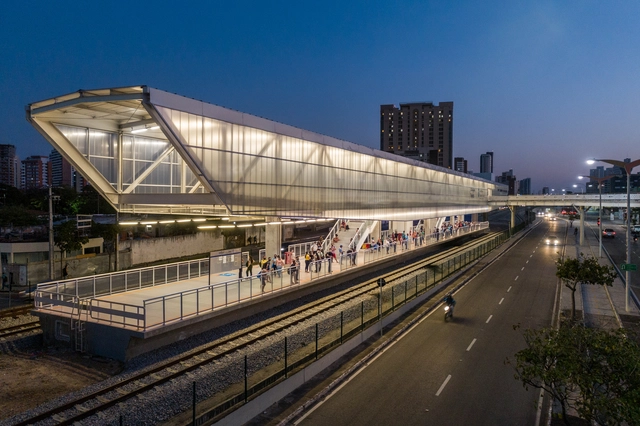
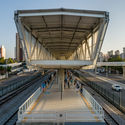
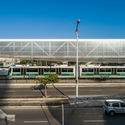
Fortaleza Subway Extension / Fernandes Arquitetos Associados

Fortaleza Subway Extension / Fernandes Arquitetos Associados - Exterior Photography,           Metro StationFortaleza Subway Extension / Fernandes Arquitetos Associados - Exterior Photography,           Metro StationFortaleza Subway Extension / Fernandes Arquitetos Associados - Exterior Photography,           Metro StationFortaleza Subway Extension / Fernandes Arquitetos Associados - Exterior Photography,           Metro StationFortaleza Subway Extension / Fernandes Arquitetos Associados - More Images+ 37

  • Area Area of this architecture project Area:  114183 ft²
  • Year Completion year of this architecture project Year:  2012
  • Manufacturers Brands with products used in this architecture project
    Manufacturers:  AutoDesk, Arkos, Deca, Docolo, Dânica, +1

Water Towers: Iconic Infrastructure, Underutilized Opportunity

This article was originally published on Common Edge

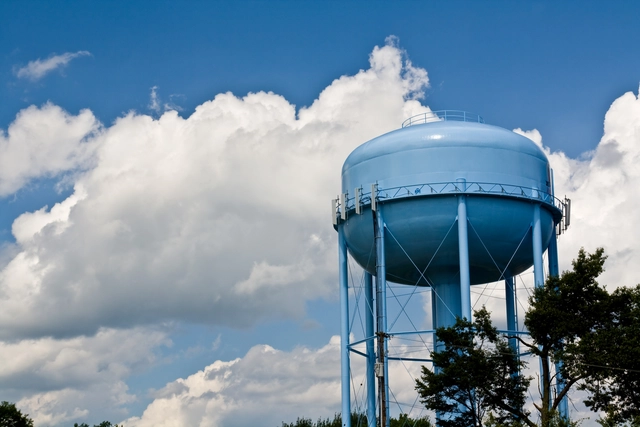
I am a relative newcomer to the Midwest, and of all the things that have captured my enduring attention, one of them is water towers. In my adopted home state, Minnesota, they are everywhere. These top-heavy engineering marvels rise to well over 150 feet tall and assume all manner of shape and metallurgical prowess, from the pedesphere and fluted column structures, colloquially known as the “golf ball-on-a-tee” and “flashlight,” respectively, to the multicolumned spheroid and ellipsoid tanks that, as legend has it, were the targets of frantic gunfire during Orson Welles’ broadcast of “War of the Worlds.” I can attest that when the day’s twilight settles in, those multilegged towers—or, rather, their silhouettes—can appear otherworldly.

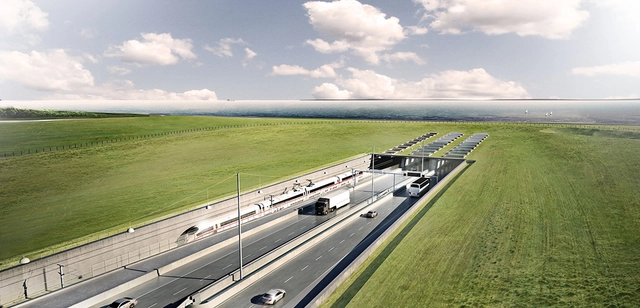
The World’s Longest Immersed Road and Rail Tunnel, between Denmark and Germany, Receives Green Light

The world’s longest immersed road and rail tunnel design, the Fehmarnbelt link gets a go-ahead. The 18 km infrastructure, the longest of its kind, connecting Denmark’s Lolland Falster region with Germany’s Schleswig Holstein region across the Baltic Sea will shorten the journey between both countries to just 10 minutes by car and seven minutes by train.

The World’s Longest Immersed Road and Rail Tunnel, between Denmark and Germany, Receives Green Light  - Image 1 of 4The World’s Longest Immersed Road and Rail Tunnel, between Denmark and Germany, Receives Green Light  - Image 2 of 4The World’s Longest Immersed Road and Rail Tunnel, between Denmark and Germany, Receives Green Light  - Image 3 of 4The World’s Longest Immersed Road and Rail Tunnel, between Denmark and Germany, Receives Green Light  - Image 4 of 4The World’s Longest Immersed Road and Rail Tunnel, between Denmark and Germany, Receives Green Light  - More Images+ 3

Moses Bridge / RO&AD Architecten

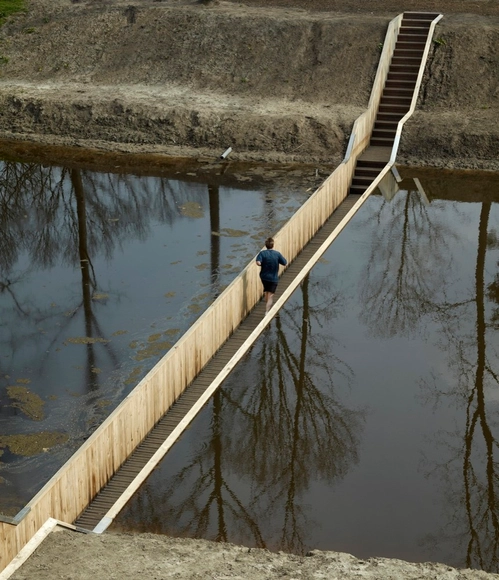
Moses Bridge / RO&AD Architecten - Pedestrian BridgeMoses Bridge / RO&AD Architecten - Pedestrian BridgeMoses Bridge / RO&AD Architecten - Pedestrian BridgeMoses Bridge / RO&AD Architecten - Pedestrian BridgeMoses Bridge / RO&AD Architecten - More Images+ 10

  • Architects: RO&AD Architecten
  • Area Area of this architecture project Area:  50
  • Manufacturers Brands with products used in this architecture project
    Manufacturers:  Accoya

The Paleisbrug / Benthem Crouwel Architects

The Paleisbrug / Benthem Crouwel Architects - Bridges The Paleisbrug / Benthem Crouwel Architects - Exterior Photography, Bridges The Paleisbrug / Benthem Crouwel Architects - Exterior Photography, Bridges The Paleisbrug / Benthem Crouwel Architects - Interior Photography, Bridges The Paleisbrug / Benthem Crouwel Architects - More Images+ 16

's-Hertogenbosch, The Netherlands

How to Future-Proof Our Cities? 4 Key Initiatives to Increase Resilience

Our cities, vulnerable by nature and design, have generated the biggest challenge that humankind has to face. With the vast majority of the population expected to settle in urban agglomerations, rapid urbanization is going to raise the issue of adaptability with future social, environmental, technological and economic transformations.

In fact, the main problematic of the decade questions how our cities will cope with fast-changing factors. It also looks into the main aspects to consider in order to ensure long-term growth. In this article, we highlight major points that help future-proof our cities and create a livable, inclusive and competitive fabric that adapts to any unexpected future transformation.

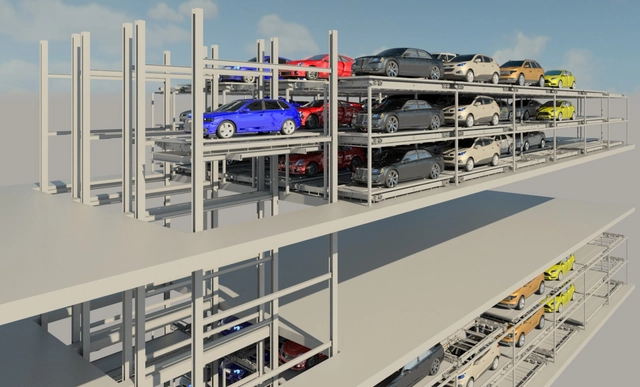
Fully Automated Parking Solutions: Space-saving systems with superior user experience

 | Sponsored Content

As ride-sharing services grow and personal ownership of automobiles declines, office building owners and developers are re-thinking the value of parking structures, and their capacity and ability to convert. As part of the total transformation of One Post Office Square (OPOS), located in the heart of Boston's financial district and designed by Gensler, a new automated parking garage will optimize the use of valuable leasable space, enhance the user experience and create long term flexibility.

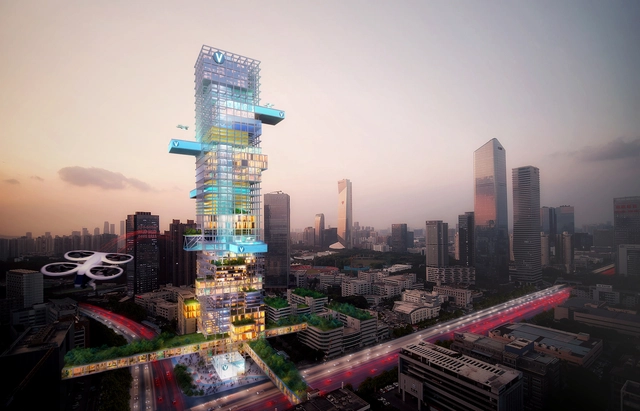
MVRDV and Airbus Integrate Air Mobility into Urban Environments

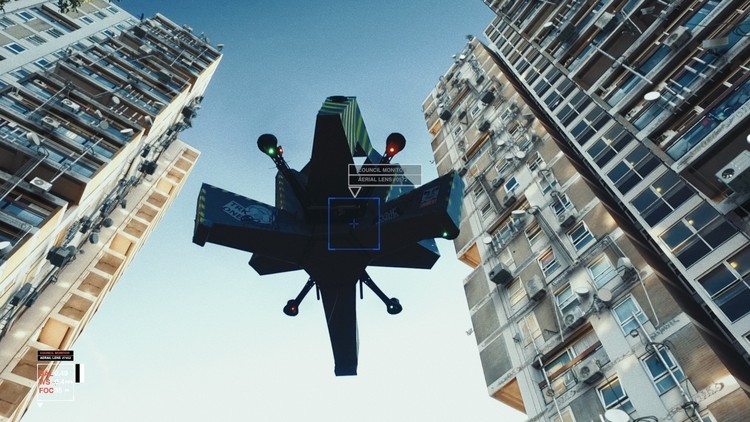
MVRDV in collaboration with Airbus, Bauhaus Luftfahrt, ETH Zurich, and Systra, is developing a plan for the future of Urban Air Mobility (UAM). The investigation tackles the integration of “flying vehicles” into our urban environments and envisions a comprehensive mobility concept.

MVRDV and Airbus Integrate Air Mobility into Urban Environments  - Image 1 of 4MVRDV and Airbus Integrate Air Mobility into Urban Environments  - Image 2 of 4MVRDV and Airbus Integrate Air Mobility into Urban Environments  - Image 3 of 4MVRDV and Airbus Integrate Air Mobility into Urban Environments  - Image 4 of 4MVRDV and Airbus Integrate Air Mobility into Urban Environments  - More Images+ 13

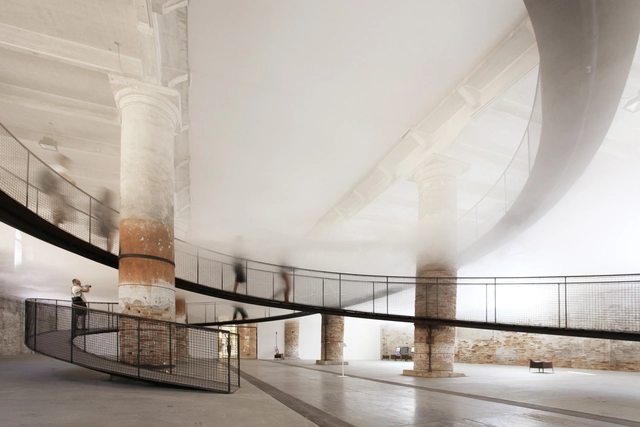
Cloudscapes / Transsolar & Tetsuo Kondo Architects

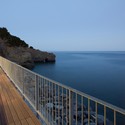
Cloudscapes / Transsolar & Tetsuo Kondo Architects - Bridges , ColumnCloudscapes / Transsolar & Tetsuo Kondo Architects - Bridges , HandrailCloudscapes / Transsolar & Tetsuo Kondo Architects - Bridges , Fence, Handrail, CoastCloudscapes / Transsolar & Tetsuo Kondo Architects - Bridges , Table, Bench, Chair, CoastCloudscapes / Transsolar & Tetsuo Kondo Architects - More Images+ 2

Venice, Italy

Albisola Superiore / 3S studio

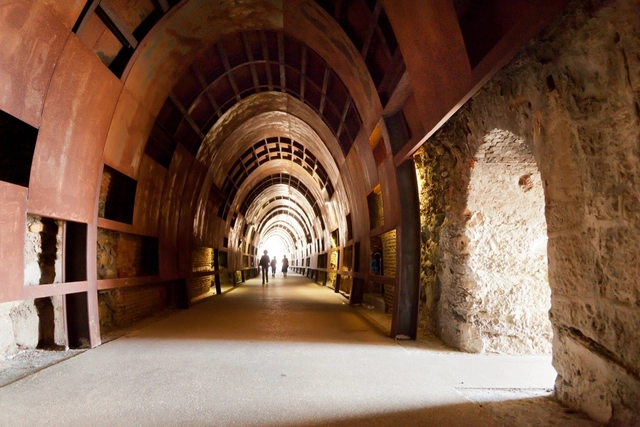
Albisola Superiore / 3S studio - RefurbishmentAlbisola Superiore / 3S studio - RefurbishmentAlbisola Superiore / 3S studio - RefurbishmentAlbisola Superiore / 3S studio - RefurbishmentAlbisola Superiore / 3S studio - More Images+ 10

Albisola Superiore, Italy
  • Architects: 3S studio
    : 3S studio + voarino cairo voarino
  • Year Completion year of this architecture project Year:  2011

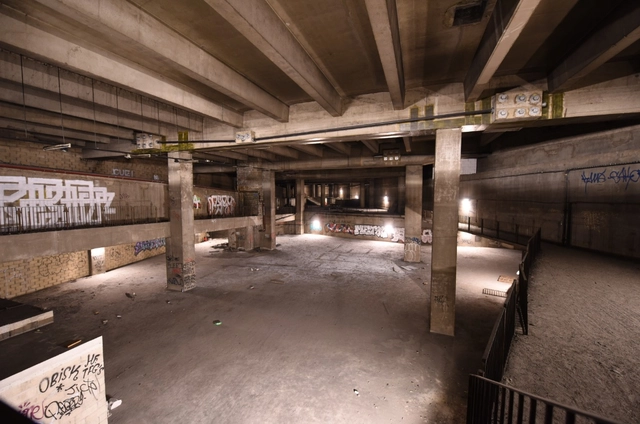
Call for Entries : Architectural, programming, engineering and planning services framework agreement for the central residual volumes in the La Défense business district

Paris La Défense is seeking to vitalise the ‘interstitial volumes’ that lie beneath its central esplanade, interlocked with underground infrastructures. Located at the heart of La Défense, those spaces are very close to public transport and offer high potential due to their distinctive size and morphology. The aim is to use them to develop a new offering of activities accessible to the public – and see a lively and unusual destination emerge as a result. Paris La Défense, as the urban planner, developer and manager of the business district, is launching a competitive dialogue process. The purpose to this

Abandoned Soviet-Era Infrastructure Captured by Danila Tkachenko

Last week, we covered the work of Moscow-based visual artist Danila Tkachenko, whose “Monuments” project appropriated abandoned Russian Orthodox churches with abstract modernist shapes. Tkachenko’s further work, “Restricted Areas” is equally as impressive, focusing on the human impulse towards utopia through technological progress.

The “Restricted Areas” photography set distills humanity’s strive to perfection through recording abandoned Soviet infrastructure. Traveling to now-deserted landscapes which once held great importance as centers of technological progress, Tkachenko captured images of “forgotten scientific triumphs, abandoned buildings of almost inhuman complexity” and a “technocratic future that never came.”

Abandoned Soviet-Era Infrastructure Captured by Danila Tkachenko - Image 1 of 4Abandoned Soviet-Era Infrastructure Captured by Danila Tkachenko - Image 2 of 4Abandoned Soviet-Era Infrastructure Captured by Danila Tkachenko - Image 3 of 4Abandoned Soviet-Era Infrastructure Captured by Danila Tkachenko - Image 4 of 4Abandoned Soviet-Era Infrastructure Captured by Danila Tkachenko - More Images+ 10

MVRDV Designs a Dual Tower Scheme with Interactive Facades for "Times Square" of Taipei

MVRDV Designs a Dual Tower Scheme with Interactive Facades for "Times Square" of Taipei - Image 5 of 4
Distant view. Image Courtesy of MVRDV

MVRDV have released images of their ambitious design for the Taipei Twin Towers, set to revitalize the central station area of the Taiwanese capital. The two towers are characterized by a “pile of blocks” that create a vertical urban neighborhood, complete with interactive media facades.

The site is currently occupied by the city’s main station, containing railway, airport lines, metro networks, and underused parks and plazas. Under the MVRDV scheme, the two towers will be built over the top of the station, offering retail, offices, two cinemas, two hotels, and the unification and redevelopment of surrounding plazas.

MVRDV Designs a Dual Tower Scheme with Interactive Facades for "Times Square" of Taipei - Image 1 of 4MVRDV Designs a Dual Tower Scheme with Interactive Facades for "Times Square" of Taipei - Image 2 of 4MVRDV Designs a Dual Tower Scheme with Interactive Facades for "Times Square" of Taipei - Image 3 of 4MVRDV Designs a Dual Tower Scheme with Interactive Facades for "Times Square" of Taipei - Image 4 of 4MVRDV Designs a Dual Tower Scheme with Interactive Facades for Times Square of Taipei - More Images+ 9

Zaha Hadid Architects and A-Lab Share Designs for Norway's Fornebubanen Metro Line

Zaha Hadid Architects and A-Lab have been announced the winner of a competition to design two new metro stations in Oslo. The stations, Fornebu Senter and Fornbuporten, are to be part of Oslo's new Fornebubanen line, connecting a major existing rail interchange to the Fornebu Senter, a major shopping center in the city.

Zaha Hadid Architects and A-Lab Share Designs for Norway's Fornebubanen Metro Line - Image 6 of 4Zaha Hadid Architects and A-Lab Share Designs for Norway's Fornebubanen Metro Line - Image 9 of 4Zaha Hadid Architects and A-Lab Share Designs for Norway's Fornebubanen Metro Line - Image 10 of 4Zaha Hadid Architects and A-Lab Share Designs for Norway's Fornebubanen Metro Line - Image 12 of 4Zaha Hadid Architects and A-Lab Share Designs for Norway's Fornebubanen Metro Line - More Images+ 8

Sara Göransson on Housing and the Future of Urban Infrastructure

Swedish studio Urban Nouveau created a plan to save Stockholm's Gamla Lidingöbron bridge by transforming it into a linear park and housing. After launching a petition to save the bridge and re-purpose it, ArchDaily followed up with Sara Göransson, founding partner at Urban Nouveau, to ask her about her background and how the studio approaches social integration, housing and the future of urban infrastructure.

Sara Göransson on Housing and the Future of Urban Infrastructure - Image 1 of 4Sara Göransson on Housing and the Future of Urban Infrastructure - Image 2 of 4Sara Göransson on Housing and the Future of Urban Infrastructure - Image 3 of 4Sara Göransson on Housing and the Future of Urban Infrastructure - Image 4 of 4Sara Göransson on Housing and the Future of Urban Infrastructure - More Images+ 2