-
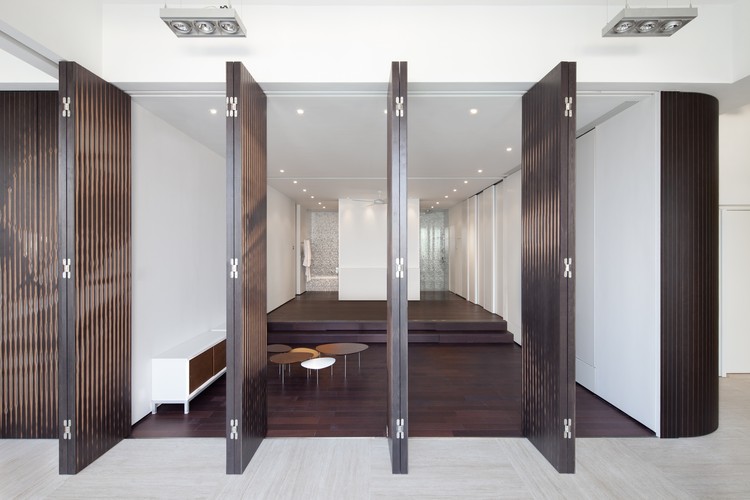
Architects: Very Studio | Che Wang Architects
- Area: 200 m²
- Year: 2018
-
Manufacturers: HAU-CHENG, Home Boutique, Li Tsai Enterprise
-
Professionals: Sustainable Building Engineering for Design Lab



This article was originally published by The Architect's Newspaper as "A wave of affordable and market-rate housing could soon wash ashore in California."
In recent months, legislators in California have begun a concerted effort to use state law to address the state’s ongoing housing crisis. The moves come amid worsening regional inequality that has pushed housing affordability outside the reach of many populations. Facing mounting pressure from a growing cohort of pro-housing YIMBY activists and increasingly grim economic and social impacts—including a sharp increase in the number of rent-burdened households and the number of individuals and families experiencing homelessness—state-level legislators have begun to take action where municipal leaders have thus far stopped short.



This article was originally published by Common Edge as "John King on San Francisco, Oakland, and the Challenge of Affordable Housing."
John King has covered the urban design beat for the San Francisco Chronicle for 17 years now. That’s long enough, in other words, to have written about a handful of economic booms and subsequent busts. But the Bay Area is a unique beast. No other region in the country has been as thoroughly transformed by the digital revolution. And it’s a transformation that continues to this day. Shortly before the New Year, I spoke to King about the fate of San Francisco, the Oakland renaissance, and his 4-month long fellowship in Washington, DC.


This article was originally published by The Architect's Newspaper as "Are micro-apartments a revolutionary trend? Or are developers exploiting an out-of-control market?"
The situation was dire: People were flocking to cities for work, but scarce land and lack of new construction were driving up rent prices. Middle-income residents couldn’t afford the high-end housing stock, nor did they want to enter cramped—sometimes illegally so—apartments. Luckily, a new housing solution appeared: In exchange for small, single-occupancy units, residents could share amenities—like a restaurant-kitchen, dining area, lounge, and cleaning services—that were possible thanks to economies of scale. Sound familiar?
It should: It’s the basic premise behind Carmel Place, a micro-apartment development in Manhattan’s Kips Bay that recently started leasing. The development—whose 55 units range from 260 to 360 square feet—was the result of Mayor Bloomberg’s 2012 adAPT NYC Competition to find housing solutions for the city’s shortage of one- and two-person apartments. Back then, Carmel Place needed special legal exceptions to be built, but last March the city removed the 400-square-foot minimum on individual units. While density controls mean another all-micro-apartment building is unlikely, only building codes will provide a de facto minimum unit size (somewhere in the upper 200 square foot range). What does this deregulation mean for New York City’s always-turbulent housing market? Will New Yorkers get new, sorely needed housing options or a raw deal?

Singapore’s first Housing and Development Board (HDB) housing blocks were erected in November of 1960, in response to a severe lack of adequate housing for the country's 1.6 million citizens. Fast forward to 2017, and over 80% of the Singaporean population live in HDBs, with over 90% of them owning the home they live in. Often painted in vibrant colors, HDBs have a focus on community social spaces, more often than not maintaining the ground floor of the apartment blocks as open public space, exclusively for public meeting areas. These can include hawker centers, benches, tables, grills and pavilions where residents can socialize under cover from the hot Singaporean sun.



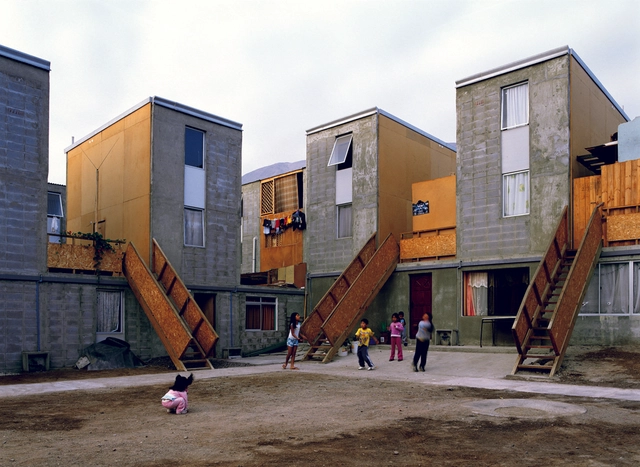
Justin McGuirk's book Radical Cities: Across Latin America in Search of a New Architecture is fast becoming a seminal text in the architecture world. Coming off the back of his Golden-Lion-winning entry to the 2012 Venice Biennale, created with Urban Think Tank and Iwan Baan, McGuirk's work has become a touchstone for the architecture world's recent interest in both low-cost housing solutions and in Latin America. This review of Radical Cities by Joshua K Leon was originally published by Metropolis Magazine as "Finding Radical Alternatives in Slums, Exurbs, and Enclaves."
Justin McGuirk’s Radical Cities: Across Latin America in Search of a New Architecture should be required reading for anyone looking for ways out of the bleak social inequality we’re stuck in. There were 40 million more slum dwellers worldwide in 2012 than there were in 2010, according to the UN. Private markets clearly can’t provide universal housing in any way approaching efficiency, and governments are often hostile to the poor. The only alternative is collective action at the grassroots level, and I’ve never read more vivid reporting on the subject.



.jpg?1427933506&format=webp&width=640&height=580)





































.jpg?1430954815 "© Dennis Lo Designs")










.jpg?1427933506)