
-
Architects: EAA - Emre Arolat Architecture
- Year: 2013
-
Professionals: Bahadır İnşaat, DS Mimarlık



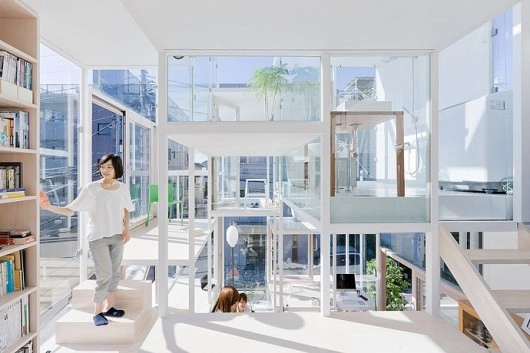
Freakonomics has just posted a fascinating new podcast that takes on the question posed by Alastair Townsend in our AD original article: “Why Japan is Crazy About Housing.” The podcast consults with Townsend and economic experts to present a thought-provoking answer to the puzzling question of why Japan builds architecture that is avant-garde and yet, ultimately, disposable. The answer may just surprise you. Listen to the whole podcast here:

d3 has just announced the winners of its annual Housing Tomorrow competition, a competition that urges its participants to "deploy innovative, socially- and environmentally-engaged approaches to residential urbanism, architecture, interiors, and designed objects" in order to determine "new architectonic strategies for living in the future." As always, the results are fantastic, thought-provoking visions of a more sustainable world. See the winners, after the break.

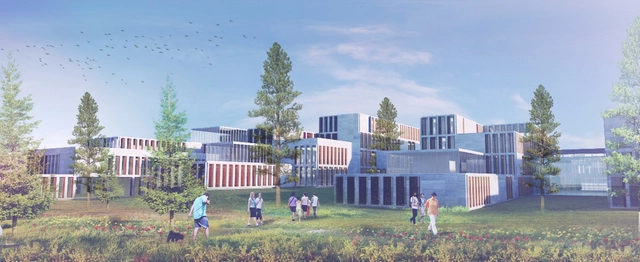
Marc Koehler Architects, in collaboration with ONZ Architects, have recently won an invited competition for their design of the Kastamonu Campus in Turkey. Their winning proposal, described as "an asymmetrical star", embodies excellence and is an endeavor to create the largest high school campus ever designed. Featuring laboratories, libraries, performance spaces, sports centers, a health centre, places of worship, dormitories and 29,000 square meters of educational spaces, the campus is expected to welcome 10,000 students.
![School Complex / IND [Inter.National.Design] - Municipal Building](https://snoopy.archdaily.com/images/archdaily/media/images/52d0/63c1/e8e4/4ec1/e700/0001/slideshow/01_View_of_auditorium_building_from_boulevard_strip.jpg?1389388713&format=webp&width=640&height=580)
Inter.National.Design (IND), based in Rotterdam and Istanbul, have won first prize in a restricted competition to design a large school complex in Viranşehir, Turkey. Five rectangular courtyards, together with five dynamic public strips, combine to envelop the collection of buildings with a variety of both neutral and dynamic voidal spaces. A degree of permeability with the city is designed into the scheme with the "two types of open spaces following a gradient using the buildings as filters from the hermetic façade of the courtyards to the permeable skins of the outer façade". Hills, pyramid stairs and areas of wild nature tie the atmosphere of the scheme into a unit within a "homogenous industrial roof profile and a modular structure".

.jpg?1464262594&format=webp&width=640&height=580)






















.jpg?1382229478 "© Fernando Guerra | FG+SG")
.jpg?1382229444 "© Fernando Guerra | FG+SG")
.jpg?1382229500 "© Fernando Guerra | FG+SG")
.jpg?1382229500 "© Fernando Guerra | FG+SG")
.jpg?1464262594)