
-
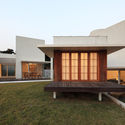
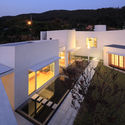
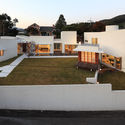
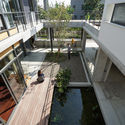
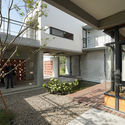
Architects: Harmony-design Studio
- Area: 270 m²
- Year: 2016
-
Professionals: Native Taiwan Architecture & Design Ltd


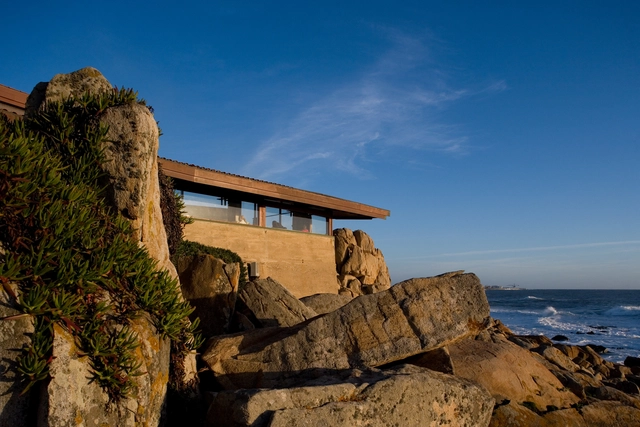
The following photo set by Fernando Guerra focuses on Boa Nova Tea House, a project by Portuguese architect Álvaro Siza Vieira. Completed in 1963, it was one of the first works done by the 1992 Pritzker Prize winner. Built on the rocks that hang over the sea in Leça da Palmeira, the tea house is in close proximity to another iconic project by the same architect, the Leça Swimming Pools, both classified as National Monuments in Portugal.
.jpg?1472236051&format=webp&width=640&height=580)
Although societies have transformed through the ages, wealth never truly seems to go out of style. That said, the manner in which it is expressed continually adapts to each successive cultural epoch. As a consequence of evolving social mores and emerging technologies, the ideal of “luxury” and “splendour” sees priorities shift from opulence to subtlety, from tradition to innovation, and from visual ornamentation to physical comfort.
AD Classics are ArchDaily's continually updated collection of longer-form building studies of the world's most significant architectural projects. In these ten examples of "high-end" residences, which represent centuries of history across three separate continents, the ever-changing nature of status, power and fine living is revealed.
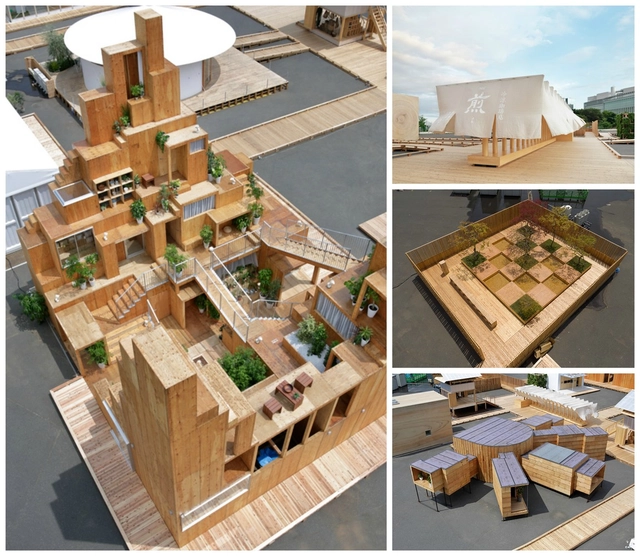
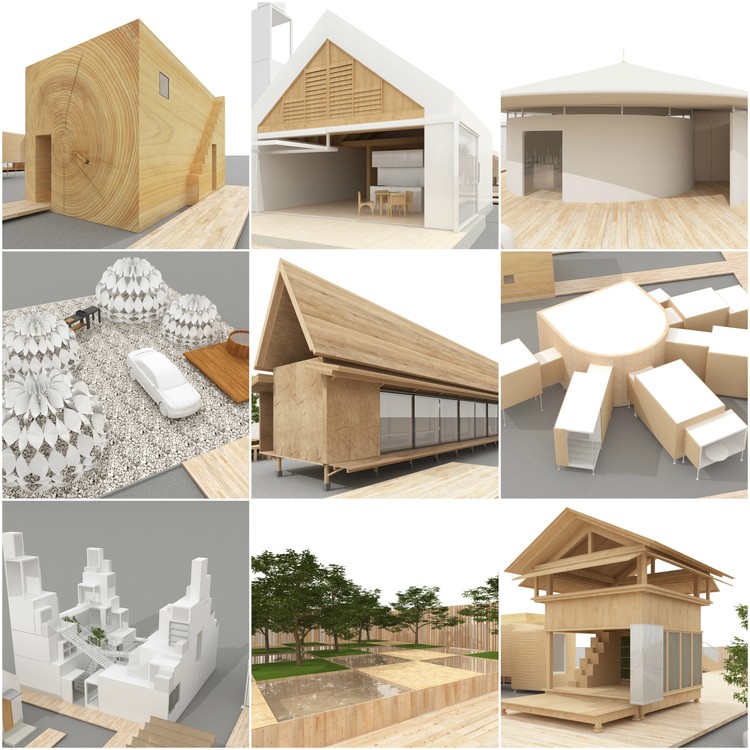
New images from HOUSE VISION Tokyo 2016 have been released as the event opened to the public this past weekend. This year’s theme, “Co-Dividual: Split and Connect / Separate and Come Together,” explores how architecture can create new connections between individuals, and the ways Japanese housing can adapt to cultural shifts through the implementation of technology.
This year’s exhibition features house designs by top Japanese architects including Sou Fujimoto, Kengo Kuma, Shigeru Ban and Atelier Bow-Wow, each paired with a leading company to envision and implement new strategies in housing design.
Continue after the break to see images from the event and the pavilions.
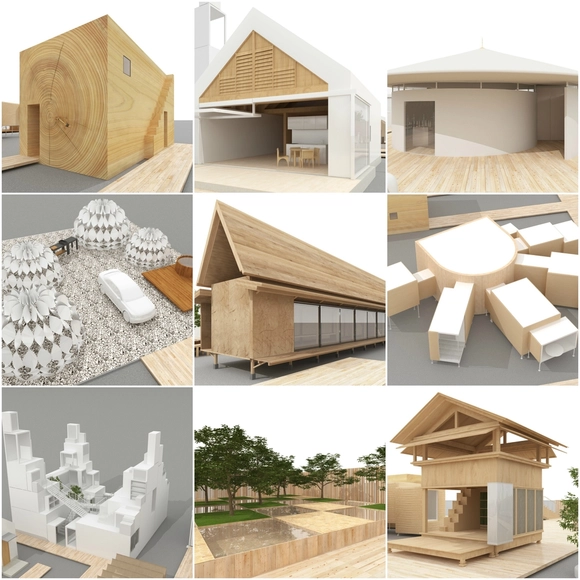
Following the success of the inaugural HOUSE VISION Tokyo in 2013, the exhibition is set to return again this summer under the theme of “Co-Dividual: Split and Connect / Separate and Come Together.” Once again curated by Kenya Hara, designer and creative director for minimalist housewares retailer Muji, the month-long event will tackle the objective of “thinking about how to create new connections between individuals,” as well as build upon the topics explored by its previous edition, namely the ways in which Japanese housing can adapt to recent demographic, technological and cultural shifts, and the vision of the house as the intersection between industries.
This year’s exhibition will feature house designs by top Japanese architects such as Sou Fujimoto, Kengo Kuma, Shigeru Ban and Atelier Bow-Wow, each paired with a leading company to envision and implement new strategies in housing design. The houses will be constructed at full-scale, allowing event-goers to fully experience and reflect upon each design.
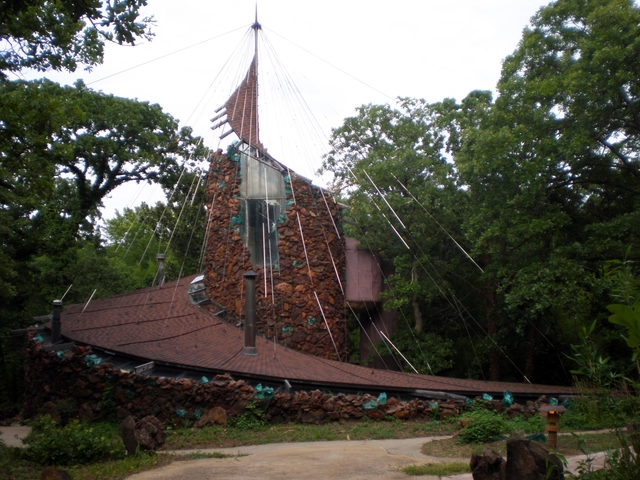
The Bavinger House, by famous US architect Bruce Goff, has been demolished, leaving no trace of its prior existence but an empty clearing amid Blackjack trees, reports Hyperallergic.
The Bavinger House is considered by many to be the crowning achievement of Bruce Goff, an esteemed architect who was once referred to by his mentor Frank Lloyd Wright as one of the few creative American architects. Its spiraling form and integration with the landscape was one of the first instances of modernist bio-mimicry.
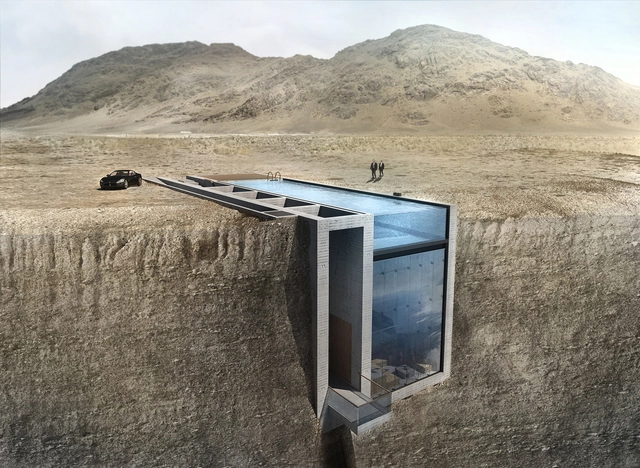
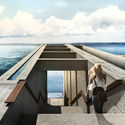
When ArchDaily published “Live on the Edge with OPA’s Casa Brutale” in July of last year, we expected it to be popular on our site, but few anticipated exactly how much attention the project would receive—enough to secure a position in the top 10 most read articles on the site in 2015. But what happened next was perhaps more astounding. By the end of the week, the project had been picked up by the gamut of non-architecture news outlets ranging from Slate to Yahoo to CNET to CNBC. For a few short days, it became difficult to traverse the wild expanses of the internet without a sighting of the project’s lead image, typically accompanied by a hyperbolic headline along the lines of “This Beautiful, Terrifying House is Literally Inside a Cliff.”
But despite the enormous traction, with seemingly impossible features like a clifftop, glass-bottomed swimming pool, the project still seemed to be destined for "paper architecture" status. Yet fast forward to today and the house has (incredibly) found a willing client, and is about to break ground on construction. How did this happen, and what takes architecture from viral sensation to real-life construction project?
This article by Paperhouses founder Joana Pacheco was originally published by Metropolis Magazine as "Aravena's Small Step, Open Source's Big Leap."
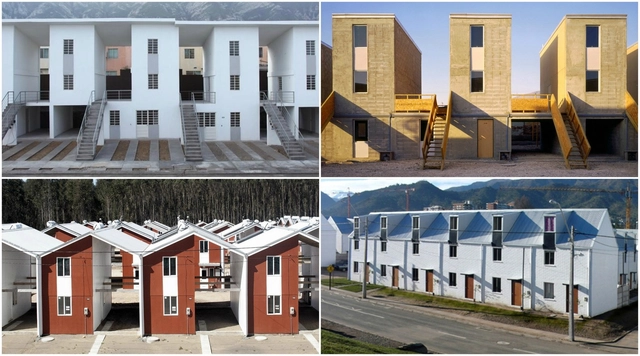
When Alejandro Aravena was awarded the Pritzker Prize earlier this month, he made a remarkable and significant announcement: he had published the plans of four of his social housing projects on his website, for anyone and everyone to study and use.
Through the work of his firm Elemental, Aravena is known for his interest in incremental, participatory housing design: a common-sense way of working within financial restraints and a cornerstone of Elemental’s studio work. The motto—focus first on what is most difficult to achieve, what cannot be done individually, and what will guarantee the common good in the future—resulted in a “half a house.” First introduced over a decade ago, the model consists of an expandable 40 square-meter (431 square-feet) container with basic infrastructure (partitions, structural and firewalls, bathroom, kitchen, stairs, a roof) built-in and added to over time. It is not only an achievement from a conceptual and project management standpoint, but also an aesthetically open and diverse project. From this one idea stemmed 100 variations.

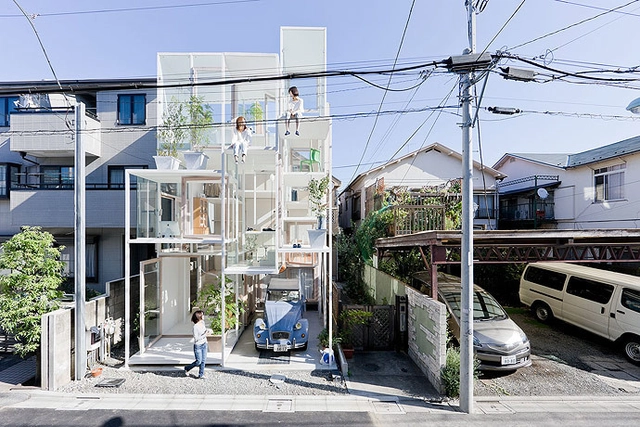
Most residential projects must include parking spaces, but only few cases are notably innovative. Your vehicle's resting place can be more than just a required space; it may even become the backbone of the design itself.
The integration of parking, interior spaces and facades can deliver extremely intriguing and unique results.
Here we present 8 cases in which the humble parking space has assumed a main role in the design, while integrating new functions such as exhibition spaces, or structural features and versatile technology.
Tucked away on a 1.3 acre lot, this house in Los Altos, California was renovated by Bart Prince -- transformed from a rectangular cabin into an eclectic combination of forms, inspired by the owners, Dale and Margo Seymour’s, love of math, art and geometry. The newly built structure is composed of steel and glulam, creating angular forms with generous glazing to create open, day-lit spaces. To navigate the California law that glass cannot be installed in non-vertical positions, an acrylic substitute was used for many of the home’s irregular windows.






.jpg?1472236051)