This article was originally published on April 22, 2016. To read the stories behind other celebrated architecture projects, visit our AD Classics section.
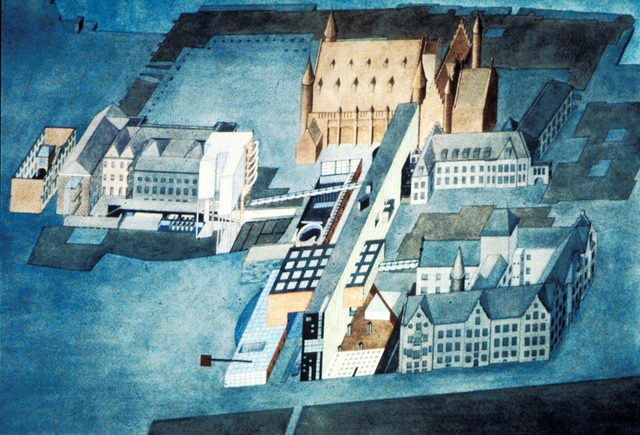
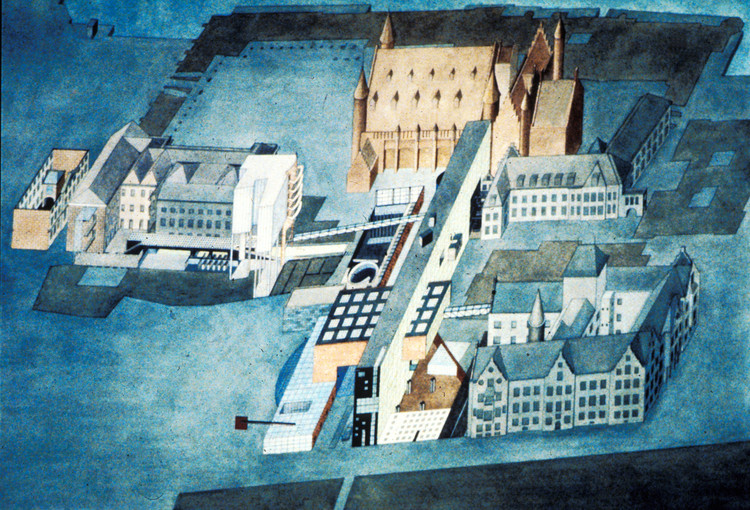
Designed shortly before Zaha Hadid left the Office of Metropolitan Architecture (OMA)—led by Rem Koolhaas—to found her practice, Zaha Hadid Architects, the proposed extension for the Dutch Parliament firmly rejects the notion that imitation is the sincerest form of flattery. Rather than mimic the style of the existing historic buildings, OMA elected to pay tribute to the complex’s accretive construction by inserting a collection of visibly postmodern, geometric elements. These new buildings, unapologetic products of the late 1970s, would have served as unmistakable indicators of the passage of time, creating a graphic reminder of the Parliament’s long history.
Het Nieuwe Instituut (HNI) have announced WORK, BODY, LEISURE as the theme of the Dutch Pavilion at the 2018 Venice Architecture Biennale. Envisioned as "a collaborative research endeavor by a national and international network," Marina Otero Verzier—head of the Research Department at HNI and a member of the After Belonging Agency, curatorial team behind the 2016 Oslo Architecture Triennale—will act as the creative mediator of a series of collaborative contributions, pooling the expertise of "architects, designers, knowledge institutions, and the private sector."
https://www.archdaily.com/880058/dutch-pavilion-at-the-2018-venice-biennale-to-explore-alternative-modes-of-living-work-and-leisure-hniAD Editorial Team
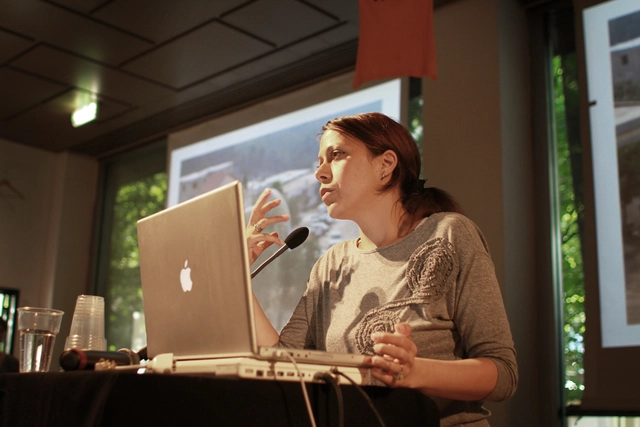
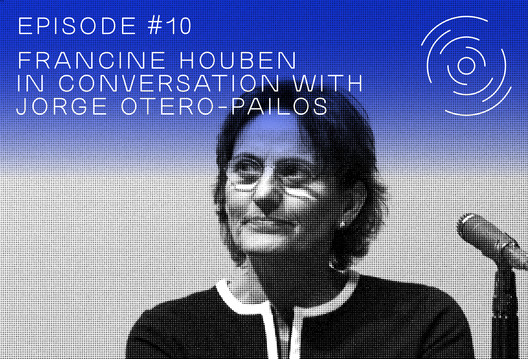
In the tenth episode of GSAPP Conversations, Jorge Otero-Pailos (Director of the Historic Preservation Program at Columbia GSAPP) speaks with Francine Houben, founder and creative director of the Dutch practice Mecanoo. Recorded before the school's annual Paul S. Byard Memorial Lecture, their conversation centers on her practice's work to renovate and redevelop the Martin Luther King Jr. Memorial Library in Washington D.C., Mies van der Rohe's last building and only library project.
https://www.archdaily.com/874332/francine-houben-mecanoo-on-washington-dc-central-library-a-balancing-act-between-mies-van-der-rohe-martin-luther-king-jrAD Editorial Team
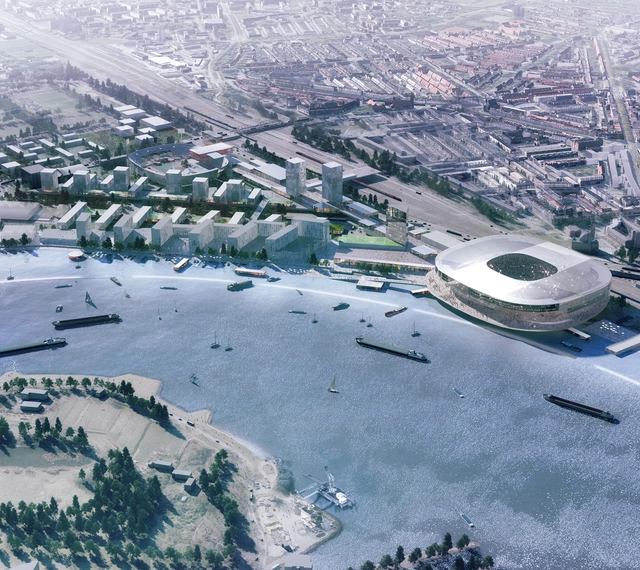
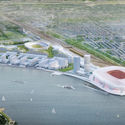
A large-scale masterplan for Feyenoord (or Feijenoord), a suburb-city of the Dutch city of Rotterdam, has been approved by Rotterdam City Council. The successful concept design from OMA, led by Partner David Gianotten, incorporates a historically-important football stadium—for the nationally significant Feyenoord football club—which "no longer fulfills modern demands." Aligned with the football club's "expanding ambitions" both in the Dutch and European football leagues, this proposal is the latest in a string of plans to expand, but the only one to have been accepted.
In this article, Dirk van den Heuvel links (Dutch) Structuralism to current day developments – more specifically in the digital realm. The following essay was first published by Volumein their 50th issue, Beyond Beyond, the editorial of which is available to readhere.
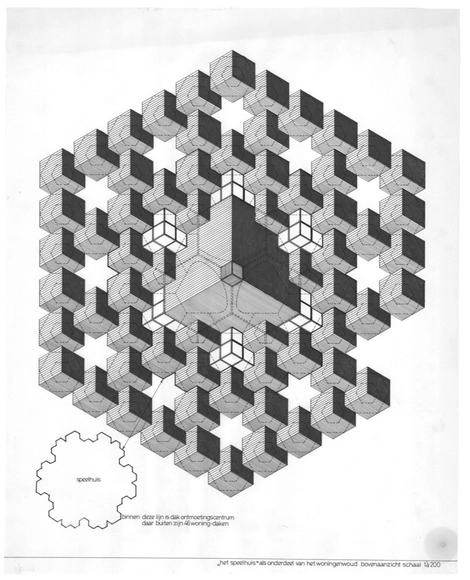
Throughout his life the Dutch architect Jaap Bakema (1914-1981) sought to convey to his students and colleagues the notion of what he called 'total space', 'total life', and 'total urbanization'. In his view, architectural design had to help in making people aware of the larger environment to which they belong and in which they operate. Architecture could not be uncoupled from urbanism, it was related to the deeper structure of society. His conceptualization of architecture was programme and process based and it put social and visual relationships at the centre, which betrays his adherence to Structuralism as voiced in the Dutch journal Forum of which he was an editor together with Van Eyck and Hertzberger, and to the Team 10 discourse, of which he himself was one of the leading voices. At the same time, Bakema would expand on the legacy of the Dutch De Stijl movement and Dutch Functionalism. In particular his concept of space and spatial continuity is derived from De Stijl. His diagrammatic approach to architectural design and programmatic organization, as well as the elementary architectural language of his projects were elaborations of the Dutch Functionalist tradition.
https://www.archdaily.com/805592/total-space-considering-dutch-structuralism-todayDirk van den Heuvel
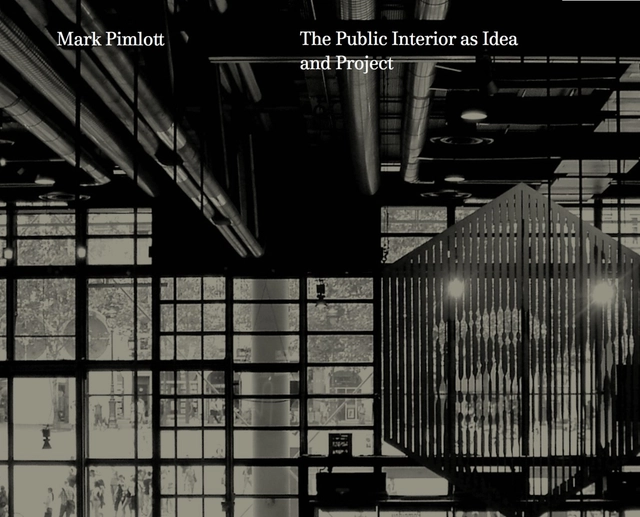
In this article, which originally appeared on BD, Nicholas de Klerk (a London-based Associate Architect at Aukett Swanke) reviews The Public Interior as Idea and Project – a new publication by the Netherlands-based Canadian artist, architectural historian and educator Mark Pimlott.
Mark Pimlott's new book, The Public Interior as Idea and Project (2016), expands on prior publications, notably Without and Within (2007). In this earlier book, Pimlott explored the concept of a ‘continuous interior’—examining repetitive spaces which share characteristics—for example, shopping malls and airports, and which, collectively, set about the urbanisation of the American territory.
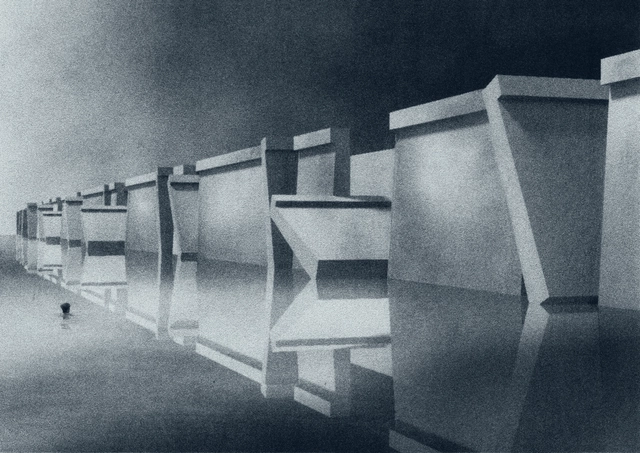
Amsterdam-based Rietveld-Architecture-Art-Affordances (RAAAF) and Atelier de Lyon have revealed designs to reimagine one of The Netherland's monumental "tribute[s] to the majesty, and seemingly indestructible power, of the Dutch Delta Works." The works themselves—a network of dams, sluices, locks, dykes, levees and storm surge barriers in South Holland—have collectively been described as one of the Seven Wonders of the Modern World. Deltawerk 1:1 is an intervention examining the practice of the preservation of cultural heritage by inserting a new structure within Waterloopbos, the former Dutch Hydrodynamics Laboratory.
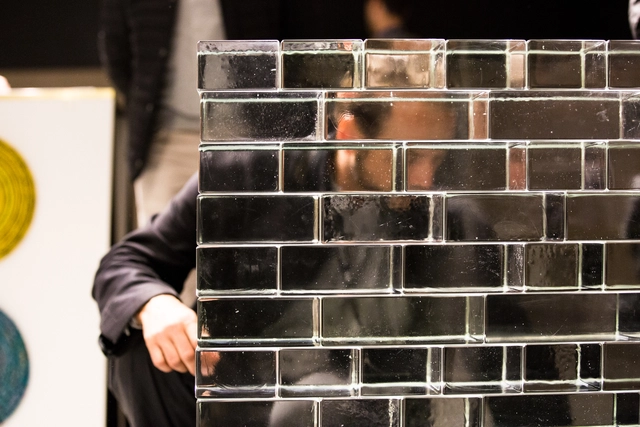
The strength of Dutch Design Week (DDW), held annually at the end of October, lies primarily in product design. Although the event has expanded over the past five years to incorporate more fashion, graphics and architecture, small-scale industrial design has retained its preeminence. Many of the designers on show in this year's edition, however, have embraced the challenges of other design disciplines and allowed them to feed into their work. But where does product design meet architecture? Building materials and, most notably at the 2016 event, some really nice bricks. Rotterdam-based architect Alison Killing guides us through her top installations.
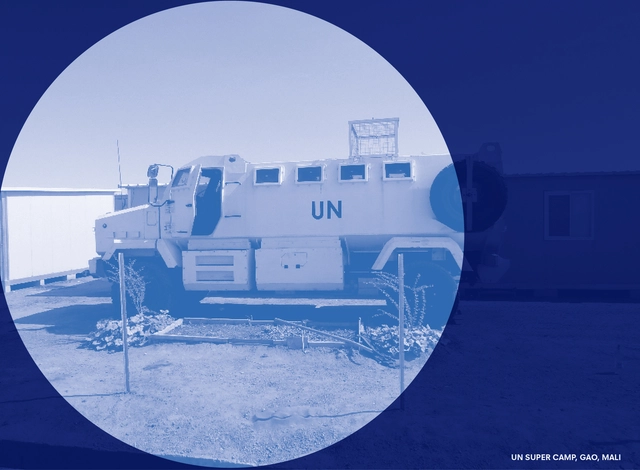
Volume #48: The Research Turn contains the exhibition catalogue for BLUE: The Architecture of UN Peacekeeping, the Dutch entry at the 15th International Architecture Exhibition, la Biennale di Venezia, by Malkit Shoshan. BLUE focuses on the most prominent footprint of the United Nations’ peacekeeping operations: the compound.
After the collapse of the Soviet Union and increasingly since 9/11 and the ‘War on Terror’, warfare has moved into the city. While the wars of the 20th century were largely between nations, fighting over territorial sovereignty and along disputed borders, the wars of the 21st century have been internal and borderless. Today’s wars are being fought between large multinational coalitions of security regimes and insurgent networks. It’s not just war that has moved to the city though: the entire security apparatus has moved with them too, including its peacekeepers and their entire infrastructure. Today, United Nations (UN) peacekeeping operations are taking place in hundreds of cities around the world and at a large scale.
In a recent interview with the BBC, Rem Koolhaas (OMA) has spoken out against the campaign seeking to remove the United Kingdom from the European Union, upon which the British people will vote in a referendum next week. Reflecting on his time spent at London's Architectural Association (AA) in the 1960s and '70s, Koolhaas fears that advocates for withdrawal may be looking at the past through rose-colored glasses.
If you look at the arguments to leave you can see this is a movement of people who want to fundamentally change England back into the way it supposedly was before.
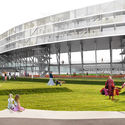
A little over a month since Rotterdam-based practice MVRDV announced a new temporary urban structure—a 180-step staircase, 29 meters tall and 57 meters long—for the heart of city of Rotterdam, the project has been officially opened. Those who ascend the staircase will find a temporary observation deck looking over Rotterdam Centraal, a rooftop bar, and the temporary reopening of the Kriterion cinema that was last active in the 1960s.
The Dutch Structuralist architect Aldo van Eyck left his mark in Amsterdam – not only in the form of buildings but also, perhaps surprisingly, in the form of urban playgrounds. Over the course of his career he created a network of more than 700 playgrounds throughout the capital. Today, only a handful of these remain intact. A special publication, compiled by Denisa Kollarova and Anna van Lingen, revisits the seventeen remaining Van Eyck playgrounds in Amsterdam’s city centre. The following extract from the book seeks to introduce the project, and describe its urgency.
We live in an era in which there are not many carefully constructed playgrounds. We don’t like what we see. Have we—city decision makers, architects, designers, parents, friends —forgotten to be critical?
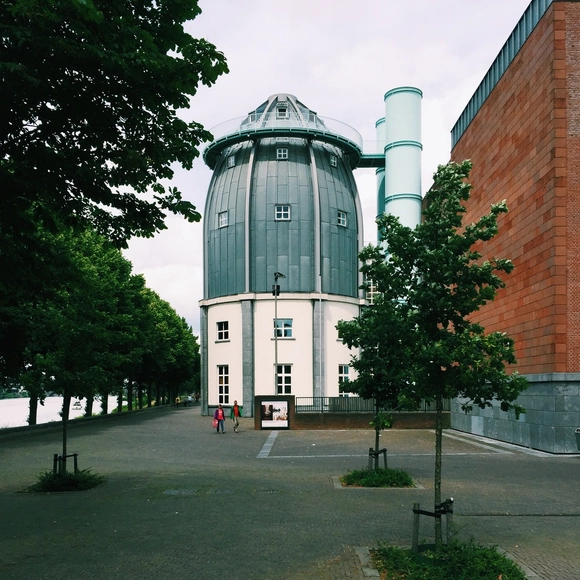
Situated in a former industrial district in the southern Dutch city of Maastricht, it’s perhaps fitting that the Bonnefantenmuseum has often been called a “viewing factory.” The museum, with its ‘E’-shaped plan and distinctive domed tower, is one of the most prominent landmarks along the River Meuse that flows around the city center. Europe’s rich cultural history was a key impetus for architect Aldo Rossi’s design, which employed a number of historical architectural gestures to place the Bonnefantenmuseum within a collapsed European canon.
Malkit Shoshan, shortlisted earlier this year for the Harvard GSD Wheelwright Prize, has been selected by Het Nieuwe Instituut to curate the Dutch Pavilion at the 2016 Venice Biennale. Founder of the Amsterdam-based architectural think tank FAST (Foundation for Achieving Seamless Territory), Shoshan has been fellow of the Institute for the past two years having previously authored the award-winning book Atlas of Conflict: Israel-Palestine (2010). Her current work, entitled Drones and Honeycombs, is a study of the architecture and landscape of war and peace and examines "public space as war zone." It is this research, under the title 'Blue', which will be presented as a new series of narratives for architecture in conflict areas.
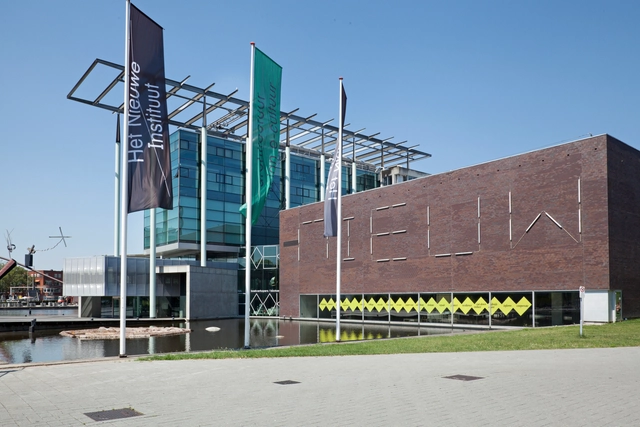
The New Institute (formerly the NAi). Image Courtesy of Het Nieuwe Instituut
Rotterdam-based practice MVRDV have begun a transfer of their early work, spanning fifteen years from 1993 to 2008, to Het Nieuwe Instituut — the central architecture archive of The Netherlands. This collection, which will eventually be made available to the public, will be in the institute's first primarily digital donation (approximately eight terabytes of data) and consisting of material from 400 of the practice's 680 total projects, including the Villa VPRO, the Silodam in Amsterdam, and the Markthal Rotterdam, as well as unrealised projects such as Meta City Datatown, Pig City, and 3D City Cube.
Videos
'Concrete Love: The Architecture of the Böhms' will open the festival on the 7th October 2015. Image Courtesy of AFFR
It's only logical that Rotterdam, one of Europe's leading cities for architecture and architectural practice, has a biennial film festival. Since its inception in 2000, the city's homage to architectural cinema now claims to be the biggest architectural film festival in the world. Featuring over one hundred international documentaries, feature films and shorts—as well as debates, lectures and seminars—this year's festival plans to "provide a podium for discussing the city and future of spatial development." From cinematic journeys into the world of the illusive Böhm family to Zaha Hadid, Chinese ghost cities to London's Barbican estate, this year's programme circles around the theme of the Global Home.
With the eighth incarnation of the Architecture Film Festival Rotterdam (AFFR) opening next week (running from the 7th - 11th October 2015), we've selected our five top picks from this year's schedule.
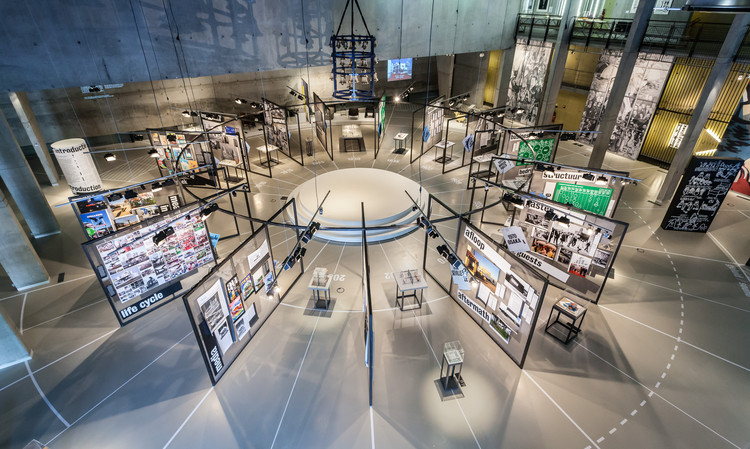
Now at the halfway point of the six month long World Expo in Milan, in which 145 countries are participating in a concentration of national spectacle surrounding the theme of "feeding the planet," Rotterdam's Nieuwe Instituut (HNI)—the centre for architecture in the Netherlands—is exhibiting an altogether more reflective display of national civic pride.
Rotterdam, which was blitzed and decimated during the Second World War, is a place well suited to host an exhibition whose underlying theme centres on the fragile, often precarious notion of national self-image. Following the war Rotterdam was forced to rebuild itself, carving out a new place on the world stage and reestablishing its importance as an international port. Now, seventy years later, Rotterdam is a very different place. In demonstrating just how delicate the construction of a tangible national identity can be this latest exhibition at the HNI offers up a sincere speculative base for self-reflection.
Renzo Piano Bulding Workshop / OMA / UNStudio / Siza / Mecanoo. Image
The Dutch city of Rotterdam, often referred to as a hotbed of architectural activity, has been named as the best city in Europe by The Academy of Urbanism at the 2015 Urbanism Awards. Pitted against two other finalists - Aarhus in Denmark and Turin in Italy - the city has been praised for its "predominantly young, open, tolerant community that is embracing innovative architecture and urban design and new business models."
Despite being a very closely fought battle, the Academy said that Rotterdam was a vote winner for its "unique approach to governance. Appointed for six years by central government, the role of mayor sits outside of political structures and with no portfolio, allowing greater engagement with citizens and businesses." Steven Bee, Chairman of the Academy, said that "a long-term perspective, a high level of autonomy, strong leadership by the mayor and municipality, and strong partnerships between public and private sector, are all helping Rotterdam grow positively."











.jpg?1463424218&format=webp&width=640&height=580)