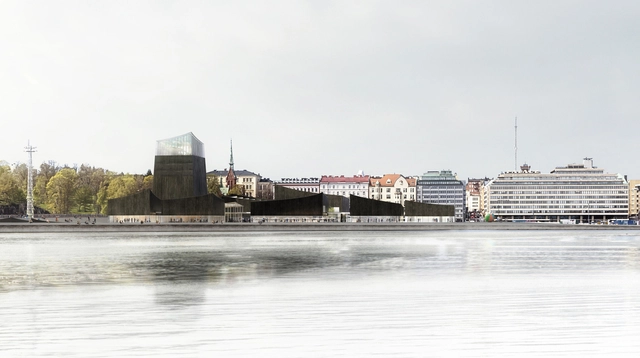
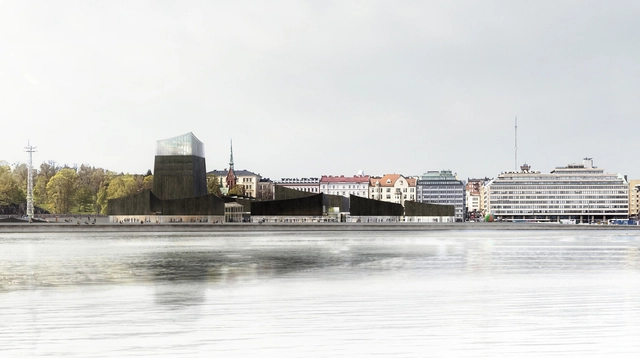
The Solomon R. Guggenheim Foundation is abandoning plans for a museum in the Finnish capital after a proposal for funding was rejected by the Helsinki City Council, 53-32.
“We are disappointed that the Helsinki City Council has decided not to allocate funds for the proposed Guggenheim Helsinki museum, in effect bringing this project to a close,” Richard Armstrong, the director of the Solomon R. Guggenheim Foundation, told the Helsinki Times.
The project emphasises a consumerist and touristic view of art at the expense of the cultural and humane task of art. instead of strengthening local artistic traditions and practices, the project strengthens the already doubtful globalisation and commercialisation of art. The public funds could clearly be used in a more innovative and efficient manner to support Finnish artistic culture.
https://www.archdaily.com/800188/finnish-architect-juhani-pallasmaa-refuses-to-support-guggenheim-helsinki-projectAD Editorial Team
Two months after the Finnish government vetoed funding for the Guggenheim Helsinki project, following an international competition won by Paris-based practice Moreau Kusunoki, it has been reported that supporters of the scheme have presented an updated proposal for the construction of the museum. According to The New York Times, "of its expected $144 million building costs, the City of Helsinki’s investment would cover a maximum of $89 million."
https://www.archdaily.com/799074/following-funding-defeat-supporters-of-the-guggenheim-helsinki-submit-a-revised-planAD Editorial Team
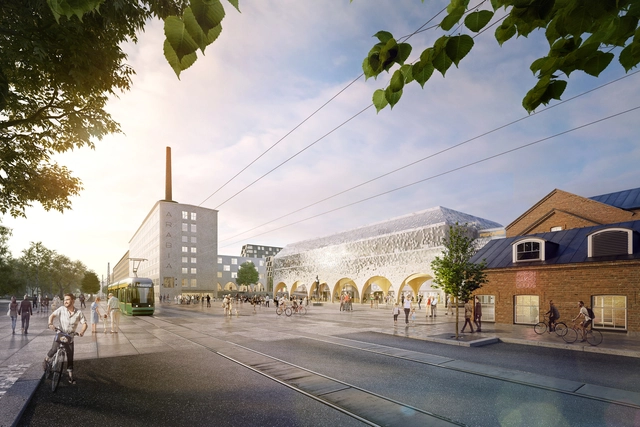
The future development of the Arabia Historic District in Helsinki has culminated in the second round of a two-stage competition.
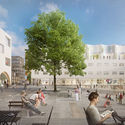
Arabiazza(s) — one of the four proposals selected for the second stage — was developed by team leader Anssi Lassila and comprised of OOPEAA working in collaboration with Lunden Architecture and Gehl Architects acting as a consultant in urban public space. Through a sequential flow of spaces in the form of public squares, Arabiazza(s) fundamentally aims to encourage public interaction. The intent to engage a broad range of people — from students to tourists to workers — inspired the creation of multiple sheltered inner courtyards.
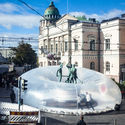
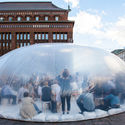
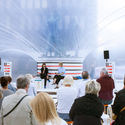
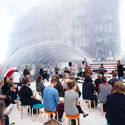
German collective Plastique Fantastique have created “superKOLMEMEN,” an inflatable structure encircling a historic sculpture in Three Smiths Square (Kolmen sepän aukio) in downtown Helsinki for Helsinki Design Week. Throughout the event, the installation was used as a space for lectures, performances and workshops, as well as a casual gathering place.
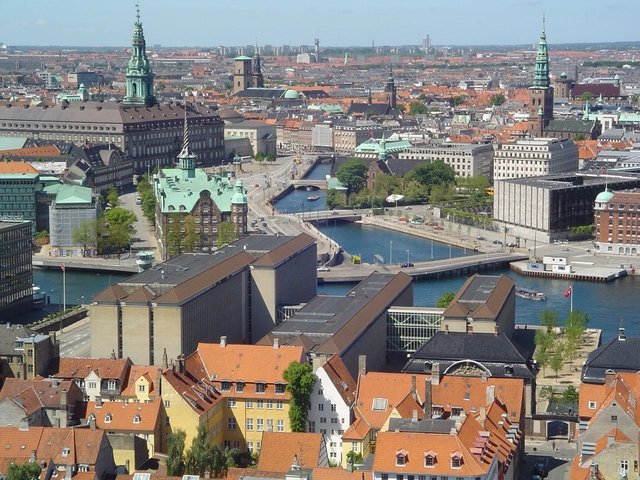
Metropolis Magazine has released their 2016 rankings of the world's most "livable" cities. Acknowledging that what makes a city "livable" can often be subjective, the team at Metropolis emphasizes that in creating the list they "focused on the concerns at Metropolis’ core—housing, transportation, sustainability, and culture." The result of this research was last year's top prize-winner Toronto dropping to the number 9 spot and Copenhagen, which last year took the number 4 spot, jumping to the top. Rounding out the top three are Berlin and Helsinki.
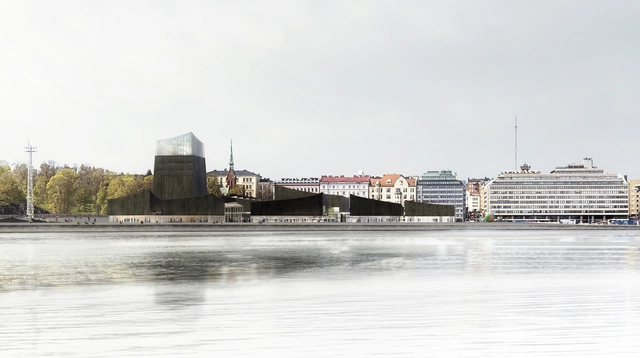
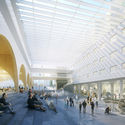
For a few months spanning from 2014 to last year, the Guggenheim Helsinki museum competition was the hottest topic in architectural media. Even as Moreau Kusunoki's more contextually-driven design was selected as the competition winner, debate raged on over whether the search by yet another city for an iconic building to call their own was ultimately good or bad for architecture as a whole. But now, funding for the project has been rejected by the Finnish government, putting the museum in danger of not being built at all.
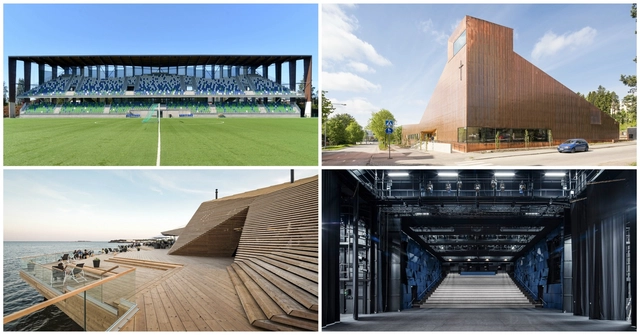
The Finnish Association of Architects (SAFA) have announced a shortlist of 4 projects in contention for the Finlandia Prize for Architecture 2016. Now in its third year, the prize continues with the goal to “increase public awareness of high quality Finnish architecture and [to highlight] its benefits for our well-being.”
Following the tradition of the award, while the shortlist was selected by a panel of architects, the final winning project will be chosen by a non-architect. This year, former Prime Minister of Finland Paavo Lipponen will have the honor of picking the winner.
Find out more about the 4 projects after the break.
Alvar Aalto was born in Alajärvi in central Finland and raised in Jyväskylä. Following the completion of his architectural studies at the Helsinki University of Technology he founded his own practice in 1923, based in Jyväskylä, and naming it Alvar Aalto, Architect and Monumental Artist. Although many of his early projects are characteristic examples of 'Nordic Classicism' the output of his practice would, following his marriage to fellow Architect Aino Marsio-Aalto (née Marsio), take on a Modernist aesthetic. From civic buildings to culture houses, university centers to churches, and one-off villas to student dormitories, the ten projects compiled here—spanning 1935 to 1978—celebrate the breadth of Aalto's œuvre.
In this article, which originally appeared in theCalvert Journal, Ksenia Litvinenko narrates the story of the K-2 Dacha – a governmental residence in St. Petersburg which sought to shrug off Russian Classicism and Soviet Modernism in favor of the principles of Finnish Modernism. Illustrated by photographs by Egor Rogalev and researched alongside Vladimir Frolov, this article examines a Modernist gem that you probably won't have heard of, or seen, before.
If you ever find yourself in St. Petersburg, take a taxi along the Pesochnaya embankment, far away from the polished attractions of the city centre. Sit back and watch the landscape changing on the other bank of the Malaya Nevka. Among the trees you will see the former dachas of Russian nobles, private residences of local officials and the buildings of the new elite, overlooking the river. This is the best and perhaps the only perspective from which to see the K-2 dacha.
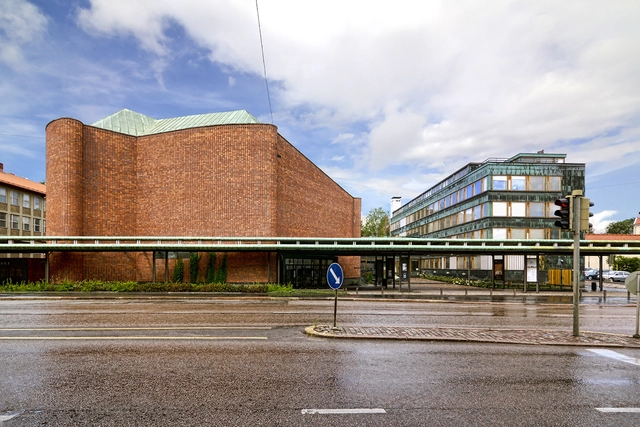
Originally built as the headquarters for the Finnish Communist Party, the House of Culture (Kultuuritalo in Finnish) has since established itself as one of Helsinki’s most popular concert venues.[1] Comprising a rectilinear copper office block, a curved brick auditorium, and a long canopy that binds them together, the House of Culture represents the pinnacle of Alvar Aalto’s work with red brick architecture in the 1950s.
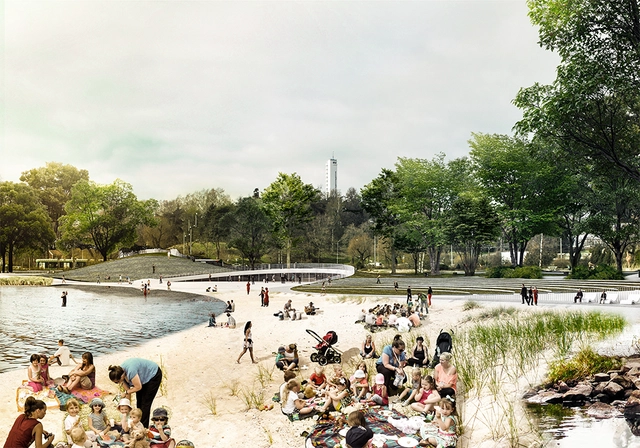
COBE and Lundén Architecture, the Danish-Finnish collaboration that has previously worked together on Tampere's Transport Hub, has revealed a plan to revitalize the Töölönlahti bay area in central Helsinki. Completed for the Finnish creative marketing agency N2, the proposal is a vision of what the area could become after a century of broken promises to clean up the polluted and underutilized area of the city. On their website, N2 estimates that the project would require an investment of €120 million, and if taken up by the government could be completed in time for the 100th anniversary of Finland's independence in 2017.


.jpg?1478677977&format=webp&width=640&height=580)



.jpg?1471484900 "© LéaPfister")
.jpg?1471484603 "Courtesy of aalto university wood program")
.jpg?1471485478 "© LéaPfister")