1. ArchDaily
  2. Government

Government: The Latest Architecture and News

AD Classics: Palace of Westminster / Charles Barry & Augustus Pugin

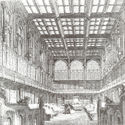
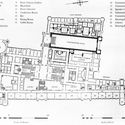
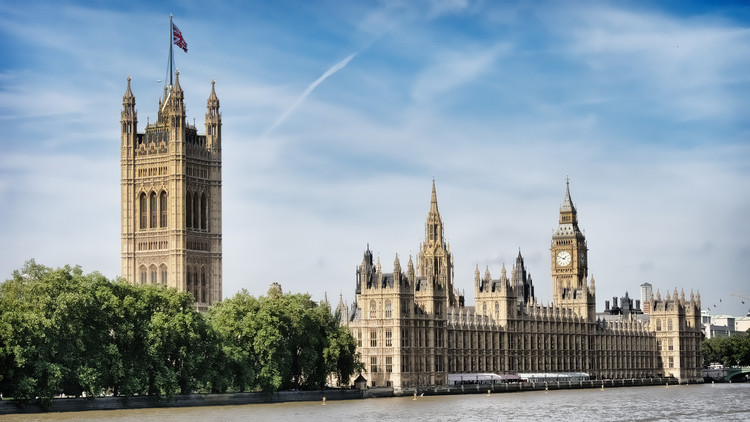
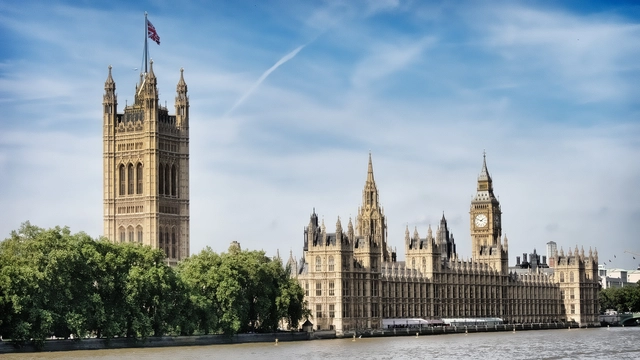
At 6:20pm on the evening of October 16, 1834, a fire began in the old Palace of Westminster in London – the foremost seat of parliamentary governance for both the United Kingdom and the British Empire across the seas. The inferno, which burned until the early hours of the morning, destroyed so much of the medieval complex that neither restoration nor preservation were considered viable options – a new palace would have to rise from the ashes to surround the largely undamaged Westminster Hall.[1] The fire gave the United Kingdom a chance not only to replace what was considered as an outdated, patchwork of government buildings, but to erect a Gothic Revival landmark to spiritually embody the pre-eminence of the United Kingdom across the world, and the roots of modern democracy.

AD Classics: Palace of Westminster / Charles Barry & Augustus Pugin - Historic Preservation, FacadeAD Classics: Palace of Westminster / Charles Barry & Augustus Pugin - Historic Preservation, Facade, ArchAD Classics: Palace of Westminster / Charles Barry & Augustus Pugin - Historic Preservation, ArcadeAD Classics: Palace of Westminster / Charles Barry & Augustus Pugin - Historic PreservationAD Classics: Palace of Westminster / Charles Barry & Augustus Pugin - More Images+ 8

Competition Proposal by Preliminary Research Office Thinks “Outside the Box”

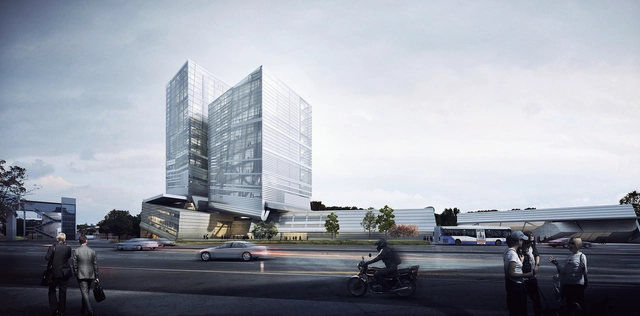
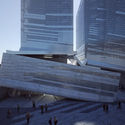
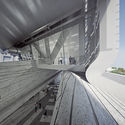
Preliminary Research Office has revealed their entry to a competition to design the new civic center for the city of Ryde, Australia. The project uses a series of boxes at different scales to inform the organization of both the building and the public spaces. Following a competition of 175 entries from 49 countries, the project did not make the shortlist. However, its approach addresses the fundamental needs of a civic center to be dynamic, flexible and human-scale.

Competition Proposal by Preliminary Research Office Thinks “Outside the Box” - Institutional Buildings, Facade, CityscapeCompetition Proposal by Preliminary Research Office Thinks “Outside the Box” - Institutional Buildings, Facade, CityscapeCompetition Proposal by Preliminary Research Office Thinks “Outside the Box” - Institutional Buildings, Facade, HandrailCompetition Proposal by Preliminary Research Office Thinks “Outside the Box” - Institutional Buildings, Facade, CityscapeCompetition Proposal by Preliminary Research Office Thinks “Outside the Box” - More Images+ 10

Fela Memorial Force HQ: The Architecture of a Leftist Police Force

This architecture exhibition deconstructs the traditional Police Station in Nigeria from an autocratic building into a leftist social infrastructure that allows symbiotic relationship between People and Police. Triggered by political events, the building is named after human rights campaigner and musician, Fela Anikulapo-Kuti and hosts protests, concerts, fora and fitness walks. Because of the social infrastructure that it is, Fela Memorial becomes a vehicle to transform the nodal Obalende, Lagos into a smart, accessible district.

6 Proposals Revealed for Oslo's New Government Quarter

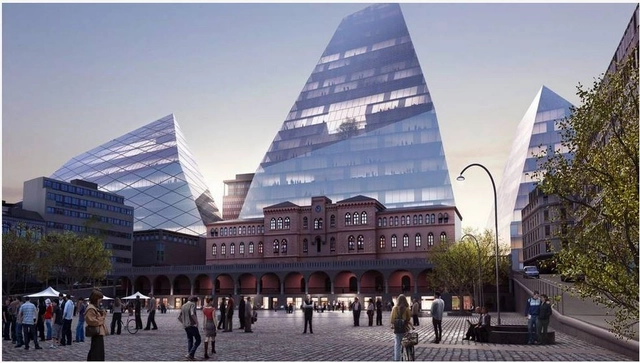
Nearly 100 architects, designers, and consultants have been developing designs for a competition for the new government quarter in Oslo. Drawing an initial 24 entries, the intent of the competition was to generate viable solutions for the future relocation of all government ministries (excluding the defense ministry), emphasizing an urban atmosphere and public elements. In the six shortlisted proposals from both local and international firms, including BIG, Snøhetta, and MVRDV, the themes of building tall and introducing green space emerged.

Now a ten-member committee of industry professionals will assist Statsbygg, the public construction advisers collaborating on the government's behalf, with the evaluation of each design. Take a look at the six proposals after the break.

6 Proposals Revealed for Oslo's New Government Quarter - Image 1 of 46 Proposals Revealed for Oslo's New Government Quarter - Image 2 of 46 Proposals Revealed for Oslo's New Government Quarter - Image 3 of 46 Proposals Revealed for Oslo's New Government Quarter - Image 4 of 46 Proposals Revealed for Oslo's New Government Quarter - More Images+ 19

Does Devolution Hold The Key To Greater Investment In The Built Environment?

The British city of Manchester, often seen as the UK's second city alongside Birmingham, will become the first metropolis outside of London to be given greater local autonomy over budgets and city planning. The devolution deal, which will also see the city receive the right to directly elect a Mayor (in line with large cities in the US, for example), will furnish the city with "a new housing investment fund worth up to £300million." As it is understood that the first Mayor of Greater Manchester will be elected in 2017, there's time to discuss how this new political environment in the UK might help boost building in what has described as a "Northern Powerhouse."

4 Lessons the UK Should Take from Denmark

Subscriber Access | 

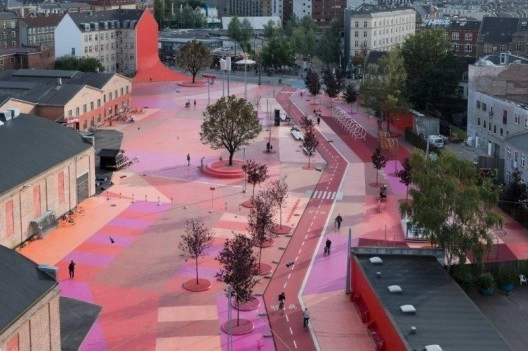
Last week the UK's Culture Minister Ed Vaizey announced that he was commissioning a review of the country's architecture policy, to be led by Sir Terry Farrell along with a number of high profile advisors, including Thomas Heatherwick, Alison Brooks and Alain de Botton. According to Vaizey, the review, expected to be complete by the end of the year, "will be a rallying point for the profession."

In his article in The Guardian, Olly Wainwright rather hopefully questioned: "might this year-long study result in an innovative new piece of legislative guidance – perhaps along the lines of Denmark's architecture policy, introduced in 2007?" While Wainwright somewhat flatly concludes, "somehow, that seems unlikely," there's no doubt that the UK could only stand to gain from learning from Denmark's innovative policy.

So what lessons could the UK (and the world) learn from the Danes? Read on after the break...

VIDEO: Federal Architecture

Subscriber Access | 

Democratic By Design is a short film, produced by the General Services Administration and narrated by Luke Russert, that tackles the issue of federal architecture. Buildings designed for the government typically have a familiar aesthetic. Washington, DC, is dominated by Neoclassical Architecture, building on the connotations of ancient Greek and Roman fora and temples as a symbol of democracy. But they perpetuate a sense of dominance and formality. Most of these buildings – city halls, courthouses, agency headquarters – were built in the 18th and 19th century, yet they leave behind a legacy and association in the architecture of the federal government.

VIDEO: Federal Architecture - Image 3 of 4
US Census Bureau Headquarters / SOM

On the contrary, government buildings built in the mid to late 20th century, specifically after 1962, have a more varied vernacular. This can be credited to Daniel Patrick Moynihan, aide to President John F. Kennedy. His one page document outlined guidelines for public architecture – an effort to contextualize and modernism government buildings. This video brings his words to life via well-known architects who have have designed federal buildings.

Join us after the break for a look at some of these buildings.