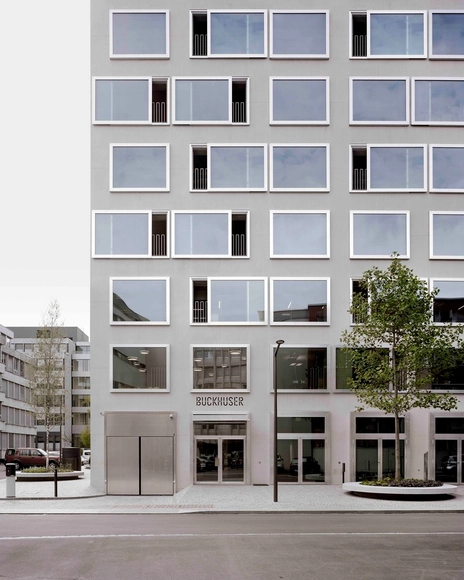
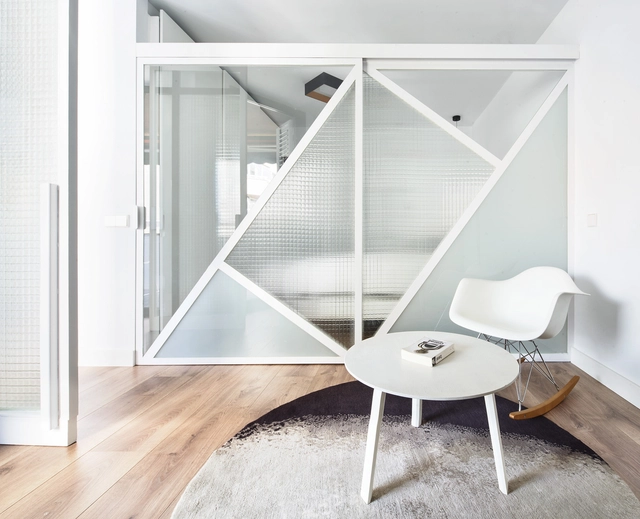
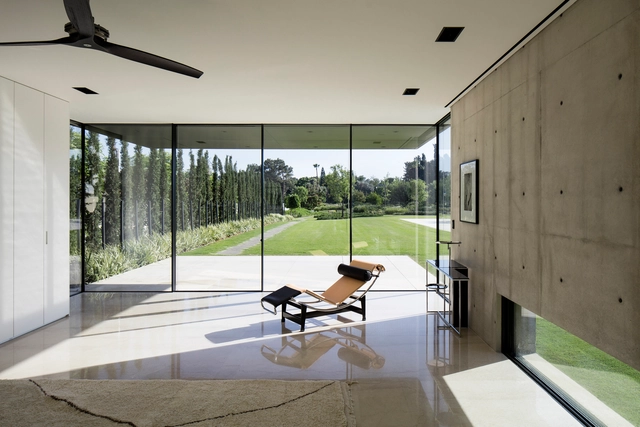
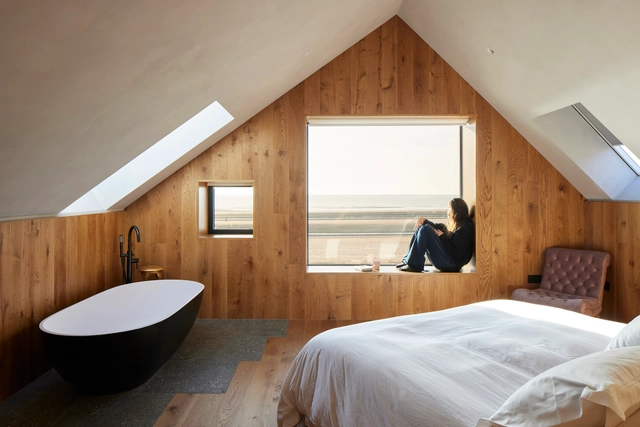
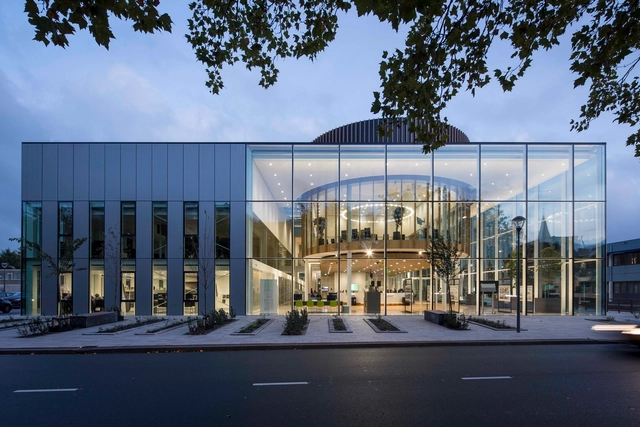
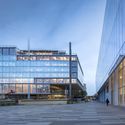
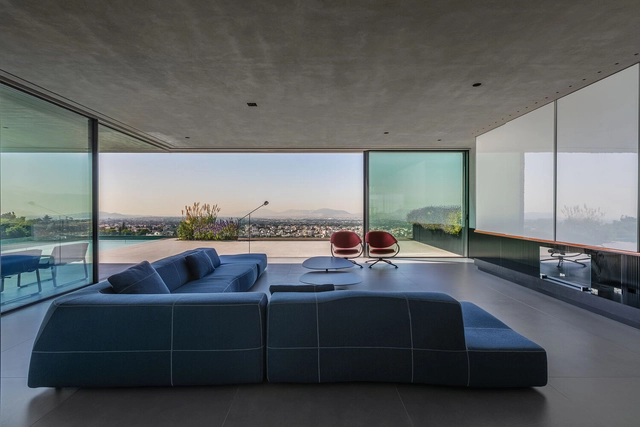
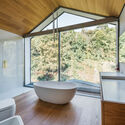
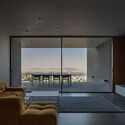
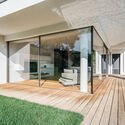
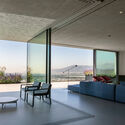
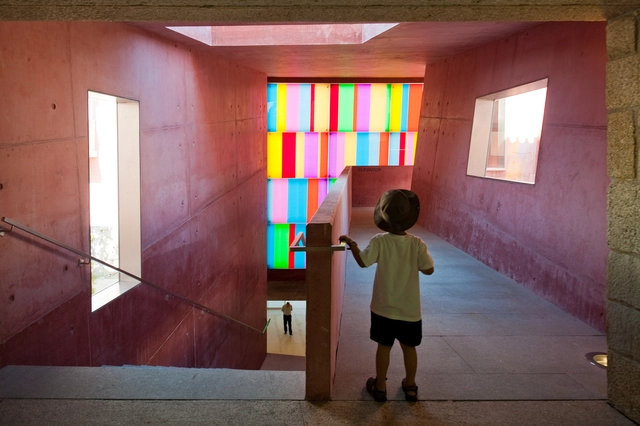
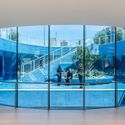
When an architect conceives the opening of a space, the primary objective is to create a frame that enhances the views, optimizes the entry of natural light, and makes the most of the illumination it provides. In this context, we often seek to maximize the proportion of glass, reducing the presence of frames and profiles to a minimum, thus expressing the growing desire for perfect integration between indoor and outdoor environments. To adequately meet this demand, architects and manufacturers are constantly searching for solutions that minimize the visual obstruction caused by structures, pushing the boundaries of what is technically and statically feasible toward minimalist window frames and profiles.
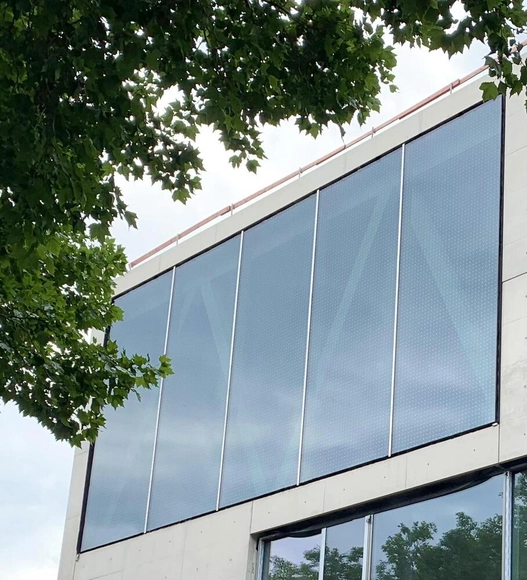
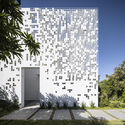
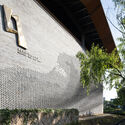
The Helios School / Schilling Architects. Image Courtesy of Eastman
Glass has become a central element in modern architecture with the introduction of new strategies for designing and experiencing buildings. Its transparency and material composition allow for natural light to enter, while creating seamless connections between interior and exterior spaces. However, the prevalence of this material has meant that every year, billions of birds collide into glass structures.
These collisions tend to occur during the migratory pathways of birds, as they fly through cities and are drawn to internal lights in buildings or misjudge outdoor reflections of trees and vegetation, causing a huge number of bird deaths and injuries. In response to this challenge, an increasing number of cities are now introducing legislation that requires new construction to feature bird-friendly glass. Without compromising on the aesthetic appeal of glass, Eastman has developed Saflex™ FlySafe™ 3D Polyvinyl Butyral (PVB) interlayers. This additional layer features a three-dimensional reflective pattern that is highly visible to the bird’s eye from the outside while remaining subtle to the human eye from the inside. Delving into the application of this solution within architectural design, we showcase how The Helios School adopted this strategy.
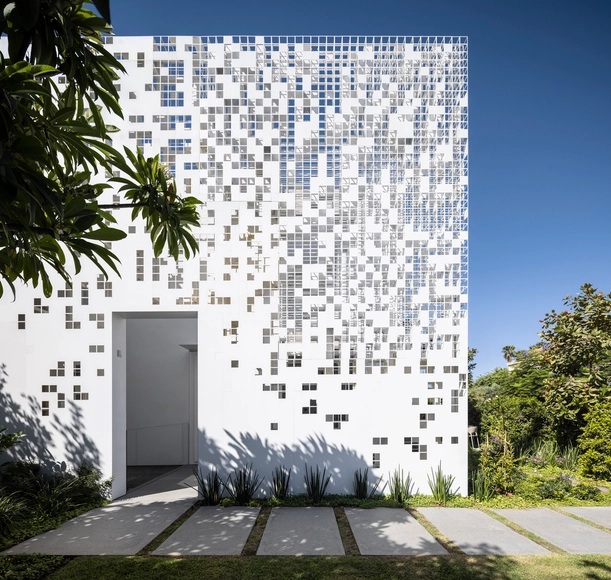
Architects and designers are often looking for ways to make building facades and interior surfaces stand out from the crowd. But sometimes just the smallest change can have the biggest impact once you step back and see the whole picture. By employing an illusionary pattern such as dithering pixels or halftone dots, or by making subtle but intentional changes to the position or orientation of materials, flat surfaces can be transformed into curved, moving forms.
Halftone patterns work by reducing a solid surface of color into dots of decreasing size. As the dots gradually reduce to nothing, they leave nothing behind except a background color. The result is a flat surface with a gradient that mimics the shadows or highlights of a three-dimensional curve. Dithering, meanwhile, is the process of feathering multiple shades of the same color to blend them together. The effect allows designers to, on a large enough scale, create images with depth and curves, while using only a single color. Or even to create the illusion of an intermediary color.
In the past, glazed surfaces tended to be small and almost opaque; but this began to change throughout the years due to the growing trend of increasingly larger glass panes in construction. Accompanied by thinner frames, they dilute the boundaries between the inside and the outside, and have become ubiquitous in modern buildings. In fact, it is increasingly rare to find a contemporary work of architecture that does not include the remarkable presence of glass: this material is present in the most diverse architectural scales, and its transparency provides harmonious integration with the surroundings and generous natural light for buildings. Traditional systems with frames are still predominant, but frameless glass facades are gaining ground in specific architectural projects, as they create perfect connections between the glass and the structure of the building, resulting in a singular aesthetic with soft and harmonious transitions. By eliminating heavy frames, a project's aesthetics can be enhanced while also improving the quality of life inside.
Materiality is a determining factor in shaping the character and experience of a building. Playing with the aesthetic and tactile qualities of materials, the design process encompasses their analysis, selection, and arrangement to create purposeful and sensory-rich spaces. Alongside textures and patterns, exploring materiality also involves the study of color possibilities. The versatile role of color in architectural materials extends beyond mere aesthetics, as it can broaden design opportunities and influence emotional responses, functionality, cultural relevance, and environmental performance.
Even though each material has its distinctive inherent color, the addition of artificial or natural pigments can modify them in favor of the project’s identity. Delving into the debate on maintaining raw aesthetics or changing a material’s natural hues, we showcase various projects to study the differences between using natural versus artificial pigmentation of glass, concrete, brick, stone and wood.
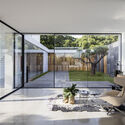
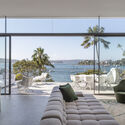
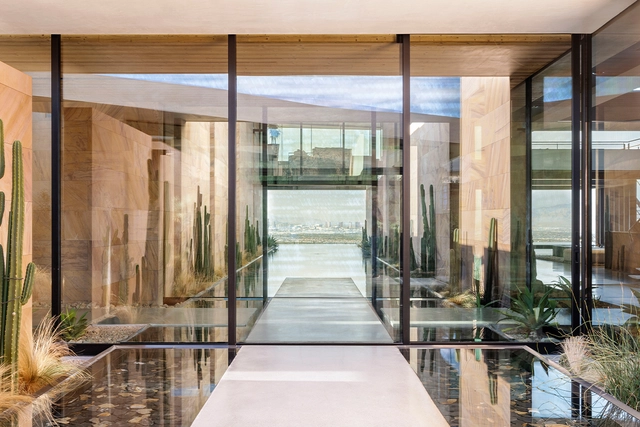
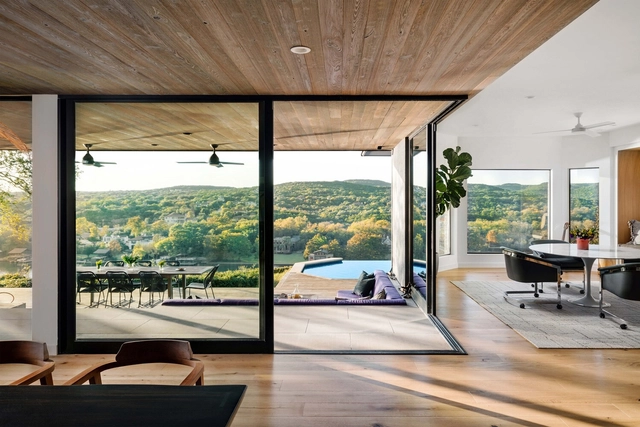
The selection of windows and doors plays a key role in the development of any architectural project, as it can significantly influence the final appearance of a building. A well-informed choice can convey values of modernity, craftsmanship, and elegance. On the other hand, inadequate specification can lead to problems such as air leakage, energy loss, and a less visually appealing aesthetic. It is also worth mentioning that windows and doors constitute a substantial part of a project's budget, which requires meticulous consideration. In this article, we examine four different residential projects, highlighting how their floor-to-ceiling glass sliding system effectively meets the needs of the residents and enhances their quality of life.
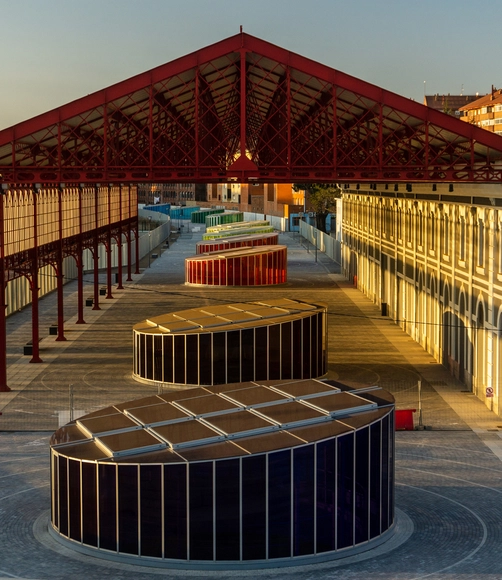
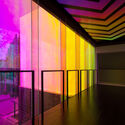
Light and color are intrinsically linked, as color cannot exist without the presence of light. In 1665, Isaac Newton made a momentous discovery when he observed that white light breaks down into different colors as it passes through a prism, creating a spectrum. This discovery laid the foundation for understanding the nature of light and developing color theory, which had a significant impact not only in the scientific field but also in artistic disciplines such as painting, photography and architecture.
https://www.archdaily.com/1001361/laminated-glass-skylights-infused-with-vibrant-colors-the-kaleidoscopic-stationEnrique Tovar
As summer in the Northern Hemisphere is inching ever closer and nature is rapidly responding to the increase in temperature, our desire to spend time outside (by ourselves and collectively) is growing at an equally fast pace. And although public parks are a great option for those of us who live in urban centers, the luxury of having one's very own, at-home access to nature cannot be overstated.
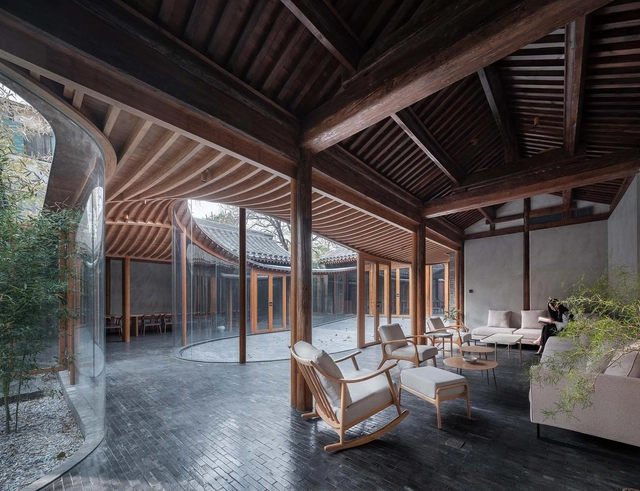
For residential projects in particular, gardens are the most common way of connecting with the natural world in this way. But, as these four examples show, courtyards can provide an equally satisfying window into changing seasons – and, when viewed through glass by way of patio doors, skylights, or frameless windows, can give us a glimpse of greenery from the weatherproof comfort of almost any room in the house.
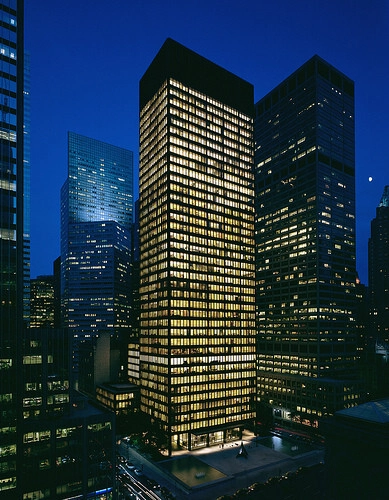
Richard Kelly illuminated some of the twentieth century’s most iconic buildings: the Glass House, Seagram Building and Kimbell Art Museum, to name a few. His design strategy was surprisingly simple but extremely successful.
Lighting for architecture has been and still often is dominated by an engineering viewpoint, resigned to determining sufficient illuminance levels for a safe and efficient working environment. With a background in stage lighting, Kelly introduced a scenographic perspective for architectural lighting. His point of view might look self-evident to today’s architectural community, but it was revolutionary for his time and has strongly influenced modern architecture.
Glass is one of the most important discoveries of mankind. Originally used as a cutting tool, it has been around for about 75,000 years. The first records of glass making, however, date back to the Egyptian and Mesopotamian. Since then, the mastery of the manufacturing technique has been developing in different civilizations and nations until the Industrial Revolution popularized the material and allowed its production on a large scale. In architecture, glass was first used as a sealing element around 100 AD.
Le Corbusier once described architecture as “a learned game, correct and magnificent, of forms assembled in the light.” Natural light –and its accompanying shadow– plays a crucial role in shaping our perception of architecture, serving a long list of functions that define how users experience, engage and interact with buildings. From illuminating and accentuating to enhancing views and evoking warmth, the presence of daylight has the power to set a room’s tone and aesthetic language. It even has a significant impact on human health and well-being, including boosting mood and productivity, regulating circadian rhythms and reducing eyestrain and headaches –it makes our lives brighter, literally.
VM01 House / Blue Heron. Image Courtesy of Western Window Systems
A home’s entry is often its first impression, and modern architects are using large scale glass to create impressions that are dramatic, surprising, and uniquely welcoming. See how six architects designed unique entries for homes, regardless of size and location.
The world's oldest stained glass window (which is still standing) is conventionally believed to be in Augsburg Cathedral in the German state of Bavaria. Depicting the prophets David, Jonah, Daniel, Moses and Hosea, it is estimated to be nearly 1,000 years old, having undergone significant bombing during World War II. Long before that, however, mankind had been working with glass, and while today we have thin frames with crystalline sheets and a variety of properties, we had to come a long way to get here. In this article we will tell you a little about the evolution of glass windows and the technologies and possibilities that we have today.
When children first learn to draw a house, there are four basic components they illustrate: a wall, a pitched roof, a door and one or more windows. Along with the common structural elements, windows have always been considered to be indispensable architectural features for their multiple functions. While providing views, daylight and natural ventilation, these insulate from cold and heat, protect from external threats and enhance a facade’s appearance. They are also associated with a strong poetic or symbolic value; it is through them that we are able to connect with and enjoy our surroundings, be it a beautiful natural landscape or a dense urban environment. An expressive part of any building, windows serve as a visual bridge between the inside and outside, acting somewhat as a refreshing escape from our everyday routine.
Somewhere between 1914 and 1915, Le Corbusier designed the Maison Dom-Ino, a groundbreaking modular structure that replaced the heavy load-bearing walls with reinforced concrete columns and slabs. The open floor plan with minimal thin elements, coupled with large glass facades, would ensure healthy natural daylight for the interior spaces as well as desirable architectural transparency that could blur the boundaries between interior and exterior —at least metaphorically.
Windows serve multiple essential functions in any project, from framing views to providing daylight and natural ventilation. As human needs have shifted and technology has advanced significantly throughout the years, these have evolved in character, shape, and use of materials. What began as small arrow loops used for defense in medieval fortifications later transformed into wider openings that exemplified status and wealth. The Romans were the first to use glass, but it was considered a precious commodity for centuries. Intricate stained-glass panels adorned countless of medieval churches and cathedrals, while most home dwellers had to settle for covering their “windows” with wood, fur and other materials.
Flexibility has been an increasingly appreciated characteristic in the field of architecture. In the extremely dynamic societies and spaces that we inhabit, it makes sense for buildings to have the ability to continuously adapt their spatial layout and even their structure to changing needs. Providing a space that can be adaptable and not completely static is a priority in today's world and can extend to many different types of projects, from domestic to public. In offices and convention centers, for example, having the opportunity to create reserved rooms when needed makes these large open spaces much more versatile.
Movable partitions, whether sliding or on pulleys, are particularly useful solutions in these cases, but they can also get in the way and often do not perform well acoustically. Skyfold specializes in developing vertically retractable walls, which are completely hidden in the ceiling when closed, therefore solving some of the aforementioned issues regarding movable partitions. Their newest product, Prisma, adds total transparency, clean lines and a lightweight structure to this functionality.
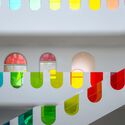
Used by artisans across the globe for thousands of years, colored glass is one of the oldest art forms. Its origins date back as early as the 7th century, when stained windows began adorning churches, cathedrals and convents – often representing religious symbols and Biblical stories. These expanded to Islamic mosques and palaces during the 8th century, and by the Middle Ages could be found in countless churches across Europe. The intricate glass work reached maximum splendor in the monumental buildings of the Gothic period, resulting in giant, elaborate windows with extremely complex figures, patterns and geometries. However, gone are the days when this was reserved exclusively for prominent places of worship or ancient structures. Hand in hand with innovative production methods and new technologies, colored glass has made a comeback in contemporary architecture, enhancing countless buildings with its bold, lively hues.