Mies Van der Rohe and Lilly Reich’s German Pavilion for the 1929 Barcelona International Exhibition is known as the most written-about modern building. But no matter how many times the pavilion is redrawn for analysis, there are always new angles from which to interpret it. Identifying its capacity to redefine the German image, while genuinely introducing new strategies that continue present in contemporary architecture projects are two key elements of the architects’ intentions behind their design strategy.
'We have to get away from the coldness of functionalism. It is a mistake to believe that to understand the problem of modern architecture it is enough to recognize a necessity for rational solutions. Beauty in architecture, which is a necessity and finality for our time as for past periods, cannot be attained unless we can see beyond simple utility when we build.' – Mies Van der Rohe
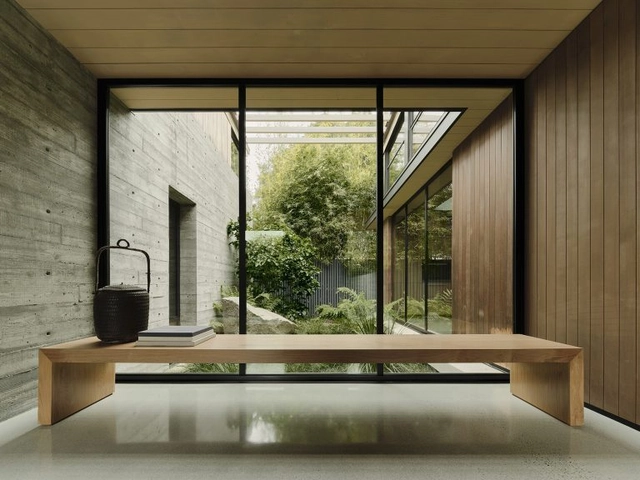
Sanctuary House / Tai Ikegami. Image Cortesia de Western Window Systems
Interior courtyards can be found in various types of traditional architectures around the world, especially in warmer climates. They can be classified as introverted, safe, and even sacred spaces in some cultures. They can also be gathering places and, above all, provide greater contact with nature while providing light and ventilation to home interiors. To properly design these spaces and create a functional relationship between the inside of a house and its courtyard, it is important to use appropriate doors and openings. In this article we highlight 5 projects that use sliding glass doors for the seamless integration of both spaces.
Cloud Center Under Construction. Image Courtesy of MAD
Nearly to be completed and opened in 2023, MAD Architects reveals the construction details that made it possible for the Aranya "Cloud Center" to appear floating above the rolling landscape surrounding it. Located in Qinhuangdao, 160 miles away from the east of Beijing, China, the 2,500-square meters Center will be a public art space for the vibrant artistic seaside community that, from the outside, will mark the center of a sculptural landscape that MAD had conceptualized as a "white stone garden."
If you’ve been avoiding some of the latest news recently, here’s a quick update; European and North American countries have been facing one of the hottest recorded summers in modern history. Discussions over the climate crises have therefore been reignited and so has the role of the design and construction industry in providing solutions that would mitigate the experienced heat effects in our daily lives. While passive cooling solutions have always been used in some parts of the world, where local resources and vernacular builds are adapted to high temperatures, other regions are looking to technological and innovative manufacturing means that would maintain human comfort, aesthetic values, and energy efficiency/ cost.
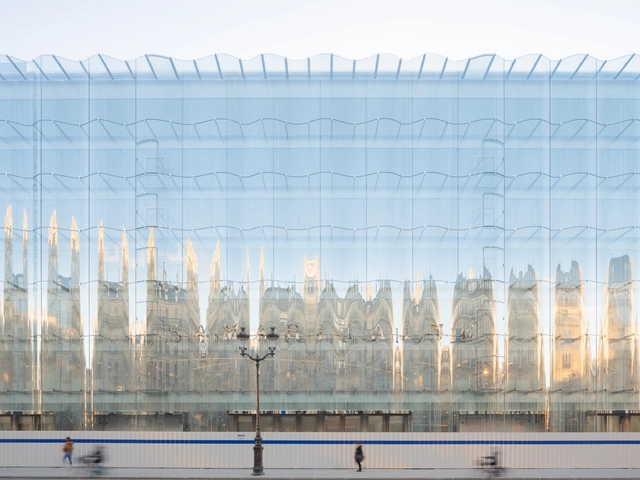
Although early modernism with its signature high-rises and glass houses had made us think that glass enveloped buildings are mostly uncomfortable, over-exposed, and overheating settings; nowadays glass manufacturers are proving that glass, if well treated and well-placed, can be as versatile and efficient a material as one could want without compromising the visual comfort or the dwellers.
The total energy demand from buildings has risen dramatically in recent years. Driven by improved access in developing countries, greater ownership of energy-consuming devices and increasing urban densities, today it accounts for over one-third of global energy consumption and nearly 15% of direct CO2 emissions. As the climate crisis aggravates and its consequences are more visible than ever, the architecture and construction industry must respond accordingly. It must take responsibility for its environmental impact and give priority to reducing energy consumption, whether through design decisions, construction techniques or innovative products. The key lies, however, in not sacrificing aesthetics and comfort in the process.
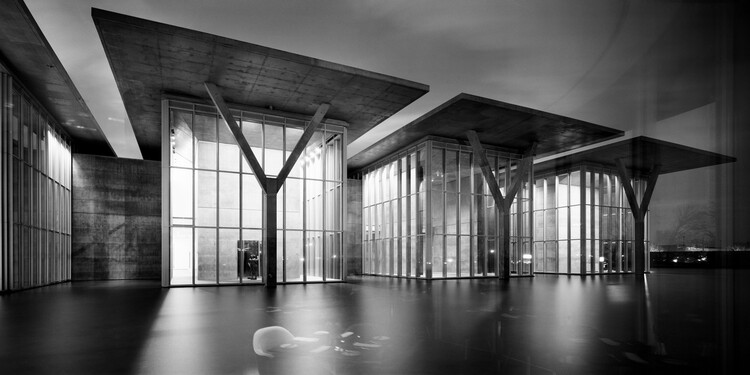
Few other materials can convey architectural atmosphere as well as the glass. A to-go choice for the modernists, due to its transparent nature, glass still holds a solid place within the material palette for architects around the globe. Such unique element is the subject of Archiving Flux / Stasis, a photographic exhibition by Erieta Attali hosted by the Greek Ministry of Culture in Casa Romana, Kos Island, Greece, set to open its doors in July 21st.
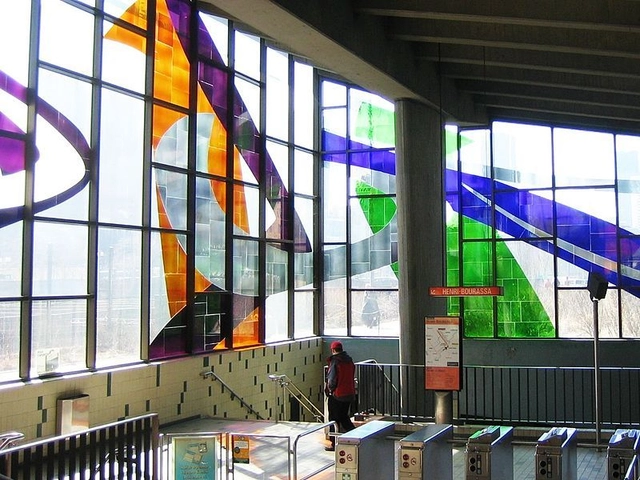
In terms of architectural enhancement, stained glass is often pieced together in order to produce depictions of decorative art, allowing light to filter and penetrate a particular structure or building. As a component it is both decorative and a variety of window, allowing a substantial and sufficient amount of light into a space, for atmospheric and beneficial effect.
Most of us use stairways every day, but few times do we stop to contemplate their design or put much thought into their function. With their steps, treads and railing, they are easily one of the most fundamental architectural elements in any home. Apart from providing a safe, simple and easy access from one floor to another, it is through staircases that architects create unique spatial forms and strong visuals. From afar, one can observe people moving up and down repeatedly; from within, the user is treated to new angles and ways to perceive a space. Therefore, good staircases are more than just means of vertical circulation. Through their might and scale, they can become the protagonist of a space – a design focal point that rises to the level of art. In this article, we present their versatile characteristics and material qualities through a selection of inspiring examples, all of which can be found in Architonic's 'Staircases' section.
Take a second to imagine a building or a room. Chances are you are envisioning flat rectangular surfaces and straight lines. Whether it be walls, beams or windows, most architectural elements come in standard and extremely practical orthogonal shapes. However, the pandemic has shed light on designs that are not only functional, but also that improve our mood and well-being. In that sense, the power of curved, free-flowing surfaces is unmatched, which explains why they have been making a comeback as a modern design trend. Adopting beautiful nature-inspired shapes, organic curls and bends energize rooms and make users feel good. In fact, neuroscientists have shown that this affection is hard-wired into the brain; in a 2013 study, they found that participants were most likely to consider a space beautiful if it was curvilinear instead of rectilinear. In short, humans love curves.
Videos
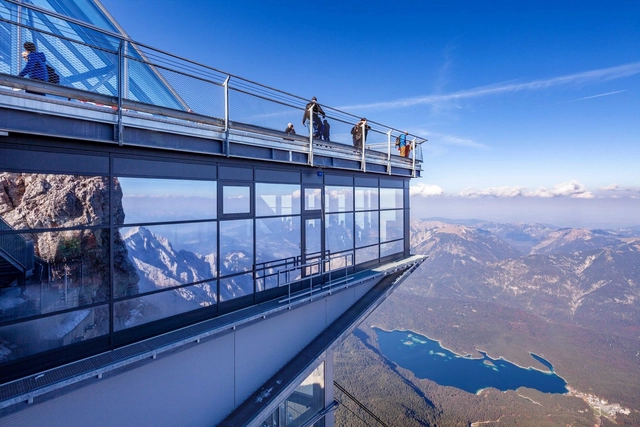
Zugspitze Mountain Station / Eibsee, Germany - Photo by Christoph Seelbach . Image Courtesy of Vetrotech Saint-Gobain
While glass is generally singled out as the weakest part of a building, it is not always true. With technological advances and the continuous innovations of the industry, there is glass that, even while allowing natural light to enter an environment, can protect the building from fire. Beyond fire, there are also other threats such as hot gases, smoke, and heat transmission, which put the safe evacuation of people and the protection of property at risk.
Polyvinyl Butyral (PVB) is a resin known for its strength, flexibility, and optical clarity. When inserted and bonded between two panes of glass, the combination —known as laminated glass— provides a tough, acoustic, glare-, UV- and solar-protective barrier with no loss of transparency. So much so, that its main use is in car windscreens.
By inserting and layering various sheets of colored PVB, glass can be transformed with a kaleidoscope of color and a range of opacity. The whole effect gives interiors specifiers a palette of light and color tools when adding personalities to interior environments. Here are six examples of projects that use PVB-laminated glass to great effect:
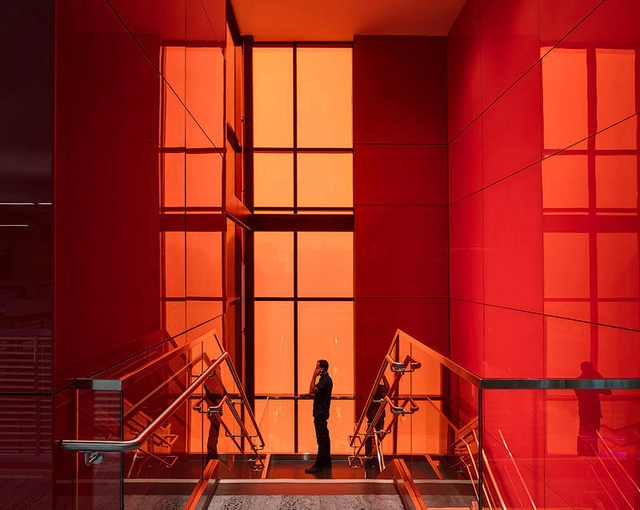
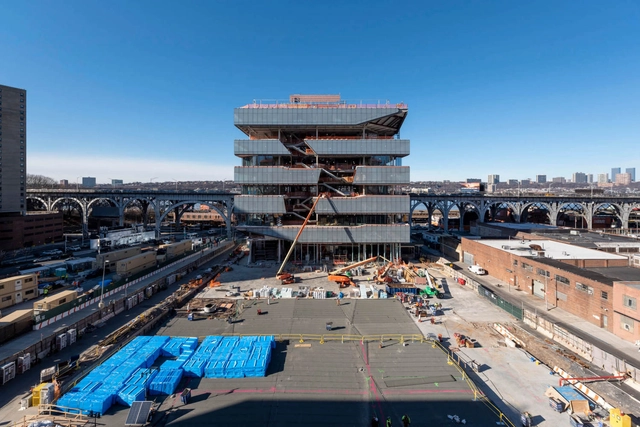
Columbia University’s Manhattanville Campus expansion has ushered in a crystalline district of glass-clad buildings amid the masonry vernacular architecture of Harlem. The latest additions to the 17-acre, $6.3 billion campus, which was master-planned by SOM, are two buildings designed by Diller Scofidio + Renfro (DS+R) in collaboration with FXCollaborative that provide a new home for the Columbia Business School. Set to open in early 2022, Henry R. Kravis Hall and the East Building rise 11 and 8 stories, respectively, and provide 492,000 square feet of classrooms, public space, and faculty offices.
In today's climate, energy and how we use it is a primary concern in the design of built spaces. Buildings currently contribute nearly 40% to global carbon emissions and with a projected growth of 230 billion square meters in construction before the end of 2060, the focus on construction decarbonization efforts should be paramount.
In a 2016 survey of 400 employees in the U.S., Saint-Gobain found that office building occupants commonly complained about poor lighting, temperature, noise, and air quality, leading the company to deduce a need for improved lighting and thermal comfort in buildings while also maintaining low energy consumption and freedom of design for architects and clients. Their solution was SageGlass, an innovative glass created first in 1989 and developed over the course of the past three decades. The glass, which features dynamic glazing protecting from solar heat and glare, simultaneously optimizes natural light intake. A sustainable and aesthetic solution, SageGlass’ adaptability to external conditions dispels the need for shutters or blinds.
https://www.archdaily.com/957605/more-daylight-but-less-glare-and-heat-how-does-automatically-tintable-glass-workLilly Cao
When designing a space, architects across the board tout the importance, and even necessity, of incorporating natural light into interiors. This means taking measures to control the quantity of light being let in and its distribution throughout the space.
In the case of residential spaces, where privacy plays a larger role than in public spaces like offices, restaurants, and stores, opaque materials like screens, tinted glass, and other barriers are the go-tos for providing protection and privacy from the outside; however, the privacy that these methods provide often comes at the cost of the space's natural lighting, forcing designers to seek alternative materials that allow for both light and privacy.
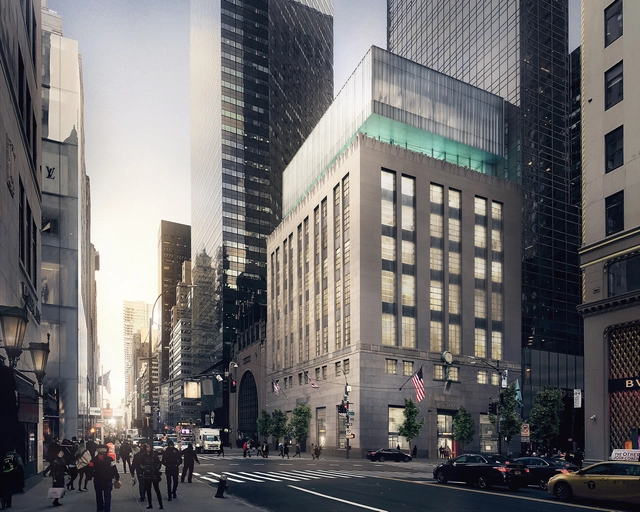
OMA / Shohei Shigematsu has revealed images of the new iconic Tiffany & Co. Fifth Avenue Flagship Store. In progress and scheduled for the spring of 2022, the intervention “reimagines the retail experience while preserving the historic identity of the original building”.
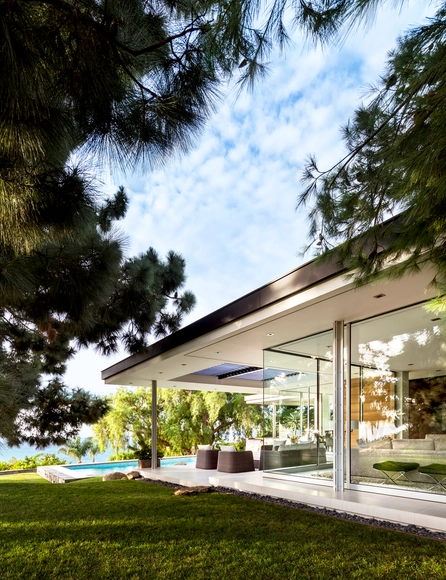
Malibu Crest, a 2019 remodeling of a 1949 International Style home, was a vital undertaking by the architecture firm Studio Bracket that aimed to expand the structure’s square footage and panoramic views of Malibu while retaining over 50% of the home’s original walls. The project was ultimately successful, not only in its refurbishment of the interior rooms and reconfiguration of the space, but in its enlargement of the windows to truly capture views of the surrounding lagoon and mountains. This expansion of the view was done in part through an open corner window scheme and floor-to-ceiling glass, manufactured by Western Window Systems. The uninterrupted glass walls afforded by this open corner technology is one of the most effective ways that architects can open an interior space to the stunning vistas of a natural environment. Yet an even more striking configuration increasingly being employed by residential architects is that of the open corner sliding glass door – a system that can even more completely open an interior space to the unobstructed outdoors. Below, we discuss this technology in more detail, alongside several examples of projects using the open corner glass door.
https://www.archdaily.com/944057/open-corner-sliding-glass-doors-towards-a-light-and-wide-architectureLilly Cao
While not all plastics are being recycled, even the ones that display the recycling sign, the global plastic waste problem is nowhere close to being resolved. Recycling, generally determined by factors like demand, legislations, and economy, takes on arguably around 20% of the annual production of plastics, leaving a large quantity unattended, doomed to last forever in our environment. In addition, competing with newly-produced materials, recycled plastics need to meet standards of quality and price, and undergo a sustainable, efficient, and economically viable transformation.
ROGP or Rejects of Glass & Plastics Technology is an innovative approach that repurposes plastics, once labeled as non-recyclable materials due to technical complexity or economy-related issues.













.jpg?1654265144&format=webp&width=640&height=580)





.jpg?1614777781&format=webp&width=640&height=580)

.jpg?1614777781)
.jpg?1596025638 "© Charbel Tannous, courtesy of Development Inc.")
