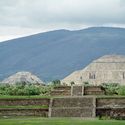
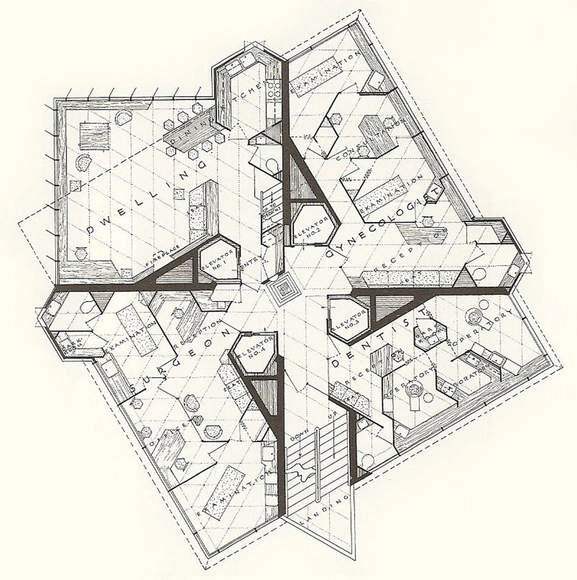
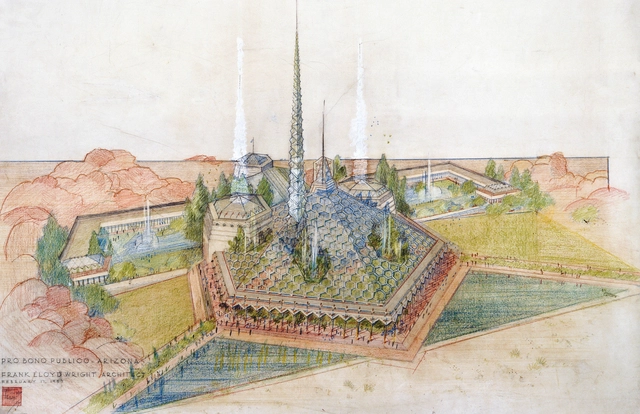
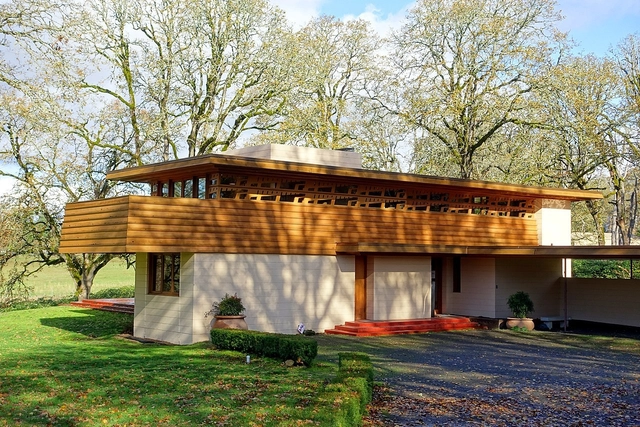
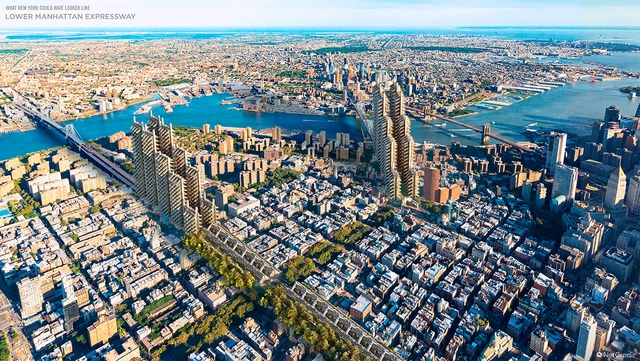
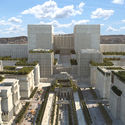
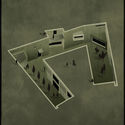
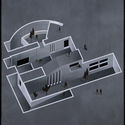
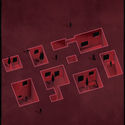
Broadacre City by Frank Lloyd Wright. Image Courtesy of Juan Miró
Juan Miró, co-founder of Miró Rivera Architects reflects in an opinion piece on the value of American cities. Stating that "when we idealize cities like Copenhagen, we risk losing focus of the fundamental historical differences between the urban trajectories of European and American cities", the architect and educator draws a timeline of events and urban transformations, in order to explain why it would be more relevant to look on the inside when planning U.S cities, rather than taking examples from the outside.
Frank Lloyd Wright’s Price Tower is the famous American architect’s only realized high-rise building and one of his only extant vertically-oriented designs. Located in the plains of Bartlesville, Oklahoma and commissioned by the local oil and chemical firm H. C. Price Company, the mixed-use tower is significant not only for its singularity within Wright’s oeuvre, but because of its unique materials and structural design. Some of Wright’s innovations, which were novel in the mid-twentieth century, remain useful even today.
https://www.archdaily.com/958989/the-tree-that-escaped-the-crowded-forest-lessons-from-frank-lloyd-wrights-price-towerLilly Cao
Skyler Dahan, an LA-based photographer, has captured Frank Lloyd Wright's Civic Center, in Marin County. Shot on Kodak Portra film with a Contax 645 medium format camera, the series of images highlight Frank Lloyd Wright's latest commission. Serving as a justice hall, the project was actually completed by Wright's protégé Aaron Green after the architect’s death.
The Architectural realm has always been torn between artistic and rational cosmos. During our architectural studies, we are rarely given one specific methodology with which we can approach a project, resulting in diverse outcomes and methods of designing. However, in order for us to discover our personal stand, we must look back at the logic and philosophy of the great pioneers who influenced architecture before us.
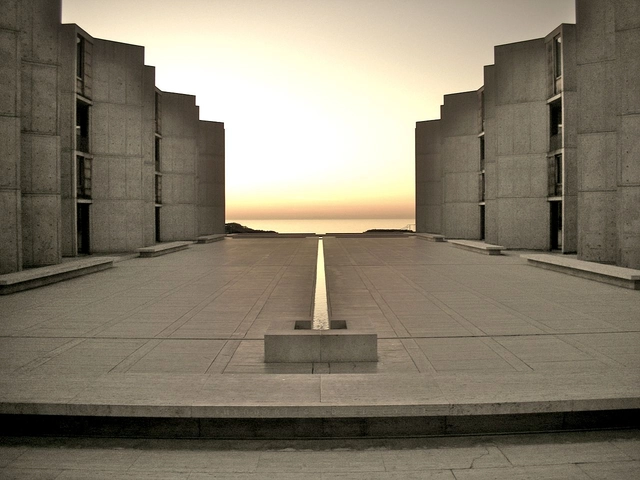
Le Corbusier, Mies van der Rohe, Frank Lloyd Wright, and Louis Kahn are four of the most notable architects to date. Read on to find out more about the creative process of these four leaders of the modern era, and why their projects and practices are still influential to our modern times.
The Frank Lloyd Wright Foundation has uncovered the Arizona State Capitol project, a never seen before unbuilt proposal by Wright. An “oasis of democracy in the Sonoran Desert”, the intervention revealed in the latest issue of The Frank Lloyd Wright Quarterly, has been digitally remodeled, with photorealistic visualizations by David Romero.
As cultural venues and museums remain closed, one initiative launched in early April brings Frank Lloyd Wright’s most prominent projects to the public via virtual tours. Shared under the hashtag #WrightVirtualVisits, the series now features twenty-four sites, and more are expected to join as the project unfolds. With new videos published every Thursday until July 15, the project compiles an insightful glimpse into Wright’s extensive body of work.
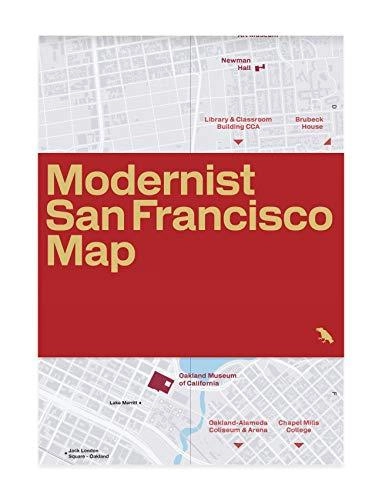
Description via Amazon.Guide map to Modernist architecture across San Francisco and the Bay Area. This two-sided folded map with original photography by Jason Woods is edited by Mitchell Schwarzer, Professor at California College of the Arts, and author of numerous books about architecture. The guide features over fifty influential examples of Modernist and Brutalist architecture from Berkeley and Oakland to Palo Alto and San Mateo. Details for individual buildings are supported by an introduction to Modernism in the Bay Area by Schwarzer. Architects featured include Vernon de Mars, Beverley Thorne, Skidmore, Owings & Merrill, Frank Lloyd Wright, Richard Neutra, Pier Luigi Nervi, Mario Ciampi, Kevin Roche and John Dinkeloo and many others.
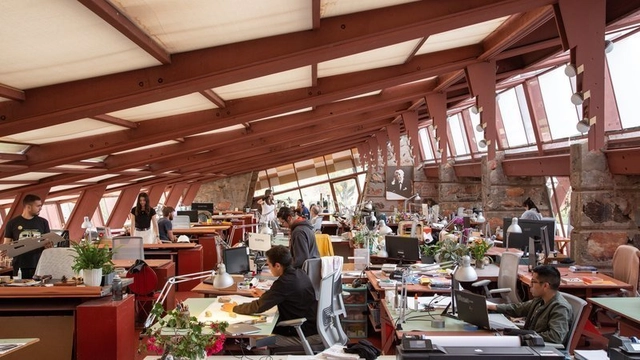
The School of Architecture at Taliesin. Image Courtesy of Simon DeAguero, The School of Architecture at Taliesin
Last month, The School of Architecture at Taliesin announced the closing of the school after 88 years. The school and the Frank Lloyd Wright foundation issued statements on the closure, as well as the students. Now, a new petition started by Simon DeAguero aims to save the school from closing. The news of closure followed the conclusion of a multi-year struggle back in 2017, when the school was approved to maintain its accreditation as an institute of higher learning.
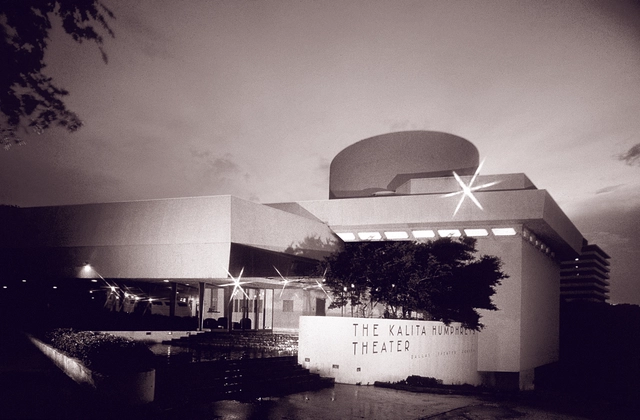
Diller Scofidio + Renfro have been selected to renovate Frank Lloyd Wright's Kalita Humphreys Theater in Dallas. Home to the Dallas Theater Center since its opening in 1959, the renovation project will include a master plan for the nine-acre Kalita Humphreys site, which will include new theater spaces and a connection to the Katy Trail.
City of the Future is a bi-weekly podcast from Sidewalk Labs that explores ideas and innovations that will transform cities.
In the final episode of season 2, hosts Eric Jaffe and Vanessa Quirk discuss the past, present, and future of responsive architecture with Sidewalk Labs’ director of public realm Jesse Shapins, engineer and microclimate expert Goncalo Pedro, Bubbletecture author Sharon Francis, and renowned architect Liz Diller of Diller Scofidio + Renfro.
Frank Lloyd Wright might be the most chronicled architect of the past 150 years. Scores of books, both mainstream and academic, have been written about him. “Wright scholars” are common in the academy. Dissertations are still being penned about the great man, six decades after his death. Philip Johnson called Wright “my favorite 19th-century architect.” (It was not meant as a compliment.) And yet every half-decade or so, Johnson’s mothership, MoMA, mounts yet another Wright exhibition, and thousands flock to see the now-familiar models, drawings, and photographs. Wright has even received the Ken Burns treatment, a full-length PBS documentary, surely a sign of his Mount Rushmore–like cultural status. Into this very crowded room now steps author Paul Hendrickson, whose new book, Plagued by Fire: The Dreams and Furies of Frank Lloyd Wright(Knopf), attempts to shed new light on the architect.
The United States of America has provided enormous opportunities to develop some of the most iconic buildings in the history of architecture, leaving the mark of important architects in urban, suburban, and rural areas around the country. However, ambitious ideas often come with a high price that cannot always be paid, causing some of the most exciting building, bridge, and tower designs to never evolve past archived plans.
In 1991, the American Institute of Architects called him, quite simply, “the greatest American architect of all time.” Over his lifetime, Frank Lloyd Wright (June 8, 1867 – April 9, 1959) completed more than 500 architectural works; many of them are considered masterpieces. Thanks to the wide dissemination of his designs and his many years spent teaching at the school he founded, few architects in history can claim to have inspired more young people into joining the architecture profession.
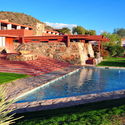
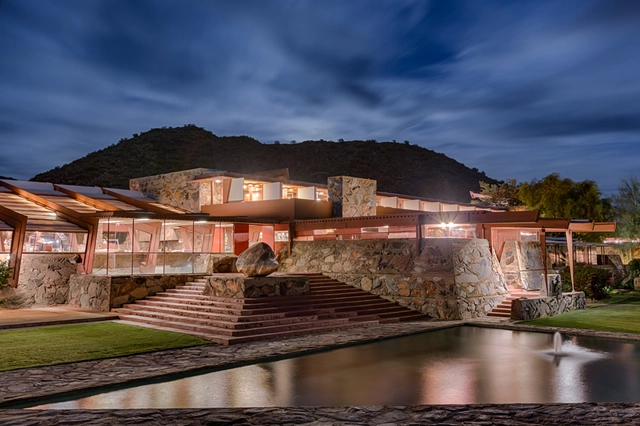
The Frank Lloyd Wright Foundation has used Earth Day, April 22nd, 2019, to launch a new initiative focused on educating the public about how sustainable practices are used in the conservation of National Historic Landmark sites, including the renowned architect’s Taliesin (Wisconsin) and Taliesin West (Arizona) residences. Taking place throughout the year, the Foundation’s efforts will aim to show how these practices can serve as examples for other facets of society.
https://www.archdaily.com/915558/frank-lloyd-wright-foundation-will-use-taliesin-west-to-educate-about-living-with-natureNiall Patrick Walsh
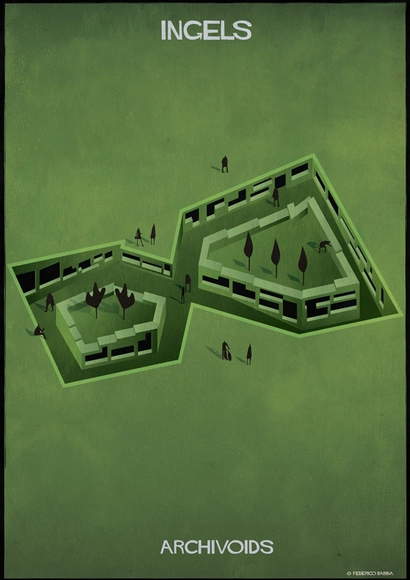
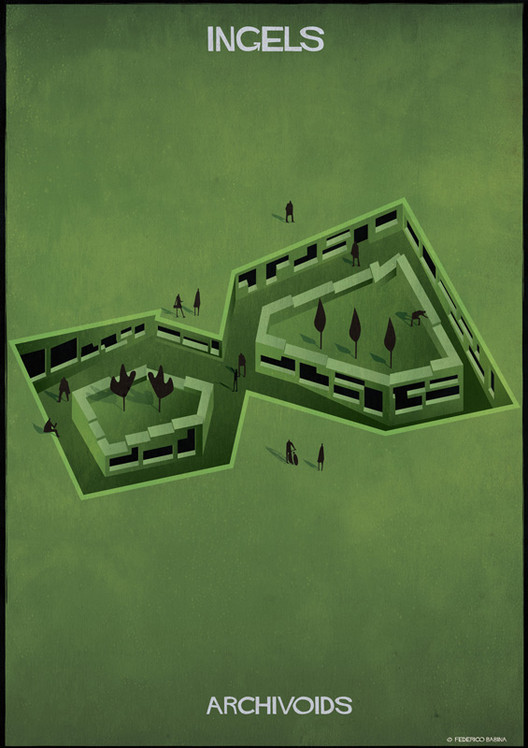
Babina’s images create an inverse point of view, a reversal of perception for an alternative reading of space, and reality itself. Making negative space his protagonist, Babina traces the “Architectural footprints” of famous architects, coupling mysterious geometries with a vibrant color scheme.
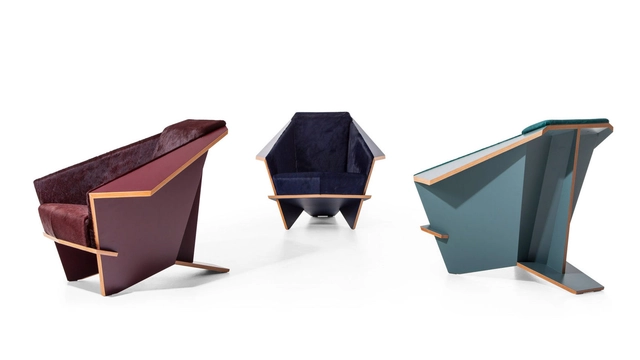
Italian furniture brand Cassina has reissued an iconic piece of Frank Lloyd Wright-designed furniture, the Taliesin 1 chair. The chair was designed by Lloyd Wright in 1949 for the Garden Room in Taliesin West. The iconic chair didn’t enter mass production until the late 1980s, but was discontinued in 1990 as it was seen as “too avant-garde.” The Taliesin 1 is constructed from a single piece of folded plywood, and will release in its original beech plywood with a cherry wood veneer.