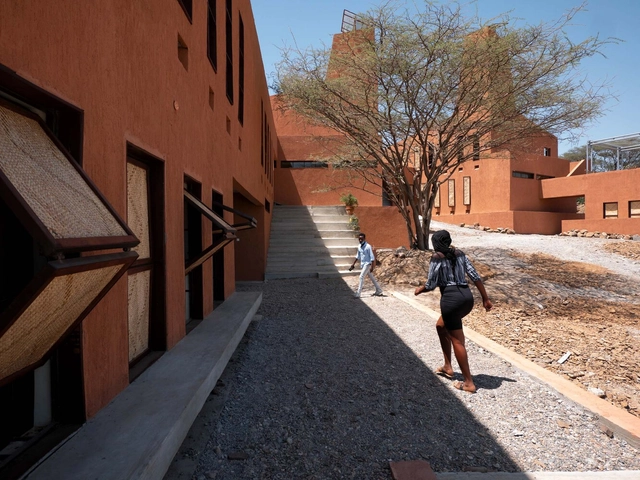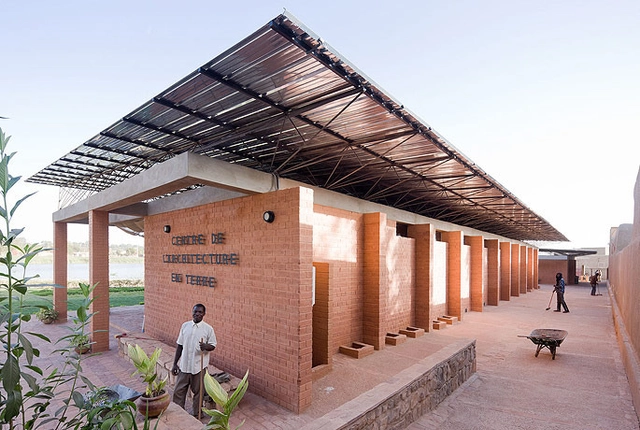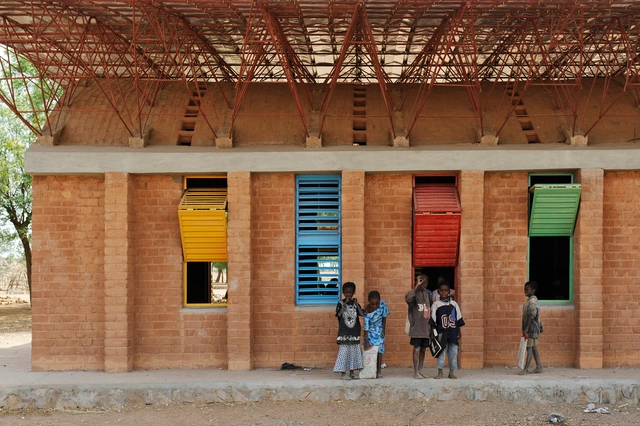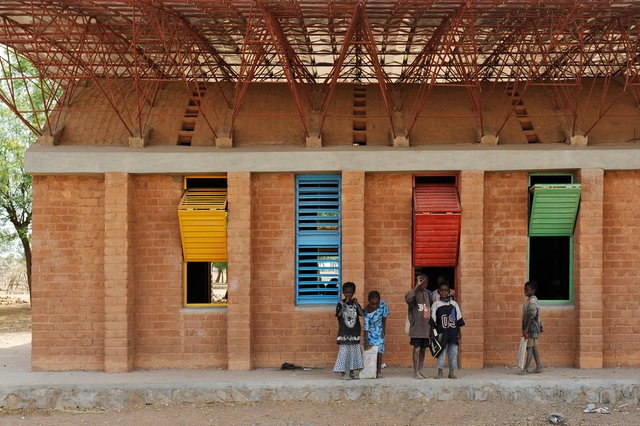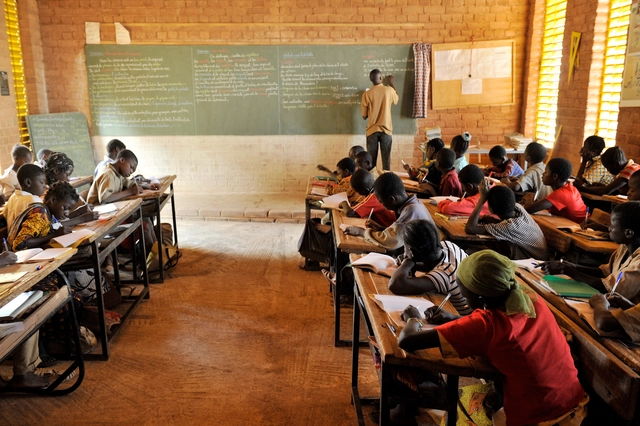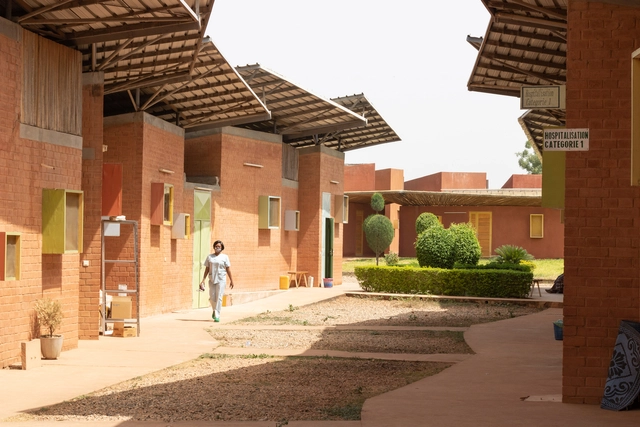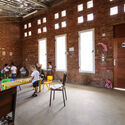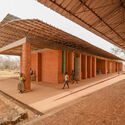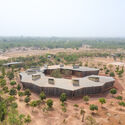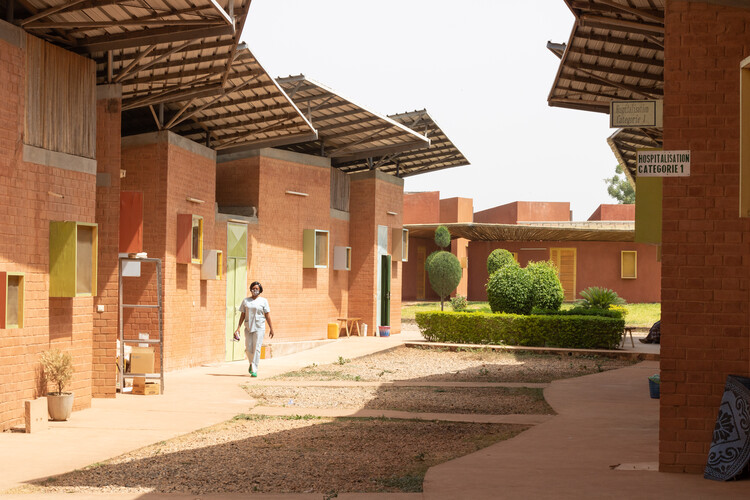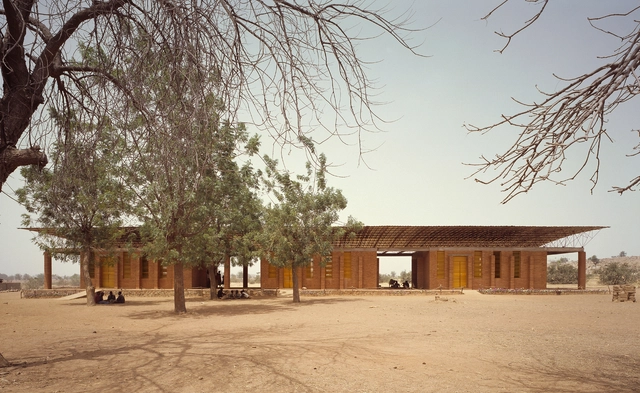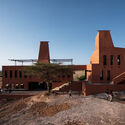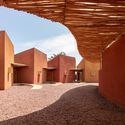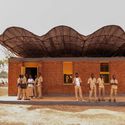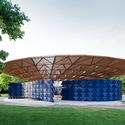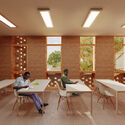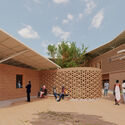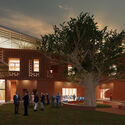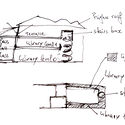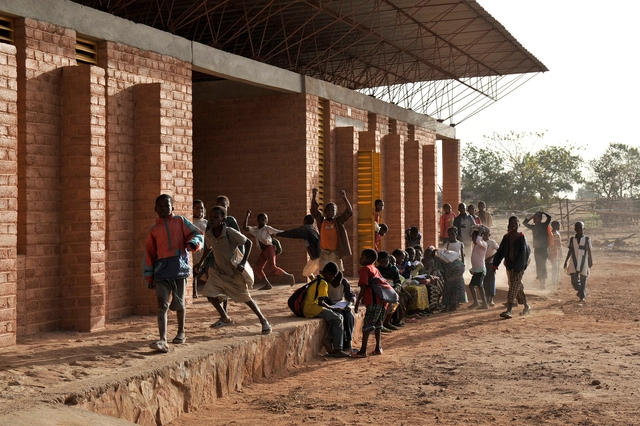
Clay walls have a high thermal inertia. This means that they act as a climate buffer that creates a thermal delay in the flow of heat from the outside to the inside, absorbing it during the day and releasing it overnight. The material is especially suitable for hot and dry climates, such as that of Gando, where Francis Kéré built his first school. After years of studying abroad, Kéré returned to his home community with the intention of building this school with the same materials historically used by locals, which many originally viewed as strange, as he said in this lecture. Despite the initial prejudice, it was the combination of local materials and techniques with Kéré’s acquired knowledge that ultimately gave strength to the project.
https://www.archdaily.com/978851/how-does-francis-kere-use-materials-to-respond-to-local-climate-conditionsValeria Montjoy and Eduardo Souza
The election of Kéré is not only symbolic in a time of identity demands, where the institutions that make up the mainstream are required to more faithfully represent the social, cultural, and sexual realities that make up our societies, but it also confirms the recent approach of the Pritzker Prize jury.
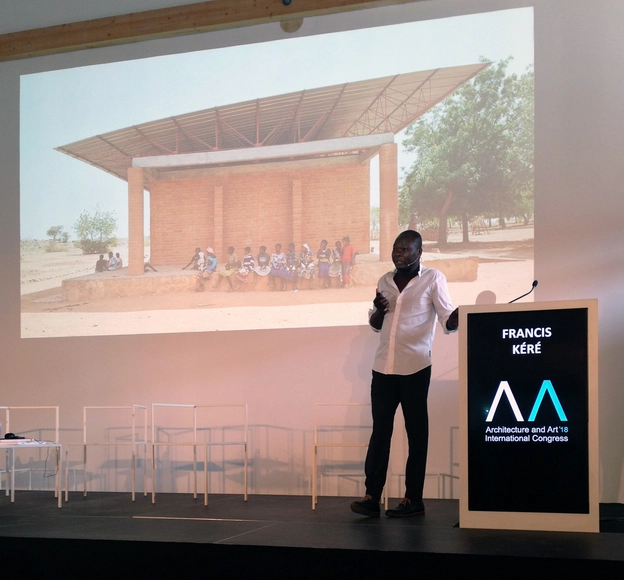
"I Draw on Paper, but I Prefer to Draw on the Ground". This phrase caught my eye during Diébédo Francis Kéré's speech at the AAICO (Architecture and Art International Congress), which took place in Porto, Portugal from September 3 to 8, 2018. After being introduced by none other than Eduardo Souto de Moura, Kéré began his speech with the simplicity and humility that guides his work. His best-known works were built in remote places, where materials are scarce and the workforce is of the residents themselves, using local resources and techniques.
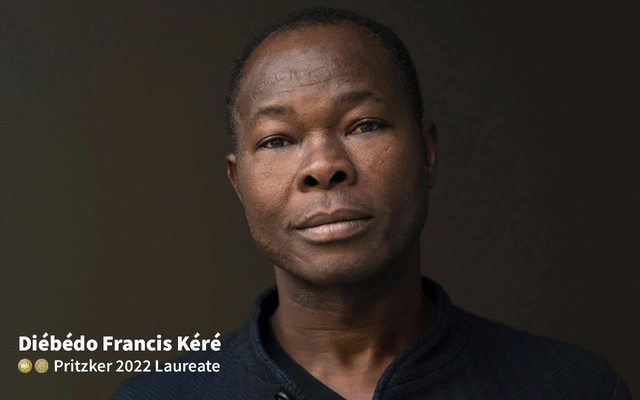
African architecture has received deserved international attention in the last decade and one of the main responsible for this is, undoubtedly, Diébédo Francis Kéré, 2022 Pritzker Prize Winner. Born in Gando, Burkina Faso, Kéré graduated in architecture at the Technische Universität Berlin, in Germany. Today, he maintains branches of his firm, Kéré Architecture, in both countries, through which he seeks to develop works in the "intersection of utopia and pragmatism", exploring the border between Western architecture and local practice.
Known for involving community in the construction process of its buildings, Kéré and his office have developed works that go beyond the conventional limits of architecture and touch on themes such as local economy, migration, culture and equity. We had the pleasure and privilege of talking with the architect about some of his projects and his broader vision on architecture. Read the full interview below.
Surgical Clinic and Health Center. Cortesia de Francis Kéré
"I just wanted my community to be a part of this process," Diébédo Francis Kéré said in an ArchDaily interview published last year. It's hard to think of another phrase that so well sums up the modesty and impact caused by the newest winner of the Pritzker Prize of Architecture, whose work gained notoriety precisely for involving the inhabitants of his village in the construction of works that combine ethical commitment, environmental efficiency, and aesthetic quality.
Diébédo Francis Kéré founded his architecture practice Kéré Architecture, in Berlin, Germany in 2005, after a journey in which he started advocating for the building of quality educational architecture in his home country of Burkina Faso. Deprived of proper classrooms and learning conditions as a child, and having faced the same reality as the majority of children in his country, his first works aimed at bringing tangible solutions to the issues faced by the community.
“Through buildings that demonstrate beauty, modesty, boldness, and invention, and by the integrity of his architecture and geste, Kéré gracefully upholds the mission of this Prize,” explains the official statement of the Pritzker Architecture Prize. Announced today by Tom Pritzker, Chairman of The Hyatt Foundation, Francis Kéré is the 51st winner of the award founded in 1979, succeeding Anne Lacaton and Jean-Philippe Vassal. Praised “for the gifts he has created through his work, gifts that go beyond the realm of the architecture discipline”, the acclaimed architect is present equally in Burkina Faso and Germany, professionally and personally.
Construction began at the Goethe Institute in Dakar, designed by Kéré Architecture. The project is the first purpose-built space for the German cultural association and exchange centre in its over 60 years of global activity. Located within a residential area and a lush garden, the two-storey structure is shaped by the canopy of trees on-site and is being built using bricks made of laterite, a residual local rock with insulating qualities that help to passively regulate the indoor climate. The project will provide spaces for a wide array of activities, ranging from exhibitions and language courses to concerts and gatherings, all while building on the cultural landscape of Senegal.
A little less than two years after the onset of a global pandemic, inclusion in the architecture profession is unfortunately still a limited conversation. A 2020 survey by the UK’s Architects' Journal revealed a sobering amount of obstacles for Black architects in the UK, and in the United States, prominent Black practitioners such as Mabel O. Wilson of Studio & have questioned the Eurocentric nature of a large amount of architectural study.
The Aga Khan Award for Architecture announced the Master Jury that will select the 2020-2022 cycle winners. The jury, among which are Anne Lacaton, Francis Kéré, Nader Tehrani, or Amale Andraos, will look for projects that respond to the cultural aspirations of their social context and show innovative use of local resources and building technologies. Founded in 1988 by Aga Khan IV, the award covering three-year cycles aims to highlight projects of relevance and positive impact for Islamic communities.
The world is home to thousands and thousands of national parks – spaces allocated for conservation, hosting land usually left in its natural state for people to visit. The term “national park” itself differs in meaning around the world. In the United Kingdom, for example, the phrase simply describes a relatively undeveloped area that attracts tourists. In the United States, this terminology is a lot more rigid, describing 63 protected areas operated by the United States National Park service.
The Royal Institute of British Architects (RIBA) and the Jencks Foundation announced renowned Indian architect Anupama Kundoo as the winner of this year's RIBA Charles Jencks Award. The accolade given in recognition of significant contributions to the theory and practice of architecture acknowledges Kundoo's holistic practice that marries theoretical investigations, material research and sustainable building methods.
The International Union of Architects (UIA) has announced the UIA Gold Medal and Prizes winners. The UIA Gold Medal is awarded to Brazilian architect Paulo Mendes da Rocha, president of the 27th UIA World Congress of Architects — UIA2021RIO Honour Committee. The architect will also participate in a keynote speakers session programmed for July.
Paulo Mendes da Rocha, now 92 years old, has been honored with important awards, such as the Pritzker Prize in 2006, considered to be one of the world's premier architecture prizes, and the Venice Biennale Golden Lion for Lifetime Achievement, in 2016. Mendes da Rocha was the first Brazilian to be awarded this prize.
Benin's National Assembly in Porto-Novo Proposal. Image Courtesy of Kéré Architecture
Founder of the Berlin-based firm Kéré Architecture, Francis Kéré, has won the 2021 Thomas Jefferson Foundation Medal in Architecture. Presented by the University of Virginia and the Thomas Jefferson Foundation at Monticello, the award is one of four honors recognizing achievements in architecture, citizen leaderships, global innovation, and law. The Thomas Jefferson Foundation Medals recognize the exemplary contributions of recipients to the endeavors in which Jefferson excelled and held in high regard.
Kéré Architecture has unveiled first images of its proposal for the Benin National Assembly. Located in Porto-Novo, in the Republic of Benin, the Parliament House has been commissioned by the Ministry of Living Environment and Sustainable Development, and has been in the design phase from 2018 till 2020. Portraying the values of democracy and the cultural identity of the citizens, the project is set for construction in March 2021.
The history and architecture of Burkina Faso is tied to its landscape. As a landlocked country in western Africa, it occupies an extensive plateau with grassy savannas and sparse forests. More than two-thirds of the people live in rural villages, and as such, the country’s modern architecture is the product of ingenuity born from reimagining traditional building materials and techniques.
Japanese architect Junya Ishigami's 2019 Serpentine Pavilion is taking shape in London. A series of photographs by Laurian Ghinitoiu showcase the project and its flowing, free-form roof. Ishigami is the second-youngest designer of the pavilion, and his work is known for a light and ephemeral approach. The design for the 2019 pavilion takes the form of a slate sheet rising from the landscape of the park, held up by pilotis that form an interior field.