-
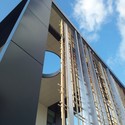
Architects: John McAslan + Partners
- Area: 7500 m²
- Year: 2011
-
Professionals: AKT II, Parsons Brinckerhoff



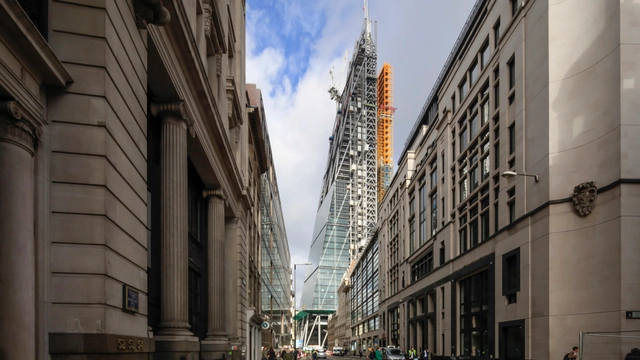
Rogers Stirk Harbour & Partners’ Leadenhall Building became the tallest building in the City of London when it topped out on June 18th. The 50 story tower opposite Lloyd’s of London rises to a height of 224.5 meters 802 feet), its slender form creating its own distinctive profile within an emerging cluster London. The building’s tapering profile is prompted by a requirement to respect views of St Paul’s Cathedral, in particular from Fleet Street. The building comprises a number of distinct architectural elements that provide clarity to the composition both as a whole and as a legible expression of its constituent parts. These elements include the primary stability structure, the ladder frame, the office floor plates, the northern support core, the external envelope and the public realm.
More images and video of The Leadenhall Building after the break...
_Malcolm_Reading_Consultants.jpg?1371133710&format=webp&width=640&height=580)
Canterbury Cathedral is delighted to announce a design competition to find an outstanding team to revitalise the landscape immediately in front of the main Cathedral entrance. The competition is an opportunity for designers to reconsider the way visitors first encounter England’s leading Cathedral and Mother Church.

_Hufton_Crow.jpg?1370195371)
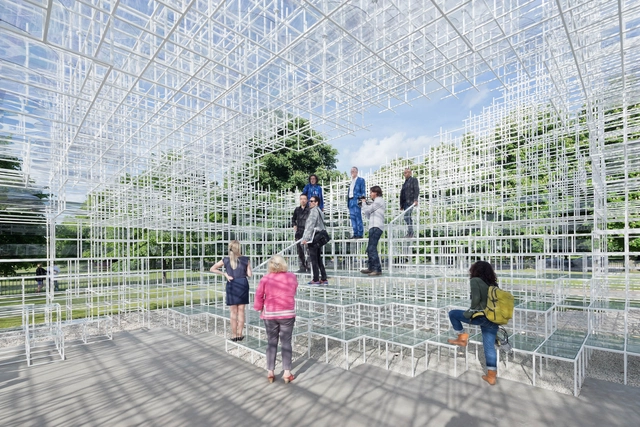
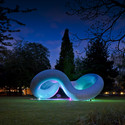
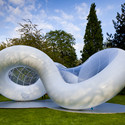
Sou Fujimoto's 2013 Serpentine Pavilion, now complete and standing on the front lawn of London’s Serpentine Gallery, has opened to the press and we are now able to see Iwan Baan's photographs of the temporary pavilion. Fujimoto will be lecturing to a sold out crowd this coming Saturday (June 8th) when the pavilion opens to the general public. The semi-transparent, multi-purpose social space will be on view until October 20th.
Fujimoto (age 41) is the youngest architect to accept the Serpentine Gallery’s invitation, joining the ranks of Herzog & de Meuron and Ai Weiwei (2012), Peter Zumthor (2011), Jean Nouvel (2010), SANAA (2009), and more. He described his Serpentine project as "...an architectural landscape: a transparent terrain that encourages people to interact with and explore the site in diverse ways. Within the pastoral context of Kensington Gardens, I envisage the vivid greenery of the surrounding plant life woven together with a constructed geometry. A new form of environment will be created, where the natural and the man-made merge; not solely architectural nor solely natural, but a unique meeting of the two."
The Guardian has posted both print and video reviews by Oliver Wainwright.
More images by Iwan Baan after the break. See also In Progress: Serpentine Gallery Pavilion / Sou Fujimoto.

As reported by BDOnline, Richard Rogers of Rogers Stirk Harbour & Partners has announced his support in the long-standing battle to save England’s Preston Bus Station from demolition. In a letter to the English Heritage, Rogers described the 1969 brutalist landmark as “truly a major modern building and an outstanding piece of 20th century architecture” that is in dire need of refurbishment.
“Preston Bus Station is not only admired internationally, but it also continues to be fully functioning. It is a critical transport hub,” he stated. “I would encourage you to consider listing the bus station and support a much-needed refurbishment.”
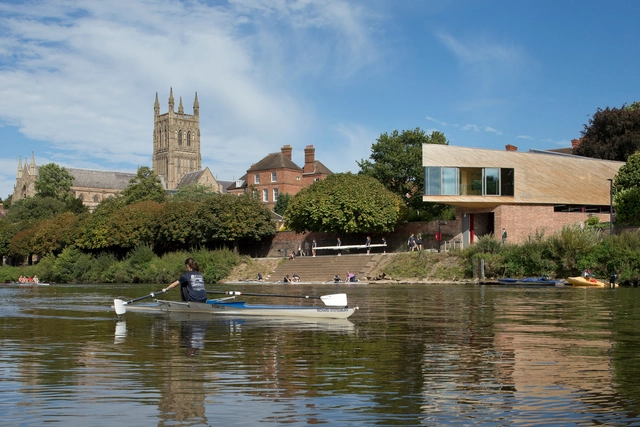

Foster + Partners have received the green light from the Lambeth Council for three mixed use towers on the 20-21 Albert Embankment in London. Ranging from 15 to 27 stories, the curved steel and glass structures will provide the area with 253 apartments, including affordable homes for senior living, along with offices, restaurants and a residents’ bar, gym, pool and spa.
Grant Brooker, Senior Partner at Foster + Partners: “We are absolutely delighted that 20-21 Albert Embankment has received planning permission – working alongside our clients at St. James and with great support from Lambeth and the GLA, we hope to transform this important and highly visible site into a vibrant riverside community that sets a benchmark for the regeneration of this part of the river.”
More after the break...
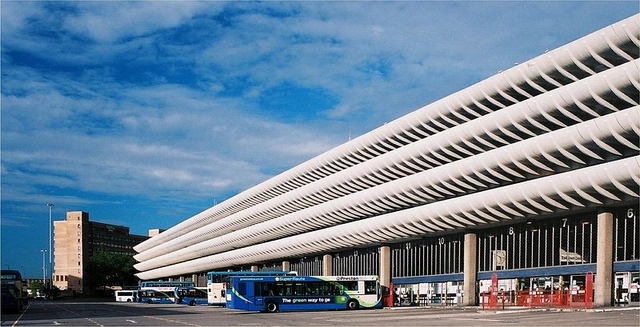
Divisive concrete behemoth Preston Bus Station may yet be saved from its planned demolition. On the heels of a well co-ordinated campaign to save the brutalist monument, local businessman Simon Rigby has stepped in and offered to relieve the council of the building planning refurbish and operate the bus station himself.
Read more about the controversy and Rigby's plan after the break...

Today, six months after the laser light extravaganza that marked the completion of The Shard in London, the controversial glass tower celebrated its official opening to the public. Architecture enthusiasts and residents were welcomed to join the mayor of London 244 meters above the capital on the 72 floor observation deck for the official ribbon cutting.
Designed by Italian architect Renzo Piano, the 310 meter needle-point structure is currently the tallest in Western Europe. The two million square meter mixed-use development offers ample office space, restaurants, a five-star shangri-la hotel and residences.
.jpg?1414503801)

On the advice of English Heritage, architecture minister Ed Vaizey has listed Norman Foster’s first major public building: the 1977 Sainsbury Centre at the University of East Anglia, Norwich, in the United Kingdom. According to BDOnline, the popular public art museum, which houses the collection of Lord and Lady Sainsbury, was granted grade II* protection for its innovative engineering, fine design, historic association, flexibility and group value. Its revolutionary design features an innovative, prefabricated modular structure that is cleverly designed to allow for subsequent extension.
Vaizey described: “Norman Foster’s design for the Sainsbury Centre is recognized around the world as a high point of the British ‘high-tech’ movement and, by any standards, a modern classic.”
Read Foster’s response after the break.


Images of the transformation of the Shell Centre Campus, which include 8 towers to be designed by six different architects in London's South Bank, have been released and submitted for approval by the local authority, Lambeth Council.
The project, under a Masterplan by Squire and Partners and co-developed by Canary Wharf Group and Qatari Diar, is a 5.25-acre mixed-use scheme between Waterloo Station and Hungerford Bridge. While the famous 27-story Shell Tower will be preserved, the plans show eight new residential and office buildings will be constructed by six architectural firms: an office and two residential towers by Squire and Partners, one office tower by Kohn Pedersen Fox Associates (KPF); a residential block by Patel Taylor; another by Stanton Williams; and two more residential towers by GRID Architecture.
In total, about 800,000 sq ft of office space, 800,000 sq ft of residential space (translating to 790 new homes, including affordable housing), and 80,000 sq ft of new retail units/restaurants/cafés will be created. As Michael Squire of Squire and Partners told The Architect's Journal: "We make no apology, this is a dense development, it sits next to one of the busiest train stations in Europe. This is a massive sustainable move that will allow people to live and work in the same area."
More on the proposed plan for London's South Bank, after the break...

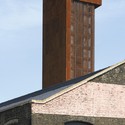


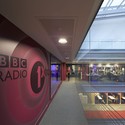

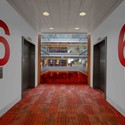



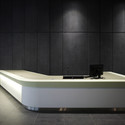
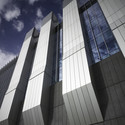

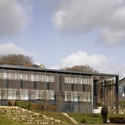
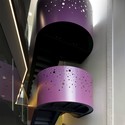


_Hufton_Crow.jpg?1370195392 "© Hufton+Crow")
_Hufton_Crow.jpg?1370195338 "© Hufton+Crow")
_Hufton_Crow.jpg?1370195354 "© Hufton+Crow")
_Hufton_Crow.jpg?1370195361 "© Hufton+Crow")
_Hufton_Crow.jpg?1370195371)