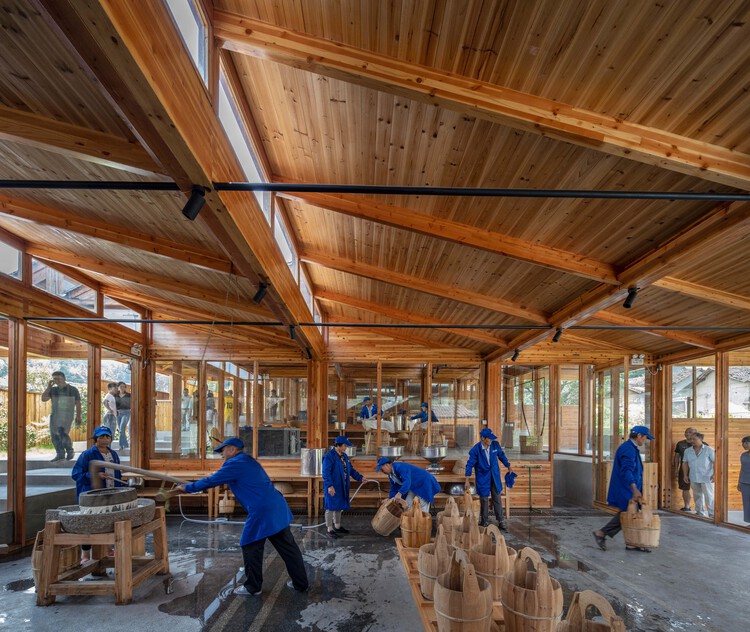
Xu Tiantian is the founding principal of DnA_Design and Architecture, an interdisciplinary practice that addresses both the physical and social dimensions of the contemporary living environment, across scales. Born in 1975 in Fujian, China, she received a Master of Architecture in Urban Design from the Harvard Graduate School of Design and a bachelor's degree in architecture from Tsinghua University in Beijing. Her recent work focuses on rural revitalization through a strategy she describes as "architectural acupuncture," understood as small-scale, site-specific interventions designed to activate local culture, agriculture, and tourism. These interventions, primarily concentrated in China's rural regions, have been recognized by UN-Habitat as a global model for urban–rural integration. In this interview with Louisiana Channel, she reflects on the role of the architect, questions architecture itself and the concept of beauty, explains her working methodology, and emphasizes the spatial dimension of nature.
DnA_Design and Architecture Studio: The Latest Architecture and News
"Beauty in Itself Is Dangerous:" Xu Tiantian on Moving Beyond Starchitecture in Louisiana Channel Interview

Louisiana Museum of Modern Art Opens Memoryscapes Exhibition Exploring the Design Methodologies of ATTA and DnA

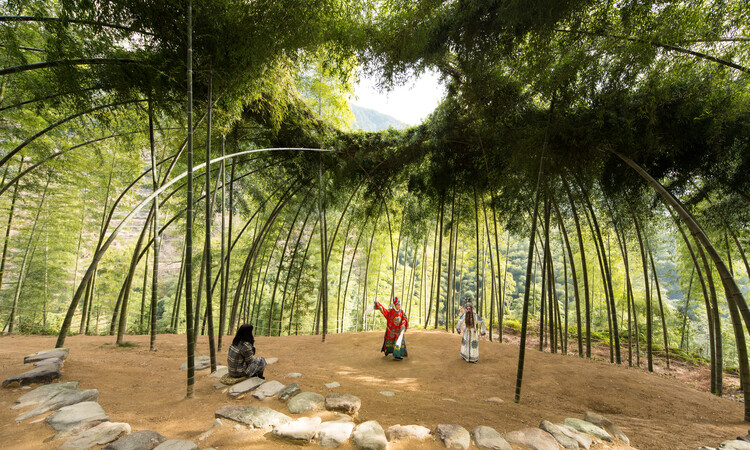
The Louisiana Museum of Modern Art will inaugurate, on January 22, 2026, the second exhibition in its Architecture Connecting series, focusing on the discipline's relationship with science and research across a wide range of fields, including biology, neuroscience, and anthropology. The first exhibition in the series, Living Structures (2024–2025), featured ecoLogicStudio, Atelier LUMA, and Jenny Sabin Studio, highlighting their work at the intersection of algorithms and nature and their development of methods that re-evaluate sustainable architecture and climate considerations. This second exhibition, titled Memoryscapes, explores the memories, stories, and traditions informing the working methodologies of Xu Tiantian's DnA_Design and Architecture (Beijing) and ATTA – Atelier Tsuyoshi Tane Architects (Paris).

ArchDaily's Best Architectural Projects of 2025
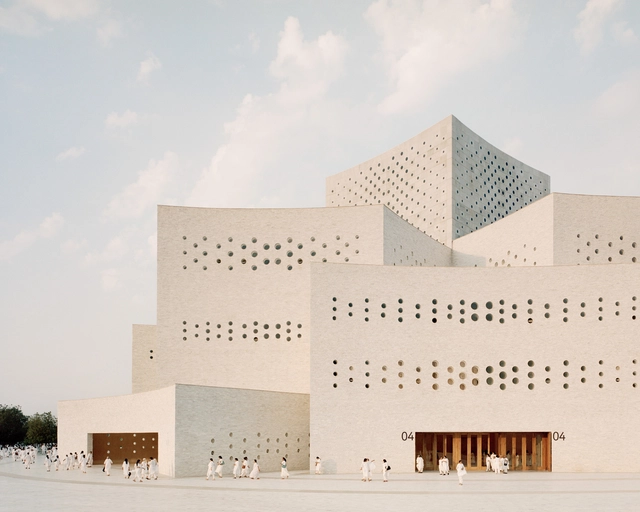
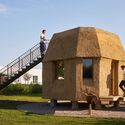
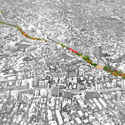
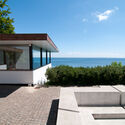
As the year culminates, it's once again time for the ArchDaily team of curators to reflect on the best-performing projects of 2025 and consider what readers were most interested in. Through this diverse overview, we assess the cross-continental similarities and differences in trends and construction development. This year brought us many grand cultural and public spaces by Lina Ghotmeh, BIG, Zaha Hadid Architects, DnA, and Serie Architects, who populated events like Expo Osaka and the Venice Biennale, as well as a surprising number of museums and public or landscape works in China and the rest of the Asian continent. However, while these were sought-after projects, the leading works remained, unsurprisingly, residential projects.
More specifically, the houses that were most viewed on the ArchDaily global site were concrete houses that bore considerable injections of greenery and landscape focus. They propose layouts highlighting voids and double heights, as well as inner courtyards or large openings to the exterior. While some references did suggest traditional or vernacular elements, modernist revivals were still predominant. Material trends are much more tame, with a recurrence of raw concrete use, as wood and stone were common accent elements. Still, the more interesting thing about the works this year is the efforts brought by architects in situating and setting the projects within their surroundings, bringing special attention to landscape and how projects merged with nature.
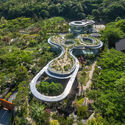
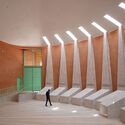
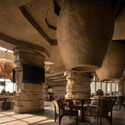
Xu Tiantian Receives the 2026 Charlotte Perriand Award
The Créateurs Design Awards (CDA) announced Xu Tiantian, Founder and Principal Architect of DnA_Design and Architecture, as the recipient of the 2026 edition of Le Prix Charlotte Perriand. The award celebrates architects whose work embodies innovation, social responsibility, and a deep engagement with community and place. The architect was recognized for her transformative work bridging urban and rural communities through innovative design interventions. Her approach to architecture was acknowledged as a tool for cultural preservation and rural revitalization, making her an exemplary recipient of this honor, previously awarded to prominent architects such as Frida Escobedo, Jeanne Gang, Kazuyo Sejima, and Ryue Nishizawa.

Beyond Manufactured Landscapes: Quarries as Sites for Interdisciplinary Collaboration

Quarries can be seen as indelible abandoned scars of human resource extraction. Man-made spaces, perceived as voids, and material gain, have fundamentally shaped our accelerating built environment. All the while, the earth stands still as a silent witness. For decades, these open-pit mines have been viewed as a necessary consequence of consumerism and urban growth, their raw, imposing forms a testament to the large-scale extraction of materials essential for building our cities. However, a global architectural movement is now emerging to engage with these existing forms, transforming these subtractive spaces into sites of innovation, collaboration, and renewed purpose.


Beijing Architecture City Guide: 28 Projects to Understand Contemporary Architecture in a 3,000-Year-Old City
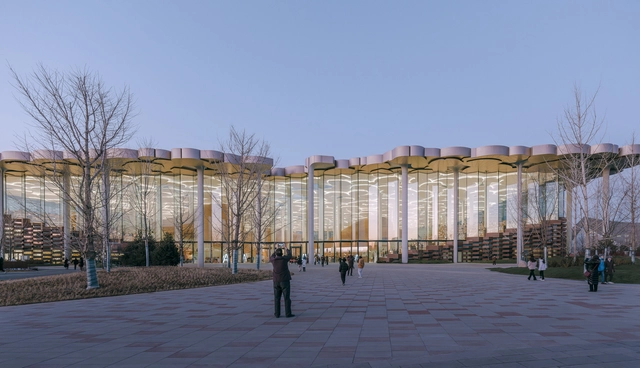
Beijing, as the cultural and political center of China, embodies a rich architectural language that bridges history and modernity, tradition and innovation, showcasing the city's profound depth and diversity. From monumental landmarks like CITIC Tower and Daxing International Airport to the hidden courtyard renovations nestled within the city's historic hutongs; from the dramatic revitalization of the Shougang industrial site to the refined transformations of Baiziwan and Baitasi, Beijing's architectural achievements continue to captivate and inspire. Every space tells a unique story of the city, blending heritage with contemporary vibrancy.
In this city, memories are preserved, and vitality thrives. Let us step into Beijing, rediscovering the "new Beijing" within the "old Beijing" through the lens of its architecture, and experience the depth of time and the pulse of the city in its dynamic spaces.


DnA's Xu Tiantian Unveils her Comprehensive Design Process in CCA’s Groundwork Debut: 'Into the Island'
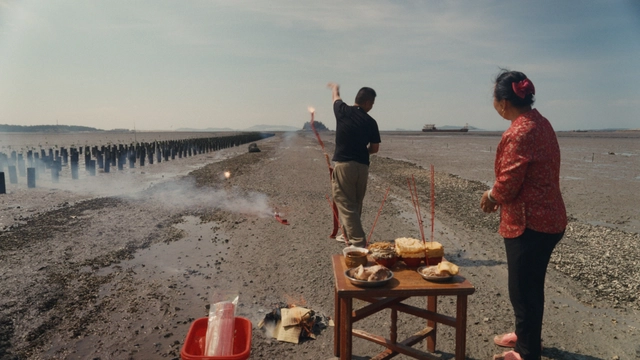
With the heightening of ecological and social crises all around the world, architects have had to re-evaluate their role, impact, and design approach. As the "new needs" of people arise, new architectural processes must be explored to answer them. However, this still comes with much resistance from the standing practices and push for financial gain that often makes it difficult to implement more comprehensive solutions. These notions led the CCA (Canadian Center for Architecture) to launch their new 3-part film and exhibit series called " Groundwork", curated by the associate director, Francesco Garutti. Through this project, the CCA selected and followed three renowned contemporary architects/practices as they developed their concepts and field research, which allowed them to engage respectfully with their site and residing communities. It's an up close and personal look into what motivates the selected architects to examine alternative ways of designing and the challenges they go through as the three parallel stories unfold.
The first exhibit opening and movie screening was held in May 2024, followed by an in-conversation event with the program curator and architect, where the question of "What is architecture today" was discussed. The exhibit and its many showcased elements, channels visitors along to the first site exploration with DnA's Xu Tiantian as she ventures "Into the Island" of Meizhou, China, in the summer of 2022.



Restoring a Symbol of Collective Memory: Holcim Award Winner Xu Tiantian Discusses the Impact of Adaptive Reuse
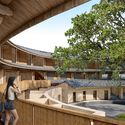
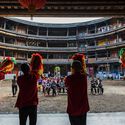
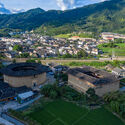
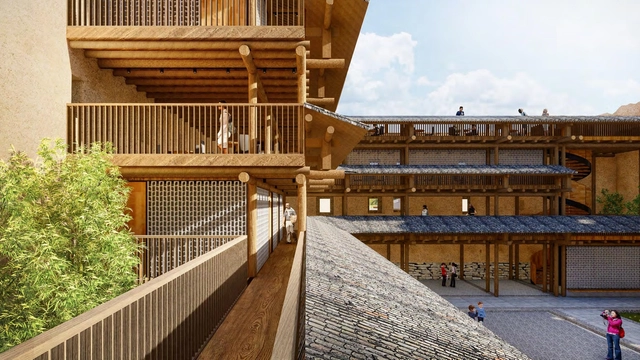
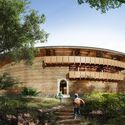
In the mountain valleys of China’s Fujian Province, thousands of large, rammed earth fortresses lay abandoned. Once used for both defense and collective housing, the tulou typology is an integral part of the region’s cultural heritage, with 46 of them being recognized by UNESCO as World Heritage Sites. Despite this, the rural communities surrounding them have struggled to find new roles and purposes for these buildings. Going beyond the need for conservation, architect Xu Tiantian of DnA_Design and Architecture set out to develop and adapt this heritage to reintroduce it into community life. The Fujian Tulou | Adaptive Reuse project recently won the Gold Prize of Holcim Awards 2023 for Asia-Pacific, recognized for creating “an exemplary model for building conservation initiatives.” In a video interview for ArchDaily, Xu Tiantian discusses the principles that underpin this initiative and the potential outcomes of adaptive reuse in rural communities.

Winners Announced for the 2023 International Holcim Awards
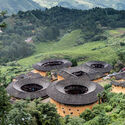
The Holcim Foundation for Sustainable Construction has revealed the winning projects for the Holcim Awards 2023 competition, as well as the silver, bronze, and acknowledgement prizes, at a ceremony on November 18 in Venice, Italy. Evaluated by a jury comprising five independent expert panels from around the world, these projects were chosen to highlight contextual and practical approaches to sustainable construction, showcasing diversity across scales, budgets, geographies, and forms. On another hand, Francis Kéré winner of the Global Holcim Gold in 2012 and Laureate of the Pritzker Architecture Prize in 2022 took the stage at the event to talk about the influence of the Holcim Award on his career.
DnA_Design and Architecture Studio took home the golden prize for Asia-Pacific for an adaptive reuse project of a heritage building, while Husos, Elii, and Ultrazul won for Europe with a 360° co-design process for the rehabilitation of an industrial building. For the Latin American territory, Cano Vera Arquitectura was selected for an urban forest and social infrastructure precinct, and for the MEA region, Juergen Strohmayer and Glenn DeRoché were praised for a youth empowerment and responsible tourism cooperative. Finally, Partisans Architects and Well-Grounded Real Estate won the first prize for North America with a high-tech and low-cost modular housing solution for urban living.

Holcim Foundation for Sustainable Construction Announces Finalists for the 2023 International Holcim Awards
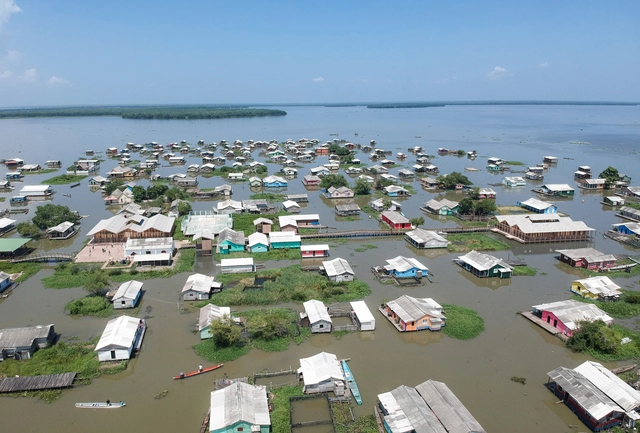
The Holcim Foundation for Sustainable Construction has unveiled the list of 20 finalists for the Holcim Awards 2023 competition. The jury, composed of five independent expert panels worldwide, has selected the projects to showcase contextual and practicable approaches to sustainable construction, exemplifying a diverse range of scales, budgets, geographies, and forms. The ranking of the nominees will be announced at the Holcim Awards 2023 Ceremony scheduled for November 18 in Venice, Italy during the final weeks of the Biennale Architettura 2023 - 18th International Architecture Exhibition.



Why Landscape Architecture Matters Now More Than Ever

Landscape architecture is having a moment. The latest proof: last week, the US Department of Homeland Security decided to accredit the field with its prestigious STEM designation. As part of the science, technology, engineering, and mathematics (STEM) educational disciplines that fall under this category, landscape architecture students can now spend an additional 24 months seeking employment and training post-graduation in the United States after an initial period of a year granted to all graduates. The title also promises more prestige, higher entry salaries, and additional career flexibility. Torey Carter-Conneen, CEO of the American Society of Landscape Architects (ASLA), calls the development a significant advancement for 'landscape architecture education and practice, and that is great for America and the global community.'
The news corresponds to a growing emphasis on landscape architecture as a pivotal practice around the globe in recent years – one that is closely connected to notions of public health, environmental design, biophilia, sustainability, and re-wilding. It also underlines the intimate relationship between technology and the discipline. Landscape proposals increasingly rely on advanced science and technology to predict how ecological interventions might alter an existing terrain and determine what measures will yield the highest benefit for both humans and nature. The contemporary ideal of wild meadows and biodiverse forests may exist free from external influence, but the path to get there requires assistance.


Saving South-East Asia: 5 Social Design Projects by Local Architects
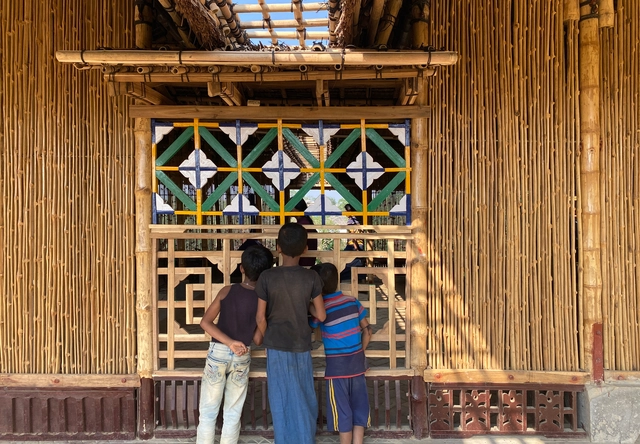
Architecture has been criticized for being a primary elitist indulgence. Most architectural projects are funded by the wealthy and seen as a means of bringing beauty into the surrounding environment. Architecture, however, is a double-sided coin with functionality balancing out aesthetics. With the ability to strategize radical solutions, architects equally find themselves at the forefront of solving complex issues. The context of Southeast Asia offers a demanding challenge with various social problems, giving architects a chance to save the world with humanitarian design.
The Manifestation of Traditional Chinese Architectural Language in Modern Architecture
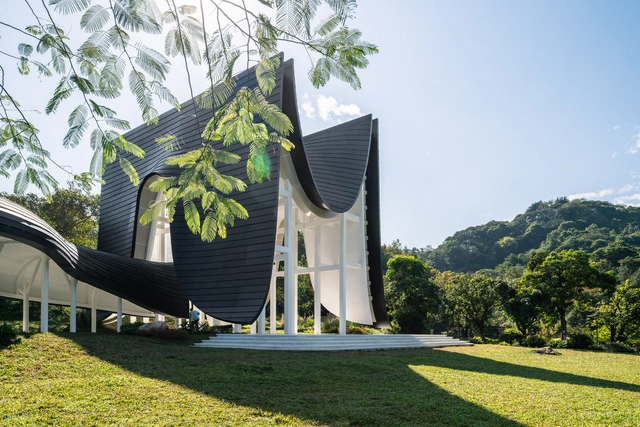
We have never stopped exploring the manifestation of traditional Chinese architectural language in modern architecture, starting with the effort of a modern volume with a traditional paradigm roof. This inheritance and expression are based on the context, which is divided into two categories: "Adoption" and "Ablation". The reinterpretation of traditions from "Form," "Sense," and "Model" is "Adoption." Ablation is a constructive compromise with the environment that respects the original rural or urban texture and appearance. It is based on old forms and building techniques, enhanced with modern design approaches and techniques. It improves conditions either by erasing them in some situations or by disappearing and integrating into them. Contemporary architecture is both the tradition of the future and the tradition of the past. The "classics" are continuously being extended by architects using new techniques


Exploring Chinese Rural Construction Strategies Based On Diébédo Francis Kéré’s Philosophy
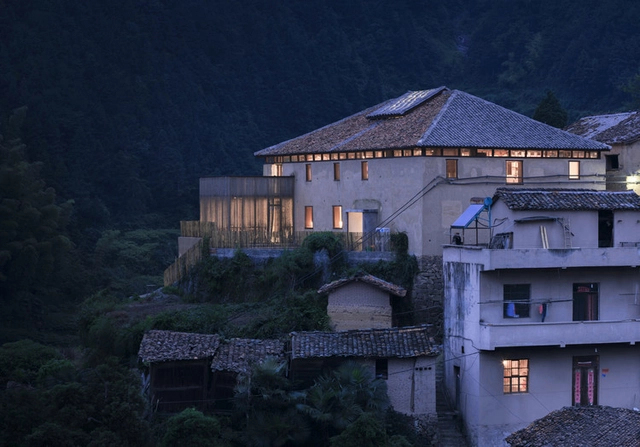
The immensity of China leads to the diversity of customs and climatic conditions. Each area has its own unique materials, construction methods, and climate adaptation measures. The regional characteristics of Chinese architecture are generally preserved in rural buildings. But we cannot overlook how contemporary technology may considerably improve the living and use conditions of rural buildings. What is the best way to create a balance between classic or inherent technology and new ones? How would the construction of rural architecture provide inspiration for the development of Chinese architectural cultural symbols?
2022 Pritzker Architecture Prize winner Diébédo Francis Kéré reported the great solutions of Burkina Faso. Kéré insists to build comfortable buildings at a reasonable price; to make users happy and inspire them to dream of a better life. The pride of the local culture is reinforced by the use of local materials and traditional techniques. And then Kéré‘s works in other countries show cultural emblems of Burkina Faso, which are the consequence of his own cultural accumulation.


The Latest Exhibition at Aedes Showcases the Transformation of Stone Quarries into Cultural Infrastructure

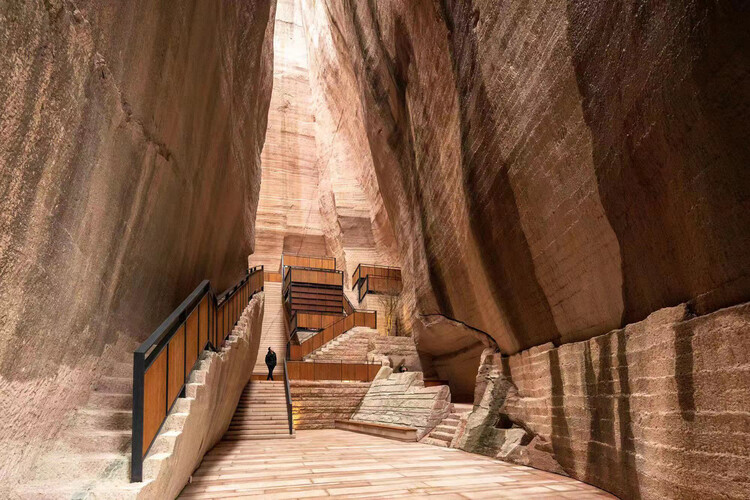
Aedes Architecture Forum recently inaugurated the "Jinyun Quarries – The Quarry as Stage" exhibition, which showcases the transformation of abandoned stone quarries in the Zhejiang Province, China, into a platform for cultural and social activities. Beijing architect Xu Tiantian and the team of DnA_Design and Architecture were tasked with developing a new public infrastructure inside nine of the mines in Jinyun County, thus opening up new economic perspectives for the local people. Running until May 5th, the exhibition highlights the extraordinary spatiality of the stone quarries while communicating the complexity of the structures through a series of models, plans and photographs of the interventions.


DnA Designs a Music Studio by the Sea in Qinhuangdao, China
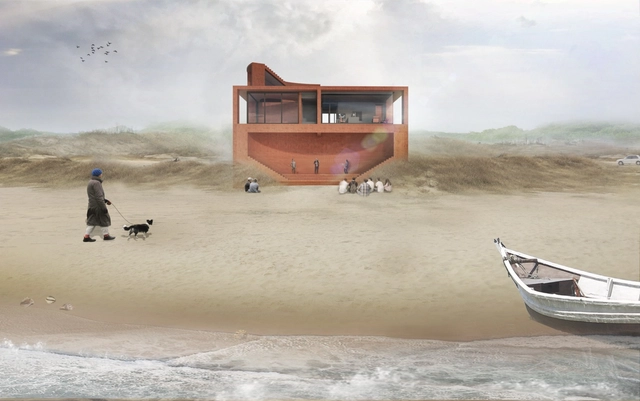
DnA has released images of its Music Studio By The Sea project, situated in Hebei Province, China. The studio building for a music foundation stands directly next to a long sandy beach, with a dune landscape in the background. On a square ground floor plan, the volumes ascend over three stories and conclude with a roof terrace.
Sheila O’Donnell and Xu Tiantian Win 2019 Women in Architecture Awards
.jpg?1551411640&format=webp&width=640&height=580)
For this year's Women in Architecture Awards, The Architectural Review and the Architects’ Journal have selected Sheila O’Donnell as Architect of the Year and Xu Tiantian to win the Moira Gemill Prize for Emerging Architecture in the 2019 Women in Architecture awards. The Architect of the Year award recognizes excellence in design specifically in the context of a recently completed project and the Moira Gemmill Prize for Emerging Architecture is awarded to women designers under the age of 45 who show design excellence indicative of a bright future.