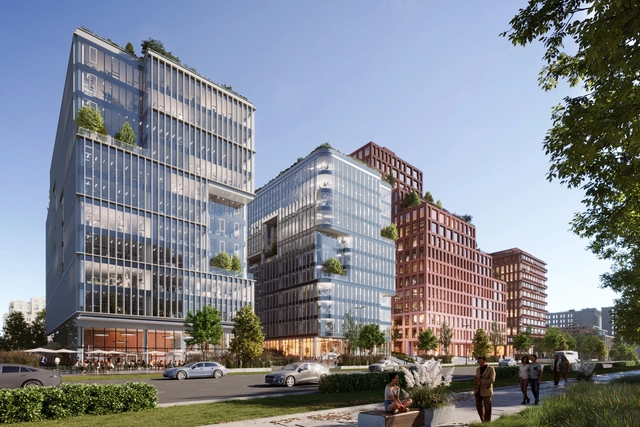
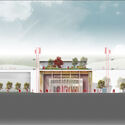
MVRDV and Orange Architects collaborate on the NUVO project, a new mixed-use complex to be built in Ukraine’s capital, the team of architects has revealed their design for three of the buildings that will become part of NOVO. Commissioned by Kovalska, the project is now restarting after work was put on hold due to the active conflict in Ukraine. The two firms are collaborating to refine the master plan initiated by APA Wojcehowski Architects.
The role of a school is to prepare children for life. But with life-changing faster than ever, schools need to change just as quickly. Recent additions to school curriculums reflect the complexities of modern life, with environmental crises, societal injustices, and the dangers of social media now major parts of the syllabus.
Although it’s often said that long-term change begins at ground-level, change is never easy, wherever it starts. For example, a curriculum that responds to environmental issues is said to cause growing instances of eco-anxiety in children, one of a number of causes of another crisis, in children’s mental health.
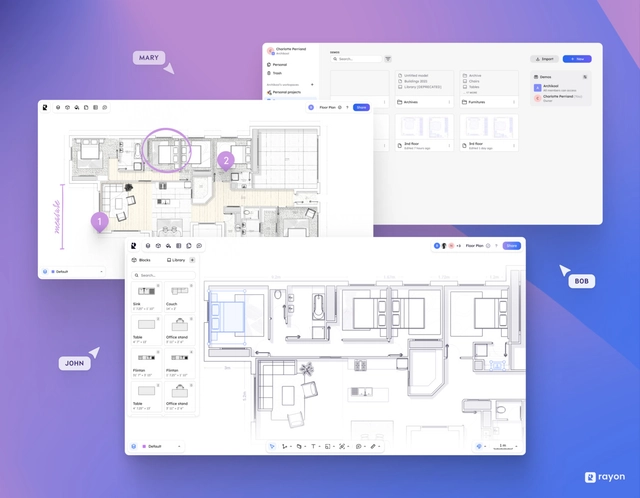
Rayon, an innovative online design tool that aims to create a new collaborative approach to developing "mundane buildings" within the city, has been selected as part of ArchDaily's 2023 Best New Practices. Founded in 2021 by Bastien Dolla and Stanislas Chaillou, it is a collaborative design software that brings together professionals in the architecture, engineering, and construction (AEC) industries. The software company believes that there is a “culture of the ordinary” in architecture. This culture represents an ecosystem of buildings that may seem unremarkable or aren't impressive landmarks in the city. However, these buildings and their construction professionals make up 90% of the urban fabric and contribute to the design culture that collectively gives identity to the city. The founders believe previous software generations have neglected this culture and propose Rayon as a novel tool to fill that gap by enhancing collaboration and user ergonomics.
Mario Cucinella Architects has just revealed the design of the Italian Pavilion for Expo Osaka 2025. Envisioned as a dynamic entity, the pavilion aims to foster knowledge and innovation through the interplay of different generations and cultures. It will serve as a collaborative repository of Italian expertise, encompassing artistic, scientific, entrepreneurial, and social experiments. The display is designed around Italy's cultural treasures and aims to highlight, deconstruct, and then reinterpret them in a contemporary manner.
The purpose of innovation is to promote positive change and progress in various aspects of life. This involves creating, developing and implementing new ideas, methods, products, or processes that improve existing ones or introduce completely new concepts. Renowned architecture and design firm Henning Larsen, founded in 1959 in Denmark, has a solid commitment to embracing innovation as a core element of its work. With an emphasis on design excellence, sustainability, collaboration and user-centric approaches, innovation plays a key role in its quest to create iconic and sustainable architectural landmarks. Through dedicated research and development, they are constantly exploring new ideas, materials and technologies to enhance functionality and elevate the user experience of their buildings. To learn more about this visionary approach and its impact on architectural efficiency, we spoke with Jakob Strømann-Andersen, who heads a specialist department that combines innovation and sustainability, highlighting the firm's commitment to pushing the boundaries of sustainable architecture.
In the south of Burkina Faso, sharing borders with the northern environs of Ghana is Tiébélé; a small village exhibiting fractal patterns of circular and rectangular buildings, housing one of the oldest ethnic groups in West Africa; the Kassena tribe. With vernacular houses dating back to the 15th century, the village’s buildings strike a distinctive character through its symbol-laden painted walls. It is an architecture of wall decoration where the community uses their building envelope as a canvas for geometric shapes and symbols of local folklore, expressing the culture’s history and unique heritage. This architecture is the product of a unique form of communal collaboration, where all men and women in the community are tasked with contributing to the construction and finishing of any new house. This practice serves as a transmission point for Kassena culture across generations.
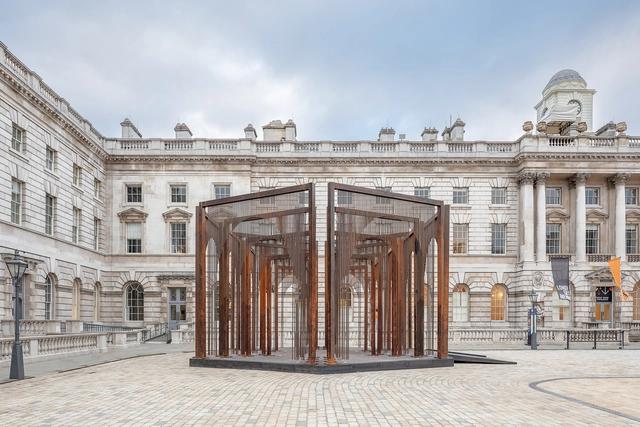
London Design Biennale has opened on June 1st, 2023, at Somerset House, bringing together participants from around the world to celebrate new forms of international cooperation through design. The Biennale, now in its fourth edition, will display more than 40 installations focused on the theme ‘The Global Game: Remapping Collaborations,’ chosen by this year’s Artistic Director, the Nieuwe Instituut, Instituut, led by Aric Chen. In addition to the national participants, the Eureka exhibition will showcase cross-disciplinary innovations from UK’s leading research centers.
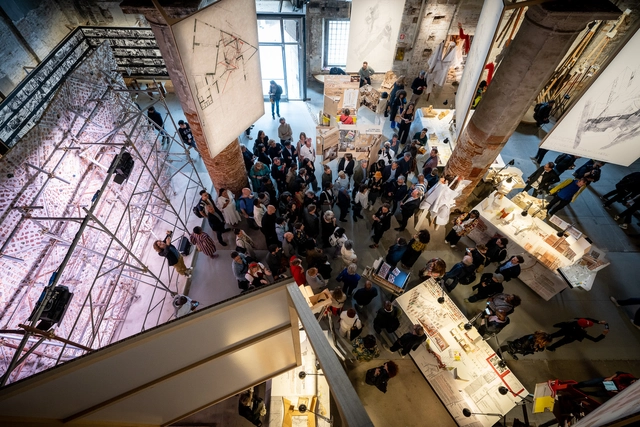
As Venice Architecture Biennale presents its 18th edition titled "The Laboratory of the Future", it centers on Africa as a place of exploration that will offer a template for solutions to the world. According to its curator Lesley Lokko, the Biennale explores entrenched concepts such as climate, land rights, decolonization, and cultures. It challenges us to question how Africa's history can be a radical tool for imagination and reminds us of Stephen Covey's statement: “Live out of your imagination, not just your history.” The biennale's title is probably the most ambitious question in years. It forces us to revisit all boundaries of the continent's historical societies, explore the influence of imposed colonial borders on them, and examine the dual identities they gave birth to. We must consider how these identities can be instruments of creativity, and, more importantly, recognize that every African society has a unique point of view. This viewpoint yearns for cross-cultural collaboration as a powerful tool for imagination.
In these fast-paced and constantly evolving times, architecture has been adapting to new building technologies and complexities to serve today’s world needs. Teams of experts from all areas, architecture, engineering, construction, and a long list of professionals, come together to bring these solutions to our built environment. At ArchDaily we have been highlighting these actors in the architecture we curate and publish every day, but we often come across other types of projects, in which we spot different needs, and ways of building in certain places and communities, that equally require a highly qualified team, specific local techniques, and knowledge that are worth sharing.
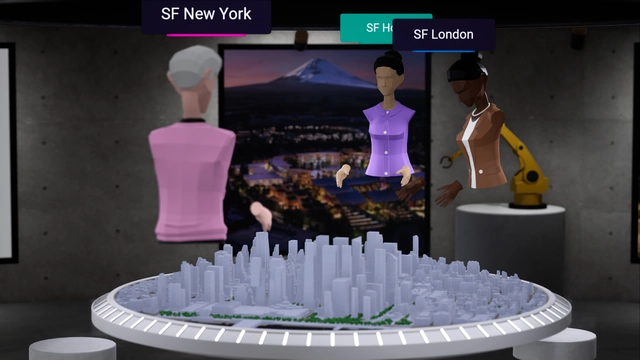
UNStudio and Bjarke Ingels Group have partnered up with Squint/Opera to develop SpaceForm, a virtual, cloud-based platform that facilitates design, review and collaboration processes for architects and developers. The new virtual workspace explicitly developed for the architecture and construction industry aims to fill a gap by creating a viable and sustainable way of collaborating and designing remotely across global teams, thus reducing the need for travel.
The role of an architect has not always been what it is today. Historically, and almost since its inception, it was viewed as a “one-man show”, where the architect was the artist, the sculptor, and the visionary of a structure. As the practice has continued to evolve, it has become a much more collaborative, and much less individualistic profession in nature, continuously understanding the importance of considering outside perspectives- even those not traditionally trained in design.
My decision to study architecture was a naive one, made after having taken several vocational tests I found on Google. When I found out it was one of the toughest courses in Brazilian public universities, I thought about giving up. But I was already hooked by the history of architecture and its social role.
However, nothing is perfect. Architecture and Urban Planning is one of the most elite courses in the most renowned Brazilian universities, something that is reflected outside of the classroom as well. The architects went on to serve the rich, casting aside the needs of the cities and the poor.
The Architects’ Journal's AJ Specification Awards returns for a 2nd year, celebrating successful collaborations between suppliers, manufacturers, and architects. The awards celebrate how exceptional working relationships between architects and suppliers and manufacturers lead to successful projects, showcasing standout examples of the creative use of products and materials in making great buildings. Be it to find solutions to particular design challenge, or simply to bring joy to a project, the intelligent integration of products into the design process – from the taps in a bathroom to the finishes on a façade – is an aspect of architecture that the AJ has long championed.
This is just one of the many questions we architects frequently ask, and get asked. But how much easier it would be if there was a foolproof way to manage revisions and know that everyone else is on top of it too.
https://www.archdaily.com/913919/the-foolproof-way-to-manage-revisionsRachel Hur
You're an architect so you know organization is key. You think you’re on top of all the categories, rules and folders in Outlook that you've created to get by. You file away all of your emails by project and category, but time and again, your email search function fails you and finding any file is a nightmare.
https://www.archdaily.com/913000/how-to-streamline-the-design-processRachel Hur
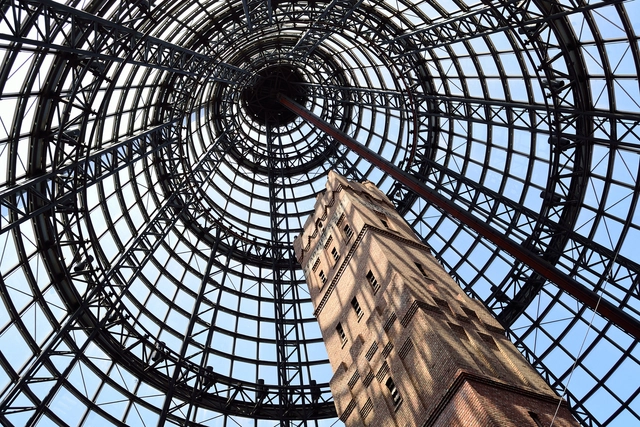
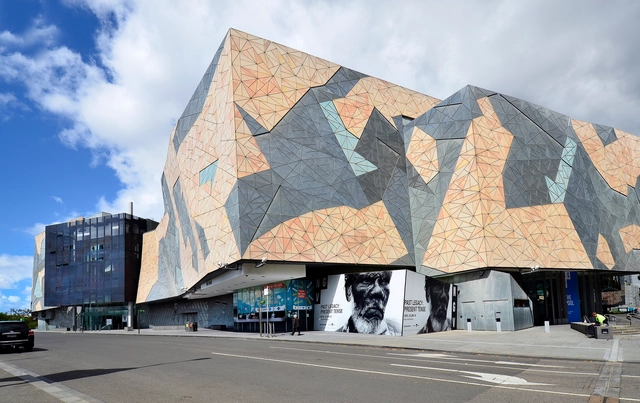
Federation Square, near the head office of SiteSupervisor, Melbourne, Australia
As architects, we often find ourselves as defacto Project Manager on site throughout construction. Whether it’s a small or large project, many of us find ourselves going from documentation to construction. SiteSupervisor provides a seamless transition from design to build that can be easily set up at the beginning of a project without costing your team more transition time, effort and money. The architect can set up the hierarchy of the project and share relevant details with assigned consultants and contractors, who can then easily pass on information to the subcontractors without breaking the communication protocols in place. So, don’t worry, you still remain in control of your project at all times.
https://www.archdaily.com/911556/how-to-make-end-to-end-design-build-easier-for-architectsRachel Hur