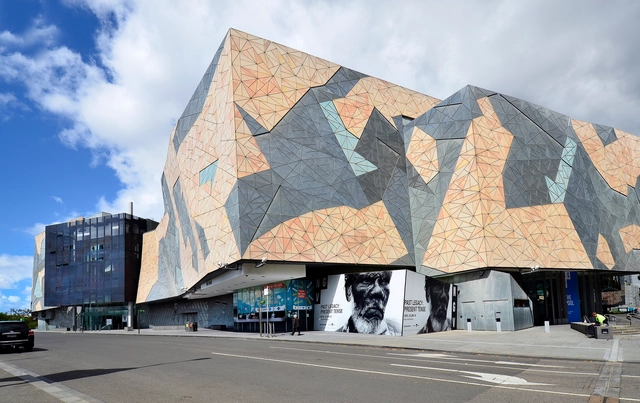
Federation Square, near the head office of SiteSupervisor, Melbourne, Australia
As architects, we often find ourselves as defacto Project Manager on site throughout construction. Whether it’s a small or large project, many of us find ourselves going from documentation to construction. SiteSupervisor provides a seamless transition from design to build that can be easily set up at the beginning of a project without costing your team more transition time, effort and money. The architect can set up the hierarchy of the project and share relevant details with assigned consultants and contractors, who can then easily pass on information to the subcontractors without breaking the communication protocols in place. So, don’t worry, you still remain in control of your project at all times.
https://www.archdaily.com/911556/how-to-make-end-to-end-design-build-easier-for-architectsRachel Hur
Communication is key. As architects, clear communication is possibly the most vital part of our role. It enables us to share our ideas with clients and is crucial in getting that vision built exactly how we want it. Starting with the parti diagrams through to intricate construction details, we know by now (many, many years post-architecture school) that we’re pretty darn good at communicating our ideas across. But have you ever thought about managing communications?
Wait. Hold on… Managing... Communications? Don’t worry, it’s not as complicated as you might think. This is just about keeping everything organized, such as your correspondence with a builder/general contractor or client. SiteSupervisor can help make this an easy process with its user-friendly interface for project communication. Here are some of the communication benefits I have found with SiteSupervisor.
https://www.archdaily.com/915149/why-managing-communications-is-essentialRachel Hur
We all get 24 hours in a day. Sometimes we feel like the clock is overtaking us with each new day adding more and more to the list that we can never seem to quite get to the end of. If only there was a way that each task could be made efficient, manageable, then the process of checking things off would be so much easier.
https://www.archdaily.com/914287/do-yourself-a-favor-and-save-timeRachel Hur
It’s a tale as old as time. The architect slaves away night after night designing the most beautiful architecture. The people are raving, excited to see what new and impressive building will go up this time. The render looks amazing!
https://www.archdaily.com/915907/realize-your-visionRachel Hur
There may be times when you remember an old project you did, perhaps at uni, that you want to show someone. The one that had the amazing render that took 10hrs of Photoshopping. But no, it’s at home on hard-drive no.2 of 5. If only you had uploaded that one to SiteSupervisor, you could be showing it off right... about... now.
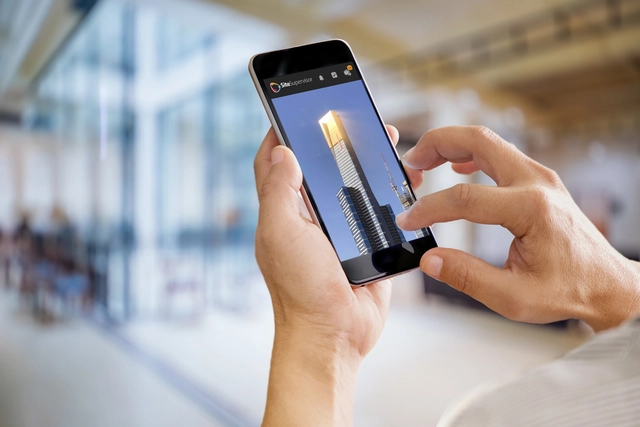
SiteSupervisor is your new pocket portfolio. No, not the portfolio that you keep in the drawing tube that only ever sees the light of day at a job interview, but a real, live portfolio that you can access on your phone anytime, anywhere. It's time to take pride in the work you do and have done, and really use what you have to not only bring in more work, but also solve problems.
https://www.archdaily.com/912085/access-your-portfolio-anytime-anywhereRachel Hur
The awards celebrate how exceptional working relationships between architects and suppliers and manufacturers lead to successful projects, showcasing standout examples of the creative use of products and materials in making great buildings.
Be it to find solutions to particular design challenge, or simply to bring joy to a project, the intelligent integration of products into the design process – from the taps in a bathroom to the finishes on a façade – is an aspect of architecture that the AJ has long championed.
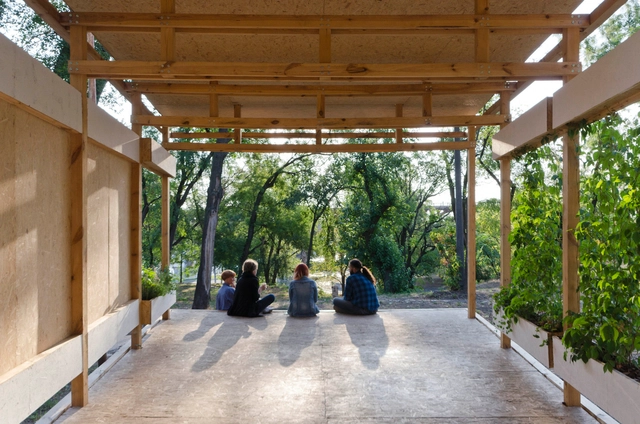
In Dnipro, Ukraine, sits a unique multi-purpose pavilion rich with historical roots and design influence. Stage is a collaborative project between architects from Ukraine, Poland, Denmark and Italy, crowdsourced and crowdfunded by the citizens of Dnipro. The site for the pavilion has been centered around community involvement throughout the complex history of Dnipro, but it has laid unused for over 70 years.
Stage is an emanation of the rich and vibrant culture and was built to accommodate the needs of dozens of artists, poets, painters and musicians, who previously relied on various spaces scattered around the city. Their "collective creative energy" was used to reactivate the lost community space. Stage was recently awarded Special Mention in the 2018 European Prize for Urban Public Space.
A +100 meter stretch of land beneath a train overpass in Koganecho, a district of Yokohama, Japan, underwent a progressive refurbishment in which seven different types of community space, each designed by a different architect, were built within a pre-set spatial grid. Historically there were many social issues in the area, largely in relation to its profitable but dangerous black market and red-light district. Once the illegal activity was eradicated in 2005, the underpass presented a great opportunity for social re-development, and the resultant project - the Koganecho Centre - emphasized an age-old Japanese cultural commitment, where what was once broken is used to make something new.
The recent availability of automated design and production techniques is changing the development of building details. With parametric and algorithmic design methods and the use of digital fabrication, new abilities are required from architects for the design of details, at the same time as new players are beginning to take part in their development.
Although not always given the necessary attention, architectural details are of extreme importance for many aspects of a building. They can define its theoretical expression and technical character, and impact its production process, its assembly method and even its ecological footprint. Contemporary architecture shows a new interest in detailing, which should not be confused with a return to the appreciation of artisanal work.[1] This new interest is related to the recent re-involvement of the architect with the physical making of buildings, as a result of the use of digital technologies.[2] The new “digital master builder” [3] counts on file-to-factory processes, in which the morphology of construction details is directly related to the knowledge of the available production processes.
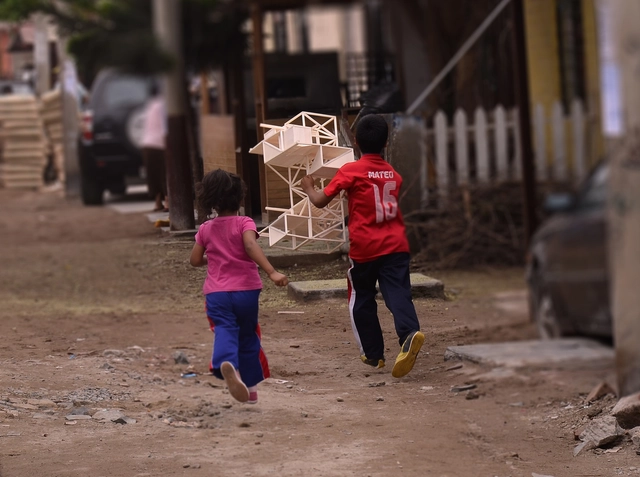
The architectural model: a tool, a sculptural artifact, a prized possession, and yet in the digital age of BIM and Virtual Reality, perhaps becoming an enigma, a relic for settling dust. And yet, we are still making them. If you imagine that famous photo of earth from space, of every model ever made in a single image, it raises the question - where are they all? Where does the architectural model go to die?
(c) Flickr user Redlegsfan21 licensed under CC BY-SA 2.0
The Oakland Athletic's have hired four firms to lead the design and urban planning for their new ballpark on the Peralta site, near the heart of Oakland. HOK will be collaborating with Snohetta on the design of the ballpark. Snohetta will also be working on the masterplan along with Sasaki and Oakland-based Studio T-Square.
The Australasian Student Architecture Congress (ASAC)—titled Agency 2017—will be held in Sydney from the 28th of November to the 2nd of December. It will be the first congress held in Sydney since 1999 and student-led by ASAC Inc., a non-profit student body based in NSW, Australia.
Charles Thornton, one of the world’s preeminent structural engineers, once said that the greatest challenge facing the profession of structural engineering is that “I don’t think we have enough self-esteem and enough confidence in ourselves to believe that what we do is so important... Architects are trained to present, to communicate, to sell, to promote themselves, to promote their industry, and to take credit for what they do.”
As a structural engineer with over a decade of experience, I agree with Mr. Thornton—to an extent.
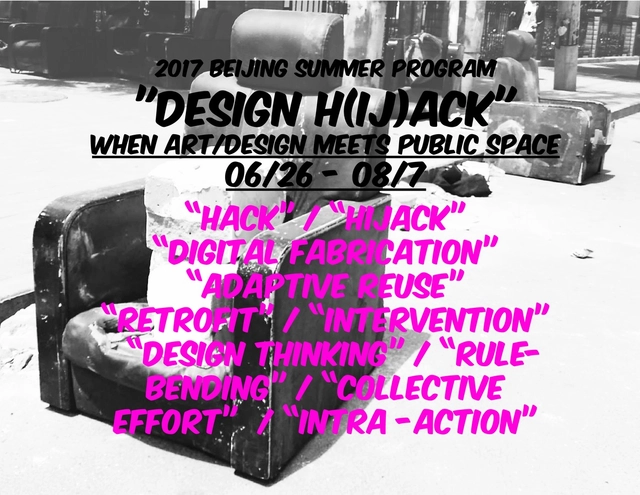
Summer Youth Program Seeks Proposals for Spectacular Projects Worldwide call seeks ideas from Engineers, Architects, Designers, Sculptors, Builders, Technologists, Artists and Makers of all kinds
How to Succeed as a Young Architecture Professor (Without Dying in the Process)
In this article originally published in Spanish by the Arquia Architecture Foundation's blog, the author Manuel Saga speaks about the important task of involving young professors in architecture schools, arguing that it is essential that the academic route is seen as a real option with as much value as being a “big name designer,” especially when you take into account the current crisis seen within the industry.
Framebench, an online tool for visual collaboration, seeks to alleviate the digital sharing problems architects and designers commonly face in practice. Aiming to do away with file storage systems, FTP clients and other kinds of complex software, this web application allows for teams and individuals to share, discuss and annotate drawings in real time. Framebench suggest that "this could be the online space where you can organize all your drafts and finals, get feedback and approve the work that's finished" - in realtime.
The system works by creating workspaces for teams to quickly share their files with one another. You can share any image, video, or document with your team, who can then view it right there without any downloads or installation. While viewing, anyone can annotate on top or leave comments; these comments transform into discussion threads that can be referred back to and added to later.
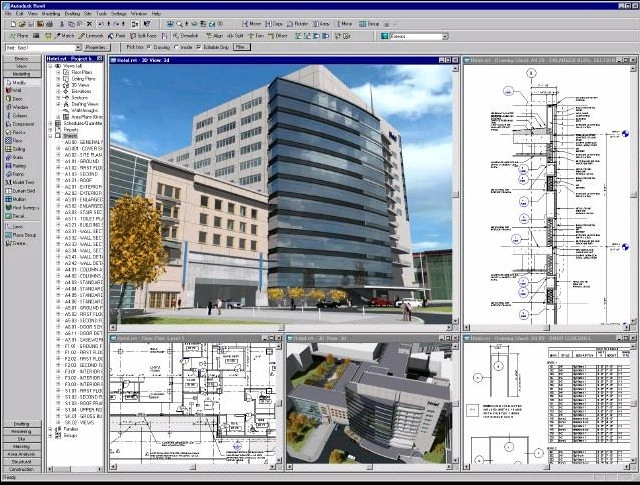
Screenshot of a Revit Model. Via Flickr CC user. Used under Creative Commons
This article on Line/Shape/Space by Jeff Yoders discusses how BIM can be used to good effect by bringing different professionals together early on in a design project. By utilizing the shared BIM model over the cloud - or even by providing a dedicated "Computer-Aided Visual Environment" or "BIM CAVE" (seriously) - clashes can be detected early, design priorities can be more balanced, and ultimately the time and cost requirements of a project can be significantly reduced. You can read the full article here.







.jpg?1503515565&format=webp&width=640&height=580)


.jpg?1470849709&format=webp&width=640&height=580)