

Spirit of Space has shared with us their most recent collaboration with Phil Enquist of Skidmore, Owings & Merrill: Art in the City. Pairing powerful quotes with imagery from the Chicago’s most prominent works, the film "expresses the vitality and vibrance that public art can bring to the urban environment by experientially including the viewer in the making of place.” As Spirit of Space describes, “The art is a reflection of the City, the art becomes a part of the City, the art is instrumental in making the City.”
Cities: The Latest Architecture and News
Video: Spirit of Space Captures the Essence of Chicago's Public Art
https://www.archdaily.com/416741/video-spirit-of-space-captures-the-essence-of-chicago-s-public-artKarissa Rosenfield
UBM Future Cities’ Interview with Jan Gehl Streams Live Tomorrow

Renowned architect, urban design consultant, and founding partner of Gehl Architects, Jan Gehl will participate in a 30-minute audio interview on August 14 with UBM’s Future Cities. During the program, and in advance of his keynote at the upcoming Future of Cities Forum, Gehl will discuss building cities for people, the importance of public spaces that promote public life, and how to design cars out of our future cities. Listeners can stream the conversation live and directly ask Gehl questions via a live chat discussion here.
https://www.archdaily.com/415149/ubm-future-cities-interview-with-jan-gehl-streams-live-tomorrowKarissa Rosenfield
City of Taipei Moves Closer to Becoming 2016 World Design Capital

Taipei has been selected by the International Council of Societies of Industrial Design (Icsid) as the only municipality to move on to the next phase in the process towards becoming the 2016 World Design Capital (WDC). The selection committee is expected to conduct an onsite evaluation and comprehensive report prior to releasing an official announcement in September.
https://www.archdaily.com/413632/city-of-taipei-moves-closer-to-becoming-2016-world-design-capitalKarissa Rosenfield
Interview: William Hunter Discusses Contested Urbanism in Dharavi

Dharavi - Asia’s largest slum of one million with an average density of 18,000 residents per acre - is amidst a heated debate between its people, the government and private investors as it sits on some of India’s hottest real estate in Mumbai. While the government is grappling for solutions on how to successfully dismantle the low-rise slum and relocate its residents to a high-rise podium style typology, the investor’s profit-driven approach has placed residents on the defense, “rendering Dharavi a perfect storm of contested urbanism," as architect, urban designer and author William Hunter describes.
In light of this, we would like to direct you to an interview by Andrew Wad of Polis in which discusses Dharavi’s dire situation and the motivation behind Hunter’s new book, Contested Urbanism in Dharavi: Writings and Projects for the Resilient City. Read the interview in its entirety here and read a recap on Dharavi’s situation here.
https://www.archdaily.com/403220/contested-urbanism-the-politics-of-slum-redevelopment-in-dharavi-mumbaiKarissa Rosenfield(x)
A New Tool for Comparing Cities
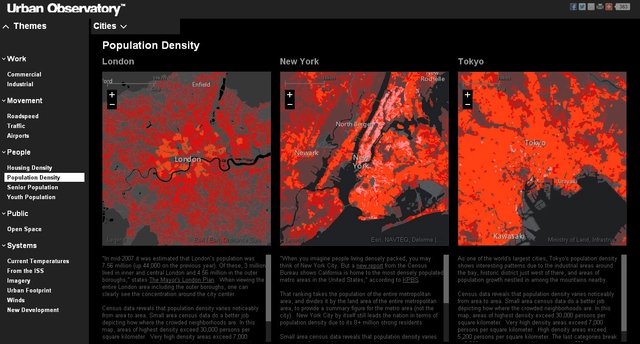
For the last fifty years Richard Wurman - architect, graphic designer and founder of the TED Conferences - has been dedicated to creating a platform that compares cities. In Wurman's early studies, he quickly learned that comparing global cities was no easy task. Cities use very different languages to describe their assets, from planning principles to land use types to social statistics. "They don’t collect their information the same way. They don’t describe themselves with the same legend," he tells Nate Berg of Next City.
Thanks to sophisticated mapping tools, delving into the statistical data of numerous cities has become far more manageable than in 1962, when Wurman produced his first comparative analysis using clay models of 50 different cities. Wurman's analog-driven statistical analysis has turned into the Urban Observatory, a website that allows users to choose from 15 variables and easily compare the public data of up to 16 cities around the world in real time.
More about the platform after the break.
https://www.archdaily.com/406912/a-new-tool-for-comparing-citiesIrina Vinnitskaya
Can Waste Be Used to Regenerate Our Cities?
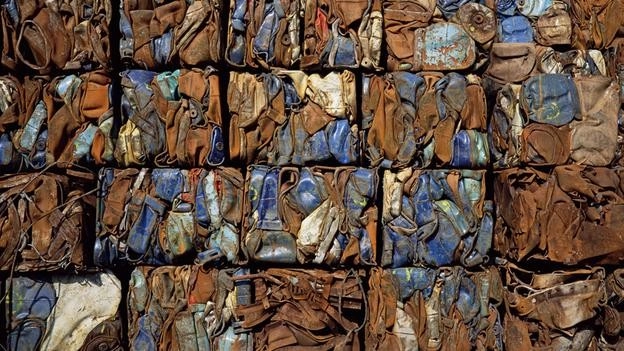
With the rise of urban dwellers comes the rise of urban waste. And, although the hidden life of garbage is still ignored by many, there is no way of escaping one of modern societies most pressing issues: unsustainable waste management. Though many plausible and obvious solutions have already been suggested and are ready to be implemented, some experts are proposing radical solutions that may one day be a reality.
https://www.archdaily.com/402299/can-waste-be-used-to-regenerate-our-citiesKarissa Rosenfield
Turkish Parliament Passes Bill to Protect Historic Skylines

In an effort to protect Turkey’s historic skylines from uncontrolled urbanization, the Turkish Parliament has passed an amendment that would grant zoning authority to the Ministry of Environment and Urbanization as well as set up an aesthetic architectural commission.
More after the break...
https://www.archdaily.com/402095/turkish-parliament-passes-bill-to-protect-historic-skylinesKarissa Rosenfield
Video: This is Shanghai
A little over thirty years ago, Shanghai was a fairly dense, mid-rise city with no skyscrapers. Now, Shanghai has been transformed into a global metropolis with over 4,000 skyscrapers - twice as many as New York. In an attempt to capture the “diversities and eccentricities of the metropolis that is Shanghai beyond the famous skyline,” photographer Rob Whitworth and urban identity expert JT Singh joined forces to create ‘This is Shanghai.’
https://www.archdaily.com/398915/video-this-is-shanghaiKarissa Rosenfield
Participatory City: 100 Urban Trends from the BMW Guggenheim Lab

From 2011 to 2013, the BMW Guggenheim Lab, a mobile think tank for exploring urban life, traveled to New York, Berlin, and Mumbai to inspire innovative ideas for urban design and new ways of thinking about cities. To sum up the major themes and ideas that emerged during this two-year global journey, the Guggenheim Museum will present the exhibition Participatory City: 100 Urban Trends from the BMW Guggenheim Lab, on view from October 11, 2013, to January 5, 2014.
https://www.archdaily.com/398763/participatory-city-100-urban-trends-from-the-bmw-guggenheim-labKarissa Rosenfield
Trailer: The Human Scale
Derived from 40 years of research by architect, professor and author Jan Gehl, The Human Scale takes a critical look at the way we build and use our cities. Assumptions about modernity are questioned, as director Andreas M. Dalsgaard urges the viewer to imagine what would happen when we put “people into the center of our equations”.
https://www.archdaily.com/395166/trailer-the-human-scaleKarissa Rosenfield
China Plans to Move 250 Million into Cities by 2025
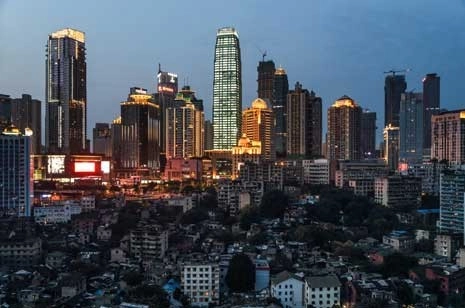
The Chinese government is pushing forward with a plan that will move 250 million Chinese people from rural communities into newly constructed towns and cities over the next 12 years. The government has been bulldozing ancient villages, temples and open-air theaters as well as paving over farmland to make way for mega-cities that will raise the number of city-dwellers in China to nearly the total urban population of the US.
To find out how and why this is happening, keep reading.
https://www.archdaily.com/390959/china-plans-to-move-250-million-into-cities-by-2025Barbara Porada
Dubai Timelapse
Check out this Vimeo Staff Pick, filmed by dimid, that captures the towering city of Dubai.
More images after the break...
https://www.archdaily.com/381159/dubai-timelapseKarissa Rosenfield
Infographic: Which Cities Are Embracing the Green Revolution

Which cities are embracing the green revolution? This infographic compares the efforts of six leading cities - New York, Vancouver, Copenhagen, London, Amsterdam and Stockholm - in the race to drastically reduce global C02 emissions. Based predominantly on 2009 statistics, Stockholm seems to be leading the way in carbon reduction. Continue reading after the break to see who claims the blue ribbon for renewable energy, efficient water consumption and rigorous recycling.
https://www.archdaily.com/377893/infographic-which-cities-are-embracing-the-green-revolutionKarissa Rosenfield
Strelka Talks: Architecture and Community / Reinier de Graaf
"The Community" might be the most frequently used term over the last 50 years of Architectural and Urban discourse. For decades, "the community" has served as a legitimization for anything from Team X to New Urbanism, from Celebration to "vancouverism". But what is "the community"? Where should we look for the proper definition? How did communities appear in the past and how do they form today? Can 'the community" influence the design of its own space, territoiry or context? If yes, what could be the relationship between the community and architecture in the future?
In his Strelka talk Reinier de Graaf is trying to answer these and other, even more complex questions.
Via the Strelka Institute.
https://www.archdaily.com/377566/strelka-talks-architecture-and-community-reinier-de-graafKarissa Rosenfield
Infographic: Saving the Earth with Sustainable Cities
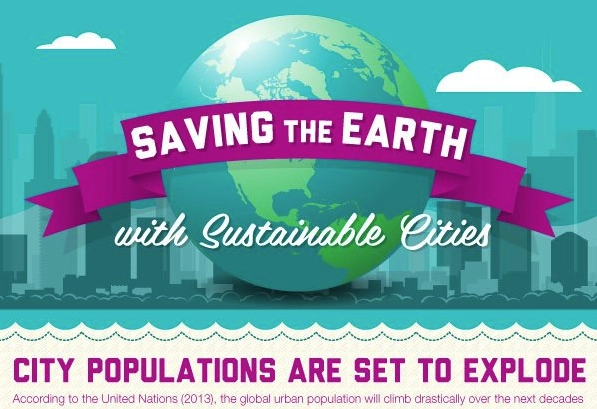
With Stockhom, Hamburg and Copenhagen leading the way, urban metropolis’ worldwide are beginning to rethink their infrastructure and envision ways to transform their city into an efficient, sustainable model of the future in an effort to preserve a high quality of life and stay competitive in the global society. This shift is already being reflected in the education system, with the rapid growth of sustainability-focused academic programs and a sizable, projected increase in “green” jobs.
Get an understanding as to how sustainable cities will save the earth with an infographic after the break.
https://www.archdaily.com/365782/infographic-saving-the-earth-with-sustainable-citiesKarissa Rosenfield
Local Economies Suffer as Foreign Investments Dominate London and NYC
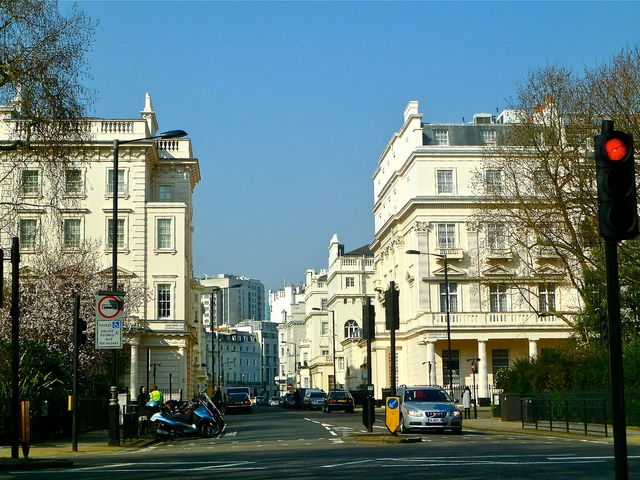
An interesting phenomenon is taking place in London: the priciest tiers of its housing market are increasingly being driven by overseas investment, primarily from the Far East. The most interesting - and perhaps most concerning - aspect of these investments is that at least 37% those who buy property in the most expensive neighborhoods of central London do not intend to use that property as a primary residence. This results in upscale neighborhoods and residential properties that are largely abandoned and contribute almost nothing to the local economy of the city. Parts of Manhattan are experiencing similar behavior, leading us to ask the question "what is happening to our cities as they become more and more globalized and how will this trend affect city economies around the world?"
Read more after the break...
https://www.archdaily.com/358237/local-economies-suffer-as-foreign-investments-dominate-london-and-nycBarbara Porada
Milan Design Week 2013: Energetic Energies for Panasonic / Akihisa Hirata
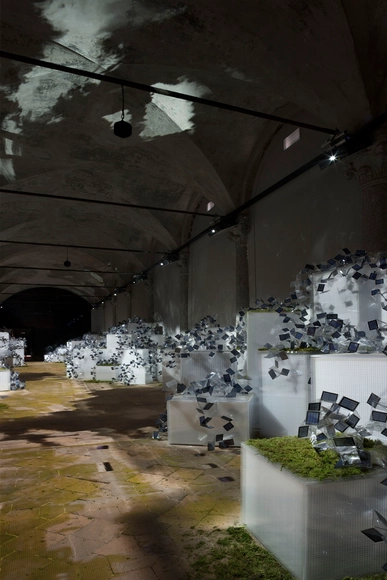
Envision a future where undulating “solar plants” transform the rectangular masses of our cities into a vibrant metropolis where technology aids in the coexistence of humans and nature. Represented in the conceptual installation “Energetic Energies” at the Milan Design Week 2013, this notion of redefining our relationship with the sky through photovoltaics is based on years of technological research and development by the Panasonic Corporation, who commissioned Japanese architect Akihisa Hirata to imagine the possibilities.
The exhibition features a 30 meter-long makeshift city, whose “hills” of photovoltaics overtake clusters of white, translucent buildings while shadows of clouds move in and out of the space.
A video interview with Akihisa Hirata and more images after the break...
https://www.archdaily.com/358319/milan-design-week-2013-energetic-energies-for-panasonic-akihisa-hirataKarissa Rosenfield
2012 Worldwide City Rankings Reveal Important Regional Trends
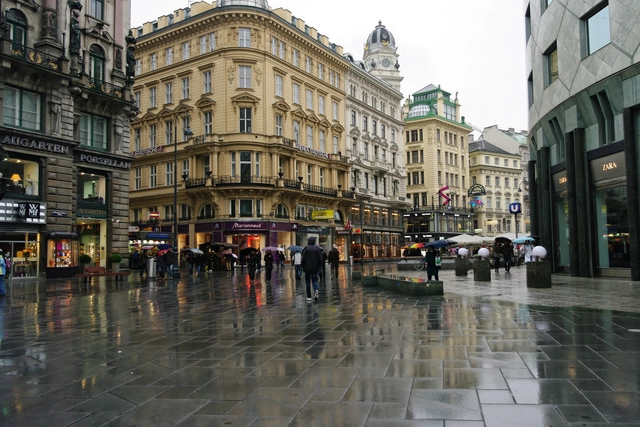
Mercer, a consulting leader that helps other organizations around the world advance the health, wealth and performance of their employees, releases a survey annually that helps multinational companies and other organizations compensate employees when placing them on international assignments. Their survey for the year 2012 evaluates over 221 cities around the world on their quality of living with New York City as the base city and highlights several trends that can add onto what we as designers and urban planners believe makes a city successful and livable.
Read on for the 2012 results.
https://www.archdaily.com/356449/2012-worldwide-city-rankings-reveal-important-regional-trendsBarbara Porada