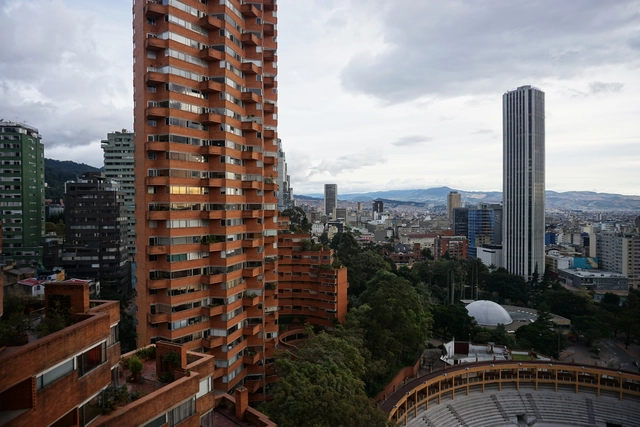
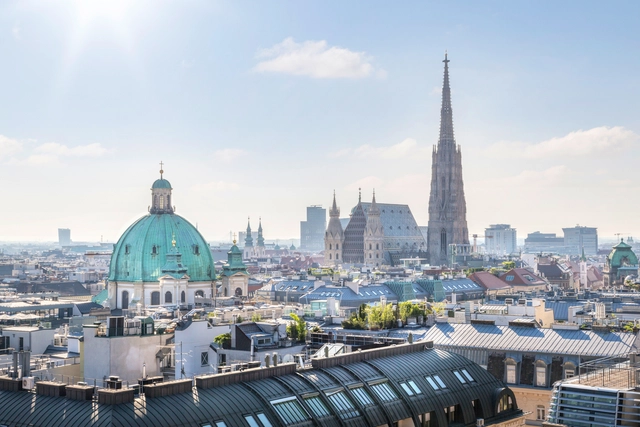
Bogotá is a metropolis that celebrates the convergence of different architectures, reflecting a significant part of Colombia's diverse culture and geography. Limited by the Eastern Hills, it is not only one of the highest capitals in the world, reaching almost 2,600 meters above sea level, but its history dates back to its foundation as the center of the New Kingdom of Granada in the year 1538.
This guide aims to provide an overview of its colonial, modern, and contemporary architecture, highlighting its main buildings and architectural points of interest. From its civic spaces to renowned public projects such as museums, libraries, and cultural centers, this list of 30 sites showcases works by modern architects like Rogelio Salmona and Germán Samper, as well as contemporary ones like Equipo Mazzanti and TAB. We hope it helps you get to know the city!
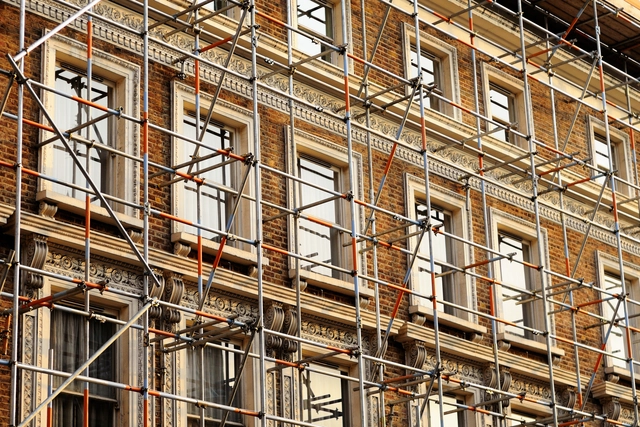
As one takes a visual tour through the city, one might spot structures that break the rhythm of finished architectural products. These are buildings encased in grids of metal or wooden sections, sometimes wrapped in colored nets, that communicate a moment of construction, repair, renovation, or demolition. They are called scaffolding systems, temporary structures built in the city to aid in the erection or maintenance of buildings. However, they have evolved to speak their own architectural language. As city-making is a continuous process, scaffolds serve as beacons, proposing silhouettes of the height, shape, or forms of new buildings. They step into the sidewalks, acting as shade or obstructions to the flow of human and vehicular traffic. In contrast to the permanence of architecture, they exhibit a sense of temporality that helps communicate time, the growth of neighborhoods, and the evolution of a city.
Under the titles of Optimism and Instability, this year’s global index score has returned to pre-Covid-19 days, highlighting that the world has fully recovered from the pandemic. Ranking living conditions in 173 cities based on stability, health care, culture and environment, education, and infrastructure, the survey suggests that nowadays, “life in cities is a bit better than at any time in the past 15 years”, although Stability scores dropped on average in 2023, due to worldwide clashes, political disruptions, social protests, inflation, and wars.
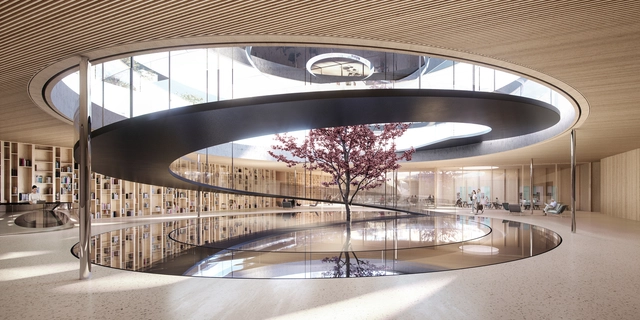
Memorium Nürnberger Visitor Center. Image Courtesy of Sebastian Brunke
Public spaces are the beating heart of our cities. They act as the hubs of social and cultural activity where people congregate, interact, and escape the clamor of the city. These areas are crucial in determining a city's identity, character, and citizens' well-being and standard of living. Public spaces can define our communities and significantly impact how we live, work, and interact with one another through their architectural designs, facilities, and activities. Furthermore, they provide leisure, exercise, and recreation opportunities, allowing individuals to escape the confines of their daily routines and connect with nature.
This week's curated selection of Best Unbuilt Architecture highlights projects submitted by the ArchDaily community showcasing different proposals made to enhance public space. Ranging from reimagining central squares to placing massive land art in the urban epicenter, these public spaces enhance the quality of life for the city's locals. In Germany, the redesign of the entire Memorium Nürnberger Trials reimagines this as a place to come together, grounded in its history, while in Havana, the new Cuban Square reimagines the metaphor of unity in the city center. The design and accessibility of public spaces significantly impact our well-being and quality of life. Thoughtfully planned and inclusive spaces with seating, greenery, and pedestrian-friendly infrastructure can promote physical activity, mental health, and community engagement in a city.
Acquiring real estate through cryptocurrencies, such as Bitcoin (BTC), Ethereum (ETH), and Binance Coin (BNB), is already a reality in many countries, including the United States, England, and Brazil. With the rise of this market and the increasing acceptance of these assets as a legitimate form of payment, investors and buyers are exploring new possibilities for transactions with cryptocurrencies, including the real estate sector.
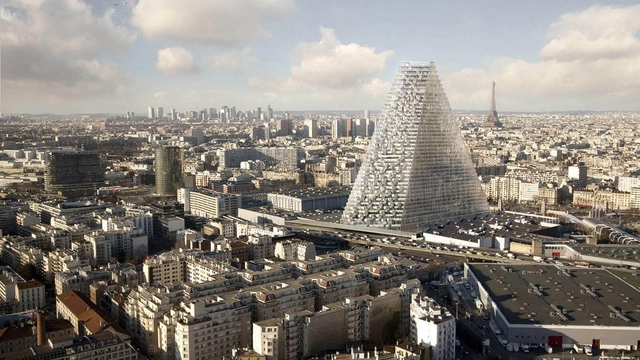
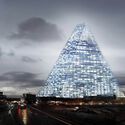
Tour Triangle . Image Courtesy of Herzog & de Meuron
The city of Paris has officially reinstated a rule that limits the height of new buildings in the French capital to 37 meters, or 12 storeys. Among the factors for the decision was the controversy surrounding the construction of the 180-meter-tall Tour Triangle, designed by Herzog & de Meuron, which began in 2021 after more than a decade of legal battles and backlash. The new urban planning regulation is introduced as part of Mayor Anne Hidalgo's Local Bioclimatic Urban Plan, which aims to reduce Paris' carbon emissions.
In January 2023, Copenhagen Architecture Festival carried out a film and architecture workshop in collaboration with Barleti University and Tirana Architecture Triennale, exploring inclusivity in Albania’s capital city. In this interview, professor Saimir Kristo shares his thoughts about his booming city and the potential of film to narrate its true character.
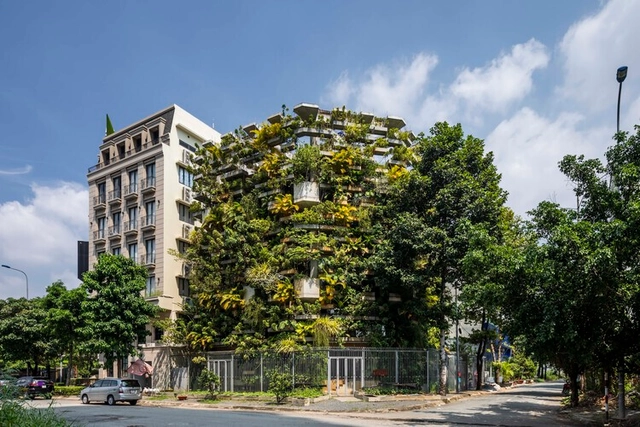
Cities are a canvas for architectural creativity and the dynamism of urban life. In recent years, they have taken on an additional role: that of living laboratories for innovative architecture and urban design. International cities have become experimental grounds for architectural technology, sustainable practices, and human-centered design principles to be tested and refined. This paradigm shift has not only transformed the physical aspects of urban environments but has also redefined the relationship between architecture, community, and the built environment.
February 20th marks a new edition of the World Day of Social Justice. The theme, "Overcoming barriers and unlocking opportunities", is a perfect occasion to reflect on the importance of equity in all areas of society - and especially from architecture and urbanism. And yes: they both have a fundamental role in building accessible cities and are important tools for addressing the challenges of economic inequality and social exclusion.
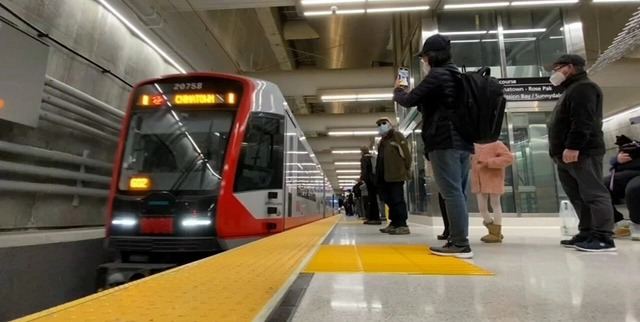
When San Francisco’s MUNI spent big money on a “central subway” to Chinatown, I was doubtful. One recent Saturday, though, I revived the gallery-hopping I did before the pandemic, taking the train from Berkeley into the city, walking to one gallery near Embarcadero Station, then taking a tram past the ballpark to the CalTrain Station, where I switched to another tram to head south to Minnesota Street’s Dogpatch cluster of galleries and artists’ studios.
https://www.archdaily.com/1001256/consider-the-15-mph-cityJohn J. Parman
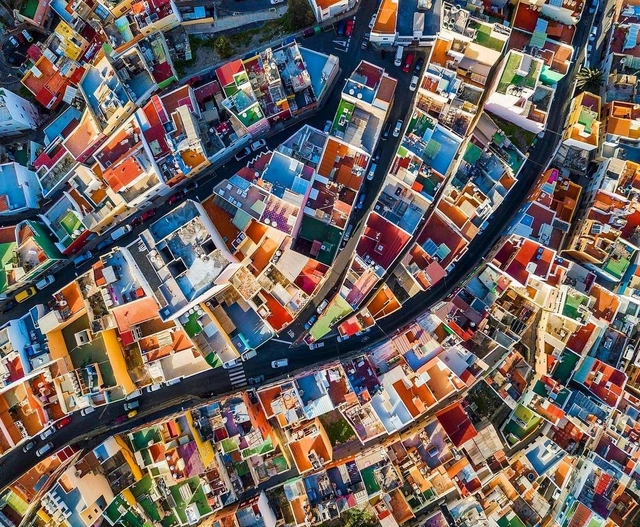
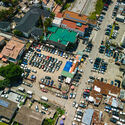
Las Palmas, Canary Islands. Drone photo by @sebastien.nagy
Fascinating and photogenic, colorful cities often catch the eye not only of the thousands of tourists visiting every year but also of many architects around the world. From an aerial viewpoint - which happens to be how many visitors get their first glimpse of these cities from the window of an airplane - one can see the colorful picture created by the many different shades of roofs and rooftops.
There are many different reasons for this diversity of colors. Some cities use specific colors on roofing as a climate strategy, while others simply have a tradition of painting houses in a certain way. In any case, these colorful cities are unquestionably very visually appealing.
Cities are complex ecologies of intersecting natural systems and urban infrastructure. Environmental degradation has brought attention to the asymbiotic relationship between man-made and natural systems. A new economy is emerging where interdependence and environmental stewardship are valued. Designing for a circular economy requires consideration of human habitats not as towns or cities, but as bioregions.
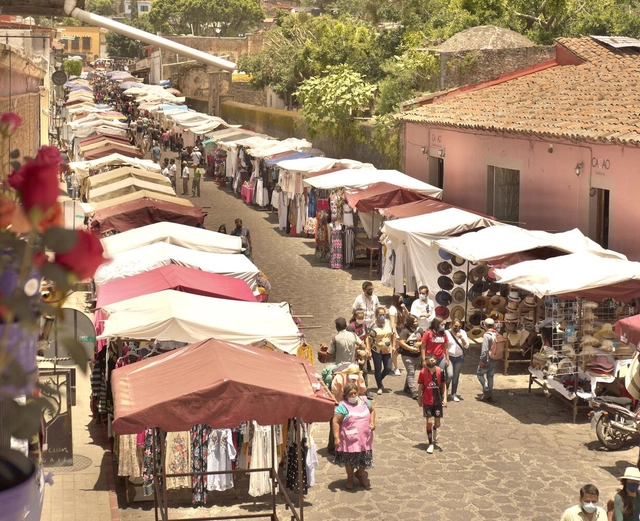
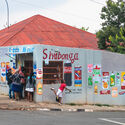
Street fair in Tepoztlán, Mexico. Photo by Karo Kujanpaa, via Unsplash
Commerce is a human activity practiced by societies since the beginning of evolution. Exchanges were made between products negotiated by entire communities at first. They began to be based on a common currency and practiced individually over time, from family to family. In one way or another, this activity is a characteristic of civilization and even influences our territorial organization. Historically practiced in outdoor spaces, commercial activity defined many spatial configurations.
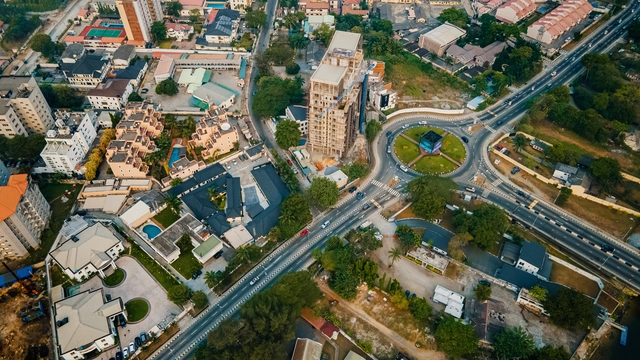
African cities are expected to experience a significant increase in population over the next 30 years. According to United Nations projections, these cities will welcome an additional 900 million inhabitants by 2050. This demographic shift will create both opportunities and challenges that will reshape the nature and structure of these cities. These challenges include the need for economic growth, increased demand for housing and infrastructure, and the development of supplementary transportation systems. So far, most African cities have responded to this rapid population growth with sprawling horizontal development patterns that expand the fringes of the city, increase social fragmentation, and ultimately lead to greater car dependency.
“Economic shocks, climate change, and COVID-19 have changed transportation systems in a fundamental way. We can’t waste a crisis. We can increase access to transportation while reducing greenhouse gas emissions. We can achieve more mobility with fewer impacts,” argued Ani Dasgupta, president of the World Resources Institute (WRI), at the 20th annual Transforming Transportation conference. For two days, global leaders reflected on the state of transportation systems worldwide at the hybrid event in Washington, D.C., which was also watched by tens of thousands online. The event was co-organized by WRI and the World Bank.
Transportation still accounts for 25 percent of greenhouse gas emissions worldwide and up to 30 percent of emissions in developed countries. Transportation is a diverse sector that includes sidewalks, bikes, cars, buses, trains, subways, ships, and planes.
https://www.archdaily.com/999939/twenty-years-of-transforming-transportation-where-are-we-nowJared Green
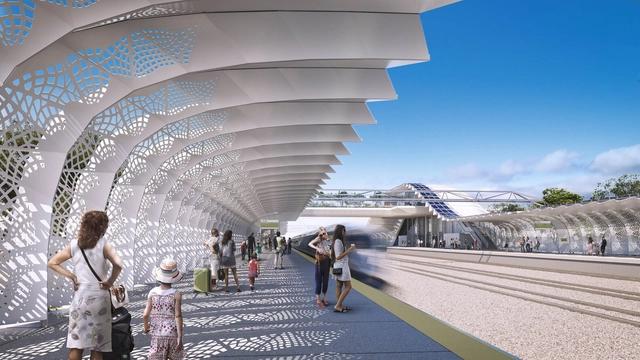
California High Speed Rail. Image Courtesy of Foster + Partners
Foster + Partners and Arup have chosen to work together to design the Merced, Fresno, Kings/Tulare, and Bakersfield stations that will service high-speed train passengers on the first 171-mile leg of California High-Speed train (CA HSR). The Central Valley stations will be the grand entrances to America's first high-speed rail stretch, marking an important step towards providing all Californians with sustainable, carbon-free transportation. Planning, architecture, and engineering for the four new stations, which will serve as design templates for stations planned for the whole 500-mile Los Angeles/Anaheim to San Francisco line, are being done jointly by Foster + Partners and Arup.
The California high-speed rail will connect the state's mega-regions, promote economic growth and a cleaner environment, foster job growth, and conserve agricultural and protected lands. With up to 200 mph speeds, the system can travel from San Francisco to the Los Angeles basin in less than three hours. The Authority is collaborating with regional partners to implement a state-wide rail modernization plan that will spend billions of dollars on local and regional rail lines.
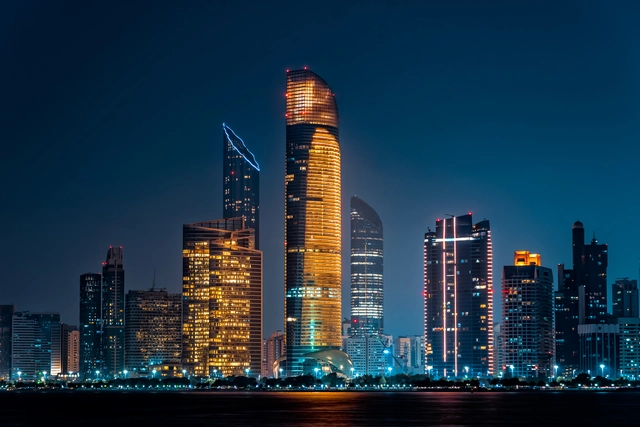
City night view of Abu Dhabi business district, United Arab Emirates. Image via Shutterstock | MDXB
Capital city of the United Arab Emirates, the city of Abu Dhabi is located on an island in the Persian Gulf, connected to the mainland by a short bridge. Home to the local and federal government offices, as well as to the President of the UAE, Abu Dhabi was formerly an undeveloped town with only local significance that transformed into a large metropolis, at a record speed of development and urbanization.
Japanese architect Katsuhiko Takahashi created the master plan of the city in 1967, with a target population of 40,000. Encouraged in the Abu Dhabi Plan 2030, tall skyscrapers symbolize nowadays its iconic architecture, as well as new developments of Al Maryah Island, and the Sheikh Zayed mosque initiated and constructed under the administration of the late President Sheikh Zayed, a pivotal figure in the development of the contemporary UAE.
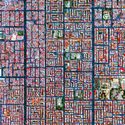
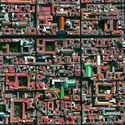
The city block is a typically urban element that, historically, has appeared in different forms and designs, structurally shaping city planning guidelines. When observing urban fabrics in cities such as Barcelona, Paris and Copenhagen, one can see significant variation between block models. This defines their landscapes and dynamics in countless ways. Style and format alterations, volumetric changes in the relationship between full and empty spaces, and modifications in connections to the surroundings are some examples of typological particularities that differentiate them. Blocks, therefore, are often emblematic and representative not only of certain urban planning models developed throughout history but also of their cities.