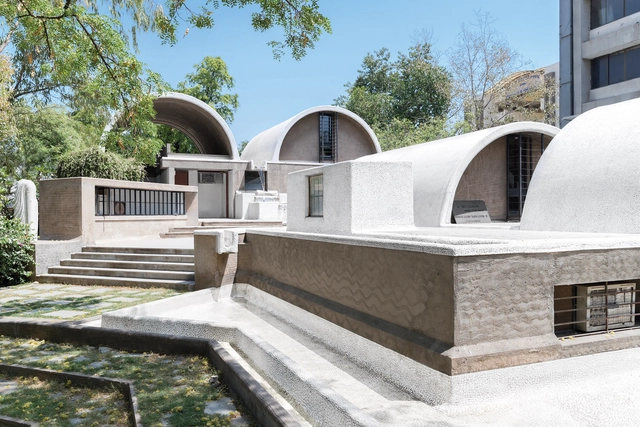
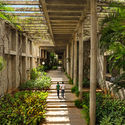
Wrightwood 659, a private institution located in Chicago’s Lincoln Park neighborhood, will host the first U.S. Exhibition of Indian architect, urbanist, and 2018 Pritzker Prize winner Balkrishna Doshi. Running from September 9 till December 12, 2020, the retrospective entitled Balkrishna Doshi: Architecture for the People, is the first display devoted to the works of the laureate, outside of Asia.
"Public space" is a legal terminology that tackles the notion of land ownership, suggesting that this type of parcel does not belong to anyone in particular, but to the state itself. Open, free, accessible to all, and financed by public money, these spaces are not only the results of planning, but the consequences of the public practices they hold. Actually, people define how public space is used and what it means.
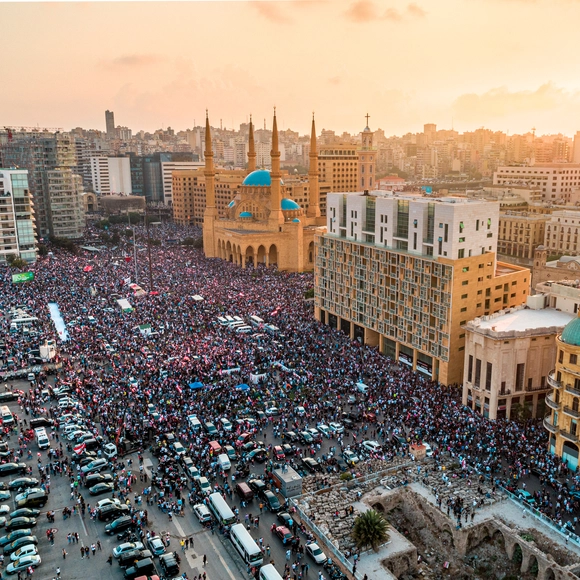
Protests - powerful political tools for change - from the March on Washington in 1963, the Arab Spring in the early 2000s to recent Black Lives Matter Movements, are altering the world. In times like these, while people still need to "take their issues to the streets" to be heard and seen, public spaces have resurfaced as a topic of discussion.
IIDA Chicago Office Designed by Gensler Photo by Eric Laignel
Part of the CAC’s “What’s Next” series. Going beyond the typical lecture or panel, this workshop lays out clear-cut steps for preparing your office for a returning workforce under social distancing guidelines.
What simple, design-minded adaptations make for a healthier office? This program is geared to employers, building managers and others charged with reopening an office space. Get the tools to do so safely and confidently from Todd Heiser, Co-Managing Director of Gensler’s Chicago office, hosted by CAC President and CEO Lynn Osmond.
Plan of Chicago, Plate 107. Image by Nathan Rennich.
The Chicago Architectural Club (CAC) is pleased to announce the 2020 Burnham Prize Competition: Burnham 20/20. A call for entries is taking place as of April 30th, 2020 with the announcement of the winning entries in September 2020.
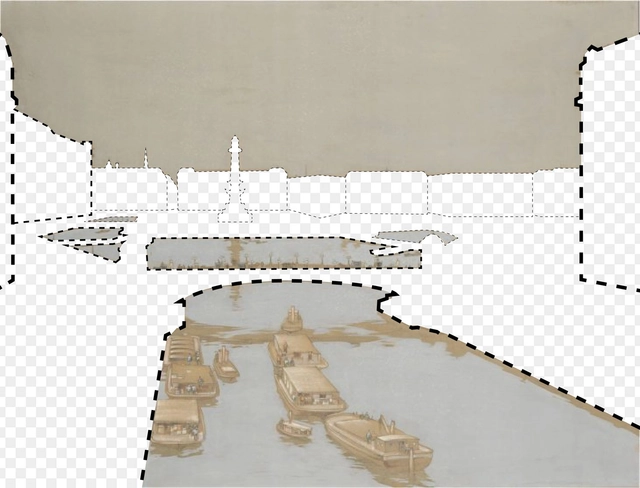
The 1909 Plan of Chicago, also referred to as the Burnham Plan, presented a progressive vision for the city of Chicago. It focused on six elements and aimed to provide a comprehensive and coherent strategy to address the city’s unregulated development creating conditions to improve commerce and reflecting on the way people live in a modern urban environment.
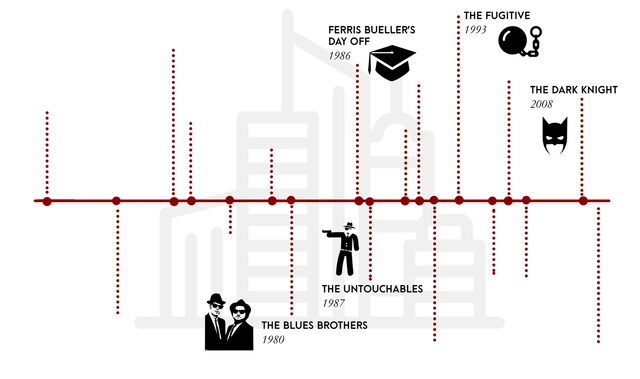
Timeline showing iconic films set in Chicago. Created by the authors. Image Courtesy of Kathryn H. Anthony, Fernando Nebot Gómez, and Yashasvini Rao
Chicago is one of the most photogenic cities in the world. Its sparkling lakefront, dramatic skyline, diverse ethnic neighborhoods, and gritty industrial sites have long captured the attention of locals and visitors alike, including Hollywood movie producers. Here the city often serves as not only a backdrop, but also as a starring role--almost as important as the characters themselves.
https://www.archdaily.com/930654/from-gangster-city-to-gotham-city-the-changing-image-of-chicago-in-hollywood-filmsKathryn H. Anthony, Fernando Nebot Gómez, Yashasvini Rao
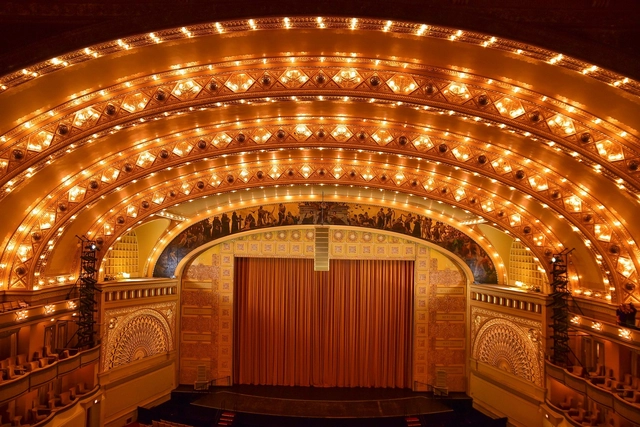
The National Historic Landmark Auditorium Theatre, which officially opened on December 9, 1889, has been a Chicago institution for 130 years. Celebrate this milestone anniversary, and explore Louis Sullivan and Dankmar Adler's masterpiece, at a FREE Open House! Take a historic theatre tour, pose for a picture at a photo booth with an Auditorium Theatre-themed backdrop; sketch and take photos of the theatre; bring the kids for free popcorn and coloring; grab a drink at the bar; and enter a raffle for a chance to win free tickets to a future Auditorium Theatre performance. Photographs, program books, and posters
By and large, architectural photo books hew to a paradigm: big, glossy images of big, glossy buildings, paired with minimal text, shorn of any and all polemics. Context, in this environment, can be a distraction. Fortunately, Lee Bey’s new book, Southern Exposure: The Overlooked Architecture of Chicago’s South Side(Northwestern University Press), is a notable exception to this unwritten rule. It’s an intriguing hybrid: a photo book of the South Side, a neighborhood history, a mini-memoir, and a polemic about systemic racism and historic preservation in Chicago.
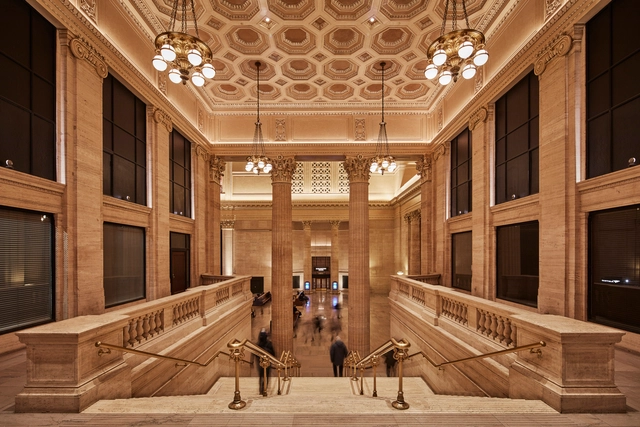
The third edition of the Chicago Architecture Biennial (CAB) has opened in Chicago with a range of new exhibitions and installations across the city. Organized under the theme ...And other such stories, the biennial showcases the work of over 80 contributors, including MASS Design Group, Forensic Architecture, Theaster Gates, and more. Taking a look at the main venue, we’re diving into some of the exhibitions and emerging stories.
The third edition of the Chicago Architecture Biennial (CAB) has opened in Chicago with a range of new exhibitions and installations across the city. Organized under the theme ...And other such stories, the biennial showcases the work of over 80 contributors, including MASS Design Group, Forensic Architecture, Theaster Gates, and more. Taking a first look at the city's exhibitions, we've rounded a list of must-see venues around Chicago.
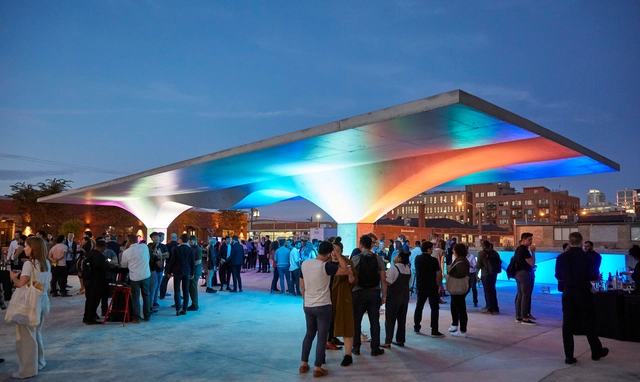
Architecture practice Skidmore, Owings & Merrill (SOM) have designed a concrete pavilion for the 2019 Chicago Architecture Biennial. Today, the practice is unveiling the work of its interdisciplinary practice with Stereoform Slab, a to-scale prototype of a future building system made using advanced robotic fabrication techniques. The project is simultaneously an activation and an exhibition that illustrates a design method that reduces the carbon footprint of concrete construction.
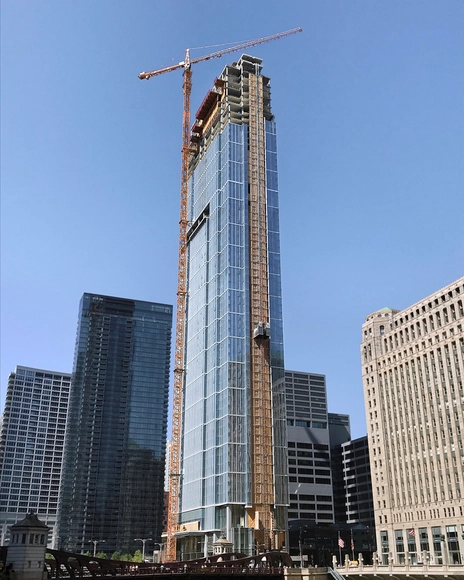
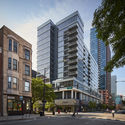
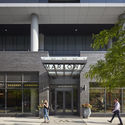
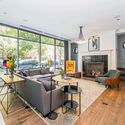
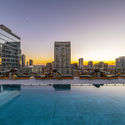
Wolf Point East, a 665-foot residential tower, part of the last remaining development along the Chicago River, topped off and is near completion. Designed by Pelli Clarke Pelli Architects, and part of a master plan to redevelop the area, the east tower generates 700 rental units, 35,000 square feet of amenities, and 4,000 square feet of retail at street level.







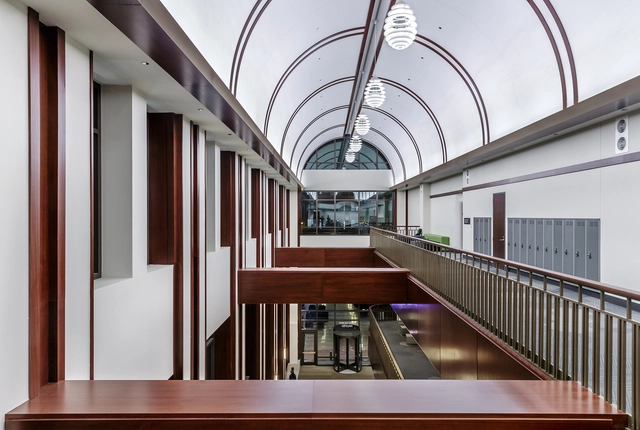

_Tom_Harris_Hero_Alt.jpg?1576082429)
_Nick_Fochtman_Hero.jpg?1576081740 "© Nick Fochtman")
_Tom_Harris_Pocket_Park.jpg?1576081846 "© Tom Harris")
_Nick_Fochtman_Facade.jpg?1576081657 "© Nick Fochtman")
_Tom_Harris_Library.jpg?1576082191 "© Tom Harris")
_Tom_Harris_Hero_Alt.jpg?1576106472)



.jpg?1572403446)
.jpg?1572403499 "© James Florio")
.jpg?1572403620 "© James Florio")
.jpg?1572403472 "© James Florio")
.jpg?1572403598 "© James Florio")
.jpg?1572464814)
.jpg?1572259226&format=webp&width=640&height=580)

_8846.jpg?1570478720&format=webp&width=640&height=580)
_8738.jpg?1570478570 "© Laurian Ghinitoiu")
_8902.jpg?1570478754 "© Laurian Ghinitoiu")
_8425.jpg?1570478520 "© Laurian Ghinitoiu")
_8751.jpg?1570478581 "© Laurian Ghinitoiu")
_8846.jpg?1570478720)


_8751.jpg?1569076314&format=webp&width=640&height=580)
_8846.jpg?1569076329 "© Laurian Ghinitoiu")
_8425.jpg?1569076196 "© Laurian Ghinitoiu")
_8721.jpg?1569076290 "© Laurian Ghinitoiu")
_8624.jpg?1569076243 "© Laurian Ghinitoiu")
_8751.jpg?1569076314)
_Dave_Burk___SOM_(2).jpg?1568925232 "Courtesy of Dave Burk | SOM")
_Dave_Burk___SOM_(1).jpg?1568925214 "Courtesy of Dave Burk | SOM")
_Dave_Burk___SOM_(3).jpg?1568925283 "Courtesy of Dave Burk | SOM")
_Dave_Burk___SOM_(4).jpg?1568925324 "Courtesy of Dave Burk | SOM")