.jpg?1614891485&format=webp&width=640&height=580)
.jpg?1614889444 "© Johnny Umans")
.jpg?1614892301 "© Johnny Umans")
.jpg?1614896949 "© Johnny Umans")
.jpg?1614891331 "© Johnny Umans")
.jpg?1614891485)
-
Architects: Edouard Brunet
- Area: 200 m²
- Year: 2020
-
Professionals: Neuf81, ALX Construct, Mus & Puccini

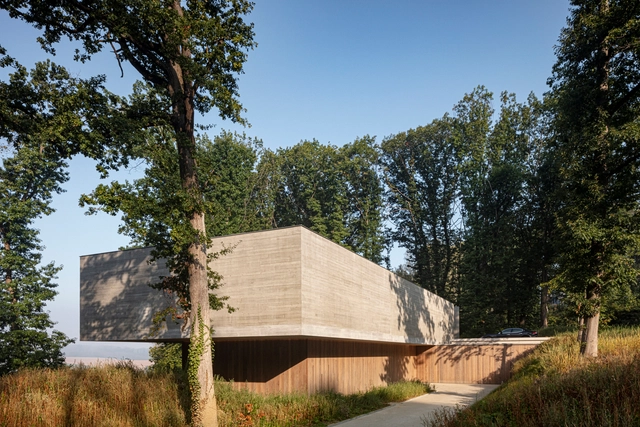
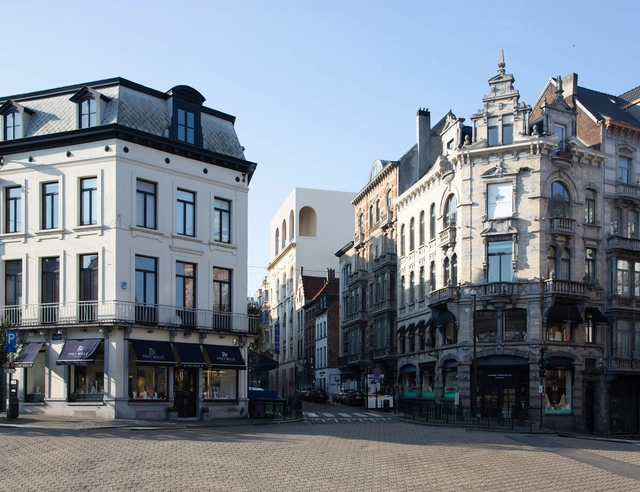
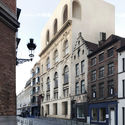
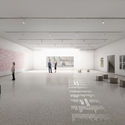
Barozzi Veiga, in collaboration with Tab Architects and Barbara Van Der Wee Architects, has just won the competition for the renovation of the Jewish Museum of Belgium. Discrete yet present and integrated into the urban fabric, as the jury stated, the proposal was selected from five shortlisted established and young architectural practices.

.jpg?1586139849&format=webp&width=640&height=580)
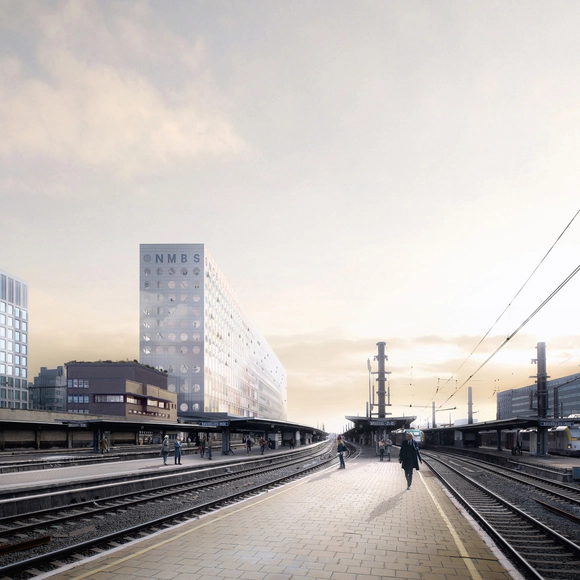
OMA and partner Reinier de Graaf, together with Jaspers-Eyers Architects, have won the competition to design the new headquarters of Belgium's National Railway Company in Brussels. The design preserves three monumental buildings in the Brussels-South train station along Fonsny Avenue. At 75,000 square meters, the headquarters project brings all departments under the same roof with work space for 4,000 employees.
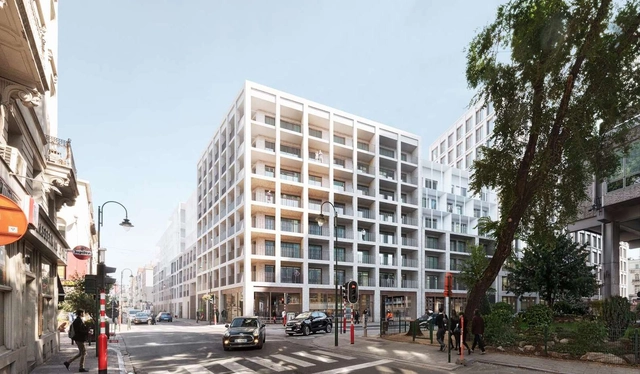
Henning Larsen has unveiled its vision for Brouck’R, a city block transformation project facing Brussels’ busy Place de Brouckère. Inspired by traditional and contemporary heritage, the proposal generates a 21st-century, vibrant, mixed-use destination in the city center.
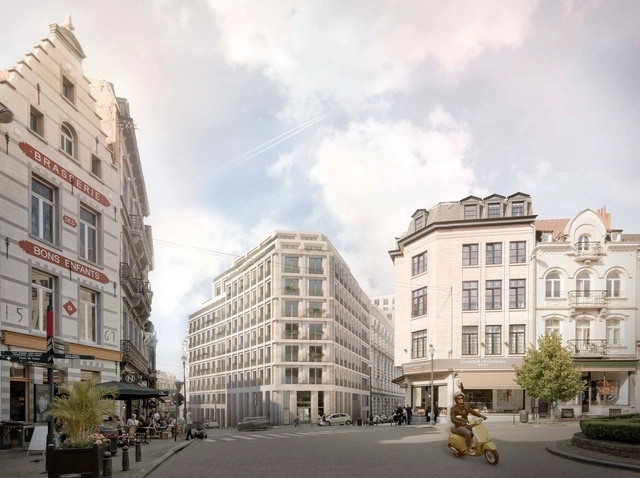
The Brussels Lebeau – Sablon competition has announced MLA+, the sister company of Maccreanor Lavington, as the winners of the international contest to transform the city's historic Le Sablon district. Working together with local firm Korteknie Stuhlmacher Architecten, the team's proposal is a new mixed-use development for Belgium developer IMMOBEL, which seeks to regenerate the key historical district. The winning scheme includes offices, residences, a student hotel, and a public square.

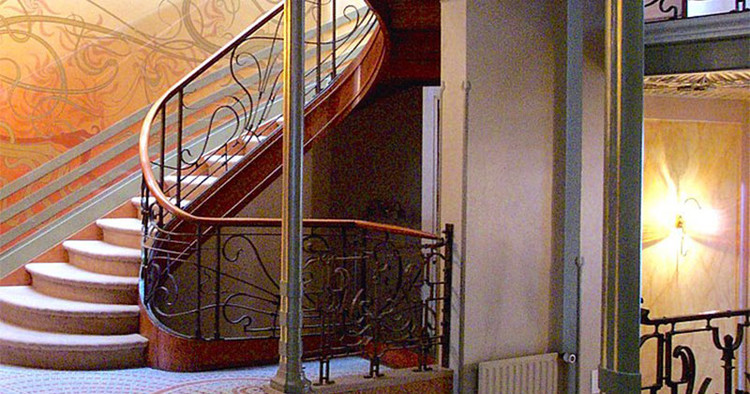
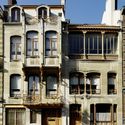
Situated throughout Brussels, Victor Horta's architecture ranges from innocuous to avant-garde. While many of his buildings were completed in the traditional Beaux Arts style, it is Horta’s Art Nouveau works—most of them built as townhouses for the Belgian elite—that are most beloved. Emerging from the decorative arts tradition and, in some ways, anticipating the coming onslaught of modernism, Horta’s Art Nouveau buildings were erected during a fleeting decade: roughly 1893 to 1903.

Schmidt Hammer Lassen has released images and details of its competition-winning design for the headquarters of Solvay, an advanced materials and chemicals company, to be located in Brussels, Belgium. Working in collaboration with Modulo Architects and VK Engineers, the Danish firm has prioritized sustainability and resilience in the zero-carbon, near-zero-energy building.
The winning team was chosen from a competitive international field including OMA, Valode & Pistre, Wilmotte & Associés, and Henning Larsen.

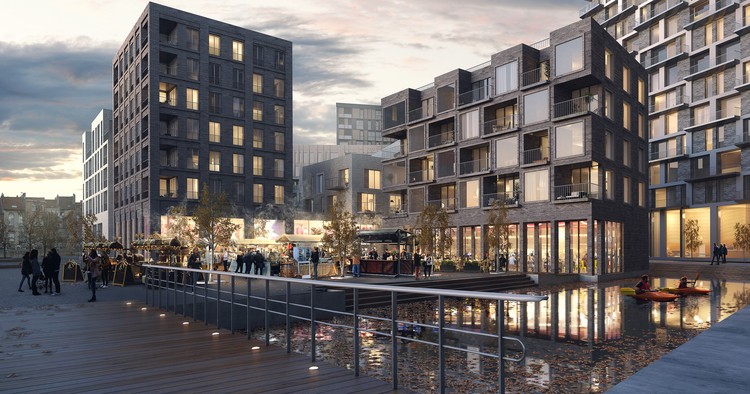
Danish firm Henning Larsen has released images of their competition-winning Key West urban development, seeking to revitalize a socio-economically challenged area of the Belgian capital Brussels. Developed in collaboration with A2RC Architects, the masterplan aims to balance urban and recreational life along the Brussels Canal Zone through a combination of housing, schools, urban farming, and a market hall.
Like many European cities, Brussels is moving towards a post-industrial economy, giving new opportunities to old industrial areas such as the Canal Zone. The Henning Larsen redevelopment seeks to remodel the area as an urban center, tying the urban areas west of the canal to central Brussels.
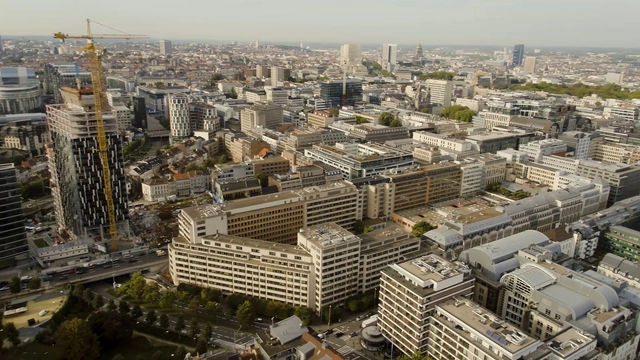
The European Commission is launching an international architectural competition to identify the best design proposals for its most important current real estate project in Brussels (Belgium) – the redevelopment of its premises at rue de la Loi 130 (hence the competition name, Loi 130).
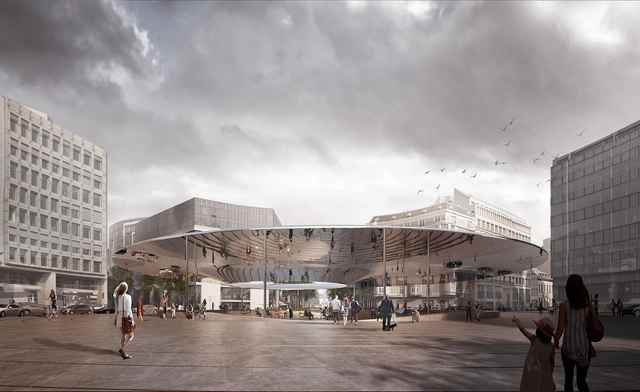
The Danish/Belgian team of COBE and BRUT has been selected as the winner of an international competition for the transformation of the Place Schuman, the entrance to the European Union headquarters in the European Quarter of Brussels, Belgium.
Aimed at creating a new “urban agora” for the city, the architects borrowed the shape of the European Parliaments’ hemicycle to create an iconic reflective roof structure that will unite all citizens and institutions of the EU within one central meeting point.








.jpg?1586140050 "© Stijn Bollaert")
.jpg?1586139763 "© Stijn Bollaert")
.jpg?1586139849 "© Stijn Bollaert")
.jpg?1586139696 "© Stijn Bollaert")
.jpg?1586139849)






.jpg?1529708839 "© <a href=‘https://www.flickr.com/photos/martinehrenhauser/8085701304'>Flickr user Martin Ehrenhauser </a> licensed under <a href='https://creativecommons.org/licenses/by/2.0/'>CC BY 2.0</a>")