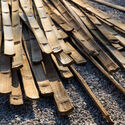
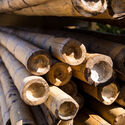
The Filipinos believe that man and woman first emerged from the nodes of a bamboo stalk. The Chinese view the caneas a symbol of their culture and values, reciting “there is no place to live without bamboo”. The plant is a symbol of prosperity in Japan and friendship in India. Along with myths and stories, strong structures made of bamboo flourished in pre-modernAsia. Built forms varied across the changing landscapes of Eastern countries, all sharing one aspect in common - a respect for natural ecosystems.
In the current scenario of a climate crisis, thinking about an architectural project without defining ecological guidelines has become practically unacceptable. One of the main emitters of carbon dioxide and other pollutants, the construction sector is increasingly looking for new ways and means that can make works more sustainable and, in some way, mitigate damage to the environment. Thinking about ecological materials can be one of the fundamental steps, but, which materials are these?
Upon becoming a sovereign country, free from British Rule, the people of India found themselves faced with questions they had never needed to answer before. Coming from different cultures and origins, the citizens began to wonder what post-independence India would stand for. The nation-builders now had the choice to carve out their own future, along with the responsibility to reclaim its identity - but what was India's identity? Was it the temples and huts of the indigenous folk, the lofty palaces of the Mughal era, or the debris of British rule? There began a search for a contemporary Indian sensibility that would carry the collective histories of citizens towards a future of hope.
Pablo van der Lugt is an architect, author and speaker. His research focuses on the potential of materials such as bamboo and mass timber for the construction sector, and their positive impacts on the world. “Throughout my professional career both in university (including my PhD research on the carbon footprint of engineered bamboo and wood) and industry the past 15 years I have found there are many misconceptions about these materials which hamper their large scale adoption. For this reason I ‘translated’ my research findings into two contemporary books for designers and architects about the potential of bamboo: Booming Bamboo, and engineered timber: Tomorrow’s Timber. They aim to dispel these myths and show the incredible potential of the latest generation of biobased building materials in the required transition to a carbon neutral, healthy and circular built environment.” We recently had the opportunity to talk with him about these topics. Read more below.
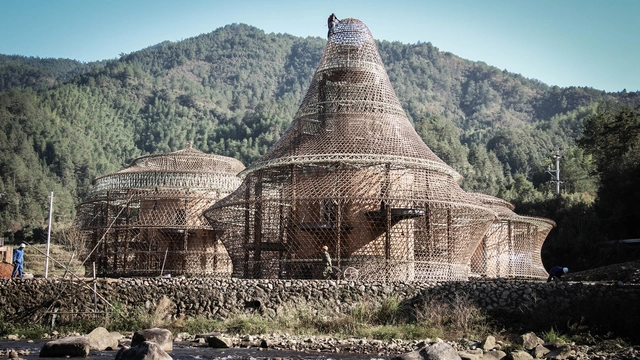
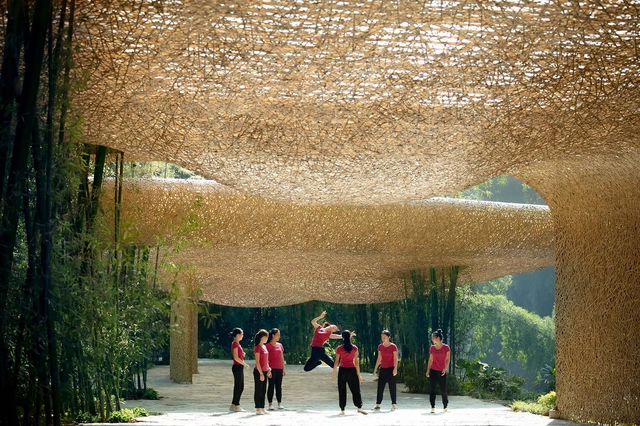
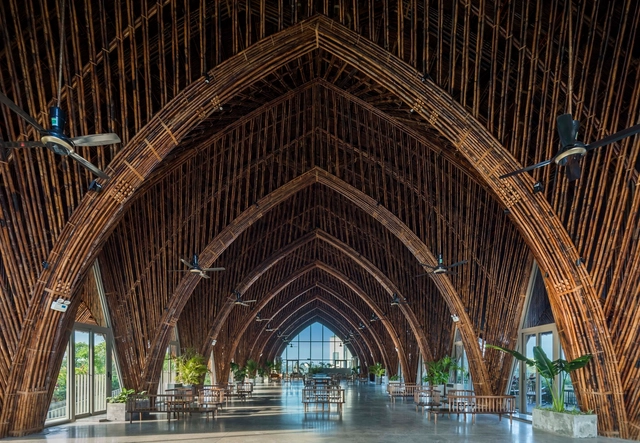
Bamboo is a very resistant, versatile, and sustainable natural building material, which can be used to build structures and decorative elements. This article explores its diverse applications in a selection of projects for public spaces.
Vernacular techniques and local materials are becoming more and more relevant in architecture, but is it possible to bring these concepts to large urban areas?
In 1984, the Amazonian architect Severiano Porto had already pointed out the need to make architecture more connected to its location. Using local materials and techniques is becoming more important each day, considering the impacts of the commodity chain of building construction on the planet. Not surprisingly, the number of projects that use this approach is growing every day, as Severiano has already mentioned in his work since the 1980s.
For the 2021 Milan Design Week, Kengo Kuma Associates designed a bamboo installation that merges form, materiality and music, creating a multisensory experience. Created in collaboration with smart device manufacturer OPPO, Bamboo (竹) Ring :|| Weaving a Symphony of Lightness and Form answers the "Creative Connections" theme by merging architecture and music, as well as craftsmanship and technology.
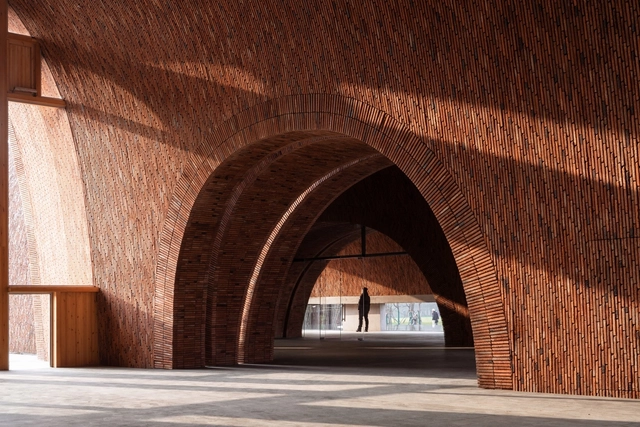
Jingdezhen Imperial Kiln Museum / Studio Zhu-Pei. Image Courtesy of Studio Zhu-Pei
Over the course of the last decade there has been a growing interest in the handcrafted buildings, as well as in the application of local and renewable materials in building construction. Under the concerns about the heavy environmental and economic expenses caused by construction, nowadays urban planners are embracing the concept of sustainability, which refers to “meeting our own needs without compromising the ability of future generations to meet their own needs”.
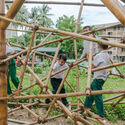
While bamboo holds incredible potential as a building material, efforts to build durable bamboo structures often fall short with errors made in both the design and building process. Bamboo structures are often criticized for their lack of durability, and before treatment technology was discovered, this was one of the pitfalls to building with bamboo, nowadays however, architecture firms like IBUKU have proven that if designed well, treated right, and maintained a bamboo structure can last a lifetime.
Besides poor treatment, there are other errors made when building with bamboo and these are often overlooked, but they hold equal weight in ensuring the longevity of a bamboo structure. There are plenty of great guides that explain how to build with bamboo, however information falls short when addressing what not to do. In this article, we will share how to avoid the most common mistakes when building with bamboo.
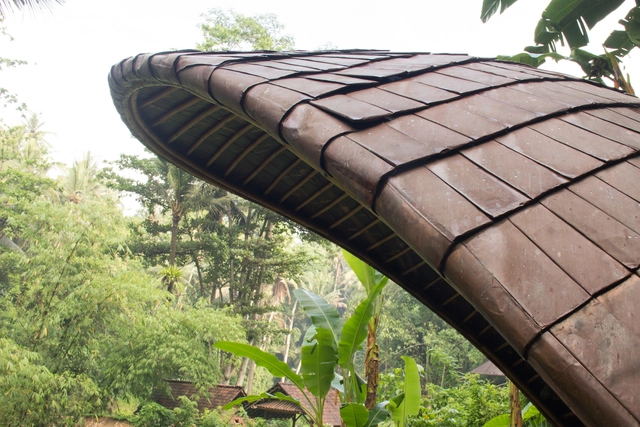
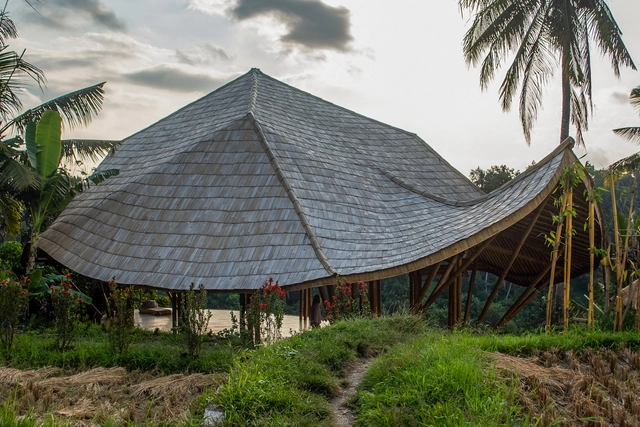
Roofings are perhaps the most fundamental architectural element of bamboo buildings (together with foundations). Well-designed and built roofs play a key role in protecting a bamboo structure whilst adding to the beauty and experience of the space. What qualifies as a well-designed bamboo roof?
There are a couple of key elements that need to be considered: 1) the overhangs of the roof to mitigate the weathering of bamboo poles from direct sun and rain, 2) the pitch of the roof for water flow, 3) the spacing of the rafters for rigidity, and finally, 4) the material used. In Bali, we have experimented with many different roofing materials and techniques. In this article, we share 5 of the most commonly used roofing systems for our bamboo buildings:
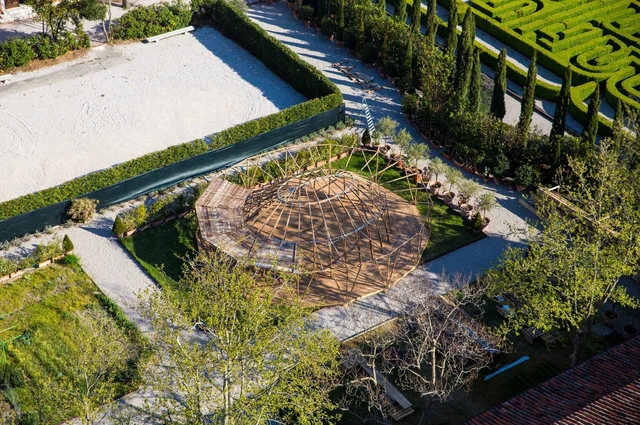
The Majlis undergoing construction at San Giorgio Maggiore. Image Courtesy of Caravane Foundation
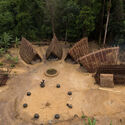
Part of the official collateral events of the 17th International Architecture Exhibition of la Biennale di Venezia, Caravane Earth Foundation will bring a unique bamboo Majlis, to the gardens of the Abbazia di San Giorgio Maggiore in Venice. Designed by internationally acclaimed bamboo architects Simón Vélez and Stefana Simic, the project will be on display from 22 May to 21 November 2021.


















.jpg?1502067117&format=webp&width=640&height=580)
.jpg?1502067167 "© Markus Roselieb")
.jpg?1502067498 "© Markus Roselieb")
.jpg?1502067235 "© Alberto Cosi")
.jpg?1502067562 "© Markus Roselieb")
.jpg?1502067117)



_-_IMG_0152.jpg?1624951616&format=webp&width=640&height=580)
_-_IMG_9898.jpg?1624951828 "© Tommaso Riva")
_-_IMG_0051.jpg?1624956812 "© Tommaso Riva")
_-_IMG_9991.jpg?1624951591 "© Tommaso Riva")
_-_IMG_9800.jpg?1624951506 "© Tommaso Riva")
_-_IMG_0152.jpg?1624951616)