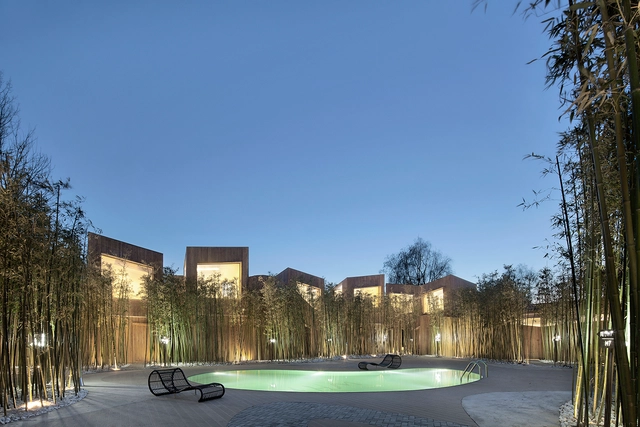
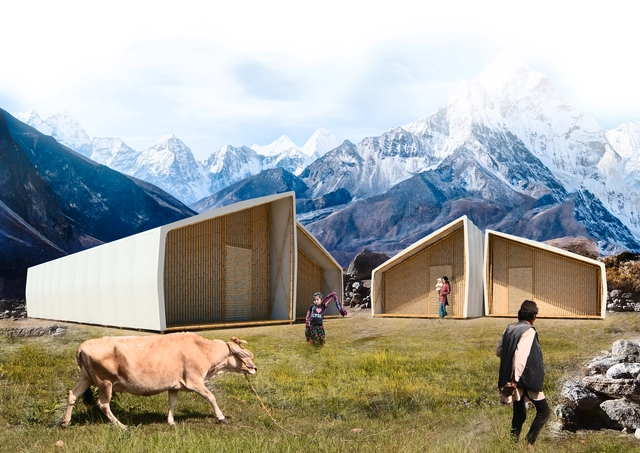
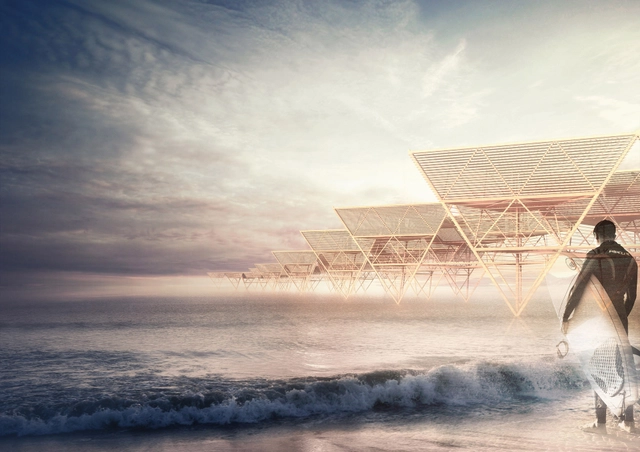
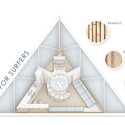
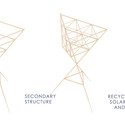
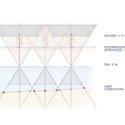
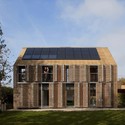
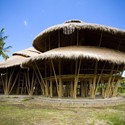
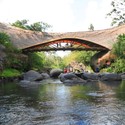
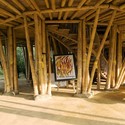
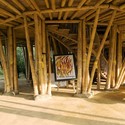
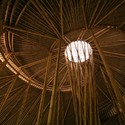
Sea Lanterns Village. Image Courtesy of Barberio Colella ARC
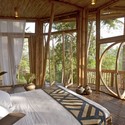
Too often, architects and designers treat nature as separate from humans or human creations. Nature is fought, or protected, or considered as something to accommodate for through a retroactive checklist. In contrast, Barberio Colella ARC's Lanterns Sea Village is a conceptual plan to create short-stay housing that integrates natural systems with people and buildings. The team behind the project, Micaela Colella and Maurizio Barberio, designed the small residences to approach housing from a more adaptive perspective.
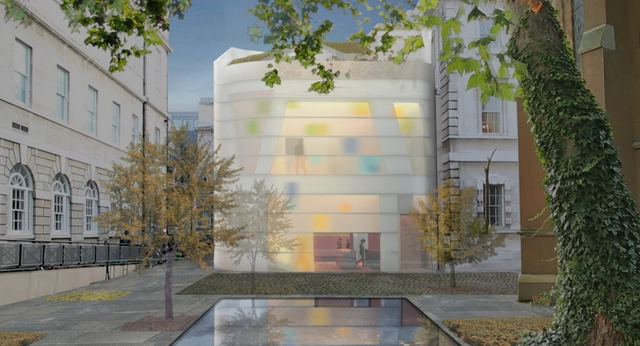
Steven Holl Architects (SHA) has broken ground on London's newest Maggie's Centre across from the large courtyard of St. Bartholomew’s (Barts) Hospital, the city's oldest hospital. The structure, a branching concrete frame lined with perforated bamboo and matte white glass, was inspired by its historic site, which also neighbors the St. Bartholomew the Great Church. It was envisioned as a "vessel within a vessel within a vessel" embellished with colored glass fragments that recall "neume notation" of Medieval music in the 13th century.
"The word neume originates from the Greek pnevma, which means 'vital force.' It suggests a 'breath of life' that fills oneself with inspiration like a stream of air, the blowing of the wind. The outer glass layer is organized in horizontal bands like a musical staff while the concrete structure branches like the hand," describes SHA.
A video of Steven Holl detailing the center's design, after the break.
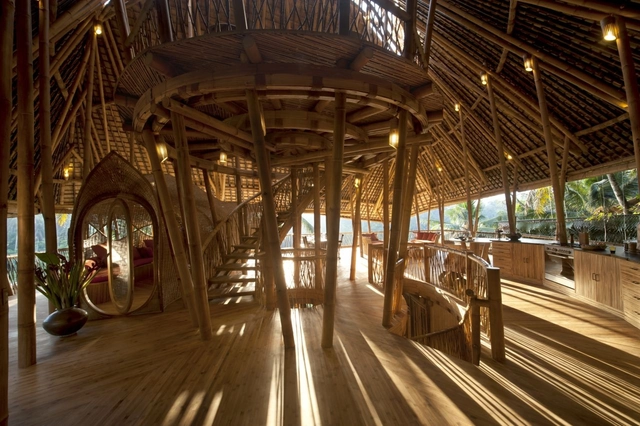
Perhaps the most surprising thing about bamboo - besides being an entirely natural, sustainable material with the tensile strength of steel that can grow up to 900 millimeters (3 feet) in just 24 hours - is that it's not more widely recognized as a fantastic construction material. Like many traditional building materials, bamboo no longer has the architectural currency that it once did across Asia and the pacific, but the efforts of Elora Hardy may help put it back into the vernacular. Heading up Ibuku, a design firm that uses bamboo almost exclusively, Hardy's recent TED Talk is an excellent run through of bamboo's graces and virtues in construction, showing off sinuous private homes and handbuilt school buildings.
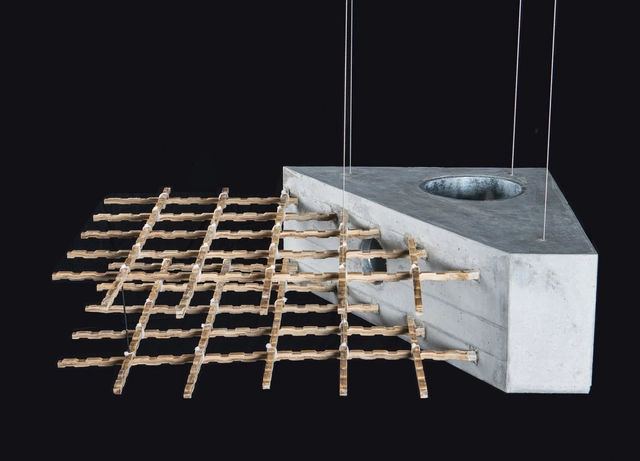
Developed by Hannah Ahlblad, a recent graduate of Wellesley College cross-registered at MIT's School of Architecture + Planning, this article explores the potential of merging bamboo and concrete, harnessing the strengths of both materials to create a sustainable, durable and affordable material for use in developing countries. Hannah’s project was created in conclusion to the semester-long emergent materials elective taught by Professor John E. Fernández, Director of MIT’s Building Technology Program.
In the rapidly developing economies of East Asia and Latin America, urban architecture often seeks to combine the local heritage with the prestige of Western contemporary form and practices. The materials used in urban areas of these growing cities follow the steel, glass, and concrete technology used elsewhere. Usually, emerging materials research looks at the structural properties and applications of materials under scientific development. Less consideration has been given to ancient building materials and their interaction with today’s engineering.
Chinese architecture firm Penda, known for their ecologically sensitive designs, has redesigned the tent in a bold new way for the AIM "Legend Of The Tent" Competition. Their proposal, ”One With The Birds," is a flexible and sustainable structure that integrates sleeping pods into the forest canopy. Inspired by Native American Tipis, which are moveable and reusable, the structure, made from bamboo sticks latched together with rope, leaves no impact on the site nor causes any harm to the bamboo itself.
A mock-up of the project will soon be installed as a temporary hotel. According to the architects, “after the temporary hotel is deconstructed, the materials can be reused as scaffolding on a construction site or reused as another temporary hotel on a different location.”
Learn more about this remarkable structure, after the break.
Developing countries have the highest demand for steel-reinforced concrete, but often do not have the means to produce the steel to meet that demand. Rather than put themselves at the mercy of a global market dominated by developed countries, Singapore’s Future Cities Laboratorysuggests an alternative to this manufactured rarity: bamboo. Abundant, sustainable, and extremely resilient, bamboo has potential in the future to become an ideal replacement in places where steel cannot easily be produced.
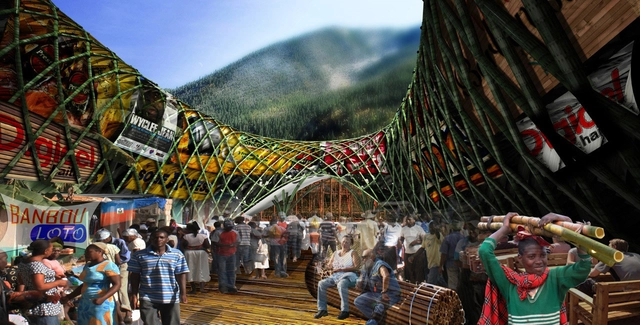
The Architectural Association and Foster + Partners have announced John Naylor of Diploma Unit 16 as the 2013 Foster + Partners Prize recipient for his project ‘Bamboo Lakou’. Presented annually, the award is presented to an AA Diploma student whose portfolio best addresses the themes of sustainability and infrastructure.
Brett Steele, Director of the Architectural Association School of Architecture, said: “John Naylor’s project demonstrates the ways in which infrastructural ideas – and architectural imagination – might today expand beyond the clichés of Modernism to become life itself, literally breathing life into communities, cities and entire countries – today and long into the future.”
The Globe/Hedron Rooftop Farm is a bamboo greenhouse designed to organically grow fish and vegetables on top of generic flat roofs. Designed by Conceptual Devices, the structure is optimized for aquaponic farming techniques: the fish’s water nourishes the plants and plants clean the water for the fish. Using this farming technique, the design is optimized to feed four families of four all year round. More images and designers’ description after the break.
The exploratory mud structure project, designed and built by Architecture for Humanity Tehran (Rai Studio) + Architecture Faculty of Razi University, demonstrates a strong focus on humanitarian design through sustainable and low budget construction methodologies. The workshop not only provided the students with an enriched academic experience, but the opportunity to reach out to an underdeveloped region. More images and their description after the break.
Architect: Sanders Pace Architecture Location: Manchester, Tennessee Project Team: Brandon Pace, Michael Davis, Michael Aktalay, Larry Davis, Matthew Davis, Carah Ferry, Will Spencer, Garrett Ferry, Ashley Pace, John Sanders, Stephanie Dowdy, David Scott, Shane Elliot, Leslie Smith Project Area: 900 SF (x2 pods) Project Year: Summer 2011 Photographs: Sanders Pace Architecture