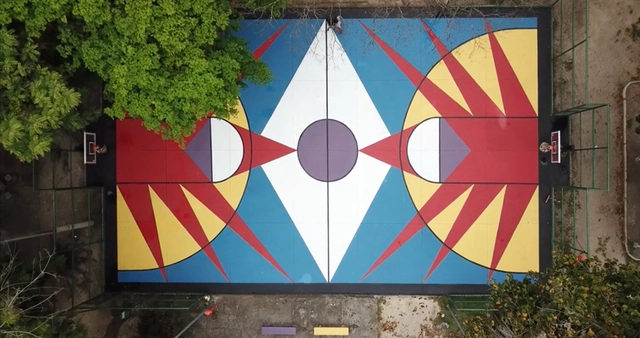
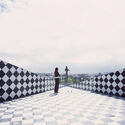
How do we give new meaning to degraded public spaces? Vibrant colors, geometric patterns, and community collaboration. That could describe the approach of Rio de Janeiro artist Antonio Ton. Drawing inspiration from interactions he finds on the streets and engaging in dialogue with local communities, his works extend beyond revitalizing sports courts and skate parks. Ton demonstrates how art fosters the creation of a space for gathering and leisure. We spoke with him to delve into his artistic process and explore the outcomes his paintings offer.
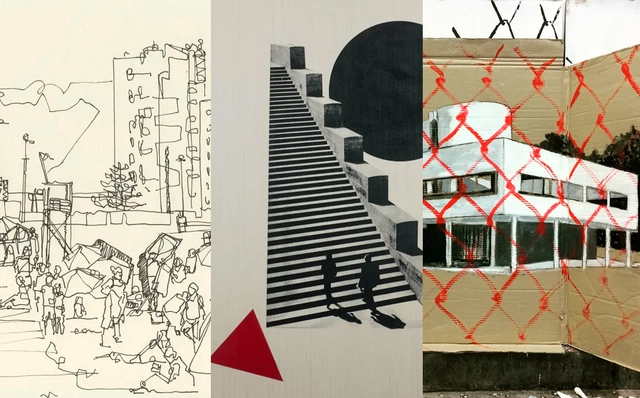
Digitization has revolutionized the way we experience art on platforms like SINGULART, which combines multiple influences from various artists.. Image Courtesy of SINGULART
The relationship between art and architecture is a recurring topic of discussion, seeing as architecture can be positioned at the intersection of structure, technology, and aesthetics. Despite the utilization of technical knowledge, architecture, and interior design also incorporate artistic concepts into their processes. From captivating illustrations during the design development phase to murals and artistic pieces that form an integral part of spatial conception, art plays an essential role in architectural production and society.
In the context of contemporary society, many of our activities are carried out digitally, from booking accommodation for travel to manufacturing materials and creating art exhibitions. In this sense, digitalization has also permeated the art world, conceiving initiatives like SINGULART, which challenges the traditional concept of art galleries by existing in a digital format. This platform combines works from various sources of inspiration and artistic techniques, encompassing everything from sketches and paintings to architectural photography. It fuses multiple influences from various contexts, including architectural work.
https://www.archdaily.com/1006625/from-sketch-to-painting-a-digital-art-gallery-to-inspire-everyday-architectural-workEnrique Tovar
At the 18th International Architecture Exhibition – La Biennale di Venezia, Karin Sander, and Philip Ursprung curated the Swiss Pavilion “Neighbors”. In her interview with Louisiana Channel, Karin Sander talks about expanding the understanding of the pavilion, reimagining the connected role of architecture and art, and explaining her artistic process. “Neighbors” was focused on spatial proximity between the Swiss Pavilion and its Venezuelan neighbor. Sander highlights also the conversation between the two structures, that became possible after the removal of a separating wall.
Every year in Mexico City, during the month of February, "Art Week" is celebrated with a series of events that seek to offer experiences in different spaces, mostly museums, cultural centers, or art galleries that join the cultural agenda. This event is important because both the city and these venues become the stage for different contemporary artists who come together to exhibit their work and enrich the dialogue around today's art. It is also a tourist destination that attracts collectors from all over the world.
Videos
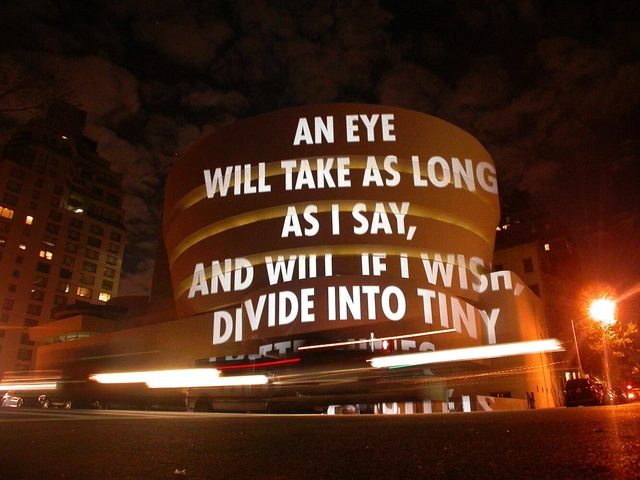
Jenny Holzer, installation at Guggenheim New York. Image: fluido & franz, CC BY-NC-SA 2.0 via Flickr
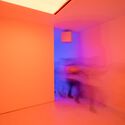
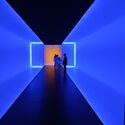
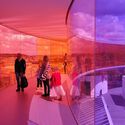
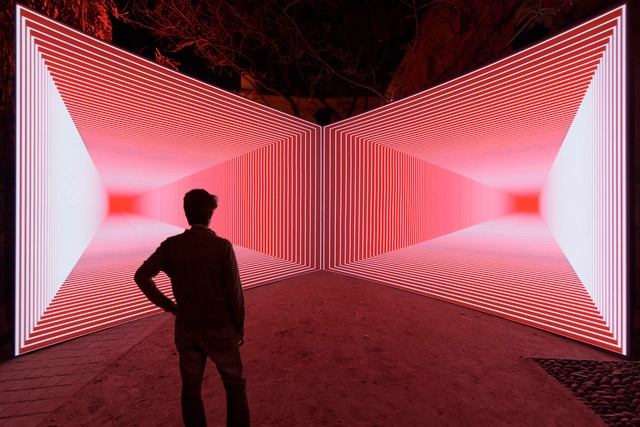
Light has been present in art for centuries. To think of the Baroque or Gothic without this element would be impossible. However, in the 20th century, artists began to explore light qualities and transformed them into a means of materializing art. Sculptures, immersive installations, and ways of shaping the environment through light, its colors and intensities brought new spatial perceptions by establishing a unique relationship with architecture.
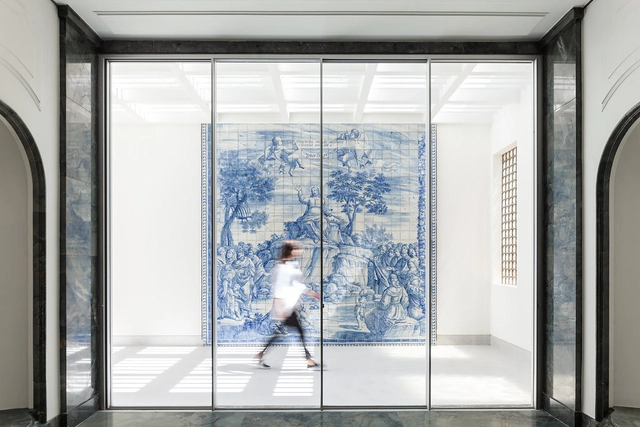
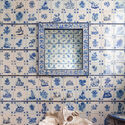
Culture reflected in a material. Portuguese tiles narrate historical themes, from the religious to the profane. They shape the Portuguese landscape and scenery when covering buildings, interiors and public spaces. In this way, its expression continues in constant change and adaptation to weave the Moorish ancestry with contemporaneity.
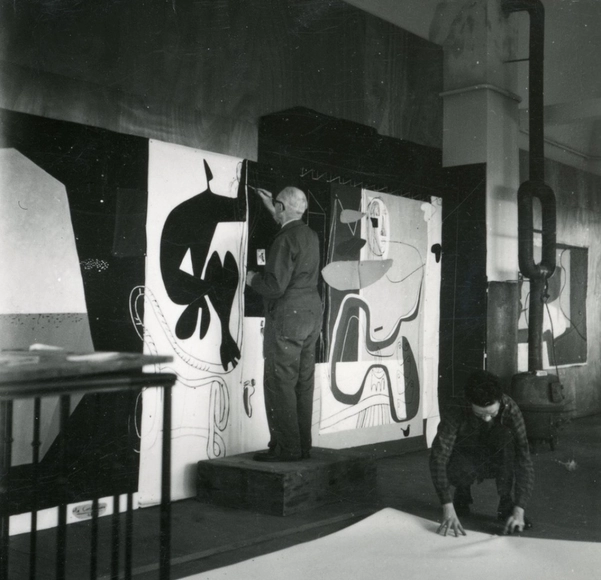
For sixty years, Le Corbusier used a wide variety of media to explore the themes and forms of his art, ranging from drawing to urbanism and including painting, architecture, and sculpture. He first discovered tapestry in 1936, in response to a request from Marie Cuttoli, who was then commissioning artworks woven in a factory in Aubusson from modern painters. However, it was twelve years later that he expressed his interest in producing woven artworks based on his drawings and found his way to this city in central France, where a true renaissance of tapestry had begun, at the initiative of Jean Lurçat and Jean Picart Le Doux.
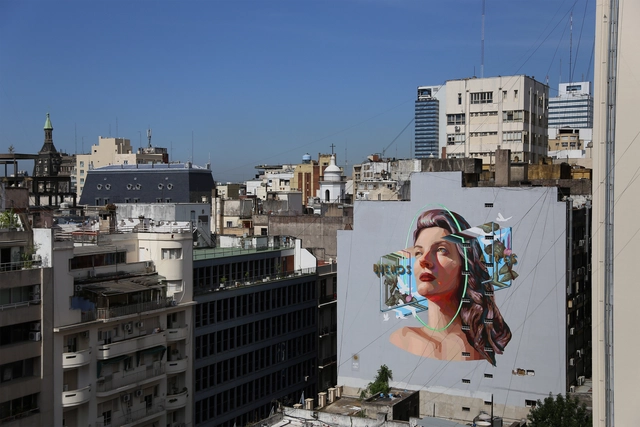
Addressing themes involving memory, oblivion and gender, the Argentinean visual artist and muralist, Mariela Ajras, displays her art on the walls of numerous cities around the world such as Barcelona, Valencia, Salamanca, Mexico City, Bogota, Montevideo, Buenos Aires, among many others. With a background in psychology, she has participated in different urban art festivals, exhibitions, fairs and public art projects, one of the largest murals in the city of Buenos Aires being the one she developed for the project "Corredor de la Memoria", commemorating the 25th anniversary of the AMIA bombing.
Architecture in its broadest sense concerns itself with the uprooting of structures that are permanent, cementing themselves within the greater cultural context and history of its humanity, however, where do we place the creation of structures that are designed with the intention to be disassembled. How much meaning and value can these structures hold, knowing they were never designed to last, but to simply take up space for a moment?
The Metropolitan Museum of Art in New York has selected Mexican architect Frida Escobedo to design the new $500 million modern and contemporary art wing. The Met does not have, until now, a thematic area that would house pieces corresponding to this temporality in art.
Ever since the period of the Renaissance in Europe, the indivisible relationship between art and architecture has long been heatedly discussed and vividly reflected in numerous classical books and buildings. With the deep connection that unites art and architecture together, designers, artists, and architects have been actively collaborating and came up with solutions on how we can house and exhibit art in the form of changing spaces.
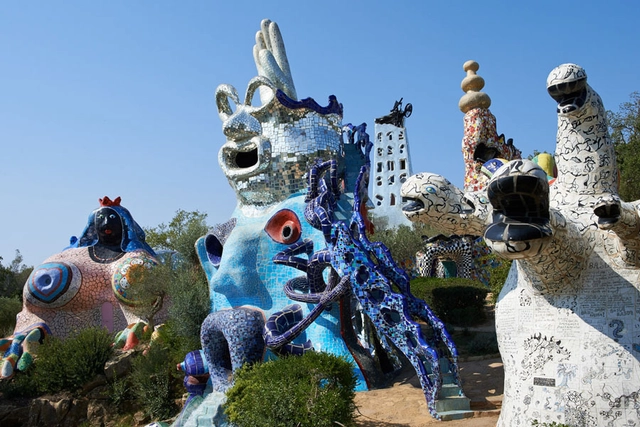
Tarot is often described as a mirror of the soul. Much like the spaces we inhabit, we can look at the symbols housed within the 72-card deck and see reflections of ourselves and our belief systems. The object and practice itself contain many architectural associations: It’s not uncommon for words like “structures,” “foundations,” and “home” to come up in a tarot reading. Traditional cards depict towers, castles, and churches. Sometimes the cards are described as keys, sometimes as gateways.
https://www.archdaily.com/959469/the-fantastic-architecture-of-niki-de-saint-phalleLeilah Stone
Using and controlling light can change the perception of a place; users perceive and feel the space differently depending on factors such as the type of light switch, color variations, and combinations. When used in temporary installations, light can break the boundaries between art and architecture, and also between tangible and intangible, transforming the elements of the project and creating new shapes and patterns.
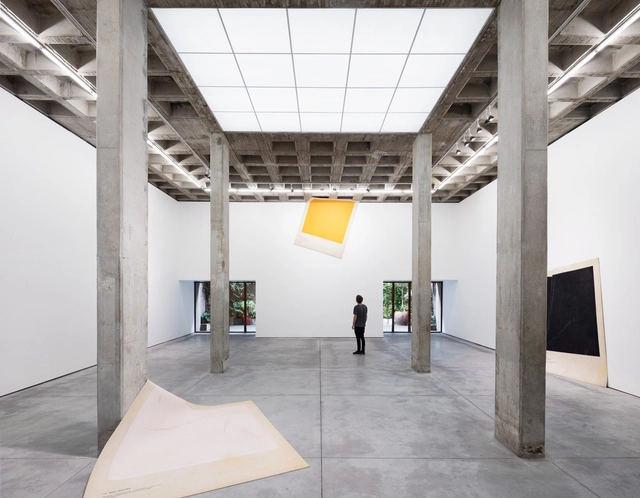
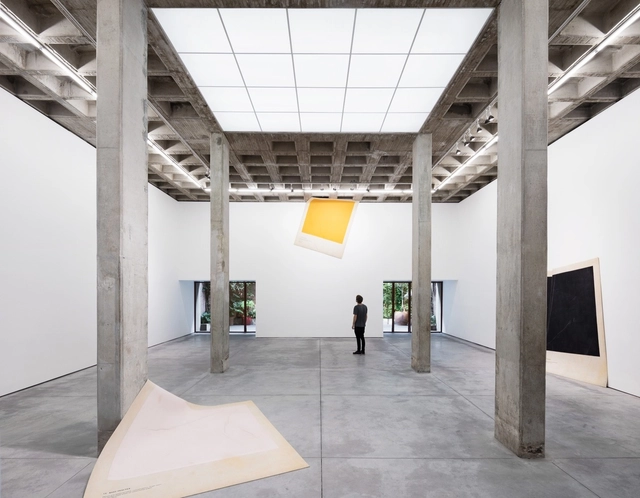
Overall, when designing exhibition spaces, certain aspects contribute to an effective display of the pieces: diffuse lighting, spatial distribution, and high ceilings are some of them. The combination of these features with rooms that are able to transform themselves (using elements that can be perforated, repainted, and adapted according to each exhibition), is common in many art galleries, expressing the dialogue between art and architecture.
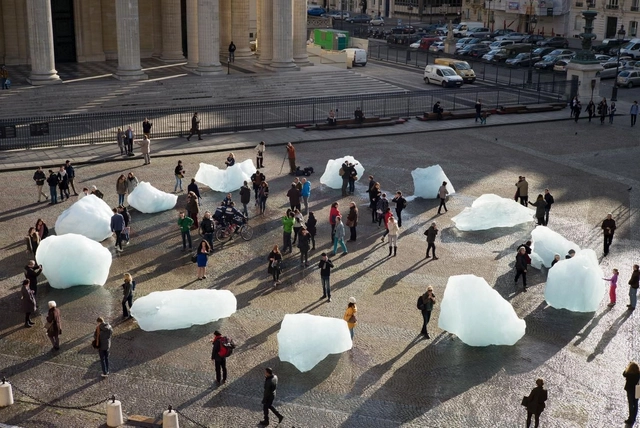
Studying the data that indicates a climate crisis that has been affecting the whole planet for the last decades, the reactionary attitudes may sound disappointing. However, at the same time that the news indicates a global average temperature rise, the political focus on the climate crisis is also intensified, according to the UN Environment report released in 2019, which is a reflection not only of the occurrence of manifestations and protests around the world but also of the so-called activist art expression.
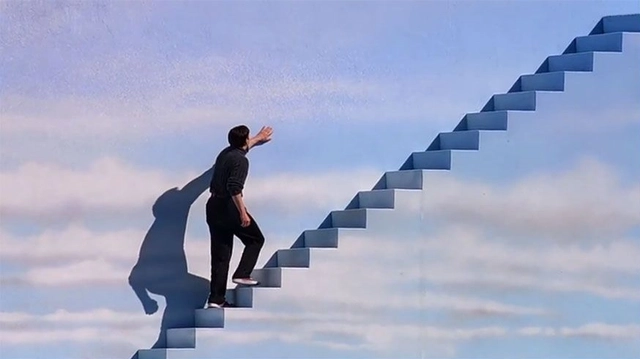
"Films have been studied by architects and other professionals who are interested in the field of architecture and urbanism because they offer a more subtle and responsive perspective of our discipline," Finnish Architect and Professor Juhani Pallasmaa tells us. Through its technical and aesthetical particularities, the cinema can go beyond simple representation to be a powerful instrument for conveying ideas and concepts related to architecture and urban space.
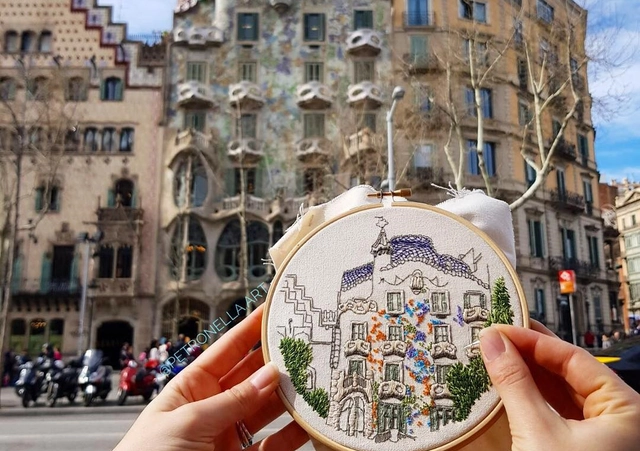
Elin Petronella and Charles Henry record the architecture and urban landscapes of European cities on vibrant, colorful, and even monochromatic embroideries. Classical Danish buildings, the bohemian streets of Paris, Lisbon's cable cars, and even the iconic Casa Batlló de Gaudí in Barcelona are some of the locations illustrated in the duo's work. See more of the textile artists/couple's work on Instagram: @petronella.art and @_charleshenry_.
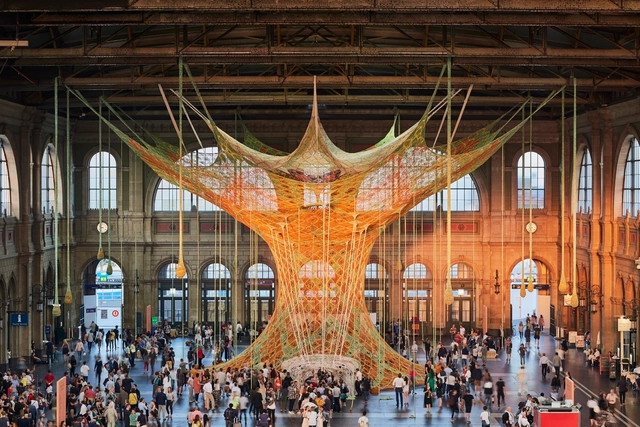
Brazilian contemporary artist Ernesto Neto recently realized a colorful sculpture made of hand-knotted cotton strips in the atrium of Zurich's Central Station. Titled Gaia Mother Tree, the installation resembles a giant tree and extends from the station's roof to its floor.
Exhibited by the Fondation Beyeler, Neto's sculpture is an immersive work of art, a space that one can enter into and walk around or remain and meditate. The Gaia Mother Tree will be on display until July 29th. A series of activities for adults and children, including musical concerts, workshops and debates, is scheduled to take place under the net of cotton.