


Architecture: The Latest Architecture and News
Red Brick Country Auditorium / Huazhong University of Science and Technology + ADAP Architects China

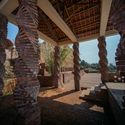
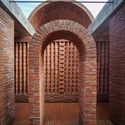
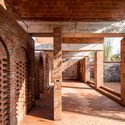

https://www.archdaily.com/892573/red-brick-country-auditorium-huazhong-university-of-science-and-technology-plus-adap-architects罗靖琳
In China, an Experimental Pavilion of Ceramic Bricks Fuses Craftsmanship and Digital Fabrication
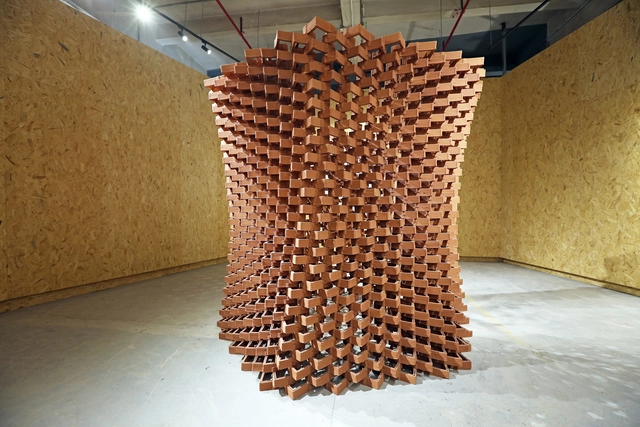
Uniting the material intelligence of vernacular crafts with the precision and flexibility provided by the new digital design and manufacturing technologies, the Robotic Fabrication LAB of The Faculty of Architecture of HKU has developed the CeramicINformation Pavilion, with the objective of finding suitable levels of automation to be used for emerging and transitioning economies.
Part of an evolving series, each of its 1,000 components is unique and relates specifically to its neighboring units. The elements are constructed through 3D printing and are made of terracotta brick, a material commonly used in modern Chinese construction.
https://www.archdaily.com/890192/in-china-an-experimental-pavilion-of-ceramic-bricks-fuses-craftsmanship-and-digital-fabricationJosé Tomás Franco
Hangzhou Central Plaza / JHD Architects


https://www.archdaily.com/892231/hangzhou-central-plaza-jhd-architects罗靖琳
Bataan Chapel by Swiss Artist Not Vital Questions the Boundaries Between Art and Architecture
.jpg?1520689109&format=webp&width=640&height=580)
Art, in general, is made to be seen or experienced by another, an interlocutor, who, in turn, establishes various relationships with the art work. However, this is not the case of the Bataan Chapel, built by the Swiss artist Not Vital in the Philippines.
Ravaged by constant winds, the art work rises on a hill in rural Bagac, a town of just under 30,000 inhabitants located about 50 kilometers west of Manilla. The remote location of the building makes access difficult and the journey becomes a sort of pilgrimage — part of its grace lies precisely in its inaccessibility.
https://www.archdaily.com/890929/bataan-chapel-by-swiss-artist-not-vital-questions-the-boundaries-between-art-and-architectureRomullo Baratto
Towards Openness by OPEN Architecture

Drawn from keen observation of the rapidly changing social economic landscape of China, and using OPEN Architecture’s projects as case studies, Towards Openness is a symphony of seven new and upcoming projects and six idea chapters that are interwoven to offer an in-depth examination of this unique practice and the critical thinking underlying its work.
https://www.archdaily.com/892094/towards-openness-by-open-architectureRene Submissions
What It’s Like to Be an Architect Who Doesn’t Design Buildings
There's an old, weary tune that people sing to caution against being an architect: the long years of academic training, the studio work that takes away from sleep, and the small job market in which too many people are vying for the same positions. When you finally get going, the work is trying as well. Many spend months or even years working on the computer and doing models before seeing any of the designs become concrete. If you're talking about the grind, architects know this well enough from their training, and this time of ceaseless endeavor in the workplace only adds to that despair.
Which is why more and more architects are branching out. Better hours, more interesting opportunities, and a chance to do more than just build models. Furthermore, the skills you learn as an architect, such as being sensitive to space, and being able to grasp the cultural and societal demands of a place, can be put to use in rather interesting ways. Here, 3 editors at ArchDaily talk about being an architect, why they stopped designing buildings, and what they do in their work now.
https://www.archdaily.com/891862/what-its-like-to-be-an-architect-who-doesnt-design-buildingsKeshia Badalge
Song Art Museum / Vermilion Zhou Design Group





-
Architects: Vermilion Zhou Design Group
- Area: 2200 m²
- Year: 2017
-
Manufacturers: Apron
-
Professionals: Jamie Pai
https://www.archdaily.com/891888/song-art-museum-vermilion-zhou-design-group罗靖琳
ODA Unveils Images of Bamboo-Inspired "Dragon Gate" for New York's Chinatown
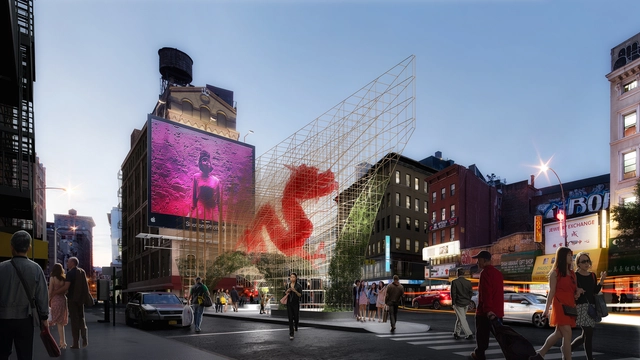
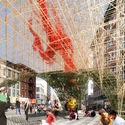
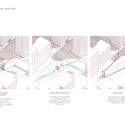
ODA New York has released images of its proposed “Dragon Gate” pavilion for New York’s Chinatown, seeking to act as a symbolic gateway to the famous Manhattan neighborhood. Using modern materials and forms to invoke symbols of traditional Chinese culture, the scheme seeks to capture Chinatown’s remarkable duality: a community of tradition resistant to change, yet one regarded as a uniquely contemporary phenomenon showcasing New York’s inclusive diversity.
Situated on a triangular traffic island at the intersection of Canal, Baxter, and Walker Streets, ODA’s scheme seeks to activate a currently-underused pedestrian space. The Dragon Gate consists of a triangular form adhering to a three-dimensional, gridded structure formed from interwoven, tubular, bronze steel inspired by bamboo scaffolding. As the structure densifies, selected pieces will be painted red to create the illusion of a dragon in mid-flight.


https://www.archdaily.com/891930/oda-unveils-images-of-bamboo-inspired-dragon-gate-for-new-yorks-chinatownNiall Patrick Walsh
The Sordo Madaleno Arquitectos Project That Will Be The New Urban Icon of Monterrey
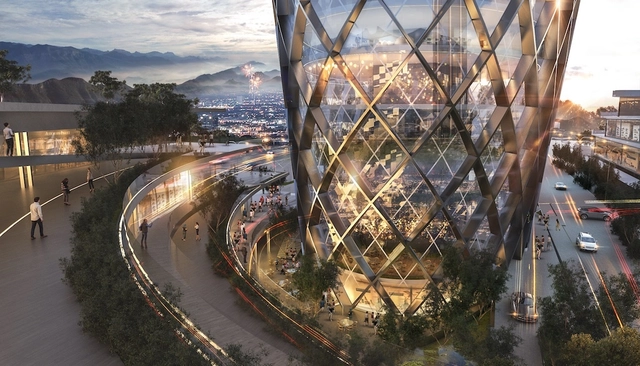


Proyectos 9, a Monterrey real estate developer, announced Sordo Madaleno Arquitectos as the winners of the international architectural design competition for the construction of Constitución 999, a new mixed-use complex to be erected in the downtown area of Monterrey.
https://www.archdaily.com/890579/the-sordo-madaleno-arquitectos-project-that-will-be-the-new-urban-icon-of-monterreyMónica Arellano
Ma Yansong: “Some People May Say My Work Is Futuristic, But I See It as Traditional”
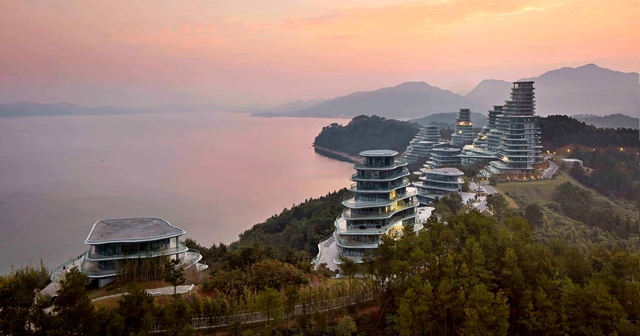
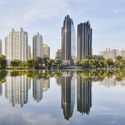
With the unconventional, undulating forms of his buildings—and the fact that his path to architectural success included a stint working for Zaha Hadid—Ma Yansong is often miscategorized as an architect of the latter generation of Deconstructivists, interested only in futuristic forms that push the boundaries of technology for the sake of innovation as an end in itself. But in fact Ma’s designs, especially those in his home country of China, are deeply rooted in nature and tradition, as he explains in the latest interview from Vladimir Belogolovsky’s “City of Ideas” series.


https://www.archdaily.com/891656/ma-yansong-some-people-may-say-my-work-is-futuristic-but-i-see-it-as-traditionalVladimir Belogolovsky
Sharing Your Home with Strangers: What Does the Future Hold for the Co-Living Craze?
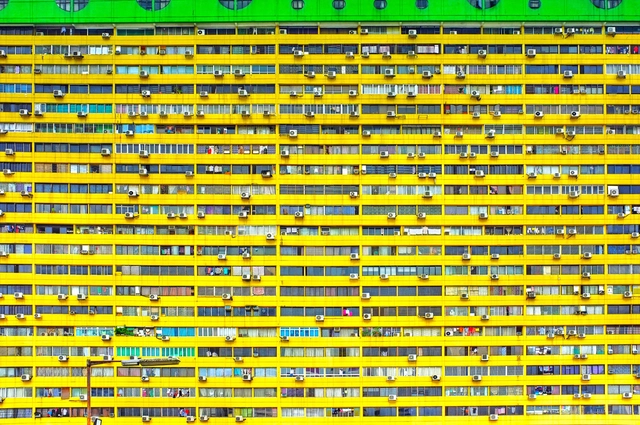
What if your apartment was more than just a place to live? What if it was a catalyst for social interactions? Or what if it removed the everyday tedious tasks of cleaning, paying bills, and buying furnishings? Co-living, a modern form of housing where residents share living spaces, is aiming to do just that.
Co-living is growing in popularity in major cities such as London and New York, where increasing housing prices are forcing residents to look at new and adaptive ways to rent in the city. When we discussed the ambitions and inspirations behind the co-living movement in 2016, it was still a concept that was in its relatively experimental stages. Today, co-living is more focused in its mission, and has found success by pushing people together through a collection of common themes: a yearning for social connection, participation in an increasingly shared economy, and the affordability of a convenient housing solution.
https://www.archdaily.com/890685/sharing-your-home-with-strangers-what-does-the-future-hold-for-the-co-living-crazeKaley Overstreet
City of Los Angeles Appoints Inaugural Chief Design Officer

Recently, long-standing architecture critic for the LA Times Christopher Hawthorne announced that he was stepping down to take up the position of chief design officer for the City of Los Angeles in Mayor Eric Garcetti’s administration. According to Hawthorne, the role will involve raising “the quality of public architecture and urban design across the city — and the level of civic conversation about those subjects.” This dramatic shift from the question: what is the role of the critic and architecture criticism in shaping civic architecture?
https://www.archdaily.com/890750/city-of-los-angeles-appoints-inaugural-chief-design-officerEvan Pavka
Modular Installation Provides Temporary Housing For Refugees Beneath Paris Bridge

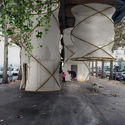
As hundreds of refugees continue to arrive in Paris, France, the city faces an ongoing struggle to find safe and suitable housing for the influx of migrants. As a result, many end up sleeping in underused urban spaces or on the side of the road with almost no access to water, sanitation, and food.
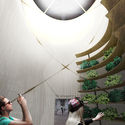
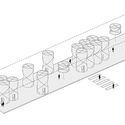
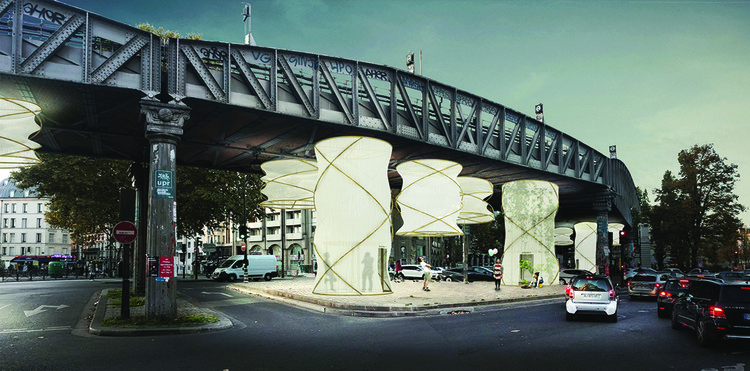
In response, Paris- and Santiago-based firm 1week1project in collaboration with Sophie Picoty unveil their design for a speculative public park titled “Illuminate Paris!” beneath an elevated railway bridge to provide additional support for organizations handling the influx of refugees. This modular “field of experiences” features a series of lantern-like environments forming a canopy along the underside of the bridge that allows for much-need space for migrants who are currently forced to sleep in encampments under similar infrastructure and in parks.

https://www.archdaily.com/890741/modular-installation-provides-temporary-housing-for-refugees-beneath-paris-bridgeEvan Pavka
Zero Pavilion: A Zero Carbon Garden Made in Alibaba / Tenio Tianjin Architecture and Engineering


.jpg?1500259381 "© Ren Jun, He Zhihan")

.jpg?1500259478 "© Ren Jun, He Zhihan")

https://www.archdaily.com/875909/zero-pavilion-a-zero-carbon-garden-made-in-alibaba-tenio-tianjin-architecture-and-engineering-c-ltd韩爽
Contemporary Architecture Captured by Mexican Photographers

The history of Mexican photography has contributed to highlighting Mexico's presence in the world. Photographers like Elsa Medina, Lola Álvarez Bravo, Graciela Iturbide, Maya Goded, and Juan Rulfo have masterfully portrayed the life of the buildings, houses and the streets of a rapidly built, nineteenth-century Mexico.
As a consequence, the contemporary scene of Mexican photography has become a fundamental tool for architecture and has contributed to a better visual understanding of the works that are erected every day.
Photography and architecture are two disciplines that go hand in hand and whose relationship has been reinforced thanks to the digital tools that we currently have. For that reason, we have compiled the work of contemporary Mexican photographers who record our walk through the world we live in and contribute to constructing the image of contemporary Mexico.
https://www.archdaily.com/888745/contemporary-architecture-captured-by-mexican-photographersMónica Arellano
MAS in Collective Housing is Celebrating Its 10th Anniversary
| Sponsored Content

The MAS in Collective Housing is celebrating its 10th anniversary and they want to share their happiness for that achievement. After having 256 alumni from 38 different countries, and 70 international workshops, we are convinced that they are doing something right. The application period for the 2019 edition is already open.
https://www.archdaily.com/890590/mas-in-collective-housing-is-celebrating-its-10th-anniversaryRene Submissions
A Guide to Santiago's Modern Architecture: 20 Projects You Need to Know About
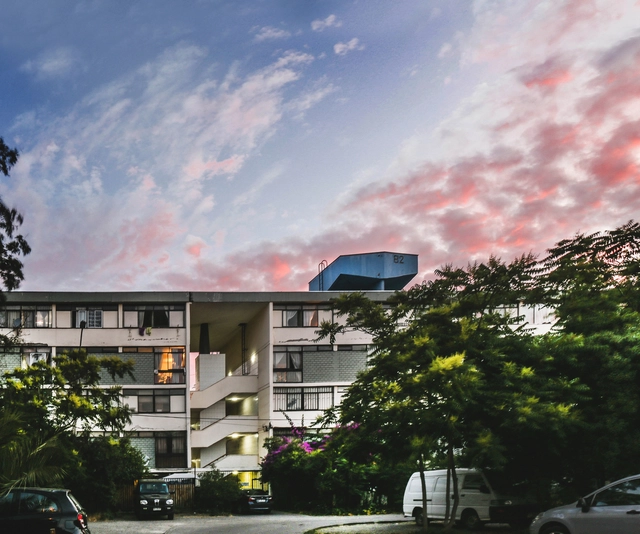
The modern movement was a key player in the cultural construction of Chile in the 20th century. Although the first projects came from the private sector, their urban and landscape principles were adopted by the modernizing project of the welfare state that began to be built after the social conflicts that exploded in the 1920s.
During chile's industrialization process, the State's housing construction incorporated concepts such as liveability, and universal access to housing and sanitation, which were put to the test early on in the reconstruction of cities such as Chillán after the 1939 earthquake. As Chile is a country that is familiar with earthquakes, it was necessary to readjust the concepts of the modern movement to national structural requirements, that is, resizing the reinforced concrete sections, which gave them a heavier visual expression than in Brazil or Argentina.
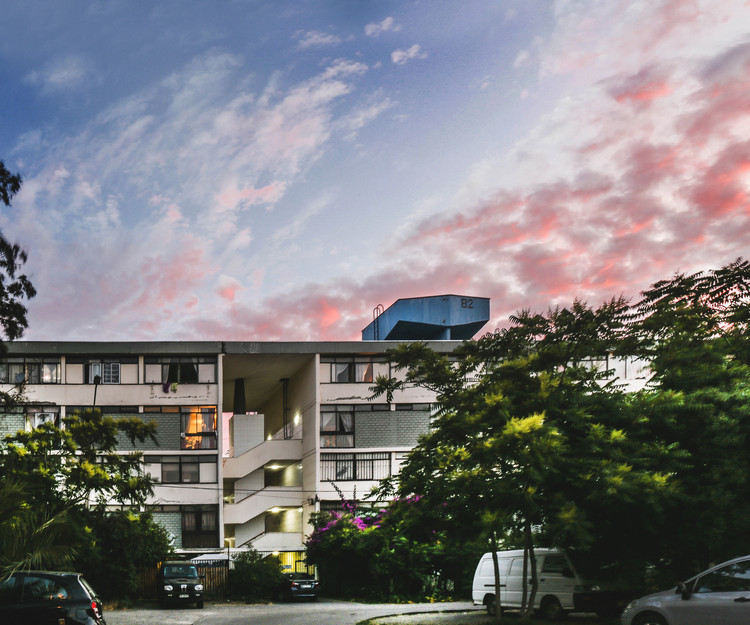
From the daring vision of Sergio Larraín García-Moreno and Jorge Arteaga in the Oberpaur building - the first of the modern movement - to the urban visions of BVCH in the Villa Portales, or the first exercises in height in the upper middle class sectors, the modern movement has left its mark on our society and in our cities. However, only one of the projects presented here is declared a historical monument.
In this edition of the architectural guides, we present you twenty chronologically ordered projects that reflect the evolution of the modern movement in Santiago, Chile.




https://www.archdaily.com/889710/a-guide-to-santiagos-modern-architecture-20-projects-you-need-to-know-aboutMaría Francisca González & Nicolás Valencia
99% Invisible Investigates the Utopian and Dystopian Histories of the Bijlmermeer
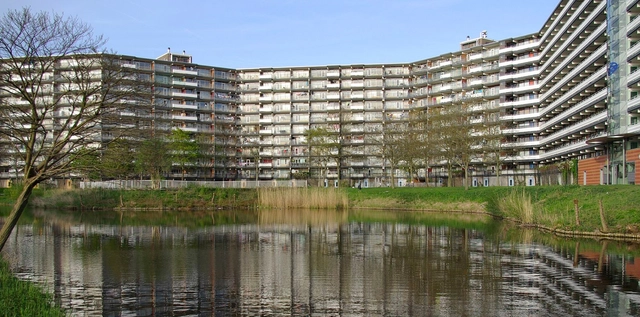
How can we plan a better city? The answer has confounded architects and urban planners since the birth of the industrial city. One attempt at answering came in the form of a spectacular modernist proposal outside of Amsterdam called the Bijlmermeer. And, as a new two-part episode by 99% Invisible reveals, it failed miserably. But, like all histories, the story is not as simple as it first appears.
https://www.archdaily.com/890077/99-percent-invisible-investigates-the-utopian-and-dystopian-histories-of-the-bijlmermeerEvan Pavka