Vladimir Belogolovsky speaks with Russian architect Totan Kuzembaev about flexibility in buildings, the freedom in design, and that even after leading a successful practice for almost twenty years, he still keeps searching for how to make architecture.
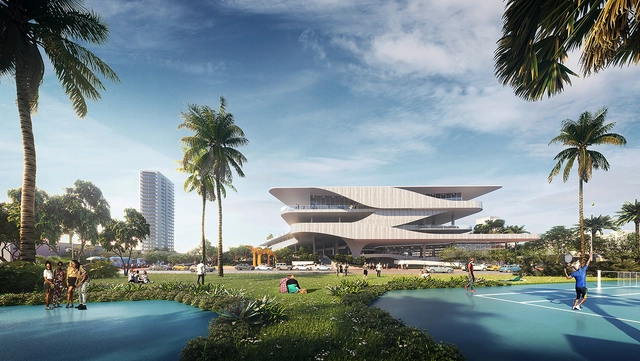
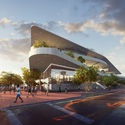
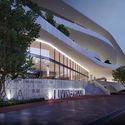
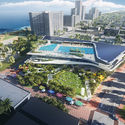
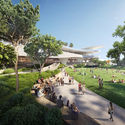
Brooks + Scarpa along with PCL and BEA, design/build team is one of three finalists selected for a new community mixed-use complex. Located in the heart of Miami Beach, just one block west of the beach, the structure that replaces a municipal surface parking lot, will include pools, libraries, retail, a community center, and a 3-acre park. Designed as a resiliency hub, the building can accommodate future residential and office use when less parking is needed.
Construction has begun on MVRDV’s new 23-story mixed-use tproject at Mission Rock in San Francisco. One of four buildings in a multi-phase masterplan, the tower was designed alongside work by Studio Gang, Henning Larsen, and WORKac. The Mission Rock masterplan aims to turn 28 acres into a new neighborhood for San Francisco residents and visitors. The projects are made to connect to China Basin Park.
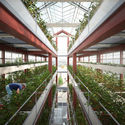
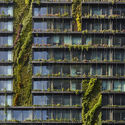
With the increase of urban density and the decrease in the availability of land, the verticalization phenomenon has intensified in cities all over the world. Similar to the vertical growth of buildings — which is often a divisive issue for architects and urban planners — many initiatives have sought in the vertical dimension a possibility to foster the use of vegetation in urban areas. Vertical gardens, farms and forests, rooftop vegetable gardens, and elevated structures for urban agriculture are some of the many possibilities of verticalization in plant cultivation, each with its unique characteristics and specific impacts on the city and its inhabitants.
But is verticalization the ideal solution to make cities greener? And what are the impacts of this action in urban areas? Furthermore, what benefits of urban plants are lost when adopting vertical solutions instead of promoting its cultivation directly on the ground?
It didn’t take long for the coronavirus pandemic to inspire both cutting-edge architectural design solutions and broad speculation about future developments in the field. Many of the realized innovations have been contracted by or marketed to the real estate sector. But as firms compete to provide pandemic comforts to rich tenants, the COVID-19 technology that directly affects working-class communities is mostly limited to restrictive measures that fail to address already-urgent residential health hazards or administrative conveniences for developers that allow them to circumvent public scrutiny. These changes had been long-planned, but they have found a new license under the pretext of coronavirus precaution. In terms of “corona grifting,” this sort of thing takes the cake.
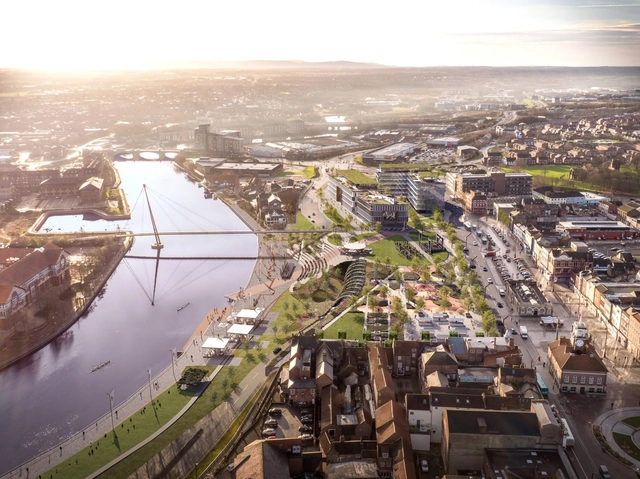
An extensive urban regeneration project is slated to take place in the town of Stockton in the United Kingdom. A 37-million-pound project, the proposal - drawn up by Ryder Architecture and backed by the Stockton Borough Council - will demolish half the high street in Stockton’s town centre and replace it with a riverside park.
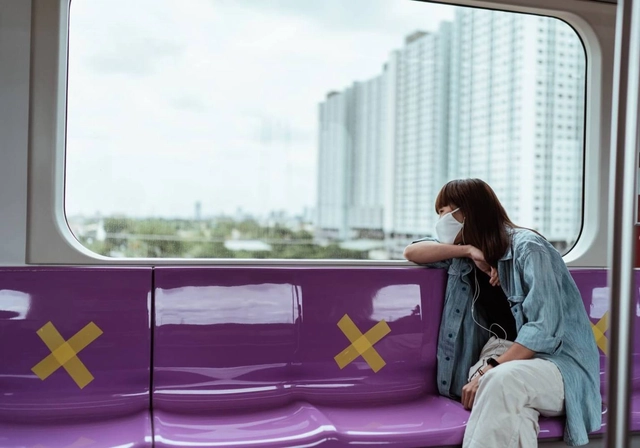
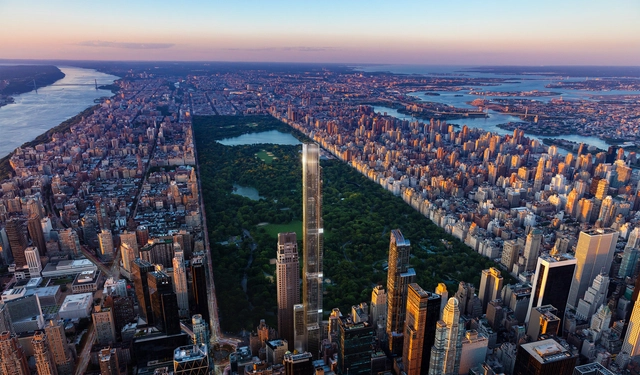
Almost one year into the COVID-19 pandemic, life is starting to feel like it might regain its sense of normalcy. With promising vaccines being slowly rolled around the globe, the focus is shifting away from the immediate, and into what the future looks like- including where people want to live. At the beginning of the pandemic, stories all across the media claimed that cities were dead, people were leaving as a permanent measure of safety and well-being, and that the real estate market would experience a long and slow recovery to the boom it had experienced in the pre-pandemic world. But there’s been a shift, and it’s happening fast- people are returning to cities almost as suddenly as they once left them.
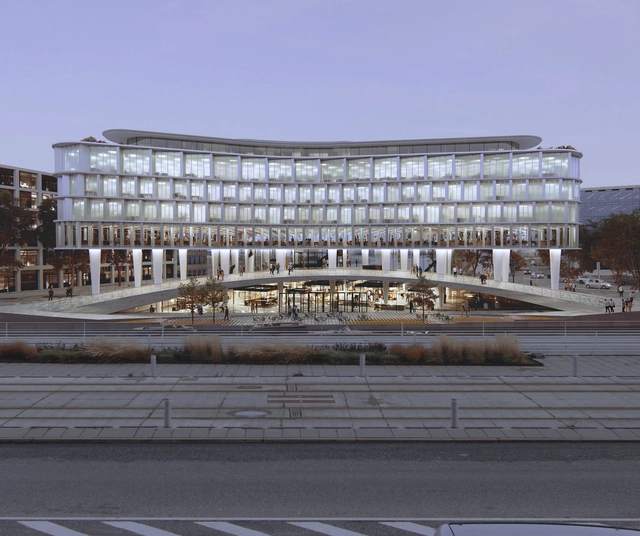
Dorte Mandrup has imagined ‘The Hinge’, a landmark transition between the new urban area Aarhus Ø and the historic town of Denmark’s second-largest city. The new city gate will put in place an innovative and sustainable urban focal point. Expected to open in 2026, The Hinge was designed in collaboration with landscape architect Kristine Jensen and Søren Jensen Consulting Engineers.
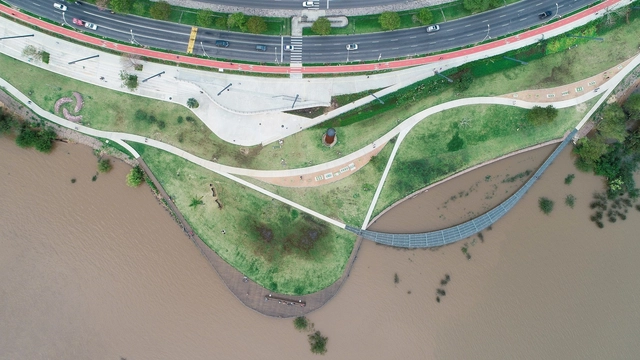
Linear parks exist in many different contexts - along riversides, coastal areas, or inserted in the urban fabric - and represent a very particular type of public space that evokes the idea of a vector and, consequently, the sense of movement. However, they can provide more than just activities and programs associated with mobility, proving to be an appealing solution to the lack of spaces for leisure, contemplation, and relaxation in the most varied urban situations.
Below, we have gathered 12 examples of linear parks built in different parts of the world, illustrated by photographs and floor plans.
There is an astonishing degree of complexity, order, and beauty in the natural world. Even so, and especially within the realm of living things, nothing is more complex than it needs to be to sustain its existence. Every aspect of the system serves a purpose. If it does not, the unneeded component eventually ceases to exist in future generations. Even with these constraints of resource and energy efficiency, we find boundless beauty and harmony in the natural world. Contrast nature’s “just the right amount of complexity” to the way many architects design buildings today. While nature is only as complex as it needs to be, architects and designers add excessive and inessential complexity to their buildings and landscapes when none is warranted.
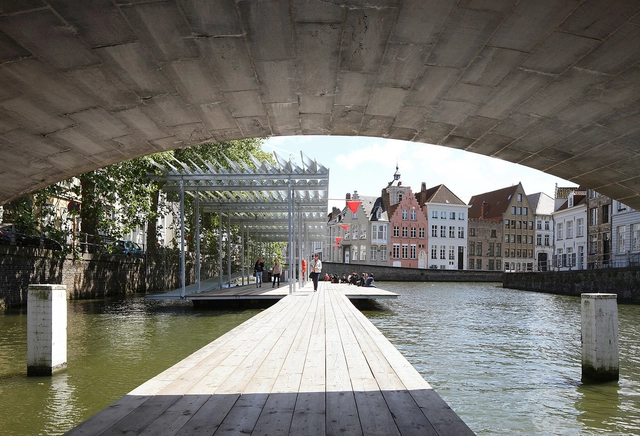
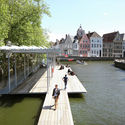
Architecture remains in constant tension with natural forces. Designed around gravity, climate, and time, buildings are always part of larger systems. Throughout the world, designers have tried to mitigate natural forces by constructing hybrid spaces and structures, artificial areas where nature meets the manmade. Embodying this relationship, canals reflect a desire to direct nature and its flows. Today, these fluid spaces are opening up to new programs, projects that explore modern life and urban vitality.
A class photograph with a.o. Martha van Coppenolle at the Technisch Instituut van Sint-Maria in Antwerp, ca. 1930. Collection City of Antwerp, Letterenhuis.. Image Courtesy of Wiki Women Design
The Flanders Architecture Institute has been working to bring “women who have left their mark on Belgium's design heritage out of the shadows”, through Wiki Women Design. Using Wikipedia as a platform, the initiative aims to organize edit-a-thons or writing sessions, to make up for this backlog.
KCAP Architects & Planners have designed a proposal for three round, residential towers on the former Brabantbad site in the Netherlands. The team's project includes slender volumes atop transparent plinths adjacent to Prins Hendrikpark in 's-Hertogenbosch. The park embraces the IIzeren Vrouw, a former sand extraction lake, while also aiming to improve upon the current zoning plan.
Memento mori is an ancient Latin expression that means "remember that you are mortal." The Roman people used it not to represent a fatalistic approach to death but rather as a way of valuing life.
A few centuries later, as we arrive at our current context and the world reaches the terrifying figure of 2 million deaths as a result of the Covid-19 pandemic, memento mori is more relevant than ever.
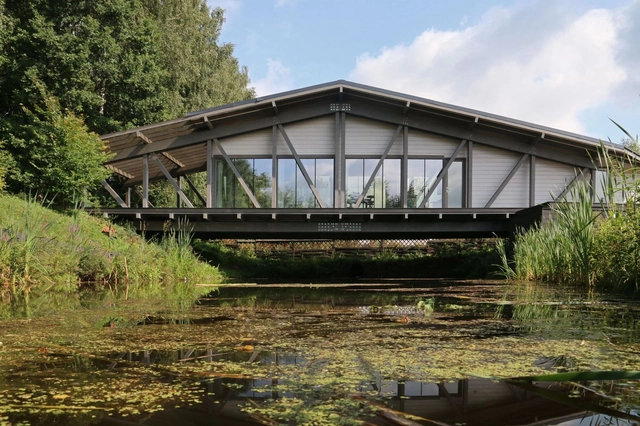
Bridge House / BIO-architects. Image Cortesia de Ivan Ovchinnikov
Metaphorically, building bridges equates to creating new opportunities, connections, and paths. The first bridges likely formed naturally with logs falling across rivers and natural depressions, though humans have also been building rudimentary structures to overcome obstacles since prehistory. Today, technological advances have made it possible to erect bridges that are both impressive and sculptural, playing a key role in transportation and connectivity. Usually needing to overcome large spans, with few points of support, bridges can be quite difficult to structure. But when is the bridge more than a connection between two points, instead resembling a building with a complex program? How can these 'bridge houses' be structured?
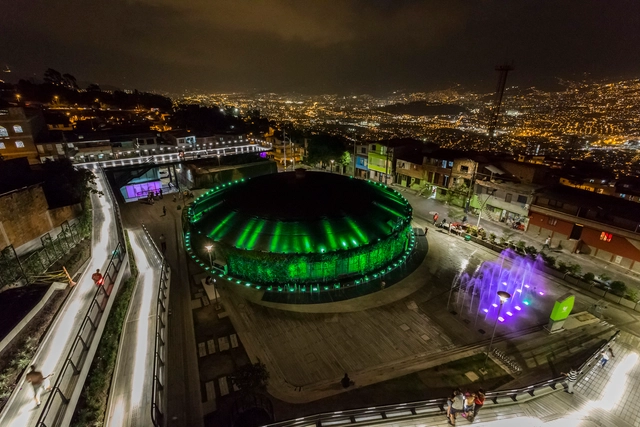
UVA La Esperanza in Medellin, Colombia. Image Courtesy of EPM
Social Urbanism: Reframing Spatial Design – Discourses from Latin America, a new book by Maria Bellalta, ASLA, dean of the School of Landscape Architecture at the Boston Architectural College, is a welcome addition to the growing number of publications on the social justice-oriented form of urbanism, architecture, and public space emanating from Medellín and Colombia. The achievements of social urbanism have rightfully become synonymous with Medellín in the world of landscape architecture, urban planning and design, and architecture.
Mobile playground in Vietnam. Image Courtesy of UN-Habitat, Global Public Space Programme
The Un-Habitat or the United Nations agency for human settlements and sustainable urban development, whose primary focus is to deal with the challenges of rapid urbanization, has been developing innovative approaches in the urban design field, centered on the active participation of the community. ArchDaily has teamed up with UN-Habitat to bring you weekly news, article, and interviews that highlight this work, with content straight from the source, developed by our editors.
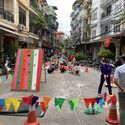
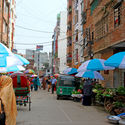
“During this pandemic, public spaces have played a vital role in the health and sustainability of urban communities around the world” states James Delaney, Block by Block chair. In fact, people need to go outside, now more than ever. In order to equip these public spaces to face the challenges of Covid-19, UN-Habitat with the Block by Block Foundation has been supporting ten cities, throughout this past year. With the help of local governments and the community, the initiatives helped covid-proof open urban entities, especially in poor neighborhoods, where there are few shared and green spaces. From creating mobile pop-up playgrounds for children in Hanoi, Vietnam, improving livelihood for street vendors in Dhaka and Khulna, Bangladesh to Covid Proofing of Public Spaces in Bhopalinformal settlements, India, these responses have provided help to those who need it the most.
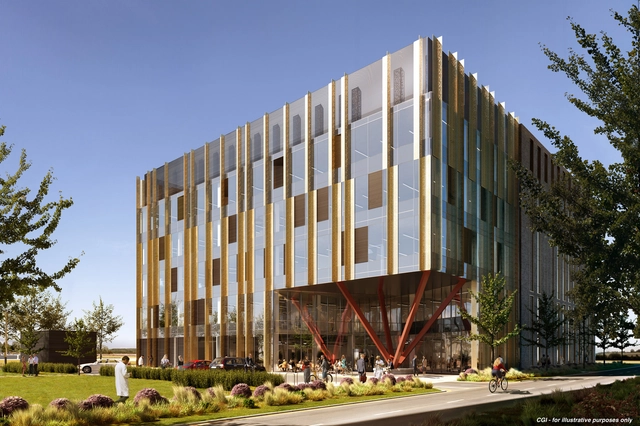
Scott Brownrigg's 1000 Discovery Drive has been granted planning approval from Cambridge City and South Cambridgeshire District Councils in United Kingdom. As the second building of the Biomedical Campus in Phase 2, the project includes 100,000 square feet of net internal area across laboratories and office space. The design aims to form a flexible and adaptable design to drive innovation within the scientific and medical community.




.jpg?1614564416&format=webp&width=640&height=580)
_Paolo_Rosselli_DSC_8101.jpg?1612525106&format=webp&width=640&height=580)

_Paolo_Rosselli_DSC295s0.jpg?1612525069 "Bosco Verticale / Boeri Studio. Image: © Paolo Rosselli")
_Paolo_Rosselli_DSC_8101.jpg?1612525106)



















(1).jpg?1614161719&format=webp&width=640&height=580)
.jpg?1614161736 "Mobile playground in Vietnam. Image Courtesy of UN-Habitat, Global Public Space Programme")

(1).jpg?1614161719)