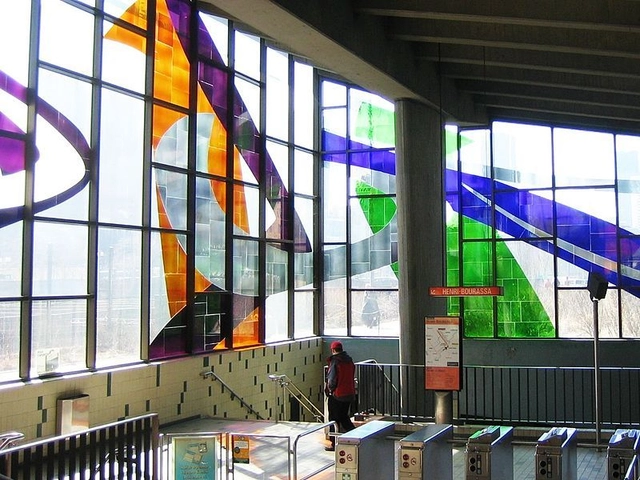
In terms of architectural enhancement, stained glass is often pieced together in order to produce depictions of decorative art, allowing light to filter and penetrate a particular structure or building. As a component it is both decorative and a variety of window, allowing a substantial and sufficient amount of light into a space, for atmospheric and beneficial effect.
Arteries of hope by Partner-z Architects. Image Courtesy of Partner-z Architects
This week’s curated selection of Best Unbuilt Architecture highlights educational facilities submitted by the ArchDaily community. From a contextual Earth school in Senegal, to a borderless, collaborative school in Vietnam, this round up of unbuilt projects showcases how architects infused nature with architecture, offering students the chance to engage with the landscape and learn more about their surroundings from their academic institutes. The article also features projects from Lebanon, Switzerland, Armenia, Ukraine, and Greece.
The EPFL Innovation Park (EIP) has selected 3XN | GXN and IB (Itten+Brechbühl SA) to design and build a new "ecotope", expanding the university's Science Park and Innovation Square to a new site, west of the main EPFL campus in Ecublens, Switzerland. The Ecotope is set to be a vibrant and innovative marketplace for ideas, serving as an "ecosystem in which policymakers, researchers, investors, executives, students, and citizens can come together for open dialogue or debate.” The concept of the project not only brings together leaders in business, science, and technology, but also puts a high priority on access to green spaces and biophilic principles.
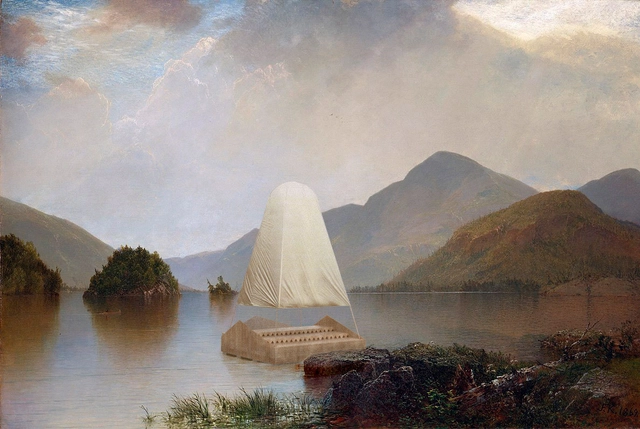
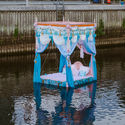
First Place - Federico Fiorino. Image Courtesy of The Outsider magazine and the City Municipality of Maribor
The Outsider magazine and the City Municipality of Maribor have announced the winners of the international competition “Floating Pavilion on the Drava River.” The purpose of the competition was to obtain an innovative design for a floating pavilion that would have two main functions: a space for smaller events during the Lent Festival and a space for contemplation by the river. The City Municipality of Maribor will invite the winning candidate to participate in the implementation of the project.
Clearly, graphic designers are not architects, but collaborative projects between these two fields of knowledge, which intersect in their details, can work well.
Creative industry as a sector has evolved, and many people are now in new fields. If you're collaborating, you can move quickly and we've covered that here. The trend is to be collaborative, and very different from 25 years ago, when you should be a graphic designer alone doing layout and paper weights or an architect isolated in an office running autocad.
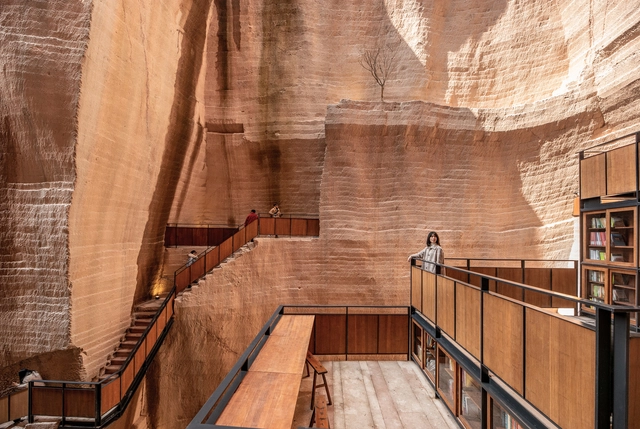
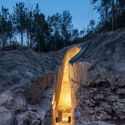
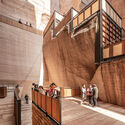
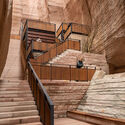
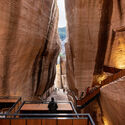
Today, reusing and adapting existing spatial resources is regarded around the world as an important contribution to sustainable development, and new challenges are thus also emerging at the margins of classic building tasks due to the changing assessments regarding whether to preserve or demolish. Xu Tiantian’s projects in the quarries of Jinyun combine aspects of landscape planning, interior design, artistic installations, and social planning with an economic revitalization of the rural area. In this way, a ruined and exploited landscape becomes a sign of departure with which a new sustainable coexistence can be linked to a narrative about the history of the location.
There are extraordinary connections between the natural world and the capacity for creativity in human beings. In his book Last Child in the Woods, journalist and author Richard Louv observes: “Nature inspires creativity in a child by demanding visualization and the full use of the senses. Given a chance, a child will bring the confusion of the world to the woods, wash it in a creek, turn it over to see what lives on the unseen side of that confusion.” He concludes that in nature, “a child finds freedom, fantasy, and privacy: a place distant from the adult world, a separate peace.” The architect Frank Harmon likewise wrote touchingly about the outdoors, woods, and water as perfect settings for cultivating a thirst for learning and discovery: “Children raised by creeks are never bored. Creek children don’t know about learning by rote, neither are they conditioned to working nine to five. Berries are their first discoveries, and birds’ nests, and watching the stars come out. Later they discover books. To creek children, learning is discovery, not instruction.”
https://www.archdaily.com/984628/an-architectural-journey-through-the-woodsMichael J. Crosbie & Suzanne Bott
Architecture shapes our lives every day, but how can it be decentralized? At the core of efforts to design extended reality (XR) environments is a desire to make these projects more human and more relatable. As technologists, architects, and users themselves develop new tools for the metaverse, as well as augmented and virtual spaces, new projects are increasingly democratized and open source. At the same time, the design process is being reimagined.
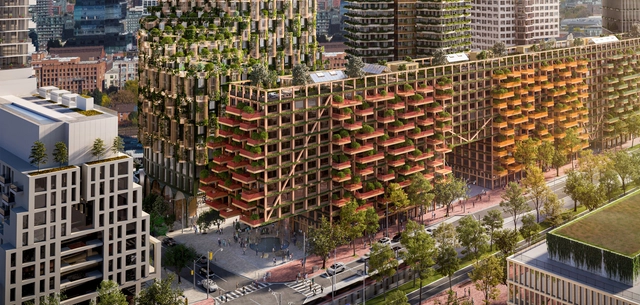
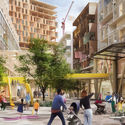
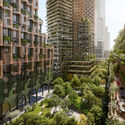
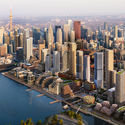
Alison Brooks Architects, Adjaye Associates, Henning Larsen and SLA to Develop Toronto's Waterfront. Image Courtesy of Waterfront Toronto
As more smart cities make their way across the globe, whether it being in countries of the Far East, Latin America, or the Middle East, Toronto is stepping back from the smart city bandwagon, and reassessing its substantial contribution to the community. The Canadian city, which ranked 15th on Global Finance's ranking of the world's best cities to live in for the year 2022, plans on "killing the smart city forever", especially after Quayside's controversial cancellation reasons, questioning its lack of privacy, necessity on an urban scale, and whether people truly want to live in a tech-driven environment.
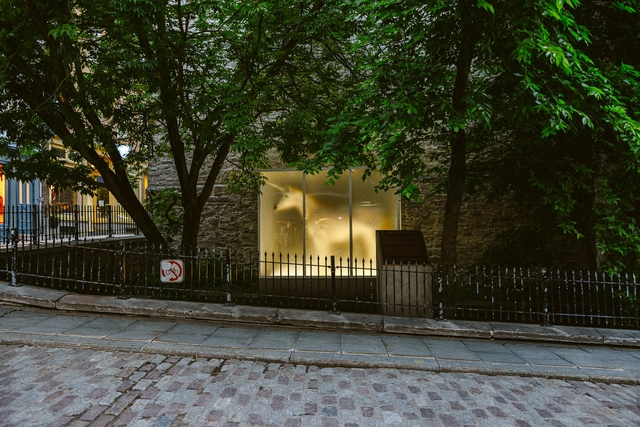
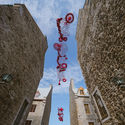
Initiated by EXMURO arts publics and the Ville de Québec, the 9th edition of Passages Insolites, or Unusual Passages, is open from June 25 to October 10, 2022, in the city of Québec. During this time, 17 works by 18 local, Canadian, and international artists will be placed along a 2.5 km circuit in the historic sectors of Place Royale, Petit Champlain, and the Old Port. This year’s edition creates spaces for artistic encounters and reflection on the environment, decolonization, and geopolitics. In the words of Vincent Roy, EXMURO’s executive and artistic director, this year’s programming will “help put Quebec City on the global art map as a venue for exhibiting art and promoting artists, both locally and internationally.”
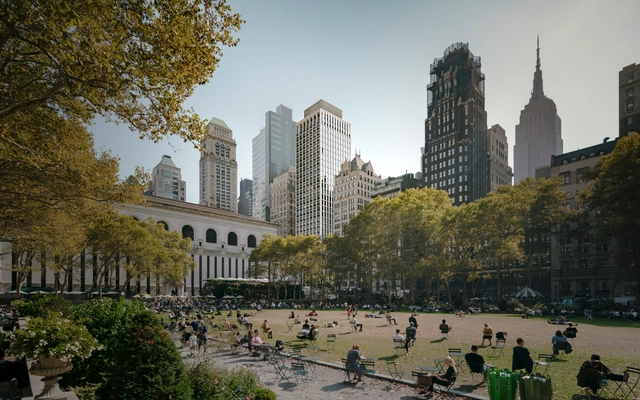
Architecture, as a profession, is highly cyclical in nature. It ebbs and flows with the tides of economic conditions, and is especially hard hit during times of downturn. We’ve all heard stories or experienced it ourselves, or layoffs during the Great Financial Crisis in 2008, or even more recently the significant cutbacks architecture firms went through during the uncertainty of the COVID-19 pandemic. Projects went on hold and new business opportunities declined almost overnight. Now, two years later, firms are keeping a close watch on global supply chain issues and rising inflation rates, especially with increased pressure to meet the needs of a growing urban population. Will architecture be recession-proof as we enter a bear market?
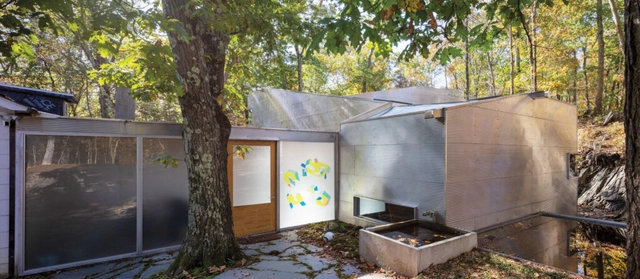
Steven Holl can often be found reading poetry and painting watercolors in a tiny cabin overlooking lotus flowers on the edge of a lake in Rhinebeck, New York. The cabin sits on a 28-acre reserve that Holl purchased in 2014 that now hosts Holl’s full-time office, and ‘T’ Space, a nonprofit arts organization offering creative exhibitions, environmental installations, and architectural residencies. Wrapping around several large trees and linking through a passageway to another existing 1959 cabin, the Steven Myron Holl Foundation’s Architectural Archive and Research Library, built in 2019, is the latest building to be carefully situated in the lush landscape.
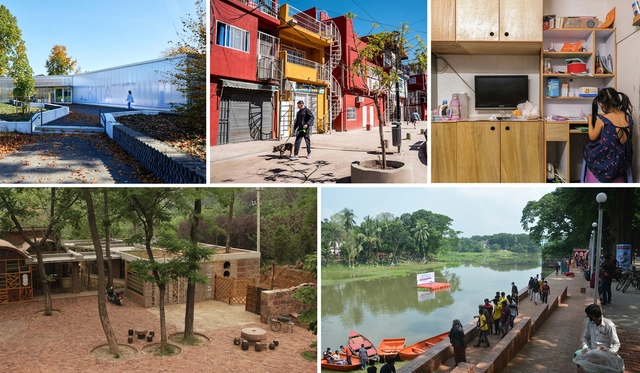
The first edition of the UIA 2030 Award celebrated projects that contribute to the delivery of the UN 2030 Agenda for Sustainable Development. Located in Germany, Hong Kong, Argentina, Bangladesh, and China, the winning interventions were announced during the eleventh session of the World Urban Forum in Katowice, Poland. Organized by the International Union of Architects (UIA), together with the UN-HABITAT, the award program gathered 125 submissions in 40 countries.
ArchDaily had the chance to talk to the winners behind the acclaimed architecture, to discuss furthermore the interventions and certain specificities of each and every project. In addition, the winning teams shared their upcoming and ongoing architectural endeavors as well as their point of view on the importance of architects engaging with the Sustainable Development Goals.
As democratizing catalysts, educational spaces play a fundamental role in shaping individuals and entire communities. These places, where students spend a significant amount of time developing their capabilities, skills, and competencies, are more than a background for the promotion of a fundamental right, they are key elements to providing equal opportunities for all.
Open and common facilities, such as schoolyards, courtyards, and auditoriums are great examples of how spaces can encourage students, teachers, parents, and community members to learn with each other in an active dialogue. Flexibility and accessibility are two other key points to promote the democratization of both design and education, as seen in programs that go beyond school time and encourage communities to participate, for example.
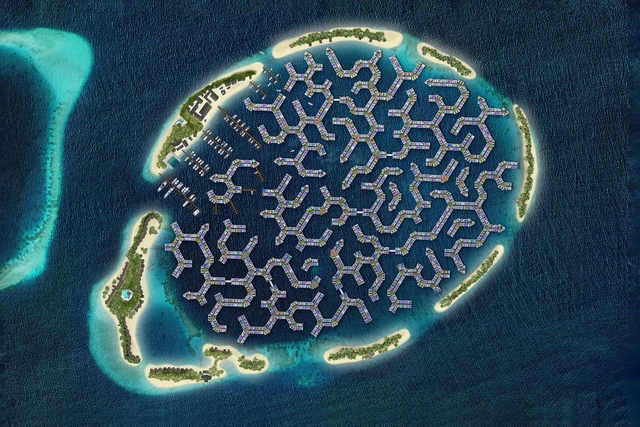
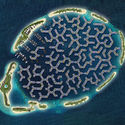
Netherlands-based architecture, urban planning, and research firm Waterstudio.NL in collaboration with Dutch Docklands and the Government of The Maldives have revealed the design of Maldives Floating City (MFC), a first-of-its-kind “island city” that offers a new approach to modern sustainable living on the Indian Ocean. The project has been in development for over a decade, and will feature thousands of residences, floating along a flexible, functional grid across a 200-hectare lagoon.
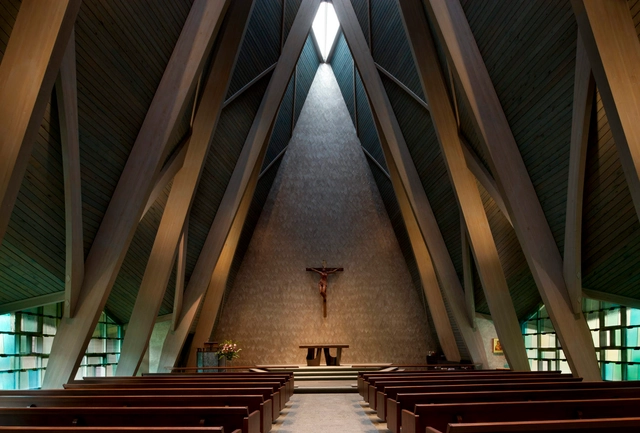
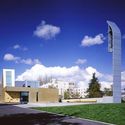
The Chapel of St. Ignatius in Seattle, designed by Steven Holl Architects, has been honored by the American Institute of Architects (AIA) with its Twenty-five Year Award. AIA’s award is conferred on a building that has set a precedent, stood the test of time for 25 to 35 years and continues to set standards of excellence for its architectural design and significance. The Chapel of St. Ignatius finished in 1997, reflects the ideal of the Jesuit practice, a religious order of the Catholic Church, in which no single method of worship is prescribed. Instead, the sect recognizes that “different methods helped different people.” That idea is reflected in the Chapel of St. Ignatius, Seattle University’s main chapel, where differences in light unify to support the worship and ritual needs of the university community.
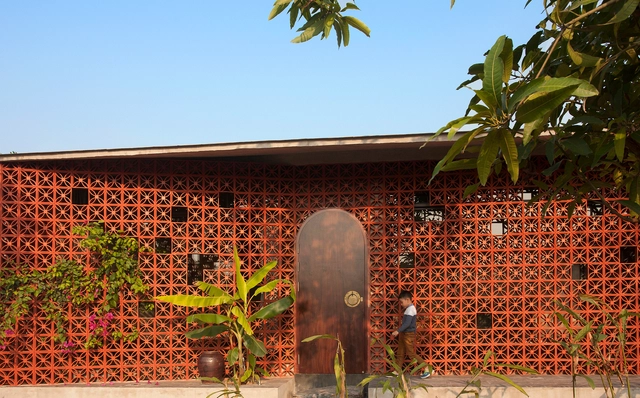
Ceramic fragments and figures found at the Neolithic site of Mureybet, in Syria's Middle Euphrates valley, indicate that clay and fire work date back to the 7th millennium BC. This means that dealing with ceramics is one of the oldest activities in human history. More than 9,000 years later, ceramic, and all its derivatives, has become one of the most used materials in construction, being used at different times, from structure to finishes.
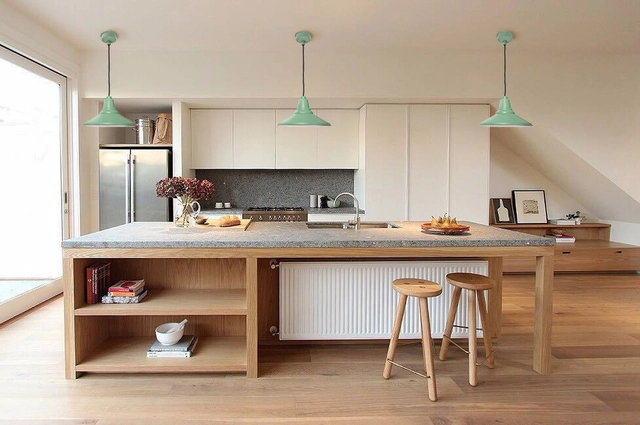
Calla Pendant Ceiling Lights. Image Courtesy of Cocoweb
Characterized by a simple structure and a gable roof, the traditional barnyard typology responds to its original function: sheltering farm products and livestock. In recent years, however, the barn aesthetic has evolved tremendously, sparking the interest of designers with its enduring rustic charm, minimalistic shape, refined ornamentation and modularity – qualities that have long made it popular in countryside hideaways. Reinterpreted to fit a contemporary style, the vintage typology has conquered modern projects that seek to offer an escape from the fast-paced, dense reality of urban life. Whether refurbishing historic farms or building new homes designed to resemble barns, architects have drawn inspiration from the industrial origins of traditional barnyards, but adding a modern twist.






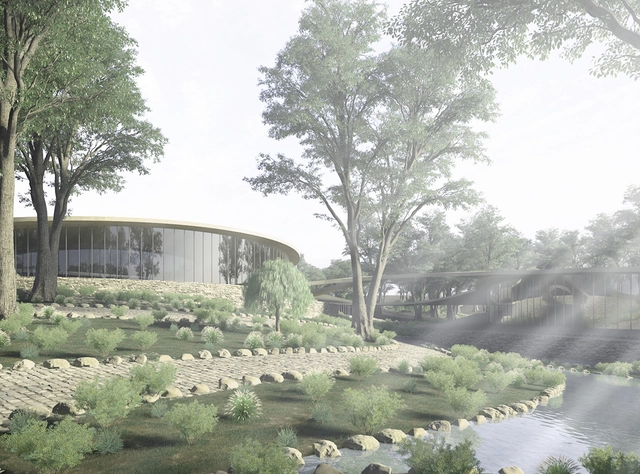

.jpg?1656583509 "The Creeper – COAF Smart Campus Armavir by TarberAK Architectural Studio; TL Bureau. Image Courtesy of TarberAK Architectural Studio; TL Bureau")


.jpg?1656608047&format=webp&width=640&height=580)
.jpg?1656609084 "© 3XN")
.jpg?1656609092 "© 3XN")
.jpg?1656608128 "© 3XN")
.jpg?1656608414 "© 3XN")
.jpg?1656608047)















_Domat.jpg?1656485110 "Home modification for low-income Families. Image Courtesy of Domat Architects")
.jpg?1656485127 "Co-creation of Urban Spaces by the Nobogonga River. Image Courtesy of Co.Creation.Architects, Jhenaidah Citywide People's Network, Platform of Community Action and Architecture (POCAA), Community Architects Network (CAN)")



.jpg?1656484624&format=webp&width=640&height=580)
.jpg?1656484650 "© Paul Warchol Photography")
.jpg?1656484668 "© Paul Warchol Photography")
.jpg?1656484634 "© Paul Warchol Photography")
.jpg?1656484624)