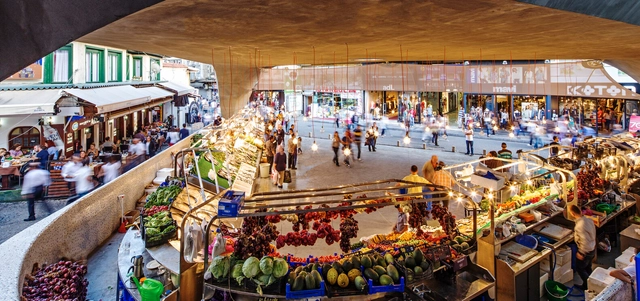
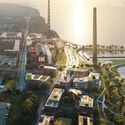
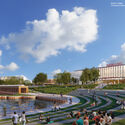
In the 1960s, Jane Jacobs criticized modernist urban planning from the perspective of the integrated city. She believes that the purpose of urban renovation is to establish a better-integrated relationship between urban space and urban function by repairing the gap between them. Rather than "beautify" the urban environment.
There are few more powerful questions than “Where are you from?” People feel intensely connected to cities as places and to other people who feel that same kind of connection. In other words, we tend to understand and experience places in a very personal way.
Yet to understand place—indeed, to understand human settlements in general—it’s important to recognize that places are not created by accident. They are created on purpose to further a political or economic agenda. Better cities emerge when the people who shape them think more broadly and consciously about the places they are creating.
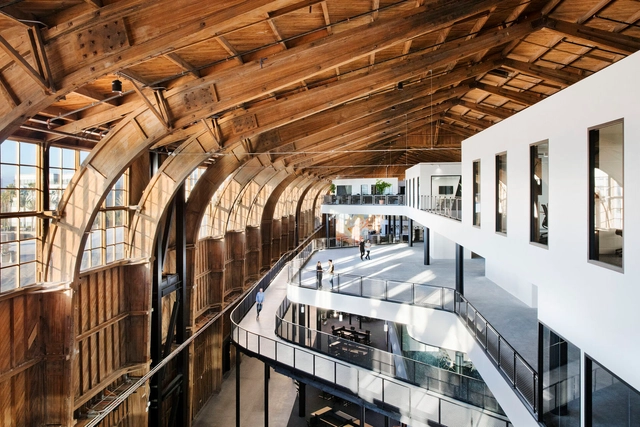
Hangar architecture is a relatively new building type. Ever since the Wright brothers stored and repaired their aircraft in a wooden hangar constructed in 1902, designers and builders have continued to rethink what these structures can be. Beyond actual airports and terminals, hangars are unique in that they're purpose-built to hold an aircraft or spacecraft. Today, how can this building type be challenged and reimagined?
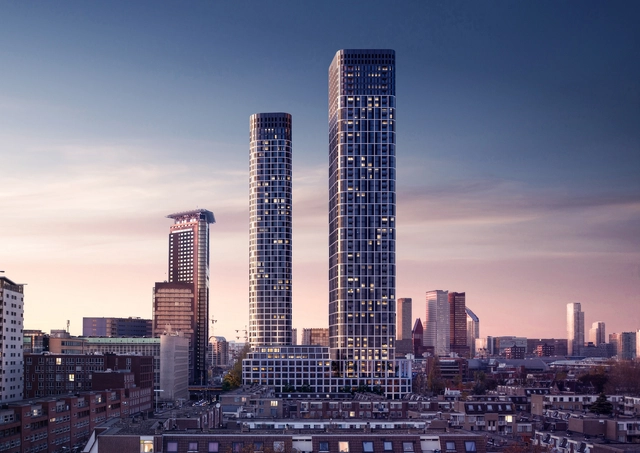
Dutch architecture firm Mecanoo has unveiled the design of what will soon become the tallest high-rise ensemble in the city of The Hague, in the Netherlands. Dubbed "The Grace", the project consists of two towers, one at 150 meters high and the other at 180 meters, becoming the tallest high-rise ensemble in the city. The residential project comes as a response to the growing demand for affordable housing, as well as fostering an enhanced sense of community.
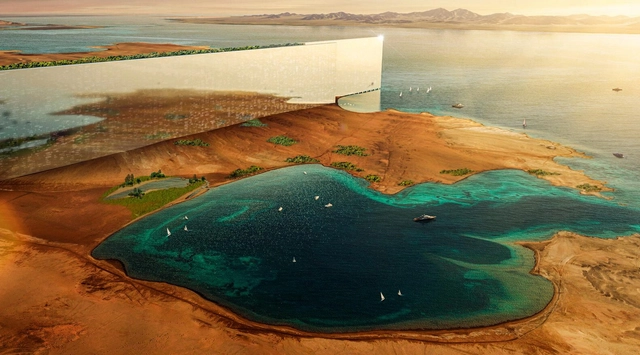
The Saudi Arabian government has released visuals of a 170-kilometer-long skyscraper as part of the NEOM project. Announced by crown prince Mohammed bin Salman, The Line is a reimagined urban development linking the coast of the Red Sea to the mountains and upper valleys of northwest Saudi Arabia. The compact structure, 200 meters wide, represents a social and economic experiment. The city aims to be zero-carbon, through the elimination of carbon-intensive infrastructures like cars and roads, and will operate on 100% renewable energy, including the operations of its industries.
Every city is a complex environment, bringing together people, cultures, architecture, commerce, and even nature. While experiencing a city, a lot of attention is given to its appearance, but appearance is not everything. The theory of sensory design aims to go beyond vision and explore the richness of the built environment through textures, smells, and sounds. For city officials and planners, a lot of attention generally goes towards how a city looks and sounds, but in terms of smell, the focus is mainly on managing waste or cleaning unsanitary areas. Yet the sense of smell, so often overlooked, is strongly linked to the creation of emotional memories. It contributes to our understanding of the world; it reveals otherwise hidden cultural practices, and it rounds up the experience of an environment.
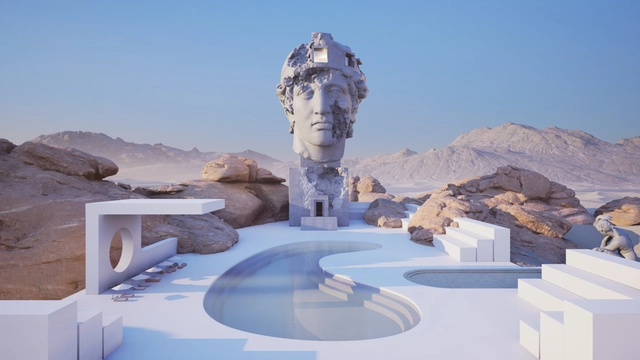
The Alexander Team and metaverse real estate development firm Everyrealm, have announced the launch of "The Row", a private, members-only metaverse real estate community featuring architecture designed by world-renowned artists. The Row will be launched on the metaverse world-building platform Mona, and will feature limited-edition series of 30 3D architectural landmarks, each sold as a 1-of-1 non-fungible token (NFT) designed by artists including Daniel Arsham, Misha Kahn, Andrés Reisinger, Alexis Christodoulou, Six N. Five, and Hard.
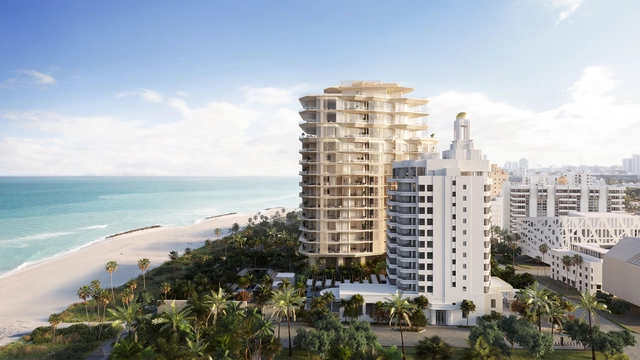
Japan-based architectural office Kengo Kuma and Associates has unveiled the design for what will become the studio’s first residential tower in the United States. Located on the oceanfront of Miami Beach, the 18-story structure will accommodate private condominiums for hospitality brand Aman. The project is adjacent to the Versailles building, a 1940s Art Deco hotel currently under restoration by architect Jean-Michel Gathy. The Art Deco architecture of Miami’s Faena district has a unique rhythm, which, according to the architect, was translated into the geometry of the new building through its vertical and horizontal lines.
As cities are increasingly vertical, buildings have been finding ways to take advantage of what roofs can bring to urban life. Through halls for parties, restaurants, swimming pools, and other programs, contemporary architecture has gained access to sunlight, natural ventilation and also to the horizon due to the occupation of the rooftops, making them attractive for both residential and commercial projects. However, the interest in appreciating the city from this point of view is not the result of verticalization alone, nor is it a merely technical alternative.
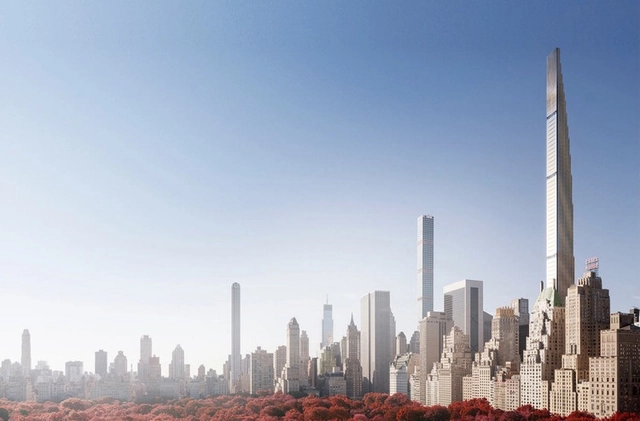
111 West 57th Street by SHop Architects. Image Courtesy of SHoP Architects
The world is facing an Urban Century. The world’s population is collapsing into city centers as manufacturing and agriculture need fewer humans because technology replaces the human hand with machines. The world's urban population has grown from 751 million in 1950 to 4.46 billion in 2021 and will grow to 6.68 billion by 2050.
While architects and designers want to define and control the future of our cities, the immediate reality of New York City, now, is a lesson in what may be our future. It’s response can be seen by the advent of The Tower the fabric of Manhattan.
Doreen Adengo. Image Courtesy of Adengo Architecture
Doreen Adengo, architect from Kampala, Uganda has passed away, as reported by African Futures Institute’s Instagram Account, after a long battle with cancer. Founder of Adengo Architecture in 2015, a research-based multi-disciplinary practice operating out of her hometown Kampala, Doreen, a registered architect in the United States and Uganda, had earned her undergraduate at the Catholic University (Bachelor of Science in Architecture) and graduate studies at Yale (Masters of Architecture). She has taught at The New School and Pratt Institute in New York, the University of Johannesburg’s Graduate School of Architecture, and was currently teaching at Uganda Martyrs University. In celebration of International Women’s Day 2022, Doreen Adengo was recognized by ArchDaily as one of the established practitioners implicated in change.
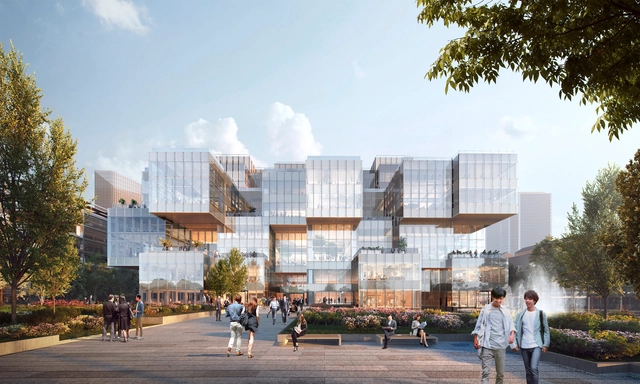
Skidmore, Owings & Merrill (SOM) has unveiled a dynamic, user-controlled headquarters for Chinese multinational technology company Alibaba's Xuhui District campus in Shanghai. Located in one of the city's premiere arts and innovation districts, the new workplace transforms the typical headquarters building “inside out”, highlighting the company’s "collaboration and creativity". The building's architecture is designed to resemble a cloud, symbolizing the company's digital presence in the Cloud, as well as the technology industry’s shifting skies of innovation.
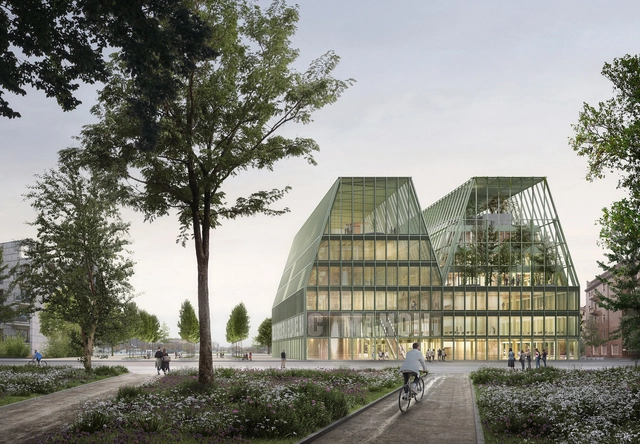
The municipality of Milan has announced the results of the competition to design the new European Library of Information and Culture (BEIC) in Milan, Italy. The winning team is composed of Onsite Studio, baukuh, Yellow Office, SCE Project, Studio Mistretta, Starching, Stain Engineering, Dotdotdot, (ab)Normal, Atmos Lab. The new building, situated in the Porta Vittoria area of Milan, aims to go beyond the traditional functions of a library to become a laboratory for the tools necessary to create contemporary culture.
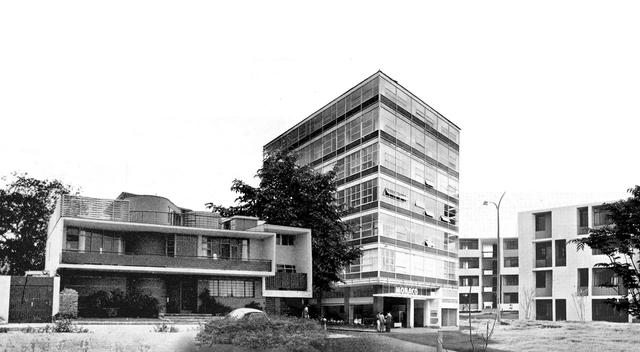
During the first decades of the twentieth century, when a traditional architectural outlook of classical languages and order still ruled, the architect Luis Miró Quesada Garland (1914-1994) was a fundamental precursor to the change of mentality that would lead Peru towards a contemporary and modern architecture.
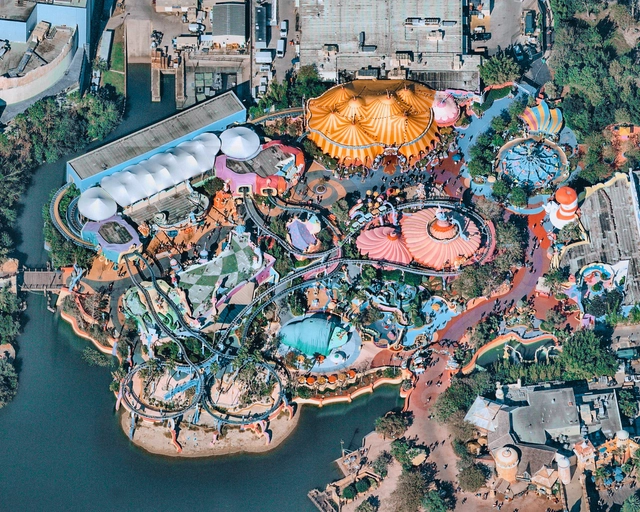
Throughout history, humans have always craved a sense of thrill and an affinity for different forms of entertainment and attraction at all different scales and sizes. Theme parks have continuously evolved, as society redefines what it means to be entertained, and have transformed from evening strolls into physics-defying twists and turns on state-of-the-art rollercoasters.
As engines of the economy and production, cities are home to the largest masses of people and it is estimated that by 2050, they will be home to 70% of the world's population. In this context, architects are incorporating the articulation of mixed uses in their buildings on a daily basis, seeking to encourage diversification and avoid mono-functionalisation.
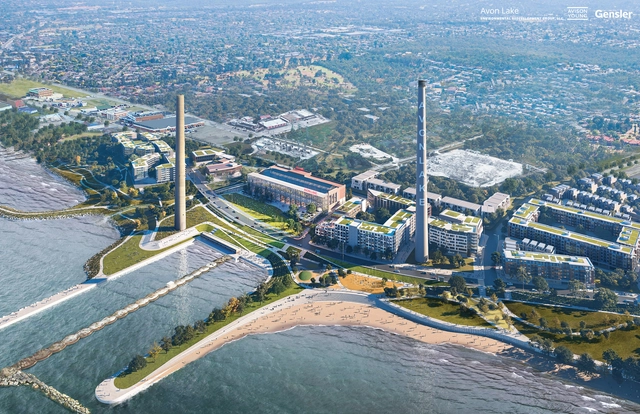
Gensler, in partnership with Avon Lake Environmental Redevelopment Group (ALERG), City of Avon Lake, and Avison Young, have presented initial redevelopment plans for the environmental remediation and sustainable redevelopment of the historic Avon Lake Generating Station in Avon Lake, Ohio. The redevelopment scheme will serve as an opportunity to reframe the former coal-fired powerplant site into a regional attraction while restoring the lakefront ecosystem.