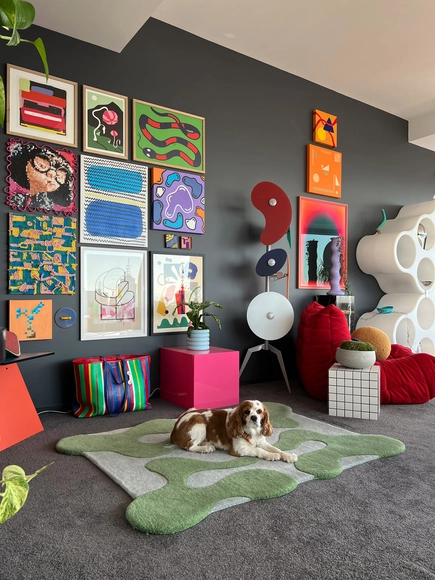
Josh and Matt's apartment embodies their "curated maximalism" style. Image Courtesy of Josh and Matt Design
With the onset of the 2020s, Gen Z is noticeably claiming their place in the world with bold perspectives and even bolder aesthetics. Gen Z proudly experiments with their identities, having grown up on an opinionated internet and through confusing lockdowns. They're bringing in a culture shift with organic shapes, colorful elements, and clashing patterns dominating art, media, fashion, and interior design. The trend is pushing away once-reigning minimalism, shouting Venturi's Less is a Bore.
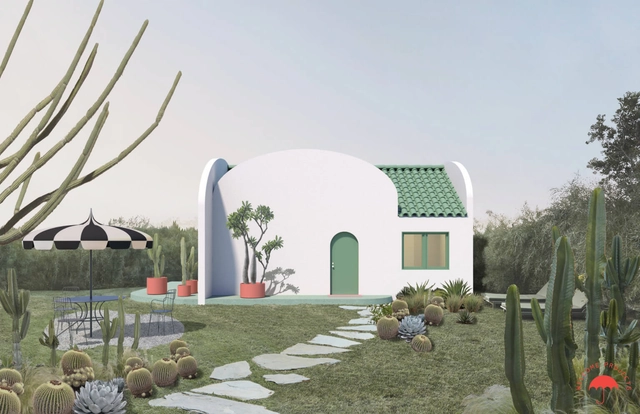
The Breadbox ADU . Image Courtesy of Los Angeles Department of Building and Safety and WELCOME PROJECTS
In a time where housing prices are unattainable and residents are looking to downsize their homes more than ever, enter the concept of Accessory Dwelling Units (ADUs). These small and highly customizable homes are taking backyards across the United States by storm, enabling homeowners to build homes on their land, and rent them out to tenants.
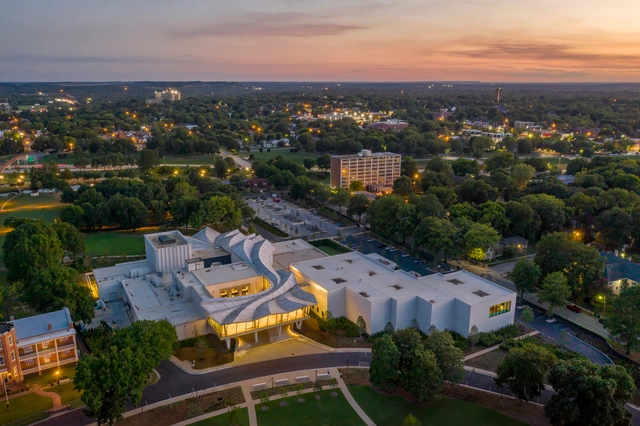
The newly transformed Arkansas Museum of Fine Arts in Little Rock, US, is ready to open to the public on April 22, 2023. Designed by architecture practice Studio Gang in collaboration with Polk Stanley Wilcox and landscape architecture and urban design practice SCAPE, The Museum’s new architectural identity aims to signify its role as a leading arts institution in the region. One of the Museum’s most recognizable features, the folded plate concrete roof, is now complete. The new roofline spans the length of the building, connecting the new construction and the renovated spaces to create a coherent architectural character for the cultural institution.
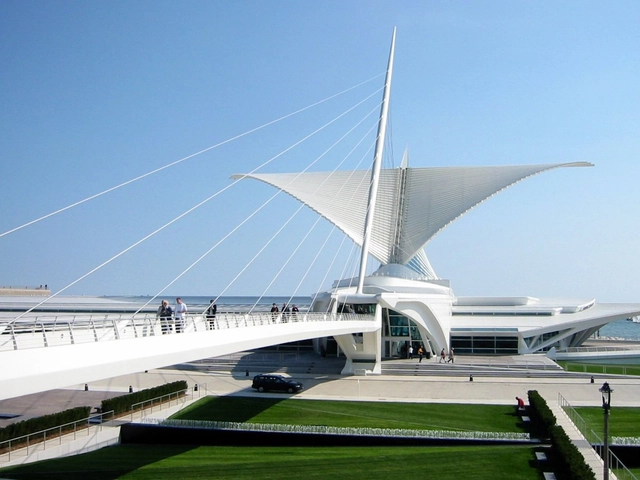
The Quadracci Pavilion at Milwaukee Art Museum. Image via Flickr user bvincent licensed under CC BY-ND 2.0
The Quadracci Pavilion by Santiago Calatrava and the Contemporary Arts Center by the Pritzker-winner Zaha Hadid are celebrating their 20th anniversary. Both buildings are the first US projects completed by these legendary architects that have contributed to the stimulation of economic development in Midwestern American cities over the past two decades. In fact, for that reason, Milwaukee's mayor declared September 16 "Santiago Calatrava Day" to commemorate the Pavillion's opening.
Jim Polshek, who died at 92 last week, was an award-winning architect (AIA Gold Medal, 2018), designer, public advocate, and educator (architecture dean at Columbia, 1973–1987). He was a Midwesterner, born in Akron, Ohio, who went on to open his own practice in 1963, when he founded James Stewart Polshek Architects. Ultimately, the practice became internationally recognized as Polshek Partnership Architects. In 2010, the partners renamed the firm Ennead Architects, and he remained involved as a design consultant.
https://www.archdaily.com/989099/james-stewart-polshek-reflections-on-a-life-in-architectureMichael J. Crosbie
Kuwait is planning a 1,600-hectare development that will provide residential units, jobs, and amenities for 100,000 residents. Developed by URB, the ambitious project aims to promote a sustainable lifestyle with high standards of living, yet a low impact on the environment. The masterplan for the smart city is designed to optimize density and amenities distribution to create a walkable city, while also optimizing the green space ratio. This will help mitigate the effects of rising temperatures and the urban heat island effect. The green transportation systems and dedicated cycling tracks will make this a car-free city, apart from a ring road that allows for limited vehicular access. The city also promotes a circular economy that aims to provide food and energy security for the residents.
The marquee-busting title says it all: Joseph Giovannini’s Architecture Unbound is an ambitious attempt to explore the wilder shores of design and explain how and why maverick architects have dared greatly. It’s also a wide-ranging introduction to artists who laid the groundwork for architectural innovation a century ago; to the philosophers and theorists who mapped new ways of thinking, and to the complexities of chaos theory, parametric and software programs that have shaped exceptional buildings over the past few decades.
New York-based architecture studio ODA has revealed the design of its newest project in Fort Lauderdale, Florida. The 47-story tower is located south of the New River in the Rio Vista neighborhood. The program comprises 830 residential units, studios with two bedrooms, while also offering ample space for amenities and commercial use, measuring 13,000 square feet. At ground level, the project incorporates a large corner plaza. By placing functions for the public at the lower levels, the project aims to activate the walkways and public spaces, thus adding to the life of the neighborhood.
Image: achassignon via VisualHunt / CC BY-SA. Assembly with image of John Cunniff via Visual Hunt / CC BY
Jean-Luc Godard, through his films, talks about architecture almost as easily as he talks about cinema itself. In honor of the nouvelle vague icon, who passed away today at the age of 91, we revisit How Architecture Speaks Through Cinema.
There are several ways of making films. Like Jean Renoir and Robert Bresson, who make music. Like Sergei Eisenstein, who paints. Like Stroheim, who wrote sound novels in silent days. Like Alain Resnais, who sculpts. And like Socrates, Rossellini I mean, who creates philosophy. The cinema, in other words, can be everything at once, both judge and litigant. — Jean-Luc Godard [1]
Next to a wall or in the corner of a room, most sofas seem relegated to lean against the only available wall in a space, preferably with a TV in front. As they are usually very large pieces of furniture, they can be complicated pieces to integrate into a room. In consequence, a sofa might end up "stiffening" a space, restricting movement and compromising flexibility – an increasingly important aspect for interiors – in a room. This is why the sofa can be considered an anchor piece in interior design; an element whose placement will probably not change throughout time, and that will certainly have an impact on the other elements within a space.
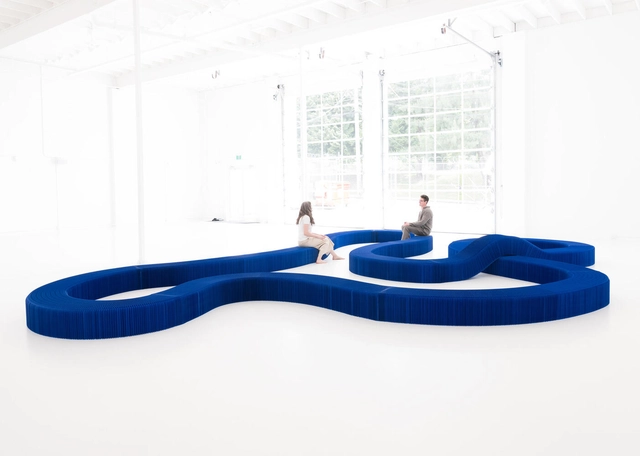
Modular sofas, however, give flexibility and versatility to an otherwise rigid piece. Made of separate parts, they can adopt several shapes and sizes, creating different ambiances and completely changing the layout and distribution of an environment. In this article, we showcase some modular sofa options – and how they can add dynamism to interior spaces – with product examples from the Architonic catalog.
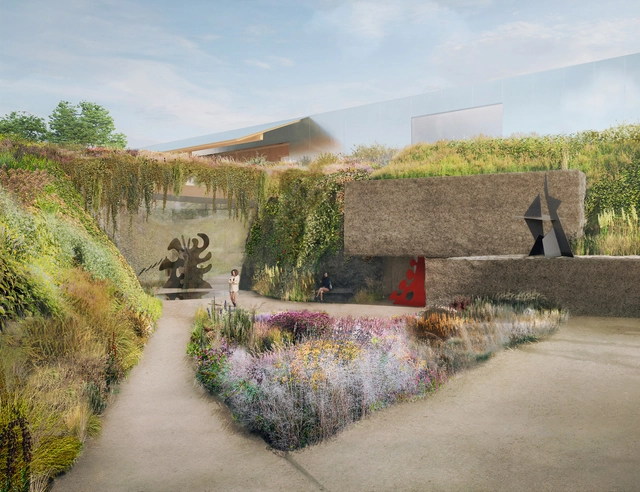
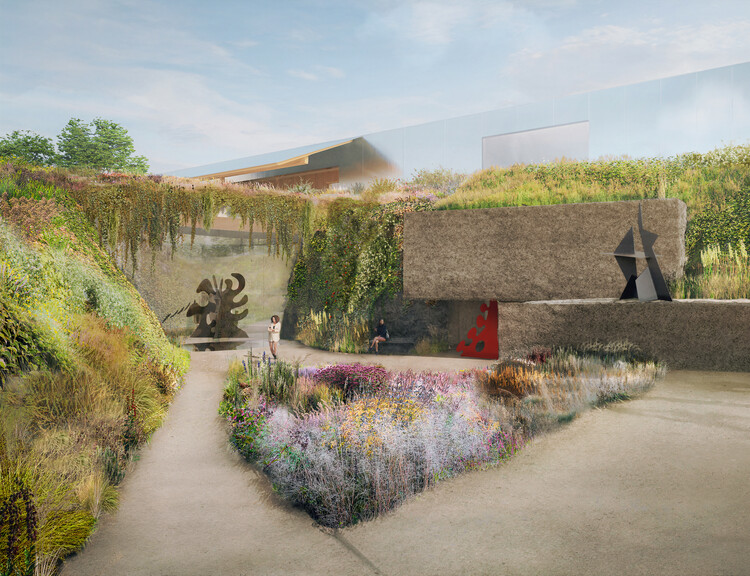
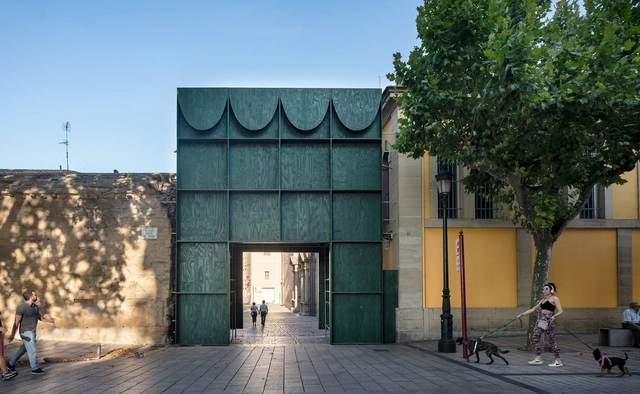
Herzog & de Meuron and landscape designer Piet Oudolf are collaborating to create Calder Gardens, which will house and display artworks by American sculptor Alexander Calder. Located between Vine Street and Benjamin Franklin Parkway in Philadelphia, the 6,500 square meter site will house a two-story building, half of which is developed underground. Instead of developing the site as a typical museum, the team decided to transform it into a garden as an attractive alternative for the people of Philadelphia.
The 311-meter-high Mixed-Use Tower in Downtown Austin designed by Kohn Pedersen Fox (KPF), will become Texas' tallest when it opens in late 2026. Called Waterline, this skyscraper is intended to define the skyline of one of the U.S.A.'s most dynamic and growing cities. Targeting LEED Gold certification, the 74-story project will include apartments, offices, hotel rooms, and a ground-floor paseo. The development will also add two new pedestrian bridges and three additional public pedestrian and bike access points.
The great debate wages on: how do we design and build a modern city in a way that everyone will benefit? Traditionally, you’re on one side of the urban war. You’re either a NIMBY, which stands for “Not In My Backyard”, meaning you oppose new development in your neighborhood, or you’re a YIMBY, who says “Yes In My Backyard”, and are pro-development, for one reason or another. But these blanket acronyms don’t describe the real issues that cause people to position themselves on one side of the never-ending tug-of-war between “No! Don’t build that!” and “Yes! Build that!”
Boston architect Brian Healy moved around for his early career, before settling and building in New England. He had studios in Florida, California, and New York, eventually opening his office in Boston. Healy acquired his bachelor’s degree in architecture at the Pennsylvania State University in 1978 and continued his studies at Yale where he encountered such influential professors as James Stirling, Vincent Scully, John Hejduk, Aldo Rossi, and Cesar Pelli, among others.
Healy graduated with a Master of Architecture in 1981 and then used traveling scholarship money from Yale, the Van Allen Institute, and the American Academy in Rome to travel around the world for a year, exploring ancient ruins in Ireland, Italy, Greece, Sudan, Egypt, India, Nepal, and Thailand. Prior to the trip, he had worked at the offices of Charles Moore and Cesar Pelli. Upon his return, he designed and built homes in Florida before working for Richard Meier in New York. In 1985, he started Brian Healy Architects. Parallel to that he taught at over twenty universities across North America, including Yale, Harvard, MIT, and the University of Pennsylvania. Healy was the 2004 president of the Boston Society of Architects and, from 2011-2014 he served as Design Director at Perkins + Will.
After two years of disrupted cycles of architecture events, due to the pandemic, 2022 has been witnessing a resurgence: biennials, triennials, design weeks, and festivals are back in the picture, with bigger interrogations and larger thematic approaches, aligned with the challenges of the world.
Relevant today more than ever, these happenings scattered around the globe are tackling climate-related issues, urban problems, as well as concerns engendered by covid-19 such as resilience, models of living, future of design, and the unknown.
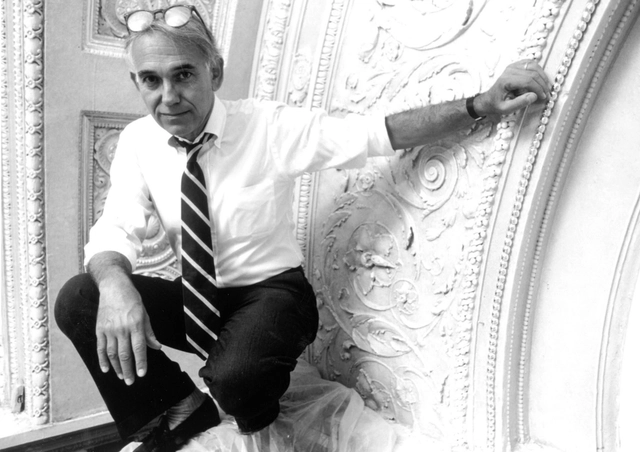
James Stewart Polshek, founding partner of James Stewart Polshek Architect, later Polshek Partnership, and currently Ennead Architects, has passed away after a 70-year-long career designing significant works of public architecture. In an era dominated by so-called starchitects, his work is often seen as a modest approach to architecture, prioritizing social values over aesthetic ones. Key projects completed by Polshek include the 1987 restoration and renovation of New York’s Carnegie Hall; the Rose Center for Earth and Space at the American Museum of Natural History in New York (2000); the William J Clinton Presidential Center and Park (2004) and the National Museum of American Jewish History in Philadelphia (2010).
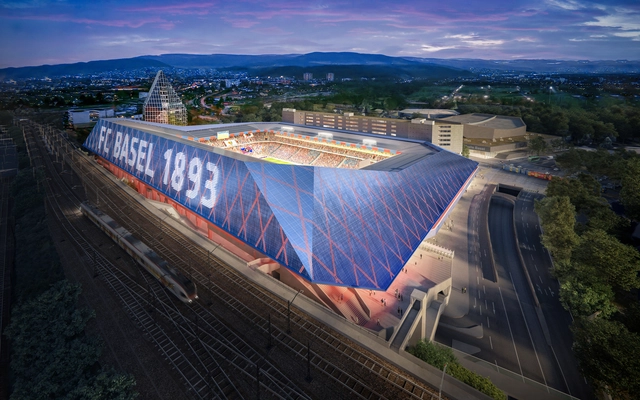
The Jakob-Park Stadium, home of FC Basel, is getting an update to extend its lifespan after 20 years of use. Originally designed by Herzog & de Meuron, the architecture reform aims to provide better hospitality to visitors by restructuring the access and optimizing security to keep the stadium open even on non-match days. The proposal also contemplates replacing the iconic facade with a sweeping roof to give the stadium a unified appearance and broadcast the events outside.