Tadao Ando. Image Courtesy of Tadao Ando Architect & Associates
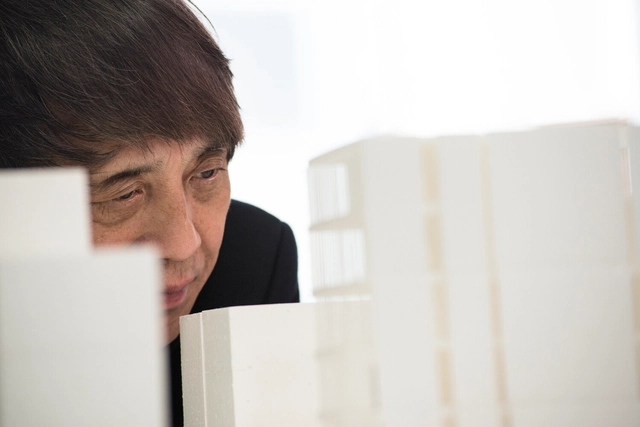
The Naomi Milgrom Foundation announced Tadao Ando as the winner of the commission to design the MPavilion 10 in Queen Victoria Gardens in Melbourne. This will be Ando’s first project in Australia, as he will be taking part in the country’s foremost annual architecture commission and design festival. Now in its 10th edition, the MPavilion gives complete freedom to the designers to create their concepts and realize their vision, hoping to encourage new and unique design languages to further develop this vital site in the cultural and community life of Melbourne. Details of Tadao Ando’s design will be revealed in May, and the pavilion is scheduled to open to the public on November 16, 2023.
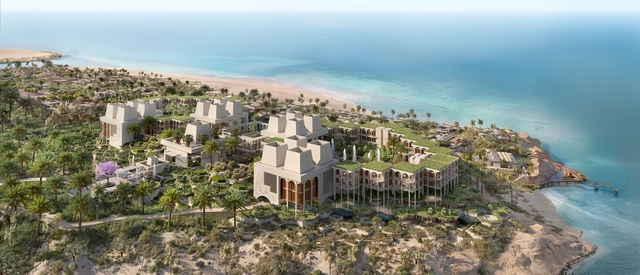
The Developer Red Sea Global has partnered with the wellness brand Clinique La Prairie to develop a high-end health resort in Amaala, located on the northwest coastline of Saudi Arabia. The resort will host 13 villas and 52 houses and suites. It will also feature a diagnostics lab, a museum, a beach club, workshops, training rooms, private dining spaces, and a cooking school, activities that ensure that the visitors embark on a journey of rejuvenation and self-discovery.
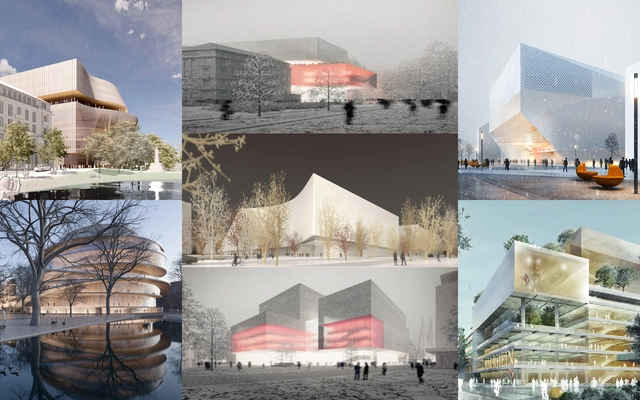
The finalists for the Opera of the Future competition have been announced. This urban planning competition, commissioned by the state capital of Düseldorf, was created to select a location for the new cultural institution. After an extensive examination of potential site locations, the two options for the competition proposals were: Heinrich-Heiene-Allee, where the current opera house is, and Am Wehrhahn.
Throughout the brief, firms were encouraged to figure out how this future project could become a lively and public space open to the entire city, offering a wide range of services. As a result, submissions were received for both prospective buildings, and the finalists for each location were announced.
Sunshine has been an integral part of life ever since the sun and the earth began their merry dance. The feel-good ambiance provided by natural light is a recurring theme in human culture, from popular music, fashion, and photography, to our most luxurious environments.
But our bodies’ craving for sunlight is more than just a feeling. Scientific research has proven it helps our bodies to produce more melatonin which aids sleep and reduces stress, vitamin D which improves immunity and strengthens bones, and serotonin which fights depression. As well as helping us to live healthier and happier lives, research suggests the sun also helps us to live longer, too.
The UIA World Congress of Architects 2023 is an invitation for architects from all around the world to meet in Copenhagen to explore and communicate how architecture influences all 17 UN Sustainable Development Goals (SDGs). The Science Track of the UIA World Congress has been tasked with the development of the agenda, Sustainable Futures – Leave No One Behind. For more than two years, its international Scientific Committee has been analyzing the various ways in which architecture responds to the SDGs. The work has resulted in the formulation of six themes: climate adaptation, rethinking resources, resilient communities, health, inclusivity, and partnerships for change. ArchDaily is collaborating with UIA to share articles pertaining to the six themes to prepare for the opening of the Congress on July 2, 2023.
When the Quzhou Sports Park project was completed in China, it became the largest earth-sheltered complex ever built. In his conversation with ArchDaily, Ma Yansong explained that MAD Architects was not only focused on completing the stadium proposal, but also on creating an architecture that disappears. Unique fields become architectural spaces where anyone can do anything at any moment.
"We need a space for people to relax, to have a moment to dive into another dimension of space and time. They can have their spiritual world. I want this space to be engaging and inviting, encouraging interaction with the public, not just for races or sports," said Ma Yansong.
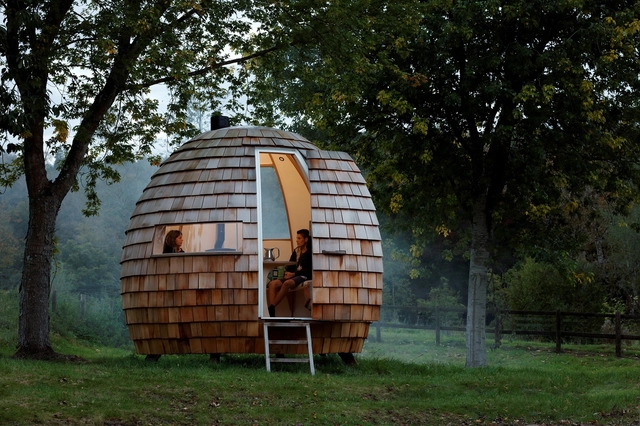
“With the forgiveness of the master [Le Corbusier], the house is a machine to carry with you and the city a machine to which you connect”. That phrase was said almost 60 years ago by David Greene, the founder of the English group Archigram. He was speaking on the presentation of the Living Pod, a capsule house that could be transformed into a trailer. The idea was that the structure could be connected and disconnected from the cities, forming the Plug-In City. Designed as an airtight capsule, the interior was small and comfortable, with multiple compartments. The Living Pod was one of many similarly utopian and daring projects by this group that seemed to have a fixation on nomadic and mutant structures like the Walking City and the Instant City.
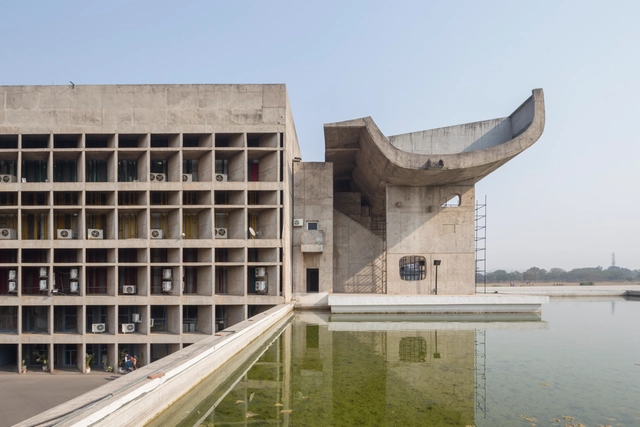
In 1950, the famous Le Corbusier was asked to design the new state capital of Chandigarh for Punjab following its separation and recent independence. The opportunity to create a new utopia was unparalleled- and is now seen as one of the greatest urban experiments in the history of planning and architecture. The city employed grid street patterns, European-style thoroughfares, and raw concrete buildings- the zenith of Corbusier’s ideals throughout his career. But what is lesser known about the ideation and realization of Chandigarh, was the woman who brought her experience of designing social housing across Africa to the project. For three years, working alongside Corbusier, and helping him design some of the best-known buildings in Chandigarh, was Jane Drew.
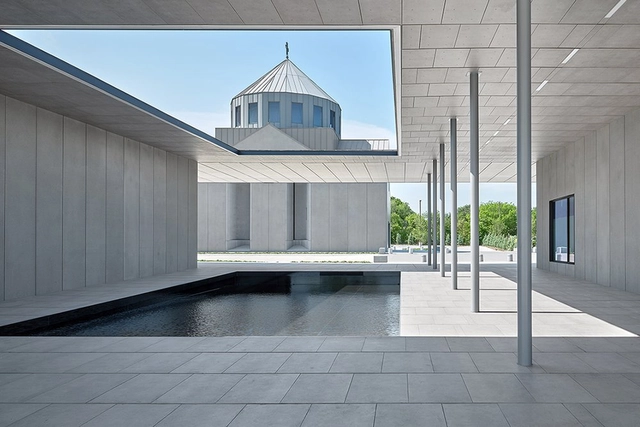
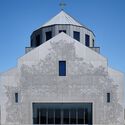
David Hotson (b. 1959) founded his New York City-based practice David Hotson Architect in 1991. His projects – houses, loft residences, penthouse apartments, and galleries – are known for their remarkable spatial and visual complexity. His Church of Saint Sarkis in Carrollton, Texas is especially distinguished for the luminous and sculptural qualities of its interior space as well as the exterior grade high-resolution digital printing on its west façade. Earlier this year this appealing work won the US Building of the Year award by World-Architects.com. Hotson obtained his Bachelor of Environmental Design from the University of Waterloo in Ontario, Canada, and earned his Master of Architecture in 1987 at Yale.
In the following interview with David Hotson, we discussed the architect’s design process, focusing on making concave spatial voids legible and primary, being inspired by Byzantine architecture and his favorite building ever built, what structure he considers the most important work of contemporary architecture, what makes his award-winning Church of Saint Sarkis special, and the use of space and light as the essential tools in creating architecture as a figural void and ultimately an art form.
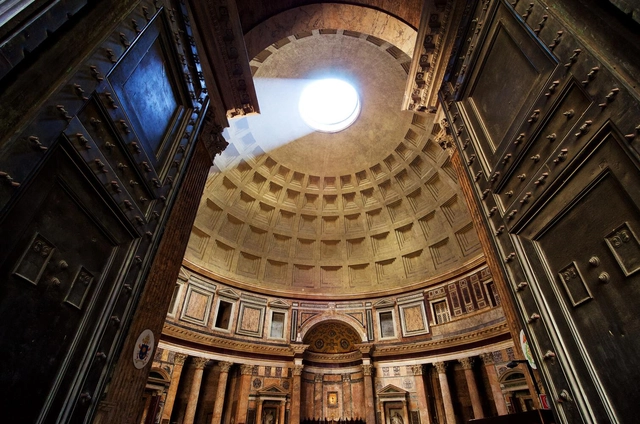
The significance of daylight in volumes of space exceeds its function of illumination. Light is a creative tool manipulated by architects to infuse a space with a metaphysical spirit, influencing the emotional states of its occupants. Having a phenomenological effect on the human psyche, light and shadow have been played with to invoke a sense of divinity and spirituality into the character of religious buildings. The interplay between architecture and light is a powerful one, shaping a deeper experience of spirituality.
Imagine if light would not only provide optimum visibility for tasks but convey meanings as well. Standards with recommended lux levels for various visual tasks have led to a quantitative understanding of lighting. However, lighting can also be used to contribute to emotion in rooms and to structure architecture. Would it be adequate to regard lighting as language sent by architects or interior designers and being received by inhabitants and citizens? Adding a semiotic perspective can help to recognize how light and shadow contributes to the meaning of the built environment.
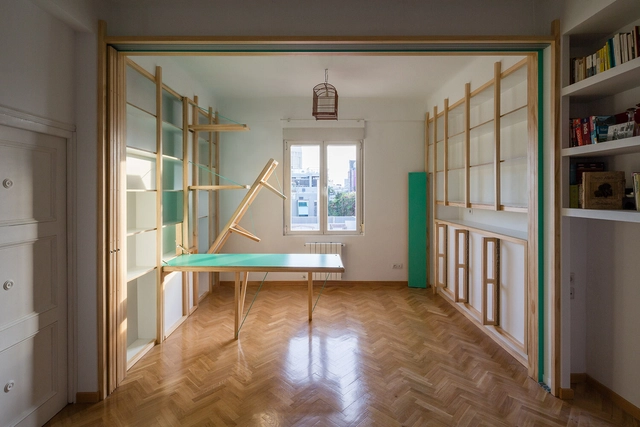
The Youtube channel Never Too Small boasts 2.25 million subscribers — a platform featuring the imaginative manipulation of space in tiny footprints. Videos of micro-apartments, in Paris, London, and beyond, get views in the millions. Clearly, there is a demand for content geared towards living small, as a global housing crisis has precipitated the ever-dwindling availability of affordable, larger-footprint residences in urban areas. Architects, working in this constrained contemporary reality, have been necessitated to make the most out of limited space, configuring sub-40 square-meter floor areas to create a non-claustrophobic spatial experience.
Animals measure distances and weight for their survival. On the other hand, stemming from their need to communicate to live in society, humans created languages and, later, established the standards of measuring. Whether for moving around, portioning food, making tools, or calculating the weight of objects and animals, measurement standards arise from this need that was already present in human activities in the age of chipped stone and has been with us ever since. Nowadays, most of the world's population uses meters and centimeters to measure distances. These standards come from the need to establish comparisons that allow trade between peoples and also from political and social disputes.
When Airbnb began nearly 15 years ago, it offered a new and innovative solution to book short-term stays without any hassle. By renting out a spare room or an entire apartment, it provided an alternative to traditional hotel models which were often overpriced and overbooked. Airbnb now faces many critics as the company quickly grew, offering hundreds of thousands of stays around the globe, but not without a handful of negative experiences. Now, planners and policymakers are beginning to see the effects of the abundance of Airbnb listings and how it impacts a growing housing crisis.
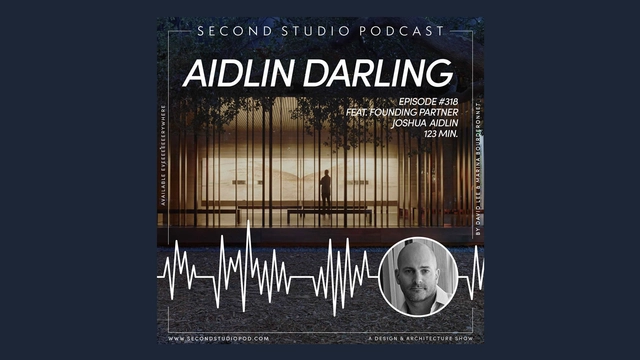
The Second Studio (formerly The Midnight Charette) is an explicit podcast about design, architecture, and the everyday. Hosted by Architects David Lee and Marina Bourderonnet, it features different creative professionals in unscripted conversations that allow for thoughtful takes and personal discussions.
A variety of subjects are covered with honesty and humor: some episodes are interviews, while others are tips for fellow designers, reviews of buildings and other projects, or casual explorations of everyday life and design. The Second Studio is also available on iTunes, Spotify, and YouTube.
This week David and Marina are joined by Architect Joshua Aidlin, Founding Partner of Aidlin Darling Design to discuss his background in the arts; his design approach and philosophy; camping on project sites; creating good office culture; his partnership with David Darling; and more.
Research by the Science Museum Group based on objects from different periods of UK history shows how their colors have transformed over time, leaving vibrant tones behind and becoming grayer every day.
Cat Sleeman examined more than seven thousand photographs of everyday objects from the Science Museum Group Collection in research funded by the Creative Industries Policy and Evidence Center (PEC). From cameras to lamps and other household objects, they were organized into 21 different categories according to their use. The analysis was carried out based on counting pixels of different colors and also addressed the shape of the objects.
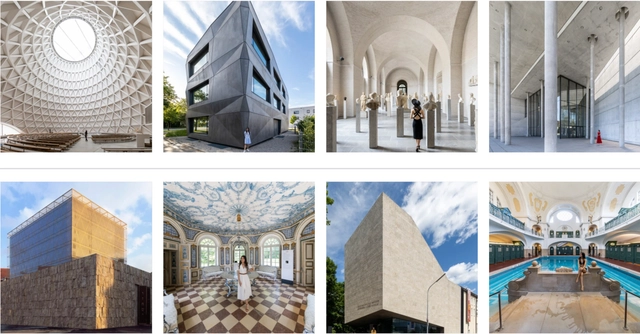
Munich – Bavaria’s capital since 1506 – is a city with layers and layers of history. Its many years as a rising architectural epicenter have left an interesting and unique mix of buildings. From Middle Age churches and cathedrals to contemporary synagogues. From skyscrapers to small pavilions. Brutalism to Art Nouveau. Munich’s architecture is truly extensive and marvelous.
Though not acknowledging Munich’s beer wonders would be wrong, the only mention of this substance would be in the stunning buildings (like the new Paulaner HQ by Hierl Architekten) that contain them. Yes, other aspects of the city are grandiose, but let’s focus on Munich’s top attraction: its architecture.
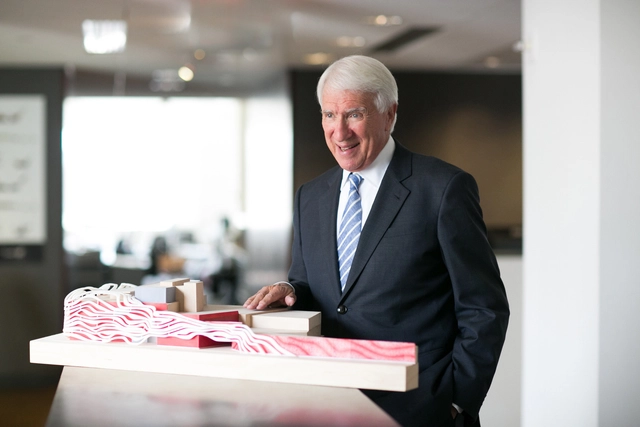
A. Eugene (Gene) Kohn, co-founder of the internationally renowned architecture office Kohn Pedersen Fox Associates, has passed away aged 92, after a year-long fight with cancer. Gene Kohn co-founded Kohn Pedersen Fox Associates (KPF) in 1976, along with partners William Pedersen and Sheldon Fox, helping to shape it into one of the most impactful architectural practices worldwide. He was recognized for his ability to find creative solutions and to build consensus between designers and developers through his understanding of the relationship between architecture and commerce. He also taught at Harvard, Columbia, and his alma mater University of Pennsylvania.