The vast majority of practitioners I've known over the years seek well-trained graduates who are ready on Day One to be productive employees. But that's not all an architectural education needs to deliver. Michael Monti—who for the past 20 years has served as executive director of the Association of Collegiate Schools of Architecture (ACSA), which represents 5,000 architecture faculty teaching more than 30,000 students—stresses that architectural education needs to rest on strong foundation of shared values and ethics in order for graduates to make meaningful contributions to what he describes as a "civilized life," promoting the dignity, freedom, health, and well-being of the people who interact with architecture every day.
https://www.archdaily.com/1021154/architecture-schools-are-responsible-for-educating-the-whole-studentMichael J. Crosbie
The Second Studio (formerly The Midnight Charette) is an explicit podcast about design, architecture, and the everyday. Hosted by Architects David Lee and Marina Bourderonnet, it features different creative professionals in unscripted conversations that allow for thoughtful takes and personal discussions.
A variety of subjects are covered with honesty and humor: some episodes are interviews, while others are tips for fellow designers, reviews of buildings and other projects, or casual explorations of everyday life and design. The Second Studio is also available on iTunes, Spotify, and YouTube.
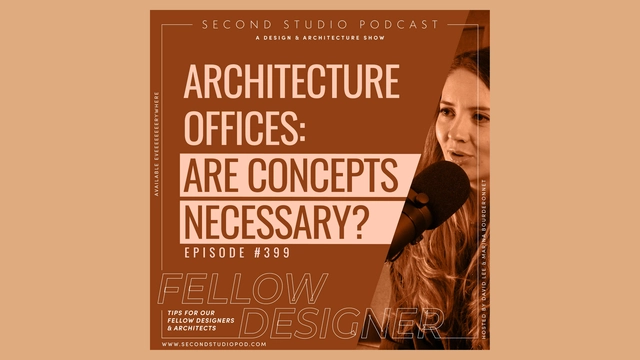
This week David and Marina of FAME Architecture & Design discuss architecture concepts in the office. The two cover the importance of conceptual thinking, the lack of concepts in architecture offices, projects in architecture school vs in practice, the challenges of merging conceptual thinking and technical aspects in practice, and more. Enjoy!
https://www.archdaily.com/1018823/the-second-studio-podcast-concepts-in-architecture-officesThe Second Studio Podcast
The rise of generative AI has given every design educator sufficient reason to reconsider both what to teach and how to teach it. Training an architect is a long process, and mapping it onto an uncertain future is a daunting task. Researchers at OpenAI, DeepMind, Meta, and similar companies seem constantly surprised by the rapid development and sometimes unforeseen capabilities of their AI creations. If even the creators don’t know how fast the future will arrive, it would be hubristic for any of us to claim that AI will do X or AI won’t be able to do Y in the next decade, which is about how long it takes to really train an architect.
https://www.archdaily.com/1014830/how-ai-can-help-us-end-design-education-anachronismsEric J. Cesal
The Second Studio (formerly The Midnight Charette) is an explicit podcast about design, architecture, and the everyday. Hosted by Architects David Lee and Marina Bourderonnet, it features different creative professionals in unscripted conversations that allow for thoughtful takes and personal discussions.
A variety of subjects are covered with honesty and humor: some episodes are interviews, while others are tips for fellow designers, reviews of buildings and other projects, or casual explorations of everyday life and design. The Second Studio is also available on iTunes, Spotify, and YouTube.
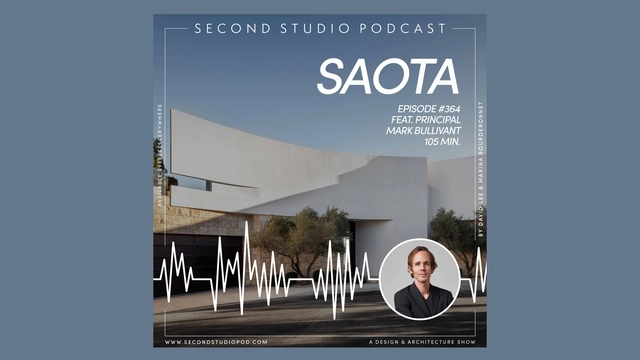
This week David and Marina of FAME Architecture & Design are joined by Architect Mark Bullivant, Principal of SAOTA to discuss his background; attending architecture school in South Africa; working on projects across continents; the differing roles of contractors in different areas of the work; their collaborative approach; leadership and management of a large office; the various types of projects they work on; and more!
The Second Studio (formerly The Midnight Charette) is an explicit podcast about design, architecture, and the everyday. Hosted by Architects David Lee and Marina Bourderonnet, it features different creative professionals in unscripted conversations that allow for thoughtful takes and personal discussions.
A variety of subjects are covered with honesty and humor: some episodes are interviews, while others are tips for fellow designers, reviews of buildings and other projects, or casual explorations of everyday life and design. The Second Studio is also available on iTunes, Spotify, and YouTube.
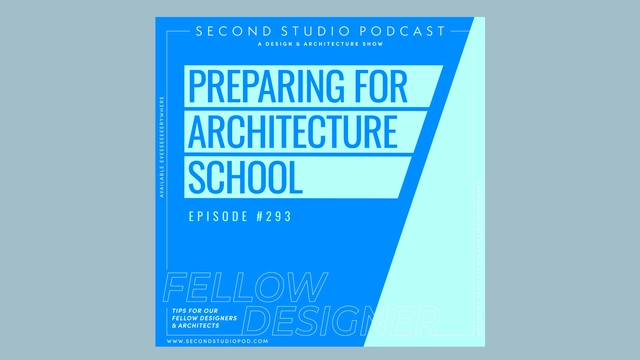
This week David and Marina of FAME Architecture & Design discuss how to prepare for undergraduate architecture school. The two cover learning different skills and tools such as software programs, sculpture, drawing, and painting; learning about construction; common challenges students face; architectural education in general; dealing with negativity in the profession of architecture; and more.
https://www.archdaily.com/1000578/the-second-studio-podcast-preparing-for-architecture-schoolThe Second Studio Podcast
Most architects can relate to the feeling of being plunged into a deep devotion toward architecture. What starts out as a dream career becomes a nightmare for many. After a rigorous education, the experience of a tumultuous career journey can dishearten professionals. Twitter threads and LinkedIn posts have widely debated topics of long work hours and disparate pay, with not many solutions. Architects are constantly at war between profession and passion, a juxtaposition of love and despair. Perhaps, at the root of these problems is the colloquial definition of the noun ‘architect’.
The Second Studio (formerly The Midnight Charette) is an explicit podcast about design, architecture, and the everyday. Hosted by Architects David Bruce Lee and Marina Bourderonnet, it features different creative professionals in unscripted conversations that allow for thoughtful takes and personal discussions.
A variety of subjects are covered with honesty and humor: some episodes are interviews, while others are tips for fellow designers, reviews of buildings and other projects, or casual explorations of everyday life and design. The Second Studio is also available on iTunes, Spotify, and YouTube.
This week David and Marina answer two questions from listeners: How to cope with the feeling of failure in architecture school and whether or not architecture is hard and stressful. The two cover why freshmen often have false expectations of success, embracing failure, not seeking approval from teachers or clients, dealing with ‘dumb’ design assignments, overcoming paralysis, the main reasons why being an architect is challenging, and more!
https://www.archdaily.com/992767/the-second-studio-podcast-overcoming-failure-in-architecture-schoolThe Second Studio Podcast
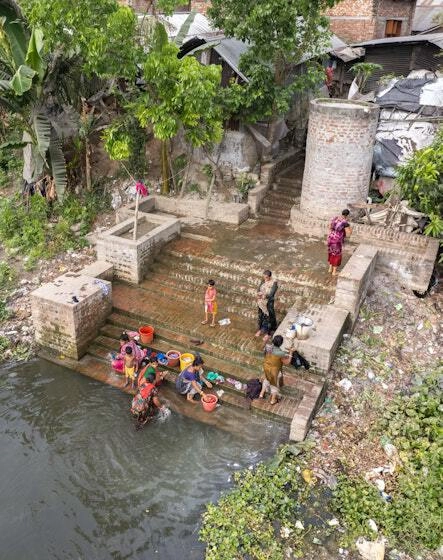
Urban River Spaces, Jhenaidah. Image Courtesy of Aga Khan Award for Architecture
Aga Khan Award for Architecture (AKAA) announced the winners of the 2022 edition. From a pool of 463 projects nominated for the 15th Award Cycle (2020-2022), the six winners show examples of architectural excellence in the fields of contemporary design, social housing, community improvement and development, historic preservation, reuse and area conservation, as well as landscape design and improvement of the environment. Two projects from Bangladesh, one from Indonesia, Iran, Lebanon, and Senegal, will share the UDS 1 million award, one of the largest in architecture.
Lviv Regional Sports School for Children and Youth in Stryi Park. Image Courtesy of Drozdov & Partners
One of the most urgent problems faced by Ukrainians today is the unsettled situation faced by displaced citizens, along with the challenge of returning to the cities they were forced to abandon earlier this year. Ukrainian president Volodymyr Zelenskiy has shared that efforts to rebuild Ukraine will require ‘colossal investments’, and as leaders gather to work out ‘Marshall plan’ to rebuild the country, local architects have already begun developing emergency housing, healthcare, and educational facilities in cities further away from the Russian border.
As a temporary solution to the displacement of north-eastern and eastern Ukrainians, Drozdov&Partners, together with Replus Bureau and Ponomarenko Bureau, have begun refurbishing shelters for internally displaced persons (IDPs) in Lviv and its region, using school campuses and other large-scale facilities as temporary housing.
Choosing a career as soon as we leave high school can be somewhat challenging and even tormenting. Although it has been said that in the future it will be common to change careers or have various overlapping jobs, the fear of making the "wrong" choice causes many soon-to-be graduates to lose sleep. Having a good overview of what each profession entails is important to understand whether or not it is a good fit, especially in creative areas or newer and more dynamic professions. Architecture, for example, is a career that is well known for covering several areas - from mathematics to art history - but also for requiring many hours of dedication, critical thinking and mastery of computational tools. To give prospective students a taste of the experience of being an architect or an architecture student, Design Immersion Days (DID) is a four-week immersive summer program for future high school graduates to experience the world of design and architecture.
The Second Studio (formerly The Midnight Charette) is an explicit podcast about design, architecture, and the everyday. Hosted by Architects David Lee and Marina Bourderonnet, it features different creative professionals in unscripted conversations that allow for thoughtful takes and personal discussions.
A variety of subjects are covered with honesty and humor: some episodes are interviews, while others are tips for fellow designers, reviews of buildings and other projects, or casual explorations of everyday life and design. The Second Studio is also available on iTunes, Spotify, and YouTube.
This week David and Marina answer the question, “Should I go to architecture school?” The two cover the relevancy of college/university, the architecture school experience, if studying architecture is needed to practice architecture, if having a degree helps with getting a job, preparing for architecture school, choosing the right degree, the cost of architecture school, and more.
https://www.archdaily.com/979573/the-second-studio-podcast-should-i-go-to-architecture-schoolThe Second Studio Podcast
The Second Studio (formerly The Midnight Charette) is an explicit podcast about design, architecture, and the everyday. Hosted by Architects David Lee and Marina Bourderonnet, it features different creative professionals in unscripted conversations that allow for thoughtful takes and personal discussions.
A variety of subjects are covered with honesty and humor: some episodes are interviews, while others are tips for fellow designers, reviews of buildings and other projects, or casual explorations of everyday life and design. The Second Studio is also available on iTunes, Spotify, and YouTube.
This week David and Marina discuss the differences between architecture school and architecture practice. The two cover school projects vs real buildings; design process; teamwork; architecture concepts; personal growth; clients vs employers vs teachers; the pace of architecture; academic and professional career paths; skill sets; and what the differences mean for students, recent graduates, and the profession.
https://www.archdaily.com/970706/the-second-studio-podcast-on-the-differences-between-architecture-school-and-architecture-practiceThe Second Studio Podcast
The Times Higher EducationWorld University Rankings 2021 have been released. Including over 1,500 universities across 93 countries and regions, the latest rankings is one of the largest to date. Featuring a range of subjects, including architecture, the rankings are based on 13 performance indicators that measure an institution’s performance across teaching, research, knowledge transfer and international outlook.
The "Site Analysis" electronic book prepared by Tifa contains thirty six types of site analysis and studies, architectural examples, how to do and tips. In his book, Tifa collects Site analysis types for students and young designers and explains the reason for doing each analysis with giving examples of architectural projects which got use from this specific analysis.
“Site Analysis is one of the most important and effective ways to find a concept. Therefore, the more detailed, meaningful and comprehensive we will be, The more useful Analysis would help us think of conceptual form, mass, materiality, approach, landscape and much more.
The 2020 coronavirus pandemic is already creating change in every part of society. Harnessing this change should be the impetus for a long-overdue overhaul of the educational system and, in particular, the way we teach architecture.
Each day during the pandemic, we are suddenly finding what was once impossible is now suddenly possible. As Thomas Friedman said of online learning back in 2012, "Big breakthroughs happen when what is suddenly possible meets what is desperately necessary."
We now find ourselves in a position where we have to re-think everything to fight this virus. This pandemic will cause us to re-think learning as entire educational systems are forced to move online. In general, most formal education institutions are not producing the creative thinkers the world urgently needs. Solutions to the coronavirus pandemic require creative thinking, and how we currently teach in institutions today produces groupthink. Our path-dependent education does not get the best from individuals.
The annual DesignIntelligence architecture school ranking for 2020 classified the establishments according to the “most admired” rather than the “best”, for the second year in a row. The subjective classification is based on the responses of hiring professionals.
Architecture school. You’ve heard the myths - the legends of all-nighters and innovation, of unmatched workaholism and love for the profession. Perhaps you know what you want – to solve the great urbanization problem, to create the next sustainable wonder-gadget, or maybe just to start your own firm and show the architectural world how it’s done. Maybe you have no idea what you want to do, drawn to architecture by the romance, the larger-than-life scale. Maybe you’re an artist who wants a job when they graduate. A hometown hero, you’re about to be thrown into a classroom of the best, possibly for the first time in your life. You’ll be surrounded by the brightest in engineering, problem solving, writing, drawing and a host of other skills. Anxious and excited, you stand ready at the doors of architectural education, hungry for innovation and ready to share and learn from others. Stepping inside that first day, you prepare yourself for the best - and most difficult times of your life so far.
To prepare you for the strange beast that is architecture school, shed light on what is fact and fiction, and give you some peace of mind, we at ArchDaily have prepared a list of advice for all incoming architecture students. There is no other education in the world quite like an architectural one, and we hope that this list can help prepare you for its unique wonders and challenges. The advice below is meant to ease the transition into school as much as possible – but be warned, nothing can compare to experiencing the real deal. Read them all after the break.
Videos
Urban Below - Still shot. Authorship: Han Wu & Studio 35mm (Hamid Khalili – University of Melbourne)
Today, the overlap of the tools and software products utilized by filmmakers and architects reinforces the historical bond between the two disciplines more than ever. In one of their design studios, Master of Architecture students at the Melbourne School of Design try to master the techniques and methods of filmmaking and employ them in their architectural films and animations.
https://www.archdaily.com/920626/students-rethink-architecture-through-filmmaking-at-melbourne-school-of-designAD Editorial Team



















.jpg?1656927557&format=webp&width=640&height=580)
.jpg?1656927557 "Lviv Regional Sports School for Children and Youth in Stryi Park. Image Courtesy of Drozdov & Partners")

.jpg?1656927412 "Lviv Regional Sports School for Children and Youth in Stryi Park. Image Courtesy of Drozdov & Partners")
_(1).jpg?1656927415 "Lviv Regional Sports School for Children and Youth in Stryi Park. Image Courtesy of Drozdov & Partners")
.jpg?1656927557)






.jpg?1440422234&format=webp&width=640&height=580)


.jpg?1440422234)