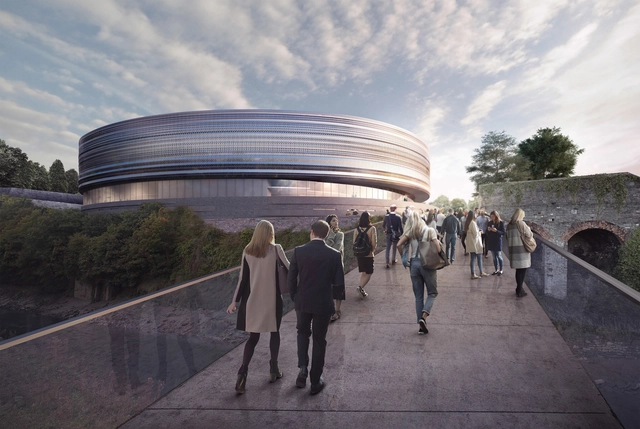
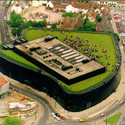
Populous, in collaboration with Feilden Clegg Bradley Architects and BuroHappold Engineering, have submitted their design proposal for the new 12,000-person Bristol Arena to the Bristol City Council for planning approval. Following the consultation with the city and with the public, “plans have been developed further to show how event spaces in front of the arena can be used for performances, outdoor cinema, festivals, and markets.”
Update: 3XN's Quay Quarter Sydney has received final approval. The article below was originally published September 25, 2014, after the practice won the commission. New interior images have been added to the gallery.
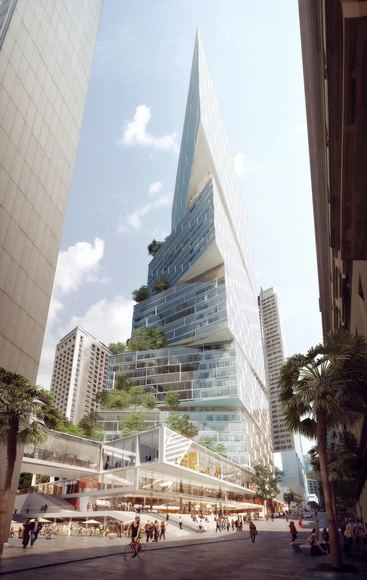
3XN has won an international competition to design the “50 Bridge Street” tower and masterplan for the Quay Quarter Sydney (QQS) precinct. Just west of Jørn Utzon’s Opera House, the new tower will feature five rotating glass volumes, each equipped with a multi-level atria and views of the Sydney harbour.
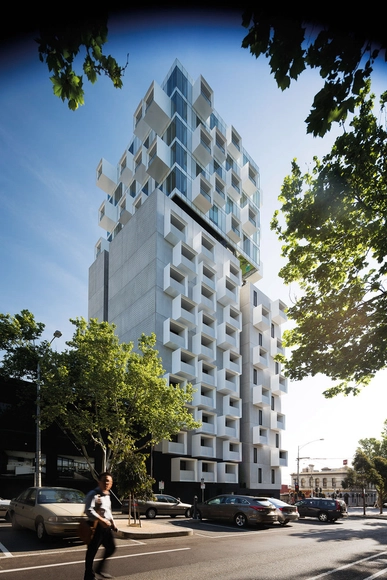
Overall, 42 projects received 46 awards in 14 categories, including commercial, public, and interior architecture. Winners were selected by a jury from the Chapter Architecture Awards, held earlier this year.
Read on after the break for a list of the winners.
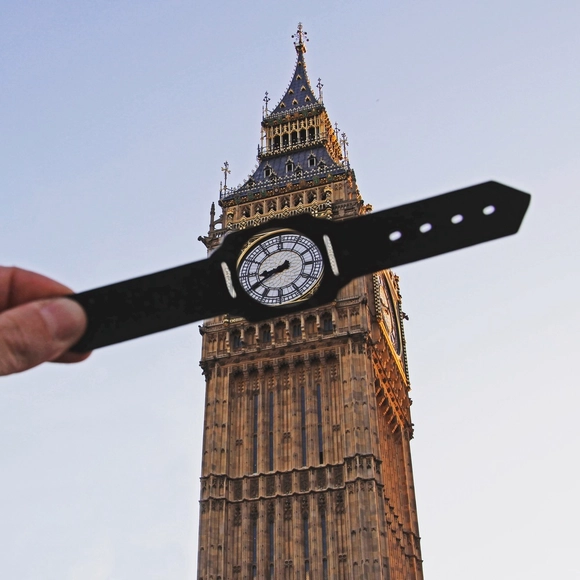
For the past few months, Rich McCor has been traveling around the world reimagining famous landmarks with paper cutouts.
Starting with some research on the locations he visits, McCor shifts between finding instant inspiration and letting his subconscious drive his creations: “After doing the first few cut-outs, I think my brain learned to look for quirky shapes and ideas in architecture and everyday objects; it’s a pretty good mental exercise.”
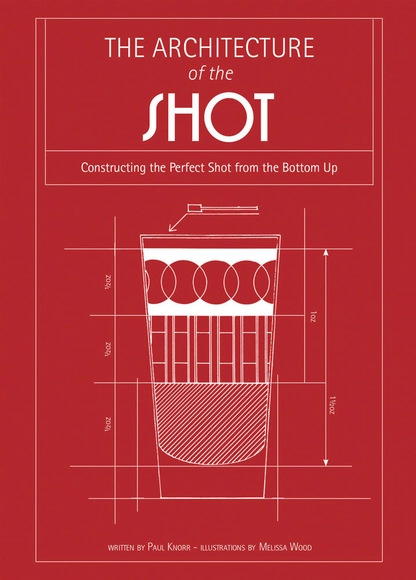
The best buildings always start with a background, materials, and a plan. With a little help, now shots can too. In their new book, The Architecture of the Shot, author Paul Knorr and architectural planner Melissa Wood teamed up to create 75 blueprints detailing the creation of "the perfect shot from the bottom up." With historical backgrounds, detailed materials lists, and precise plans, anyone with an architectural eye will feel right at home constructing the “perfect” mixtures.
View a few of the blueprint recipes, after the break.
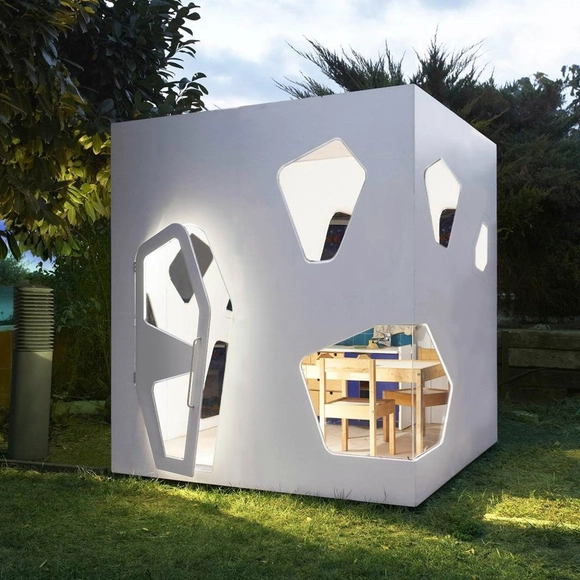
Barcelona-based designer David Lamolla of SmartPlayhouse creates children’s playhouses based on contemporary architecture styles, aiming to create fun spaces for children that are also sculptural elements for the garden. His Kyoto playhouse series is inspired by minimalist Japanese architecture, taking on a form reminiscent of Toyo Ito’s Mikimoto Ginza 2 building.
It is surprising then to find the man or his eponymous firm Foster + Partners absent from a list like Fast Company’s “The World's Top 10 Most Innovative Companies in Architecture,” organized into superlatives: MMA Architects, “for thinking outside the big box,” Heatherwick Studio, “for reimagining green space,” or C.F. Møller Architects, “for rethinking high-rise living.” This is not to say that Foster or his firm should be substituted for any of these deserved accolades, but rather that for five decades Foster and his firm have ceaselessly worked to enhance and expand on the human experience with architectural solutions that are both inventive and practical - a fact that is perhaps lost as a result of his position within the architectural establishment.
With that in mind, we thought it was worth highlighting the many occasions over the decades where Foster + Partners has shown themselves to be among the world's most innovative practices. Read on for more.
There is perhaps no better display of modern architecture’s historical victory than Jacque Tati’s film Playtime. In it, a futuristic Paris has left-for-dead the grand boulevards of Haussmann, in favor of endless grids of International Style offices. The old city is reduced to longing reflections of Sacré-Cœur and the Eiffel Tower in the glass of these shiny new monoliths. But the irony central to the film is that this construction is created through mere surface treatments, and as the narrative unfolds, cheap mass-production withers in a world where the veneer has triumphed over craftsmanship and polish. In short, Modernism hasn’t always been all it's cracked up to be.
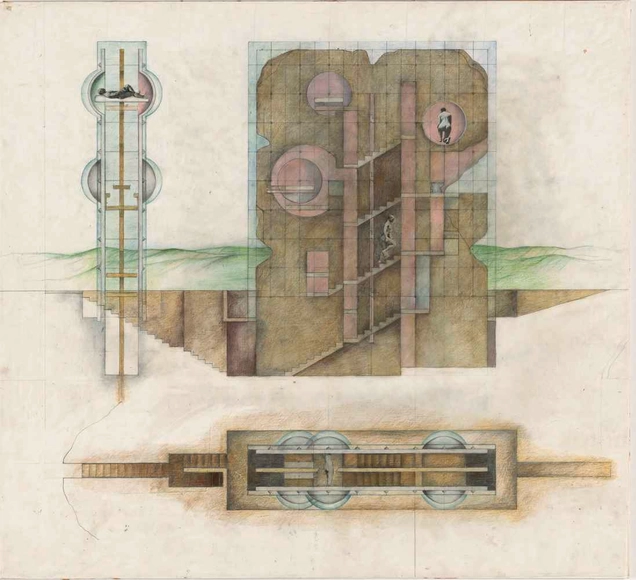
In the Museum of Modern Art’s new exhibition, "Endless House: Intersections of Art and Architecture," the simplicities of mass-market modern homes are abolished by artists and architects who, in examples from the 1940s to the present, have chosen to use the dwelling as a platform for universal messages and as an arena for architectural experimentation. In the same way that photography freed painting from the terrestrial concerns of realism, the simplicity of modernism liberated artists and architects to subvert extant conventions of buildings.
Collège Mixte Le Bon Berger – one of Architecture for Humanity’s completed projects in Haiti. Image Courtesy of Architecture for Humanity
Nonprofit organization Architecture for Humanity has launched a rebranding campaign, calling for public input to help create its new name. After working to transition “from a group of chapters to a collectively mobilized and collaboratively led network,” the new version of the organization has a similar mission, but with a focus on “consensus building, professional development, and support for local groups to develop innovative business models while driving humanitarian design services.” Thus, the rebranded AFH will utilize its new image as a “banner to rally under,” putting an emphasis on interdisciplinary collaboration and incorporating anyone outside the architectural profession who can help with the mission.
BW International is now accepting entries for its Design a Beautiful House competition, an international call offering £25,000 (about $39,000 USD) to winner(s). The competition is open to all designers, students, artists, and others from anywhere across the globe, and requires no registration fee.
Entrants are asked to think about the definition of beauty in order to create a design that considers the ways that beauty and aesthetics can enhance the function of a home and the experiences of its users.
What do Ice Cube, the members of Pink Floyd, and Seal have in common with fashion icon Tom Ford and former president Thomas Jefferson? They all studied architecture. Perhaps a representation of the diversity of talents in architecture studios, household names like Samuel L. Jackson and Courteney Cox found their footing as students of architecture prior to reaching success in other fields.
We've put together a list of some of the most unexpected names gracing the yearbooks of architecture schools from around the world, including the likes of Queen Noor of Jordan and George Takei of Star Trek fame. Discover "Weird Al" Yankovic's true (architectural) passions after the break.
The winner of a competition for a mixed-use building scheme, London-based Kamvari Architects has unveiled the design for Zartosht, a 300,000 square-foot retail and office building in Tehran, Iran. The building's design is based largely on local cultural contexts, like the region’s reputation for renowned fabric and textile shops, and environmentalism, particularly with respect to solar energy.
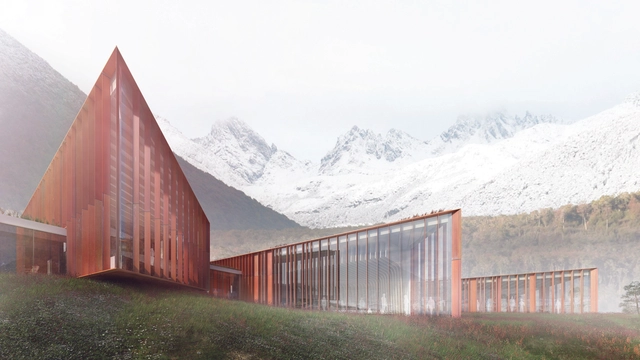
As a result of a public competition, the Chilean Regional Government has commissioned Ennead Architects to collaborate with Chilean architects Cristian Sanhueza and Cristian Ostertag on the design of the Cape Horn Sub-Antarctic Center. Planned for a site within the UNESCO Cape Horn Biosphere Reserve in Puerto Williams, a town on Navarino Island in the Chilean Sub-Antarctic Province, the center will provide a home for the Biocultural Research and Conservation Program led by Dr. Ricardo Rozzi, Professor at the University of North Texas, the Universidad de Magallanes and the Institute of Ecology and Biodiversity.
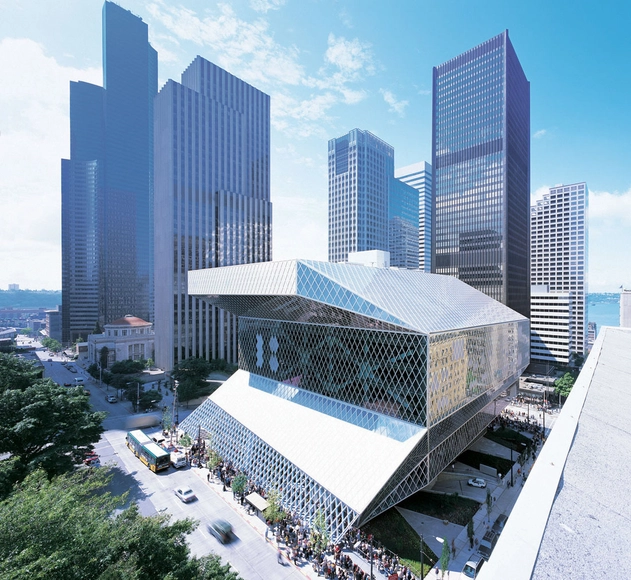
Bjarke Ingels worked on the Seattle Central Library during his time at OMA. Image Courtesy OMA
The world of architecture is small. So small in fact, that Rem Koolhaas has been credited with the creation of over forty practices worldwide, led by the likes of Zaha Hadid and Bjarke Ingels. Dubbed “Baby Rems” by Metropolis Magazine, this Koolhaas effect is hardly an isolated pattern, with manifestations far beyond the walls of OMA. The phenomenon has dominated the world of architecture, assisted by the prevalence and increasing necessity of internships for burgeoning architects.
In a recent article for Curbed, Patrick Sisson dug into the storied history of internships to uncover some unexpected connections between the world's most prolific architects. With the help of Sisson's list, we've compiled a record of the humble beginnings of the household names of architecture. Where did Frank Gehry get his start? Find out after the break.
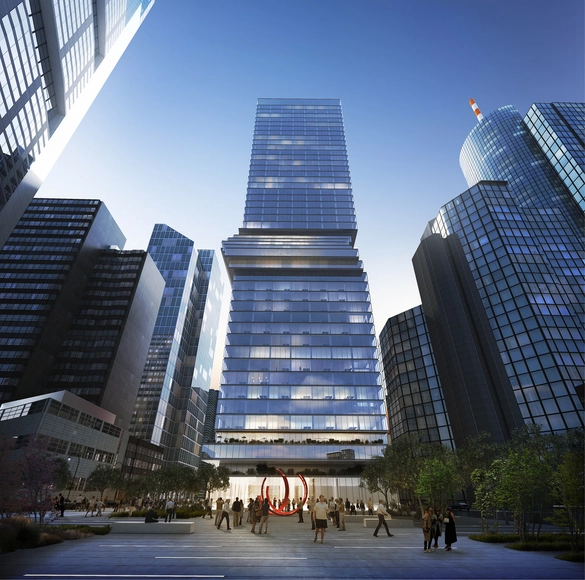
BIG has been selected through a competition to realize a 185-meter-tall, mixed-use tower in Frankfurt. With a shape that is "both rational and sculptural," the skyscraper is organized as a basic volume whose floor plates "shift" to provide the "best spaces for each specific program."
"Organized as a slender and rational stack of inhabited floors, the tower is interrupted by two sculptural moves where the program changes," says BIG.
Screenshot from "115 Years of American Homes Scrolling Parallax Infographic"
Moving specialists iMove have created 115 Years of American Homes, a Scrolling Parallax Infographic in which viewers can “drive” through a neighborhood of single-family homes that reflect the style of their respective decades. For each home, graphics detail “tell-tale architectural features, design trends, average home price, and the historical and cultural context” of each decade from the 1900s through the present. Test out the interactive timeline here, and let us know: which decade of residential architecture is your favorite?
Videos
Proposals such as Vincent Callebaut's "Hydrogenase" have always been science fiction as much as they are architecture - but with Arx Pax's MFA technology, is it time to think more carefully about how to design levitating buildings?. Image Courtesy of Vincent Callebaut Architectures
Could Hovering Buildings be the Future of Sustainability?
If Arx Pax, a cutting-edge technology firm led by Greg and Jill Henderson, has its way, levitating objects could become a common sight. The team is developing what they call Magnetic Field Architecture (MFA), a technology which controls electromagnetic energy to make objects hover, and at the several months ago, they used it to produce Hendo Hover, a hoverboard capable of carrying a person. While the fact that Arx Pax was able to produce a hoverboard is fascinating, the technology could have much more serious applications: as an architect, Greg Henderson envisions that one day MFA technology could be used in buildings to produce sustainable structures which can better survive earthquakes and other natural disasters. Is this goal realistic?