Columbia Graduate School of Architecture, Planning and Preservation (GSAPP) has launched the United States’ first-ever Ph. D in Historic Preservation. GSAPP is ranked within the top 10 architecture graduate schools in the US in the latest figures for 2017. It’s leadership in learning and experimental practice is about to be further enhanced by the introduction of the course.
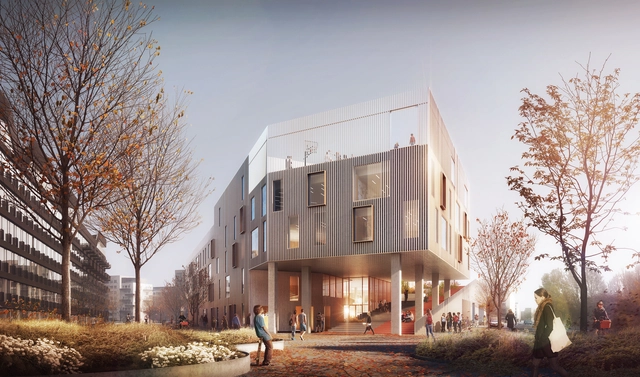
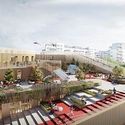
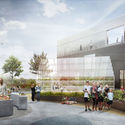
In May 2017, C.F. Møller and Tredje Natur’s interactive education design won the New Islands Brygge School competition. The new education facility sets up innovative, sustainable and active spaces for sixth to ninth grade students to participate in experience-based learning.
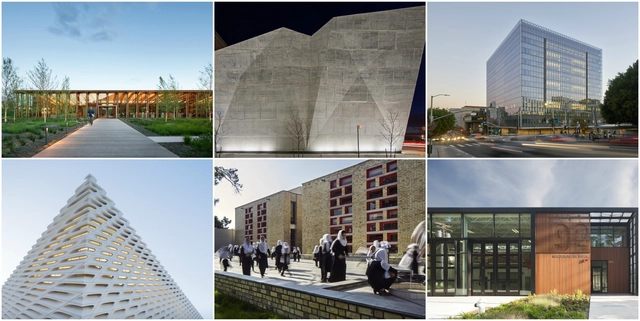
Seventeen projects chosen by the American Institute of Architects (AIA) have been selected for this year’s Institute Honor Awards for Architecture, an award known to be the profession’s highest recognition of works in America that exemplify an excellence in architecture, interior architecture and urban design.
Out of 500 submissions, the 17 recipients will be honoured with the award at the AIA Conference on Architecture in New York City in June.
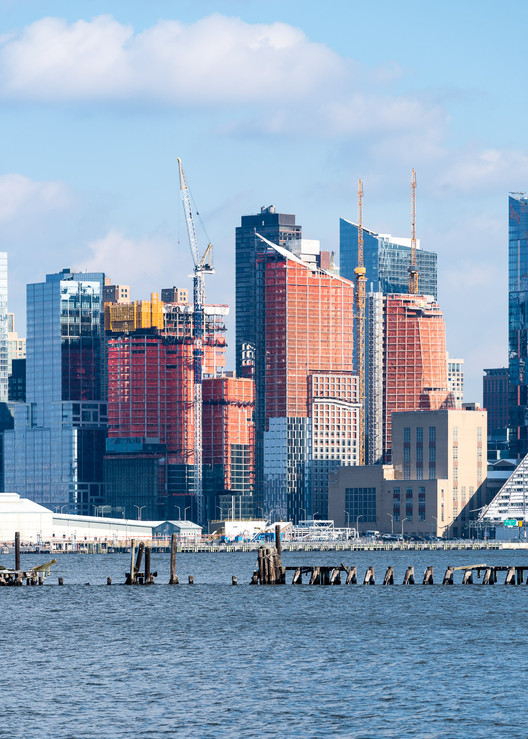
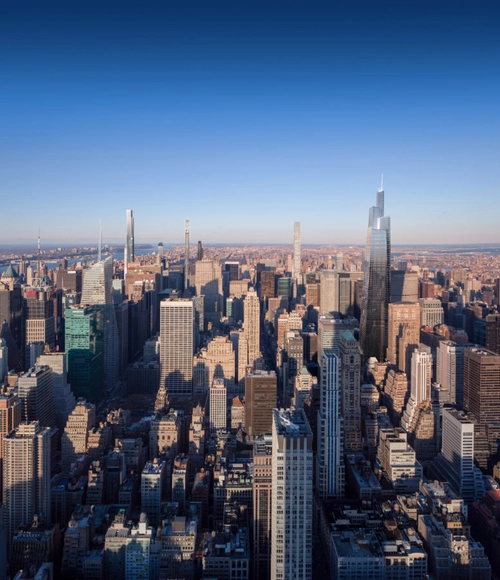
The 2020 skyline, photo by Andrew Campbell Nelson, rendering by Jose Hernandez. Image Courtesy of YIMBY
2017’s building applications has seen a rise in both Brooklyn and the Bronx, according to YIMBY’s construction report on New York. Despite a drop within Manhattan and Queens, the number of new building applications over the five boroughs seems to be stabilising; 2016 saw the number of multi-family units decrease by over 40% to 19,356, a pattern which fortunately appears to have stopped as 2017 saw fillings for 19,180. After the last two years of massive drops, this couldn’t be more welcomed by New York.
We are starting the new year with an announcement from the American Institute of Architects that there will be no winner for their Twenty-five Year Award in 2018. This will be the first time this has occurred since the award was officially established in 1971. The AIA award recognises buildings that have “stood the test of time for 25-35 years and continues to set the standards of excellence for its architectural design and significance.”
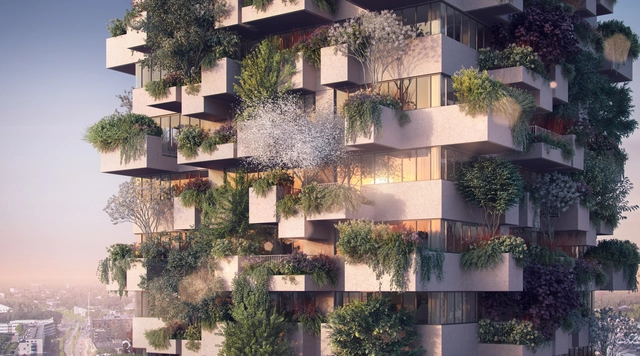
The new social housing project by Stefano Boeri Architetti is the first to integrate a vertical forest into an affordable residential skyscraper, improving the living conditions often incurred within such developments. 5,200 shrubs and 125 trees will be planted up the 75m tall structure in Eindhoven.
Trudo Vertical Forest will contain 125 social housing units over 19 floors to house lower income social groups, particularly young people. Each apartment will include a balcony filled with an array of trees, plants and shrubs for a forest soaring into the city's sky.
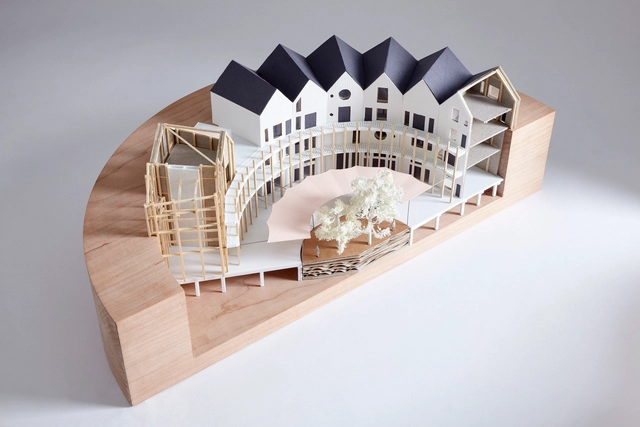
The RIBA have announced the winner of their competition in collaboration with the National Grid to give function to the sub-terrain voids left behind when the steel frame of a gasholder is dismantled. Outpost, the winning London studio, proposed a mixed-use scheme for a ring of four storey buildings descending into the well below. The other shortlisted teams included CF Architects, 318 Studio, Max Architects, Wilson Owens Owens Architects and Jan Verhagen and Priscille Rodriguez of Unit Architects.
Outpost’s proposal solves Britain’s shortage of affordable housing and creates an opportunity for flexible workshops, studios and workspaces to be integrated into the structure. The simple, economical vision makes full use of the gasholder base and presents a familiar domestic setting on street level, appearing as one storey.
CF Møller’s Storkeengen (Stork Meadow) is a landscape solution, bringing the town of Randers closer to the longest river in Denmark, the Gudenå River to prevent the threat of flooding. The storm protection uses the wetland meadows as an attractive nature park to handle the raised stormwater level, whilst a recreational pathway increases accessibility with the nature areas across the river.
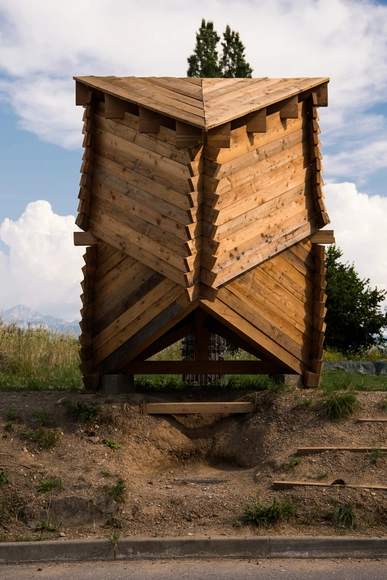
At an altitude of 2735m, architecture students at the École Polytechnique Fédérale de Lausanne (EPFL) in Switzerland have built The Bonatti Bivouac, a temporary refuge for the A Neuve’s glacier. The shelter uses the envelope as a structural object, eradicating the need for metal, screws, or nails. Informed by theoretical architect Semper, their design uses the joints to form a piece of architecture.
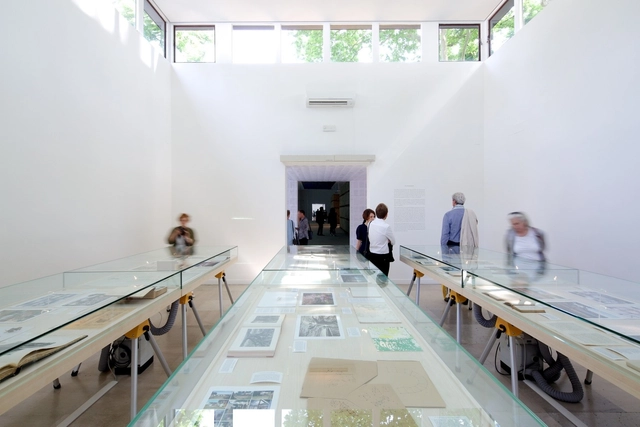
The Danishpavilion at the 2018 Venice Architecture Biennale will demonstrate the power of collaborative innovation through large-scale installations. Architect and Head of Institute of Architecture & Technology at The Royal Danish Academy of Fine Arts, Natalie Mossin was selected to be the Danish pavilion curator by several prestigious organizations including The Danish Architecture Centre, The Danish Ministry of Culture, Realdania and the Danish Arts Foundation.
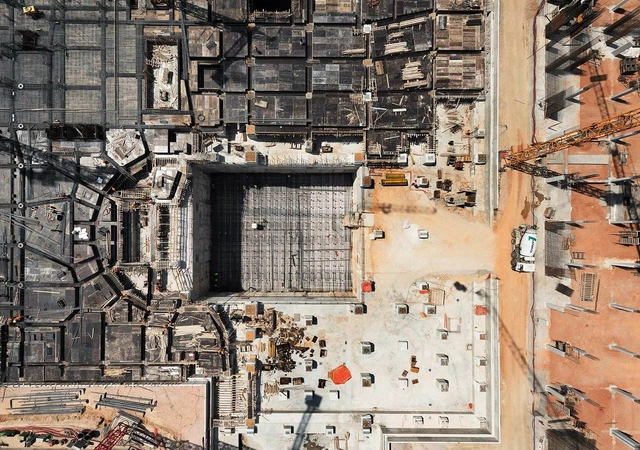
From Greek architect and photographer, Yiorgis Yerolymbos comes a book which captures the construction process of Renzo Piano’s Stavros Niarchos Foundation Cultural Centre in Athens, Greece. Yerolymbos carefully documented every moment where the superfluous Olympic parking lot became a cultural center and sloping park with waterfront views. For almost a decade, and from every angle, the photographer watched the site transform. Birds-eye imagery proved to be some of the most captivating. As photographs, they manage to possess the characteristics of an architectural drawing.
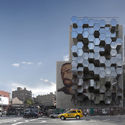
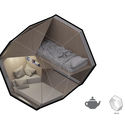
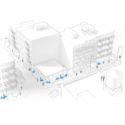
Across the world, homelessness in fast-paced metropolises such as New York City is at a record high since the Great Depression of the 1930s, more than 60,000 people are in shelters every night while many others must find a place to sleep on the streets, the subway or other public spaces. The real estate industry has caused the increasing rents and a high demand for any remaining plots; many of the new builds are luxury apartments, rather than the low-cost housing that is so desperately needed. As a result, thousands of people are forced onto the streets and charities struggle to provide adequate help for everyone.
Thousands of people in Tel Aviv put together over 500,000 plastic building blocks to create the tallest LEGO structure in the world. The project was created in memory of 8-year-old Omer Sayag, who loved the toy blocks before he was taken by cancer in 2014.
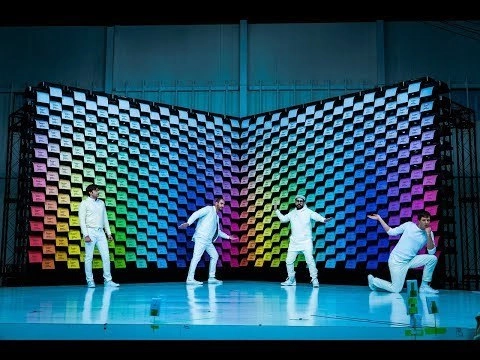
The old adage "writing about music is like dancing about architecture" (it's stupid etc.), loses some of its impact when architecture becomes the backdrop for both music, and dancing. Ever since video killed the radio star, famous houses, quirky spaces, and history's great buildings have provided beautiful, unique and dramatic settings for music videos of all types. So which of 2017s music videos have capitalized on the wonderful world of architecture?
The new year is almost here, and Richard Meier & Partners has four international projects that will be coming to fruition. These new multi-use building designs play with light, transparency, and volume as well as respond to their varying urban context.
Last week marked the opening of Canada’s first ever funicular in downtown Edmonton, a cable-mechanized incline elevator aimed at making the city’s largest green space more accessible.
Publically funded, the $24million project features the 100 Street Funicular to transport mobility aids, strollers, and bikes, as well as a generous staircase for walking, running and lounging. Concrete sitting blocks are dispersed up the 170 steps from a promenade at the bottom. Visitors can walk along the promenade to a lookout point or ascend the stairs or funicular to the raised lookout for extensive views of the river valley.
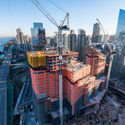
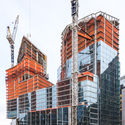
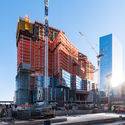
At one of the last remaining waterfront sites in Manhattan, the topping out of a luxury, five-acre, three tower mega-structure dubbed Waterline Square marks the end of a 25-year process for the 77-acre Riverside South Master Plan. Each of the three towers has been conceptualized by a different architect, with One Waterline Square by Richard Meier & Partners Architects, Two Waterline Square by Kohn Pedersen Fox Associates (KPF) and Three Waterline Square by Viñoly Architects. The towers were developed concurrently, but each reflects the vision of its architect, contributing to a harmonious complex while still remaining distinct.
.jpg?1516300417&format=webp&width=640&height=580)










.jpg?1513747529&format=webp&width=640&height=580)
.jpg?1513747674 "© Brock Kryton")
.jpg?1513747342 "© Brock Kryton")
.jpg?1513747611 "© Brock Kryton")
.jpg?1513747258 "© Brock Kryton")
.jpg?1513747529)