Witold Rybczynski’s latest book—he’s written 22 now, at last count—is The Story of Architecture (Yale University Press), and it’s as comprehensive as the title implies. The author of Home and A Clearing in the Distance starts with the ancients, works his way chronologically through the movements, buildings, and architects, and into the present day. It’s done, he concedes, through his own prism. “I have not given equal attention to all parts of the world,” he writes in the book’s Note to the Reader. “This is primarily although not exclusively the story of the Western canon. That is not to slight regions that often have their own unique architectural accomplishments … but I have chosen examples that best convey the principal thrust of the strain of architectural thought that has most influenced me.” Recently I talked with Rybczynski about the genesis for the book, what architecture lost when it abandoned ornamentation, and where we are today.
Blair Kamin stepped down as architecture critic for the Chicago Tribune in January 2021, after a nearly 30-year run in the post. He won a Pulitzer Prize in 1999 for a body of work highlighted by a series on Chicago’s lakefront, including a story that documented the race- and class-based disparity between the city’s north and south lakefronts. He has previously published two collections of his work: Why Architecture Matters (2001) and Terror and Wonder (2010), both from the University of Chicago Press. His third collection, Who is the City For? Architecture, Equity, and the Public Realm in Chicago, was released last week. Recently I talked to Kamin about the new book, the state of post-pandemic Chicago, and the need for more mainstream architecture criticism. I will post the second of our conversations tomorrow, in which the critic pushes the need for a redefinition of the phrase “design equity.”
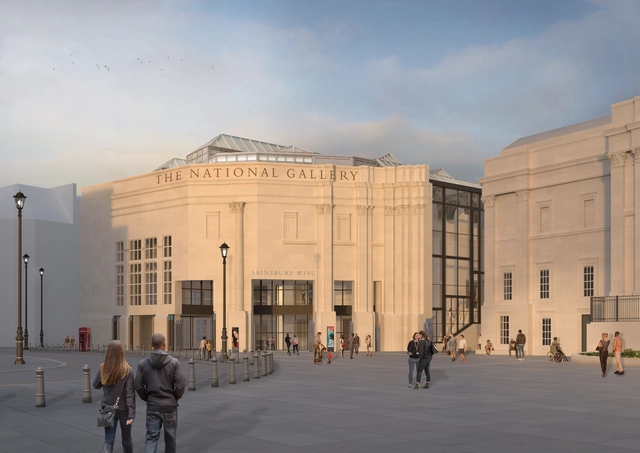
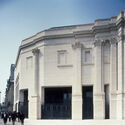
Updated exterior view. Image Courtesy of Selldorf Architects
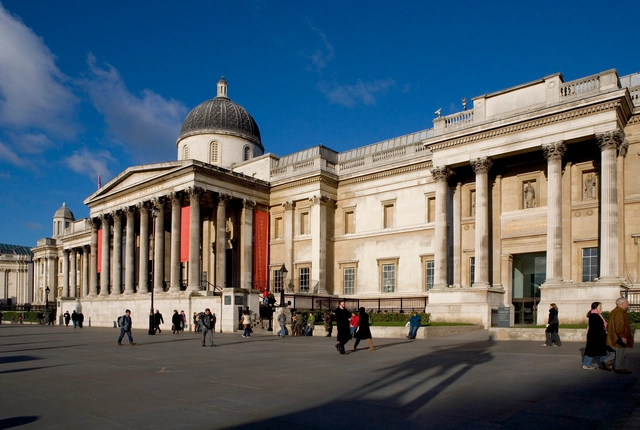
Selldorf Architects have released a revised version of the plans to remodel the National Gallery and the Sainsbury Wing, both classified as Grade-I-listed monuments. Sainsbury Wing is also the recipient of the 2019 AIA Twenty-five Year Award. The plans for the Sainsbury Wing, designed by Robert Venturi and Denise Scott Brown and opened in 1991, have faced intense criticism, with former RIBA Journal editor Hugh Pearman calling the remodeling plans “unnecessarily destructive”. The plans to remodel were first revealed earlier this year as part of the NG200 Project to celebrate the National Gallery’s bicentennial in 2024. The project proposes the remodeling of the Sainsbury Wing’s front gates, ground-floor entrance sequence, lobby, and first-floor spaces.
Writer Eva Hagberg and I have known each other for a long time. Way back, in a year I can’t remember, I assigned her one of her first magazine assignments. Literally, dozens of other assignments followed. So it was with some anticipation, and a bit of surprise, that I received her new book When Eero Met His Match: Aline Louchheim Saarinen and the Making of an Architect (Princeton University Press), an intriguing hybrid text, one-part Aline and Eero biography, one part memoir of Hagberg’s experiences as a design writer and publicist. (I am briefly mentioned in the book.) The book’s main argument is that Aline Saarinen largely invented the role of the architectural publicist. Recently I traveled out to the Brooklyn Navy Yard to talk to a very pregnant Eva about the impetus for her new book, its dual structure, and the journalistic ethics of Aline Saarinen.
When the estimable Blair Kamin stepped down as architecture critic of the Chicago Tribune in early 2021, it left the city without a daily critic at any of the local news outlets. That sad state of affairs was partially corrected recently, when the Chicago Sun-Times announced that Lee Bey would begin a monthly architecture column. The writer, historian, photographer, and critic brings a wealth of experience to the task: he was architecture critic for the Sun-Times for five years in the late 1990s, served as deputy chief of staff for planning and design in Mayor Richard M. Daley’s administration, directed governmental affairs at SOM, and taught at IIT. His most recent book is Southern Exposure: The Overlooked Architecture of Chicago’s South Side. Last week I talked to Bey about the new role, how the city has changed since his last stint as a critic, and the unique importance of architecture to the city.
What, exactly, is the point of architecture criticism? The word “criticism” is derived from the Greek term krinein, meaning to separate, to sift, to make distinctions, to discern, to examine, or to judge. According to Wayne Attoe, an architect and educator who writes about architecture criticism in his book Architecture and Critical Imagination (now sadly out of print), this does not necessarily mean to disapprove of, or to find fault with. It can be favorable or unfavorable; it can praise or condemn.
https://www.archdaily.com/978701/whats-the-point-of-architecture-criticismMichael J. Crosbie
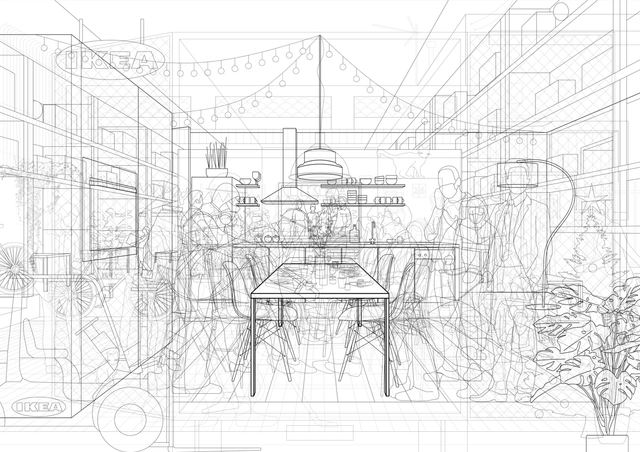
Poner la mesa. Image Cortesía de Florencia Köncke y Paula Olea Fonti
Setting the Table is an illustrated reflection by architects Florencia Köncke and Paula Olea Fonti. In the following paragraphs, the authors develop a first approach to the study of the table as "the centre of our notion of domesticity"(1). In the relationship between space, objects and people and as a social catalyst for gathering and exchange.
https://www.archdaily.com/977914/setting-the-table-from-the-ordinary-table-to-the-extraordinary-tableFlorencia Köncke + Paula Olea Fonti
Michael Sorkin used to regard criticism as "a service profession", highlighting the field's ability to shape public opinion and the direction of architecture at large. Intellectually expansive architecture criticism not only evaluates the merits and shortcomings of a project but reveals how buildings are situated in relation to history and theory and how they contribute to current economic, social and environmental dilemmas. The following explores the field of architecture criticism, highlighting some of its key figures while reflecting on how this role has changed with the emergence of digital media.
What is an architecture critic? And what makes a critic in the 21st century? Throughout history, critics were the select few who were chosen to describe and evaluate architecture while we waited for their rave reviews or disappointments before we validated our own opinions. Their thoughts and words became design canon and heavy-handedly shaped our profession. This mindset and culture only further contributed to the idea that architecture is an “elitist” practice where a few set the rules and the rest must learn them. While architecture will always have named critics, just as other forms of art and culture have theirs, there’s recently been a push for architecture to transform itself into a profession that designs for the masses and is equally critiqued by the masses.
This article was originally published on Common Edge as "Kate Wagner on McMansion Hell, Criticism, and Her Love of Cycling."
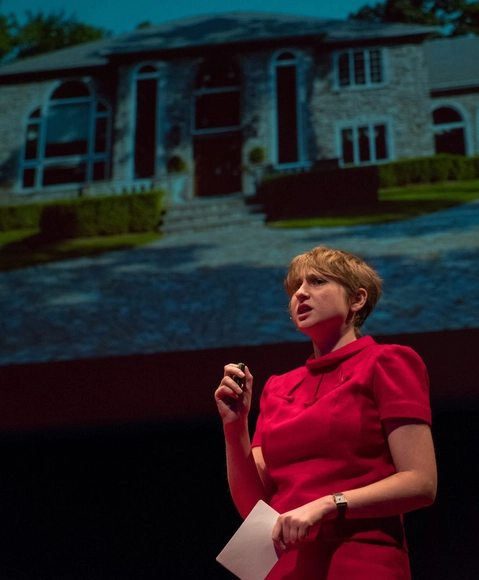
Contrary to movie myth, there is no such thing as an overnight sensation. The moment when a cultural presence bursts upon the scene, seemingly fully formed, is almost always preceded by unwitnessed years of DIY training and single-minded obsession. Such is the case for Kate Wagner, who broke the architectural internet in 2016 with the introduction of McMansion Hell, a sharp and hilarious skewering of the bloated American home, in all its garish and desperate striving. A year later, the real estate listing site Zillow served the then-23-year-old Wagner with a cease-and-desist letter, claiming that her use of photographs violated copyright (even though they didn’t own the photographs either!). It was a clumsy move, resulting in an eventual corporate about-face and scads of free publicity for McMansion Hell.
Chicago architecture is empty without Chicago architectural journalism. From the 1880s launch of the black-and-white publication Inland Architect, which covered the rebuilding after the Great Chicago Fire, to a 1985 critique of the James R. Thompson Center by Paul Gapp in the Chicago Tribune titled “Masterpiece or Ego Trip?” which set the course for the public reception of the building, coverage, and criticism of architecture in local newspapers and architecture publications has provided a critical link to how Chicago maintains its reputation as a city of extraordinary architecture. Architectural criticism and journalism have and continue to help Chicago understand how we arrived at this built environment and what the future holds.
https://www.archdaily.com/956076/what-chicago-loses-when-it-loses-an-architecture-criticElizabeth A. Blasius
Last Friday, January 15, Blair Kamin ended his 28-year run as architecture critic for the Chicago Tribune. I have known and admired Kamin for almost two decades. His writing on architecture and the built environment was sharp and lucid; he was not afraid to offend the less than delicate sensibilities of those in power.
Winner of the Pulitzer Prize for Criticism in 1999, Kamin was an activist critic, very much in the tradition of Ada Louise Huxtable and Allan Temko. Late last week, I reached out to Kamin to talk about the role of critics, and the end of his singular run.
Every December talking heads (or screens) trumpet “Everything Has Changed”. But this year it is true. Imminent inoculations may bring back human contact, but the Coronavirus Year has changed us.
I think 2020 ended the 20th Century in architecture. Architecture never leads in pivotal periods. Modernism was birthed by a Western World leaving monarchies and diving into the Industrial Revolution: it caused neither.
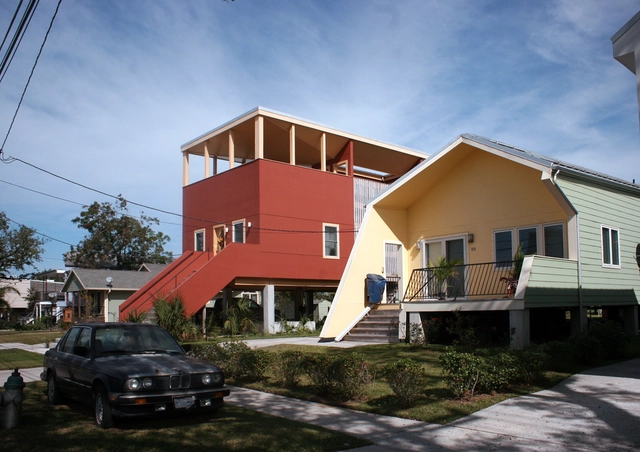
Some celebrate the failures of "Make It Right", Brad Pitt’s patronage in New Orleans. After Hurricane Katrina wrecked New Orleans in 2005, celebrated architects like Frank Gehry, David Adjaye and Thom Mayne created art for a foundation set up by Pitt. A local architect, John C. Williams was hired to turn designs from those starchitects into buildings with a directive to use the best sustainable materials available.
In 1755, Francesco Algarotti, disgusted with what opera had become, wrote An Essay On The Opera in which he called for its simplification. For Algarotti, opera had degenerated into a vehicle for soloists to grandstand with endless improvisations overshadowing the music and ignoring the drama. Even the drama had lost the plot with mythological characters in extraordinary and complex situations. Algarotti saw drama as being the essence of opera and wanted the emphasis restored to it, with everything else secondary. Christoph Willibald Gluck and his librettist, Ranieri de’ Calzabigi, were the first to make it work with their 1762 opera Orfeo ed Euridice. It had characters and drama people could relate to, music that could be remembered and lyrics and a plot that could be understood. It’s regarded as the first truly modern opera.
The International Committee of Architectural Critics CICA is pleased to announce an invitation to publishers, editors, curators and authors to submit their publications for consideration for the 10th CICA Awards 2020 by 30th November 2019. Award winners will be announced during the UIA XXVII World Congress of Architecture to be held in Rio de Janeiro from July 19th to 23rd, 2020.
Back in 2008, ArchDaily embarked on a challenging mission: to provide inspiration, knowledge, and tools to the architects tasked with designing cities. In an effort to further align our strategy with these challenges, we recently introduced monthly themes in order to dig deeper into topics we find relevant in today’s architectural discourse. From architects who don't design to reframing climate change as a global issue, we are celebrating our 11th birthday by asking 11 editors and curators to choose ArchDaily's most inspiring articles.