

-
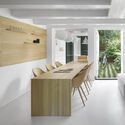
Architects: i29 interior architects
- Area: 115 m²
-
Professionals: i29, Kodde, G.K. Visbeen & Co., Schneider Interieurbouw

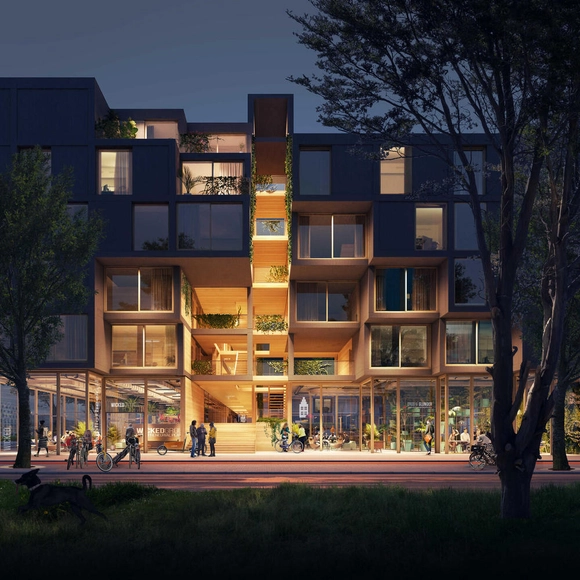
The first wooden housing modules of Juf Nienke, a new circular prefabricated timber housing project by SeARCH, RAU, and DS landscape architects, has been installed in Amsterdam. The project will feature 61 rental homes made entirely of wood, and will sit at the entrance of Centrumeiland, a newly raised piece of land on Lake IJmeer that features 1500 housing units. It is set to be one of the most sustainable apartment buildings in the Netherlands, incorporating an innovative cross-laminated timber construction and utilizing recycled materials.


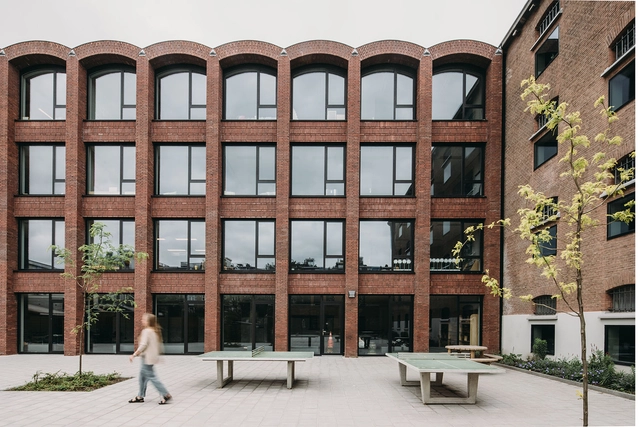


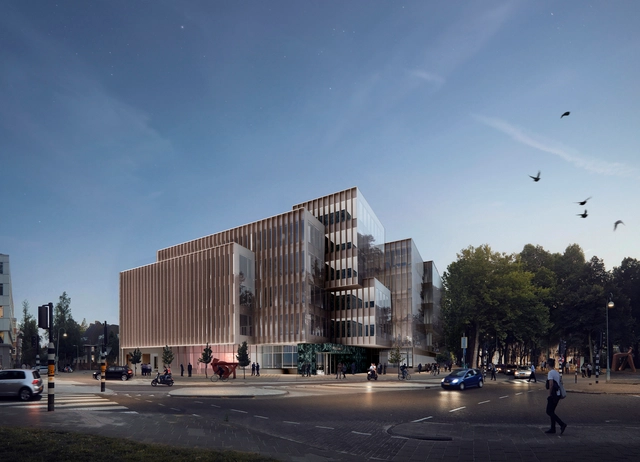
OMA / David Gianotten has revealed the design for a five-story office building in Amsterdam, replacing a 1980s bank headquarters. Located on one of the city’s main avenues among high-end offices, housing and luxury hotels, the architecture of the new project is shaped by the characteristics of its surroundings. Featuring interlocking glass volumes towards the boulevard and brick-clad facades towards the residential area, Apollolaan 171 creates a dialogue with both the green avenue of Amsterdam’s south district and the neighbouring 20th-century Berlage architecture.


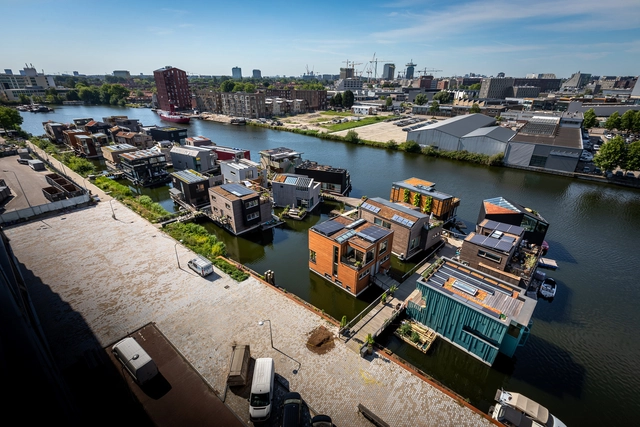
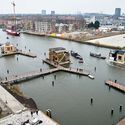
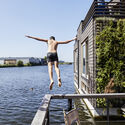
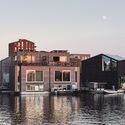
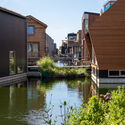
Schoonschip is Amsterdam’s innovative circular neighbourhood, a community-driven project set to become a prototype for floating urban developments. With a masterplan designed by Dutch architecture practice Space&Matter, the project comprises 46 dwellings across 30 water plots connected by a jetty and features decentralised and sustainable energy, water and waste systems. With the last of its buildings completed this year, the development showcases a valid adaptation strategy in the face of climate change and rising sea levels.
.jpg?1623754842&format=webp&width=640&height=580)
MVRDV has revealed the design of "De Oosterlingen", a series of seven sustainable residential buildings on Amsterdam’s Oostenburg Island. The proposed buildings are distributed in a 'barcode' composition, forming an apparent unified design but with an animated skyline and unique characteristics such as varying roof shapes and façades of wood, glass, recycled brick, and bio-based composite.
.jpg?1623754916 "© Proloog")
.jpg?1623754848 "© Proloog")
.jpg?1623754842)