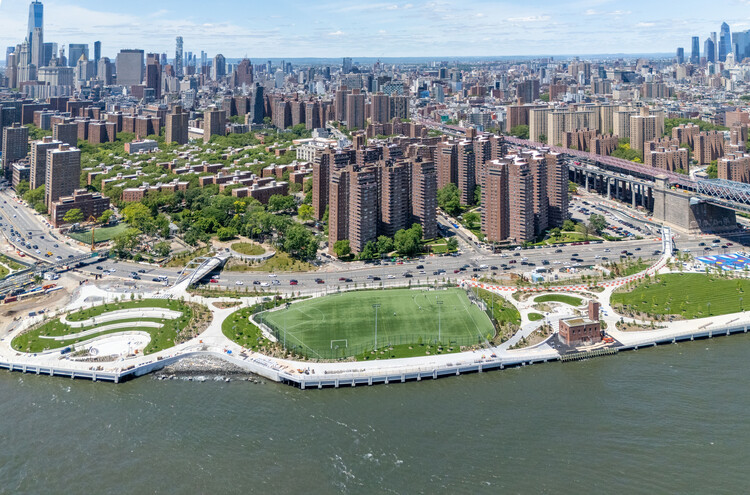
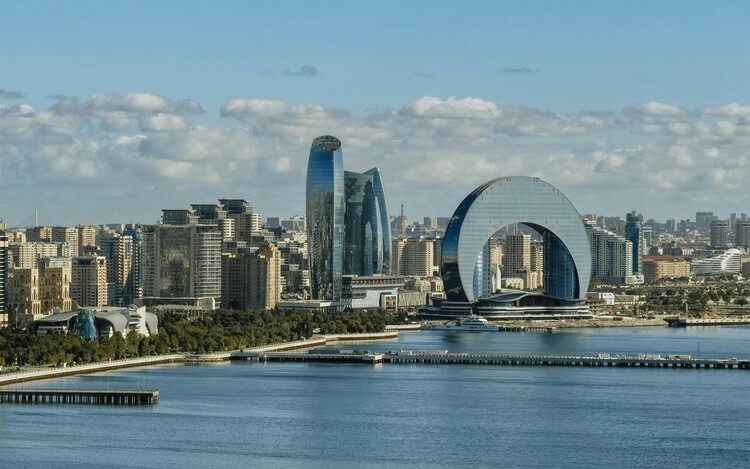
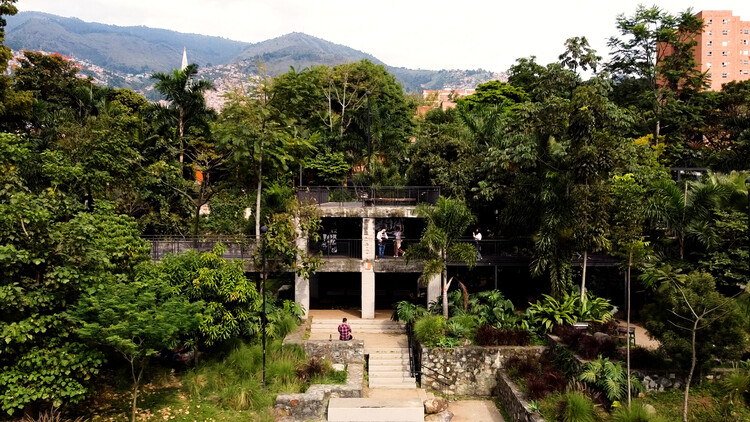
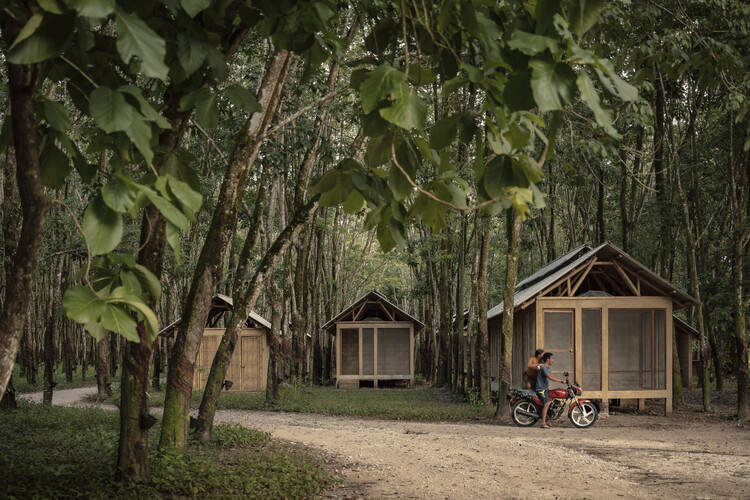
Architecture has long been understood as a powerful tool for shaping the physical environment and social dynamics within it. However, its potential to foster social equity is often overlooked. Empathy-driven design invites architects to approach their work not only as creators of space but as facilitators of human connection and community well-being. This approach centers on understanding people's lived experiences, struggles, and aspirations — particularly marginalized communities — and responding to their needs through thoughtful, inclusive architecture. It goes beyond aesthetics and functionality, instead focusing on creating spaces fostering dignity, accessibility, and social equity. By prioritizing empathy, architects can design environments that uplift communities, address disparities, and create inclusive spaces that promote positive societal change in a tangible, human-centered way.
The New Jersey Performing Arts Center (NJPAC) has announced a three-year redevelopment of its 2-acre downtown Newark campus. The project, designed by architectural firms Skidmore, Owings & Merrill (SOM), and Weiss/Manfredi, has recently broken ground and is scheduled for completion in the fall of 2027. It integrates 350 mixed-income residential units, retail spaces, and a dynamic education and community center, in addition to rehearsal spaces, a new headquarters for jazz public radio station WBGO, and various outdoor gathering areas.
Contemporary challenges and technological developments inevitably trigger changes in how we design and build our cities. The traditional construction industry suffers from inefficiencies that render methods slow, expensive, or harmful to the environment. Excessive material waste and lengthy build times pose significant challenges to built environment professionals, calling attention to the complexity and rigidity of conventional construction processes. The optimization of time and physical resources in construction calls for innovative methods that enhance efficiency.
In an industry where innovation often moves with the eagerness of setting mortar, WoHo Systems, one of ArchDaily's 2024 Best New Practices, has emerged as a disruptor aiming to address global sustainability and housing affordability issues. Born from the experimental roots of Ensamble Studio, this architectural startup wields prefabrication and sustainability as core pillars to redefine construction norms and deliver adaptable building solutions. Their solutions aim to speed up and simplify the construction process, as well as reduce costs and minimize environmental impact.
First Prize Winner + Buildner Student Award. Image Courtesy of Buildner
Buildner has revealed the results of its Under Bridge Affordable Housing Challenge, the 17th version of its Affordable Housing competition series, which focused on proposing design solutions to address housing challenges in cities around the world. This competition aimed to transform neglected areas under bridges, turning idle or empty spaces in sprawling cities into vibrant and thriving communities.
Participants were invited to select any "under the bridges" site globally, considering factors such as accessibility, available amenities, and how the proposed solution would integrate with the existing community or city. Designs needed to demonstrate adaptability, ensuring they could meet diverse needs while remaining cost-effective and sustainable. Buildner and its jury sought practical, scalable, and eco-friendly designs to revolutionize these overlooked spaces. The competition encouraged creative thinking and innovative housing solutions that challenge conventional approaches.
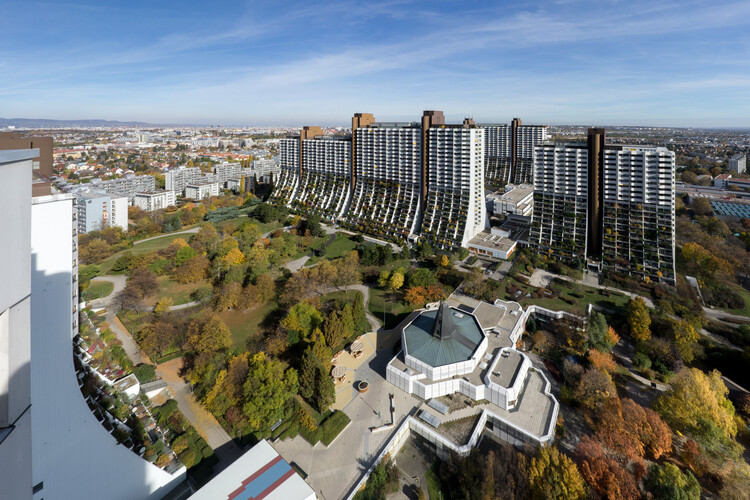
The first Olympic village was built for the 1924 Summer Games in Paris. Before this, athletes stayed in hotels, hostels, schools, headquarters, and even on the ships that brought them to the host cities. Pierre de Coubertin, co-founder of the International Olympic Committee (IOC), proposed the idea of an Olympic village. He realized it would be more cost-effective to house athletes in temporary structures rather than hotels. He believed the village would also create a sense of community among the international competitors.
Celebrating groundbreaking projects that showcase sustainable construction practices, this year’s winners of the Holcim Foundation for Sustainable Construction 2023 highlight innovative approaches across various scales, forms, geographies, and forms. The Gold Prize for North America was awarded to Partisans Architects and Well-Grounded Real Estate with their high-tech, low-cost modular housing solution for urban living in Toronto. In a video interview for ArchDaily, Jonathan Diamond from Well-Grounded Real Estate discusses the development of the winning project and the forces that shaped it.
When Brenda Mendoza told an NPR reporter about her commute to work, she became the face of the housing crisis in Los Angeles today. Mendoza, a uniform attendant at a Marriott hotel, was living with her family in an apartment in Koreatown, where she had grown up, 10 minutes from her job. The landlord raised the rent, so she moved to a less costly place in Downey. When that rent also rose out of reach, she moved to Apple Valley, and now gets up at 3:30 a.m. to drive 100 miles to her job, dropping off her husband and son at their jobs on the way. She did not move to Apple Valley to invest in a house she could love. She simply found an equally unstable, but slightly more affordable, rental hours from her workplace.
By the time I was 17 years old, I had moved 11 times. Because of my own experience relocating from one place to another, I’ve spent the better part of the last several decades focused on making sure that everyone has a place to call home, that everyone enjoys the human right to housing. But it was not until my time at Enterprise Community Partners, a nonprofit focused on community development and affordable housing, that I realized the methods and materials we employ to realize that human right matter.
One of the principles of comedy is that you “punch up.” If you have to make fun of someone or something, make sure it’s more prominent than you, and deserving. You can’t get much higher than Santa Clara, California, and you can’t get much more deserving. Santa Clara is, arguably, the city at the heart of Silicon Valley, a globally famous urban region that is so ill-defined as to deny its own existence. Those ranch houses and corporate headquarters represent a distinctly 21st-century brand of power. And a distinctly 20th-century brand of urbanism.
Ice caps are rapidly receding; one of America’s two political parties is actively undermining federal authority; despite new materials and additive manufacturing, most houses constructed today are built much as they were several generations ago; the pathological suburbanization of the nation continues unabated. In the face of this and more, it seems, “the center cannot hold.” Such were several of the issues that prompted Keith Krumwiede, a soon-to-be fellow at the American Academy in Rome (AAR) at the time, to argue in 2017 that if a single detached house for every family is at the core of “The American Dream,” then we need a new dream.
Architect and planner Peter Calthorpe has a new book coming out, Ending Global Sprawl: Urban Standards for Sustainable Resilient Development. But when I called Calthorpe last week to interview him about it, he was more interested in talking about something else: last year’s passage in California of AB 2011, the so-called “Affordable Housing and High Road Jobs Act of 2022.” That’s legislation intended to significantly increase housing production by allowing construction on commercially zoned property. Calthorpe had an active hand in crafting many aspects of the bill, which is scheduled to go into effect on July 1.
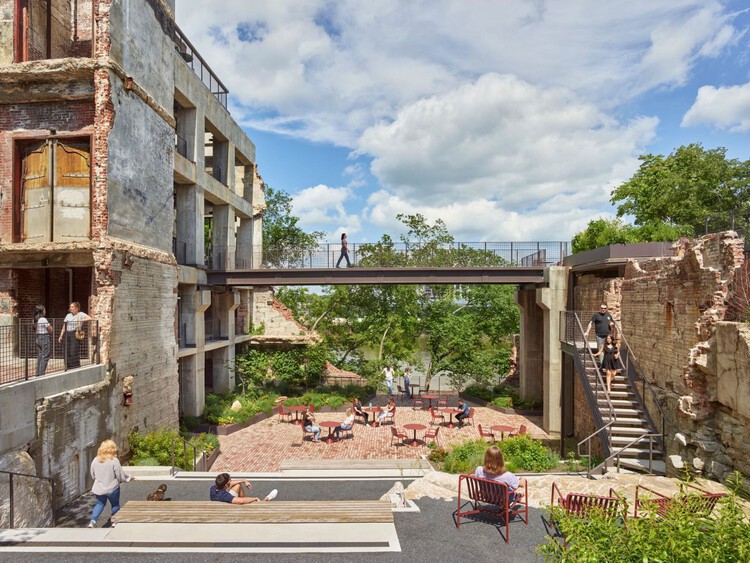
Domino Refinery. Image Courtesy of Practice for Architecture and Urbanism (PAU)
Adaam James Levin-Areddy and Vanessa M. Quirk, the hosts and producers of the Uncertain Things podcast, interview people from diverse backgrounds and a wide range of expertise to ask the question: “now what? What is happening and how did we get here?”. In this episode, they talk with urbanist, architect, and professor Vishaan Chakrabarti, founder of Practice for Architecture and Urbanism, to seek to understand how the cities got so expensive. Together they delve into the affordability crisis, the detrimental effect of progress, and what we need to do to have better cities.
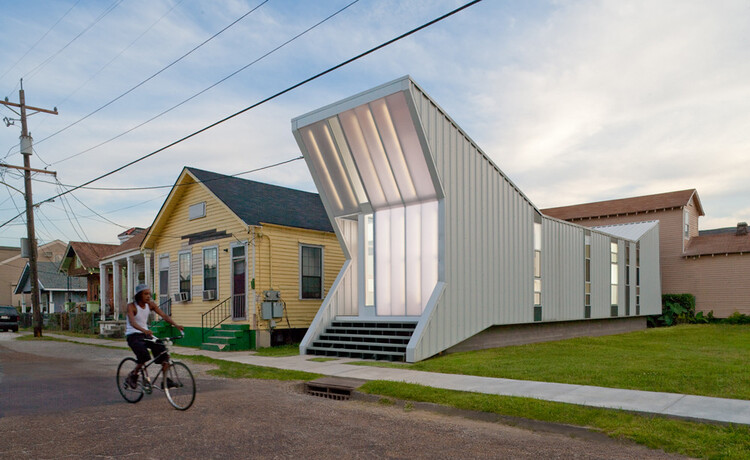
3609-13 S. Saratoga Starter Home*, completed in 2019 by OJT. Image Courtesy of Office of Jonathan Tate
Architect Jonathan Tate was living and working in Memphis, Tennessee, when Hurricane Katrina ensnared New Orleans in 2005. Instinctively drawn to the Big Easy, he later moved there for the opportunity to observe the reconstruction effort and investigate architecture’s role in it.
Major cities are facing major crises. The United Nations estimates that by 2050, almost one billion people with disabilities will live in cities, representing 15% of total city dwellers. With urban landscapes awash with inaccessible subways, shops, and bathrooms, the UN has declared that poor accessibility represents a major challenge for cities. At the same time, most cities around the world are struggling to provide safe, respectable, affordable housing for their citizens, with rent accounting for more than 50% of some incomes. The World Economic Forum recently warned that “a world in which only a few can afford housing is not sustainable.”
https://www.archdaily.com/923441/10-technologies-for-accessible-affordable-citiesNiall Patrick Walsh
It may shock some people to hear this, but architecture is not urban planning. It is not transportation planning, sociology, political science, or critical geography. However, architecture, new-build apartment architecture specifically, has become a social media scapegoat for today’s urban housing crisis: escalating developer-driven gentrification.
Out of my own curiosity, I searched several academic databases for research that successfully correlates the architectural aesthetic of new build apartments with gentrification. While many writers and denizens of social media really want to blame today’s bland, boxy, cladding-driven style of multifamily urban housing for gentrification, I’m afraid the research isn’t there. In fact, one study featured in a paper on neighborhood early warning systems for gentrification cites historic architecture as one of five predictors of gentrification in the DC area.
In recent months, legislators in California have begun a concerted effort to use state law to address the state’s ongoing housing crisis. The moves come amid worsening regional inequality that has pushed housing affordability outside the reach of many populations. Facing mounting pressure from a growing cohort of pro-housing YIMBY activists and increasingly grim economic and social impacts—including a sharp increase in the number of rent-burdened households and the number of individuals and families experiencing homelessness—state-level legislators have begun to take action where municipal leaders have thus far stopped short.
John King has covered the urban design beat for the San Francisco Chronicle for 17 years now. That’s long enough, in other words, to have written about a handful of economic booms and subsequent busts. But the Bay Area is a unique beast. No other region in the country has been as thoroughly transformed by the digital revolution. And it’s a transformation that continues to this day. Shortly before the New Year, I spoke to King about the fate of San Francisco, the Oakland renaissance, and his 4-month long fellowship in Washington, DC.