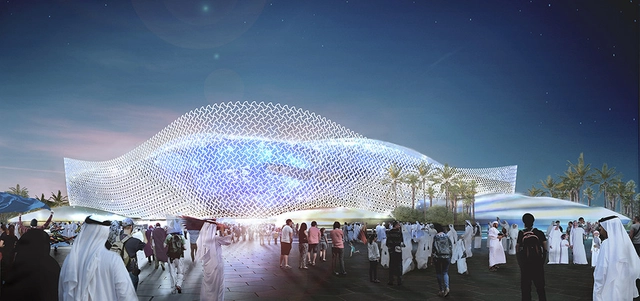
Qatar's Supreme Committee for Delivery & Legacy (SC) has unveiled the fifth proposed venue planned for the 2022 FIFA World Cup, this time designed by London-based Pattern Architects. Titled "Al Rayyan Stadium," the 40,000-seat Qatari-inspired structure will be built on the site of the former Ahmed Bin Ali Stadium, of which 90 percent of its materials generated from demolition are expected to be re-used for either public art projects or on the new stadium.
"We know that buildings are destroying the environment as well as building the environment." In the latest Archiculture extras interview from Arbuckle Industries, architect and CIO of AECOM Joe Brown talks about the changes and challenges he has witnessed in the architecture industry. He discusses the dynamics of being part of a multinational firm and the effects it has on design, as well as the political notions embedded in the field. Additionally, Brown touches on the problems associated with the built environment and how they are inspiring change in the next generation of designers.
Courtesy of City of Milwaukee Department of City Development
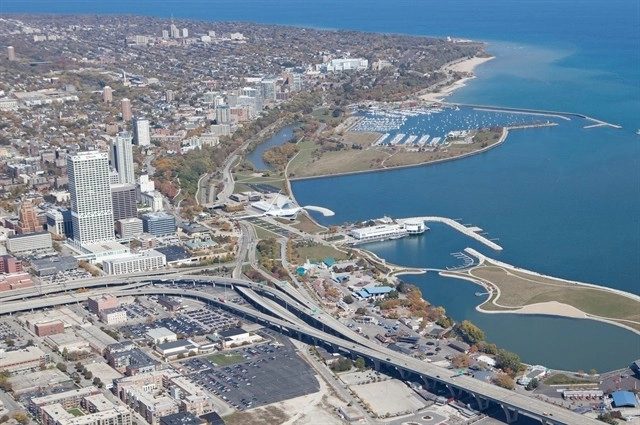
The City of Milwaukee has announced the four finalists in a competition to redevelop the city's lakefront, naming OJB, James Corner Field Operations, multidisciplinary firm AECOM, and Wisconsin-based consulting firm GRAEF. Selected from 24 entrants, the shortlisted teams are competing for a chance to revitalize the Milwaukee lakefront as part of the Lakefront Gateway Project masterplan. Each firm must now submit specific proposals for the Plaza project in time for a June deadline, after which all proposals will be made available to the public and judged by a selection committee. Learn more about the project after the break.
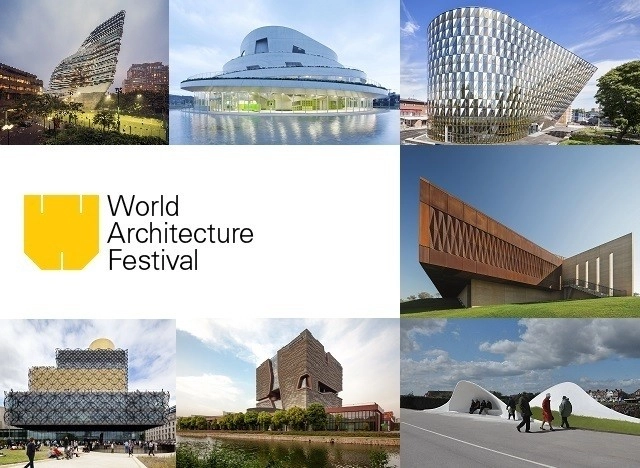
The 2014 World Architecture Festival (WAF) officially kicked off in Singapore today, and the first group of award winners were unveiled, with Vo Trong Nghia Architects and AECOM among the 16 announced winners.
The winners of the remaining 11 categories will be announced tomorrow, and the festival will culminate on Friday with the World Building of the Year and Future Project of the Year awards, which will be selected by the festival’s ‘super-jury’: Richard Rogers, Rocco Yim, Julie Eizenberg, Enric Ruiz Geli and Peter Rich.
This year’s festival is taking place from October 1-3, featuring three days of talks, key-note speakers and networking opportunities. With “Architects and the City” as the overarching theme for this year’s main conference sessions, the festival will focus on the contributions architects can make to cities and how they affect – and are affected by – politics, infrastructure, planning communities and technology.
Click here to view the full shortlist and read on after the break for the full list of WAF's day 1 winners.
The use of fiberglass allowed for the pavilion to be thin and brittle, but also had the strength to span a large face. The pigment made it fire retardant. Image Courtesy of Louis Webb Bird/AECOM
Settled neatly in the quiet hum of London's Kensington Gardens rests Smiljan Radić's 2014 Serpentine Pavilion, an ethereal mass of carefully moulded fiberglass punctuated by precisely cut openings. Radić desired a structure that appears thin and brittle, yet was strong enough to support itself, and his affection for the rudimental layered qualities of papier-mâché - his maquette medium of choice - inspired the use of fiberglass by AECOM, who engineered Radić's wild ideas. In this article, originally published by Metropolis Magazine as "Paper-Thin Walls," an AECOM engineer explains their solution. Read on after the break to find out more.
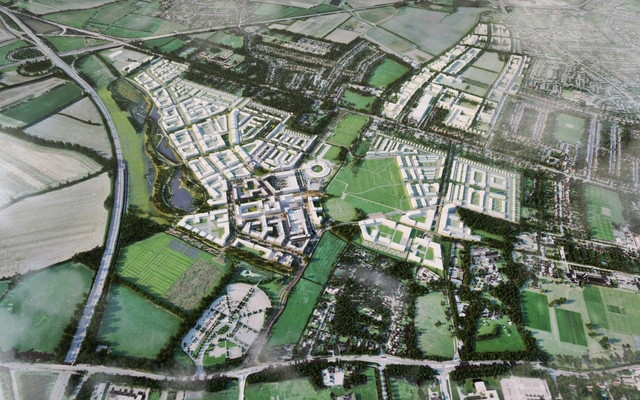
Masterplan. Image Courtesy of North West Cambridge
Earlier this year the University of Cambridge announced an ambitious new urban extension in the north west of the city in order to create a framework for a new district centered on a mixed academic and urban community. The development, planned by Aecom, has aspirations of achieving urban space that is well balanced, permanent and sustainable. Containing 1,500 homes for its key workers, accommodation for 2,000 postgraduate students, 1,500 homes for sale, 100,000 square metres of research facilities and a local centre with a primary school, community centre, health centre, supermarket, hotel and shops, proposals from Mecanoo and MUMA are now entering the planning phase. Future lots are expected to be filled by the likes of Stanton Williams, Alison Brooks Architects and by Cottrell and Vermeulen working with Sarah Wigglesworth and AOC.
As part of their annual research for the World Architecture Top 100, Building Design (BD) has compiled a list of which architects are most admired by their colleagues from across the globe. Last year's results were somewhat predictable, with Foster + Partners leading and Renzo Piano's Building Workshop and Herzog + de Meuron close behind. According to BD, "this year saw a trend towards more commercial names."
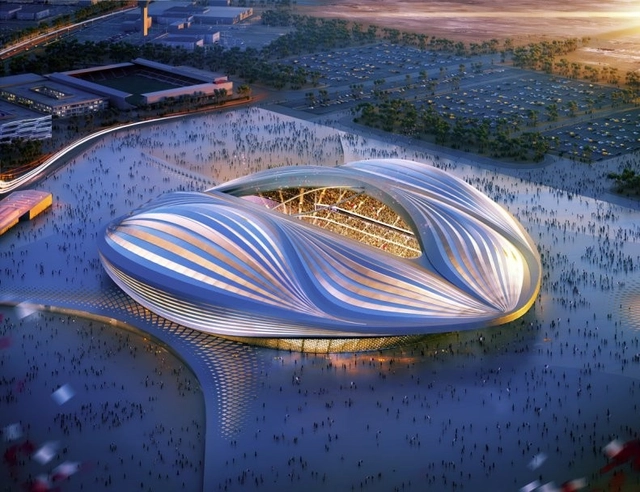
New details have emerged on Zaha Hadid Architects and AECOM’s 2022 FIFA World Cup stadium in Qatar. Scheduled to begin construction in late 2014, the 40,000-seat venue pulls inspiration from a local fishing boat - the Arabian dhow - to influence its overall design.
The Department of State's Bureau of Overseas Buildings Operations (OBO) has shortlisted three design teams for the new U.S. Embassy in Beirut, Lebanon for Stage 3 evaluation. The project is part of OBO’s Excellence in Diplomatic Facilities initiative in which seeks to provide safe and functional facilities that represent the best in American architecture.
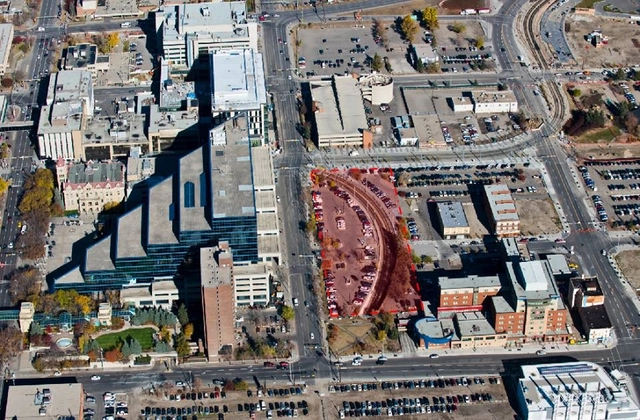
Four shortlisted teams have been asked to design proposals for a new central library in the Canadian city of Calgary. Selected from 38 submissions, the competing teams of local and international architects will harness the power of platemaking to envision a 280,000 square-foot “landmark” for the East Village Calgary.
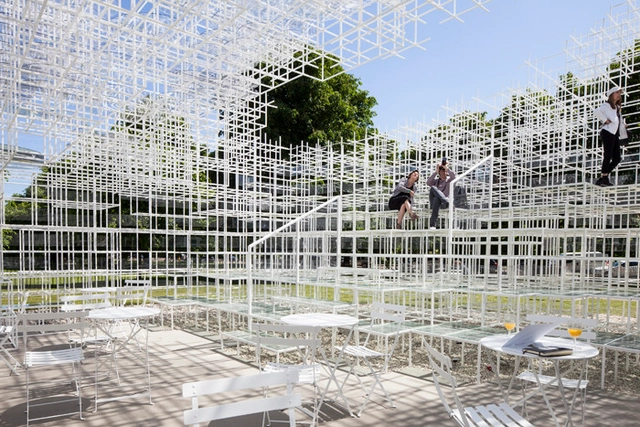
AECOM has published an article detailing the way they helped engineer this year’s Serpentive Pavilion. “A typical building might have between 1-2,000 such steel supports, and it’s estimated that the Eiffel Tower has just over 18,000 steel struts, but the Serpentine’s new pavilion has over 26,000 – each one working hard to lend form and strength…The level of detail nearly brought AECOM’s computer systems to a halt. In fact a system upgrade was required to manage the information.” On AECOM’s website you can read more about the challenges of lighting and fireproofing Fujimoto's complicated structure.
Building Design has released their annual ranking, The WA100, of the world’s largest architecture firms. Coming in the #1 spot (up from #2 last year) is Nikken Sekkei (ranked #4) were the top 3 earners of 2012, each making over $400 million US Dollars in Fee Income.
Of the top 10 largest firms, 5 are based in North America, 3 in Asia, and 1 in the UK (Aedas, which ranked 5th, is dually based in both China and the UK). A similar trend is also evident in the list as a whole - as you can see from the graphic we compiled (after the break), US firms remain the biggest employers of architects and the highest-earners. Although the UK represents about half the number of employed architects as the US, UK firms earned almost as much in fee income.
Interestingly, the only firms to grace both the Top 10 list and Building Design's survey of the Top 5 Most Admired Firms of 2012, were Gensler (#2 Largest; #4 Most Admired) and Foster & Partners (#10 Largest; #1 Most Admired). Rogers Stirk Harbour & Partners, ranked as the 45th largest firm).
See our graphic and the full list of the world’s largest firms, after the break...
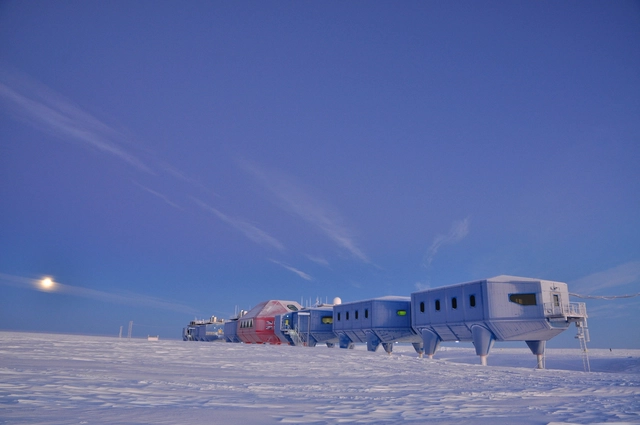
This bizarre looking creature is the world's first relocatable research facility. Located on the Brunt Ice Shelf in Antarctica, the Halley VI Research Station was officially opened on Tuesday, more than one hundred years after Captain Robert Falcon Scott’s Antarctic expeditions.
More on the building and its uncommon features after the break...
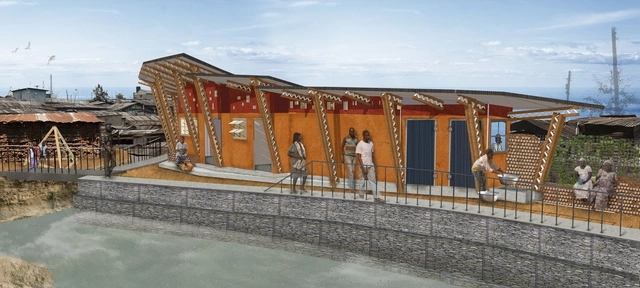
AECOM has announced 'Unslumming Kibera' as winner of the fourth annual Urban SOS competition.
The student competition received submissions from 118 universities in 41 countries. Three projects were shortlisted for a presentation to a panel of judges in New York on Jan 16.
Read about the finalists and their projects after the break
The Golden State Warriors recently announced that Snøhetta and AECOM have been selected as the architecture team to design the Warriors’ new sports and entertainment complex on the San Francisco waterfront. Currently in the final stages of the agreement, the new stadium will be a true centerpiece in hosting the Bay Area’s NBA basketball team, as well as provide a great venue concerts, cultural events and conventions, which are all prominent events the city currently cannot accommodate. More images of the architects’ design can be viewed after the break.
Kallang River Bishan Park, Singapore, designed by Ramboll Studio Dreiseitl, has won the ‘Landscape of the Year’ Award and Msheireb – Heart of Doha, Qatar, designed by AECOM, has won the ‘Future Project of the Year’ Award.
Find out more about the awarded projects after the break.
The Los Angeles International Airport (LAX), one of the world’s busiest airports, is undergoing a facelift. As part of a multi-phase project, AECOM is working with Los Angeles World Airports (LAWA) to create a sensational experience for the 61 million passengers who travel in and out of LAX annually. The project aspires to unify the disparate components of the airport’s central terminal area (CTA) and insert grand gestures that provide architectural hierarchy — yielding LAX as exciting as the city in which it resides. Through an artful integration of lighting, graphics, and architecture, the design draws from key existing airport elements such as the 1960s architecture of the Theme Building and the 60-foot polychromatic light pylons that define the airport’s entry.
AECOM recently shared with us their 4th annual Urban SOS student competition brief. Created to engage students in urban planning and design, architecture, landscape architecture, environmental restoration, and engineering and allow them to propose solutions for the issues that are confronting modern cities, and viewed by established professionals in their field. The theme for this current year is Frontiers. AECOM is seeking proposals that engage urban sites that are currently facing chronic liveability challenges that are largely the result of a city’s location on a natural, political, cultural or economic border. Submitted proposals should fall under at least one of the following criteria; “On a political border,” Ports and trade,” Migration and population shift,” Transnational destinations,” and “Shifting geo-political conditions.” The winners have the potential for their project to be engaged by a local organization to assist in advancing the project.


.jpg?1408972517&format=webp&width=640&height=580)