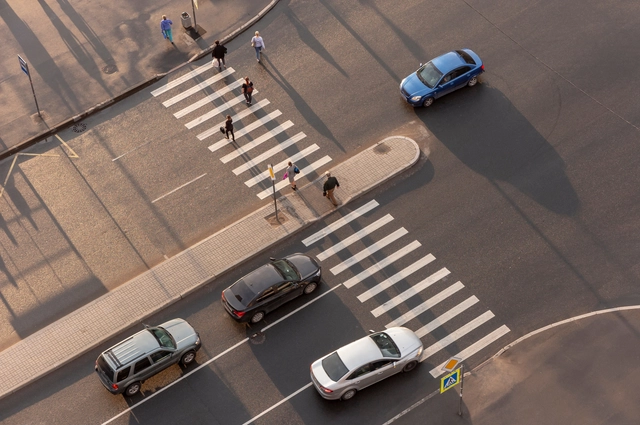
The fabric of our cities is shaped by millions of small decisions and adaptations, many of which have become integral to our experience. Nowadays taken for granted, some of these elements were revolutionary at the time of their implementation. One such element is the curb cut, the small ramp grading down the sidewalk to connect it to the adjoining street, allowing wheelchair users and people with motor disabilities to easily move onto and off the sidewalk. This seemingly small adaptation has proven to be unexpectedly useful for a wider range of people, including parents with strollers, cyclists, delivery workers, etc. Consequently, it lends its name to a wider phenomenon, the “curb cut effect”, where accommodations and improvements made for a minority end up benefiting a much larger population in expected and unexpected ways.
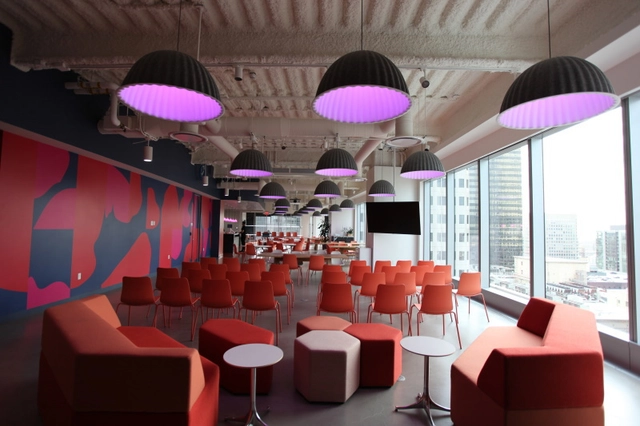
How do we create buildings that use energy efficiently? Traditionally, efforts to green the built environment have centered on the physical infrastructure, often overlooking the relationships between people and space. The emergence of the technological era has ushered in "Smart Buildings." that employ machine learning and automation. These innovative structures are designed to operate with impressive energy efficiency, however, they are largely disconnected from their occupants. What if buildings could be made smarter and more sustainable by engaging with their occupants?
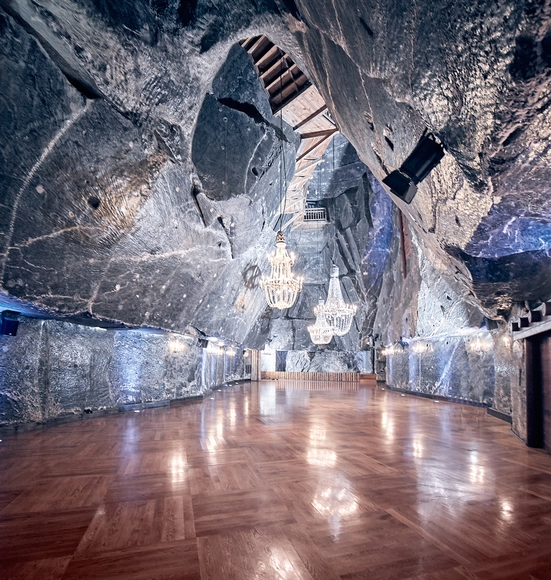
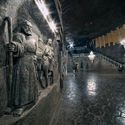
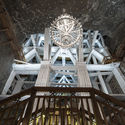
The Republic of Poland boasts diverse geographical territories and cultural tribes that span thousands of years. Its cities and towns reflect a whole spectrum of styles, from Romanesque architecture to Gothic Revival and postmodernist residential and commercial structures. In addition to its unique topography and rich urban fabric, the country houses 17 UNESCO World Heritage Sites. One site, however, has stood out from the rest and given the country a royal status. Tucked beneath the Malinowka stream, just outside the southern city of Krakow, is one of the world's oldest and largest hand-chiseled underground mines that has been transformed into an expansive, all-inclusive complex. From a naturally-healing health center to a secluded church and an underground bungee jumping platform, this colossal adaptive reuse project is the Wieliczka Salt Mine.
Amidst the current wave of architectural globalization, the art of crafting designs attuned to specific contexts is fading. This concern is especially significant in countries in crisis, such as Ukraine, where the built environment's history is being eroded by war. In these conditions, the contribution of local architects with an innate grasp of the country's cultural nuances becomes imperative. Leading the charge in the rebuilding of Ukraine is prototype, a pioneering practice that challenges architectural conventions to push the country towards a promising future.
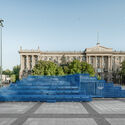
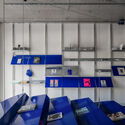
Recognizing their forward-looking vision, ArchDaily has featured prototype as part of the 2023 New Practices, a global annual survey. prototype's outlook on the future of architecture aligns with responsible design that addresses the environmental impact of construction and marries contextual and specific considerations for each project. Their recent accomplishments include the bookstore Readellion, and Ukrainian-Danish Youth House, epitomizing prototype's recurring design principles of mobility, adaptability, dynamic levels, and change of scenarios.
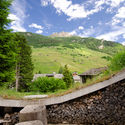
The rustic village of Vals in the Swiss Alps is one of the country’s most picturesque areas, located at an altitude of 1250 meters above sea level with numerous exceptional projects. The main square is surrounded by original Vals houses roofed with stone tiles made of Vals quartzite. Throughout the years, the village maintained its authentic residential and rural typology, making sure that its agriculture and rural fabric remained intact. Perhaps the most powerful natural resource of the Vals Valley, one that has nurtured its landscape and wilderness, is the water. For millions of years, ice and rain have forged the deeply-cut topography, and provided the village with a 30-degree thermal source, the only one in the Grisons Canton which springs straight from the ground.
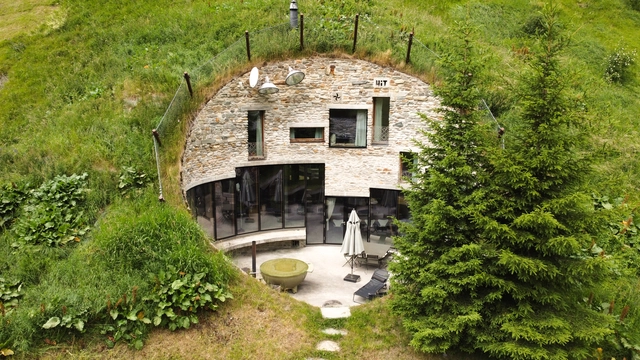
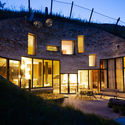
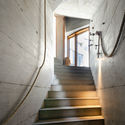
One of the most notable architectures in Vals is The Thermal Spa designed by 2009 Pritzker LaureatePeter Zumthor. The secluded structure is built with local quartzite, a stone that blends the elements of water and stone to create “the perfect wellness experience”. Another iconic architecture tucked within the mountains of Vals takes advantage of the local material, structural typology, and topography, a project that leaves the original landscape intact and subtly intervenes to create a one-of-a-kind award-winning vacation home; The Villa Vals.
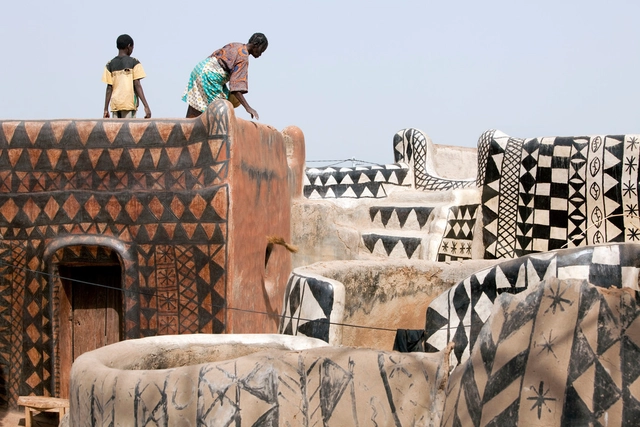
In the south of Burkina Faso, sharing borders with the northern environs of Ghana is Tiébélé; a small village exhibiting fractal patterns of circular and rectangular buildings, housing one of the oldest ethnic groups in West Africa; the Kassena tribe. With vernacular houses dating back to the 15th century, the village’s buildings strike a distinctive character through its symbol-laden painted walls. It is an architecture of wall decoration where the community uses their building envelope as a canvas for geometric shapes and symbols of local folklore, expressing the culture’s history and unique heritage. This architecture is the product of a unique form of communal collaboration, where all men and women in the community are tasked with contributing to the construction and finishing of any new house. This practice serves as a transmission point for Kassena culture across generations.
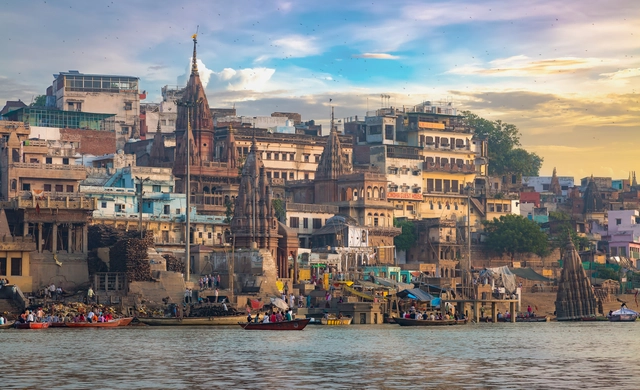
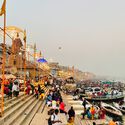
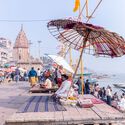
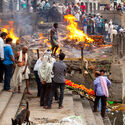
Water, with its religious connotations as a symbol of purification and life, holds great significance in many cultures. Nowhere is this respect for water more evident than in India, a country that reveres its rivers as holy. Water bodies serve as a testament to the veneration and use of water in religious rituals, embodying cultural heritage as public spaces, ritual sites, and places for cremation. Central to daily life in India, water and water architecture intertwine spirituality, and cultural traditions, offering a glimpse into the rich traditions of communities.
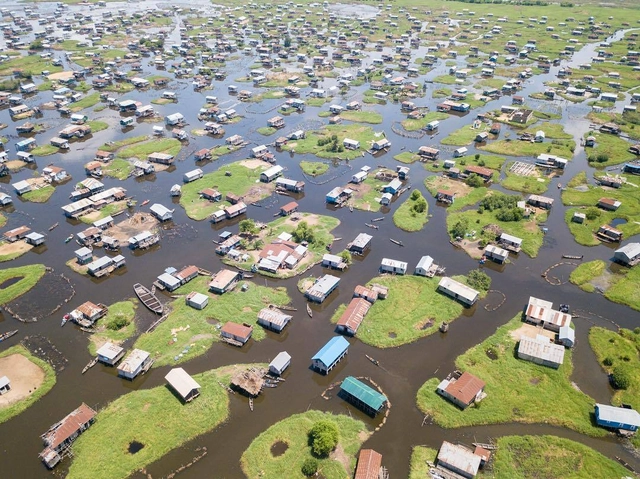
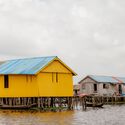
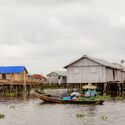
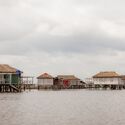
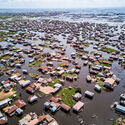
Located in the southern part of Benin-Republic, near the port city of Cotonou, is Ganvie; the largest floating village in Africa. It is situated in the middle of Lake Nokoué and is characterized by colorful wooden stilt houses arranged around artificial islands dating back to the 17th century.
This unique architecture was born from the history of the Tofinu tribe, who built it as a refuge from the slave trade. It has been sustained over time by their communal socio-ecological aquacultural systems and has now become a global tourist attraction for the country. The village was recognized as a world cultural heritage site by UNESCO in 1996, attracting up to 10,000 visitors annually. However, this influx of tourists has impacted the locals and their socio-ecological practices that sustain this water environment. Aquaculture has become increasingly challenging to maintain as the village struggles to retain its economic foundation. Additionally, traditional building practices have given way to modern ones, and the village faces ongoing environmental challenges. Nevertheless, the unique lifestyle of the locals around the water still offers many lessons for the design of prospective floating cities.
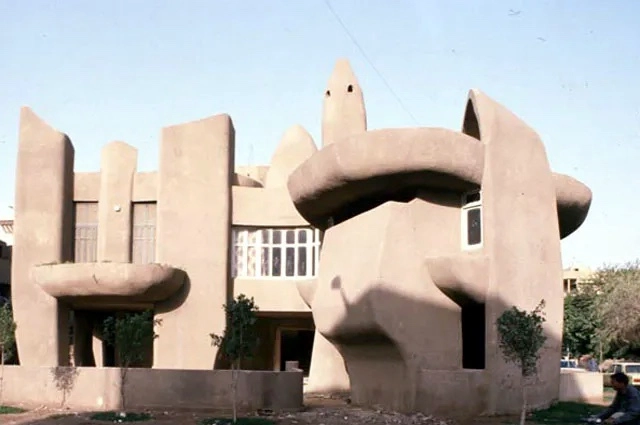
Villa Badran. Image Courtesy of Rare Books and Special Collections Library American University in Cairo
While Egyptian architects were exercising their understanding of modernism in the urban fabric in the 1970s, a “chubby rebellion” in the form of Villa Badran defied the standardized curvilinear forms and rigid geometry. Gamal Bakry dived deep into his imagination to construct this unique piece of architecture that still stands as part of the city of Cairo today. With curving and free-flowing facades, Villa Badran drew inspiration from natural forms. In an attempt to create a living space that was more natural in its essence, the bubbly intervention puts in place a monolithic composition that hosts a two-story detached home for an Egyptian family.
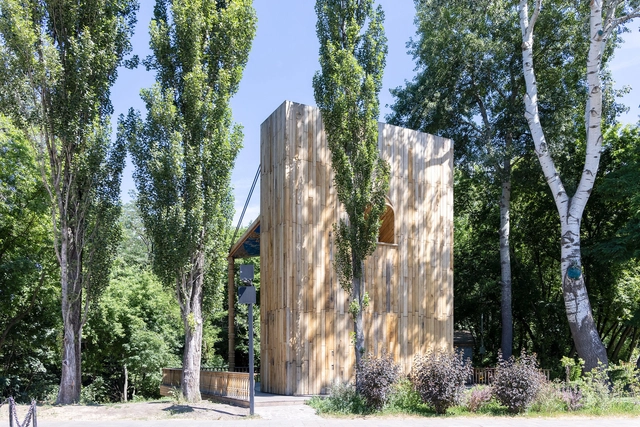
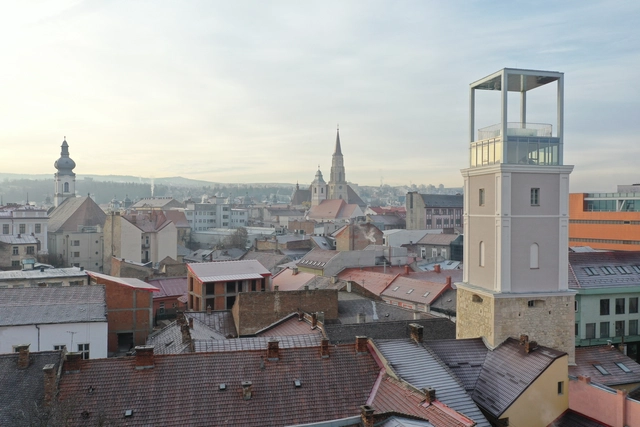
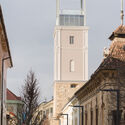
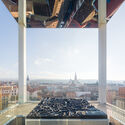
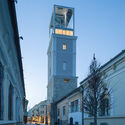
The skyline of Cluj-Napoca, a city located in the Transylvania region of Romania, is defined by a mosaic of historical and modern buildings, giving the city a unique and diverse appearance. Among the visible landmarks, the Firefighters' Tower, or "Turnul Pompierilor" in Romanian, stands out for its mixture of styles, from Medieval stonework to Baroque detailing and contemporary interventions. Despite it being a relatively small monument, with a ground floor area of just under 50 square meters, the tower holds layers of history narrating the evolution of its neighborhood and city, from its beginnings during Medieval times until the present day. Left derelict in recent years, a new intervention by Vlad Sebastian Rusu B.I.A and Octav Silviu Olănescu B.I.A. aims to restore the tower's position as a repository of local history and an attractive space for residents and visitors alike. This article explores the story behind the Firefighters' Tower both narratively and visually, through the lens of Cosmin Dragomir.
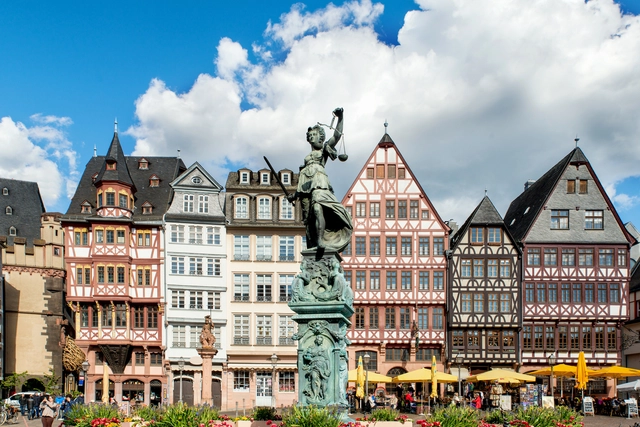
The architectural identity and urban fabric of the old city of Frankfurt has grown organically over centuries. Shops, bars, and craftsmen's workshops have always attracted a lot of visitors to the area between the Cathedral, or "Dom" in German, and the Römer, the main square in the center of Frankfurt. Historically, the area included buildings of many different styles, such as Gothic, Renaissance, Baroque and Classical architecture, which most locals only knew about from black and white photographs, the town’s famous miniature model in the historic museum, or stories passed down through generations.
However, the quarter’s picturesque buildings and alleyways, were almost entirely destroyed during the Second World War, but the collaborative work of the community and local authorities have made it seem as though time before the war stood still. The entire quarter was reconstructed exactly as its original plans, bringing Frankfurt’s medieval history back to life and creating what is now known as the Neue Alstadt, a project considered by some to be controversial.
Seoul, similar to numerous large cities across the globe, are characterized by land scarcity, overpopulation, staggering real estate prices, and urban segregation. These living conditions forced architects and urban planners to pursue alternatives, (re)introducing new models of co-living, low-cost housing in suburban areas, and mixed-use developments. However, proximity to work, educational, commercial, health facilities, and public transportation, as well as optimized infrastructure and better governance have sustained living within compact city boundaries desirable. Tucked within the busy streets of Gangseo-gu, Five Story House by stpmj is a project that explores the relationship between single-family housing and dense urban contexts beyond investment value and contextual constraints.
Architects Sevince Bayrak and Oral Göktaş from SO? Architecture&Ideas were attracted to the idea of having the opportunity to escape the urban bustle of Istanbul into a natural setting, and in 2017, they designed and built the Cabin on the Border. Since its completion, the project has undergone several changes, and the dwelling experience prompted the architects to re-evaluate their initial ideas and assumptions and change how they see the tiny house typology. Five years after the project's design, the architects share what they've learned from living in a tiny house, providing valuable insight for the design of such projects.
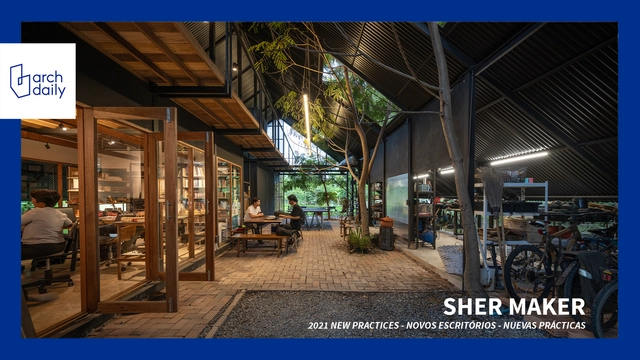
The culturally-significant town of Chiang Mai, northern Thailand, is an area of rich history and religion, preserving traces of walls, moats, and temples from a past that dates back to the 13th century. Between its lush trees and scenic landscapes sits architectural design studioSher Maker's workshop and office, a locally-sourced space that accentuates the process and meaning behind building construction. Their workspace is no different than their portfolio; having an interest in the origins of architectural formations, the context of local materials and technologies, as well as the atmosphere that surrounds the building both physically and atmospherically, the team translated their design approach to create their own working space.
Babyn Yar Synagogue by Manuel Herz, image by Iwan Baan. Image Courtesy of BYHMC
Babyn Yar, a ravine in the Ukrainian capital Kyiv, witnessed the killing of more than 33,000 Jewish men, women, and children, on September 29 and 30, 1941. The site of one of the largest single massacres perpetrated by occupying German troops against Jews during World War II, Babyn Yar became a symbol of the Holocaust by Bullets.
While the main tragic event took place in 1941, throughout the occupation, the site was used as a killing location by the German forces. In fact, it is reported that 70 to 100 000 people lost their lives in Babyn Yar. With no architecture to the tragedy and only a remaining “broken” landscape, people struggled with achieving memorialization and public recognition.


























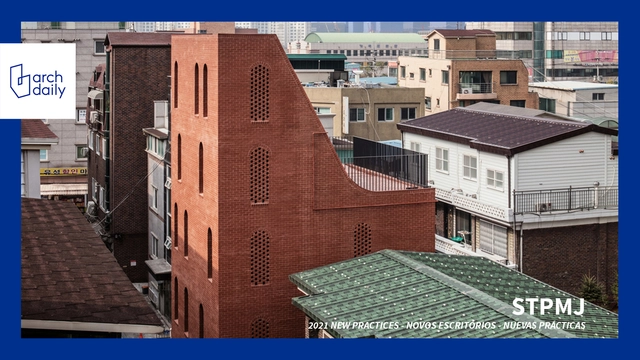
.jpg?1656064406 "© Bae Jihun")


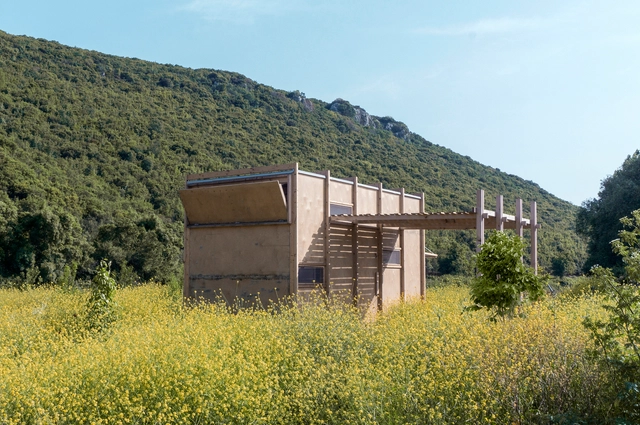


.jpg?1646659724 "Courtesy of Sher Maker")