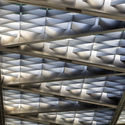
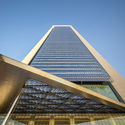
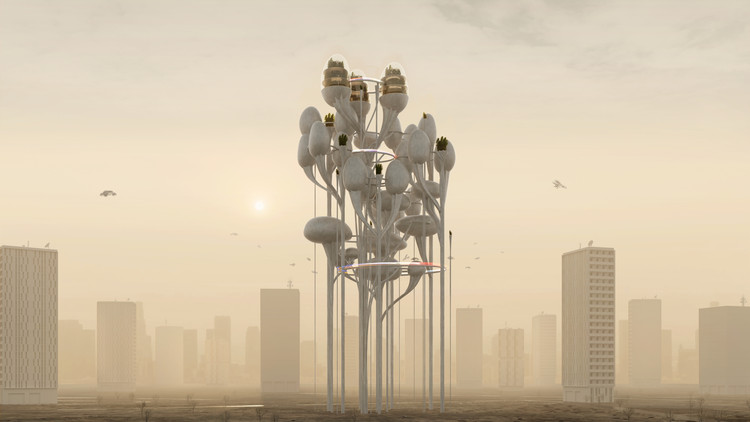
Force Majeure - Futura. Image Courtesy of Jeanne Schultz Design Studio
Putting together competition entries from all around the world, this week’s curated feature for Best Unbuilt Architecture showcases inspiring approaches and concepts. Submitted by our readers, the selection highlights uncommon proposals, part of international contests. While some are winning projects, others received honorable mentions.
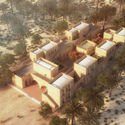
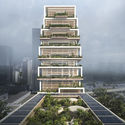
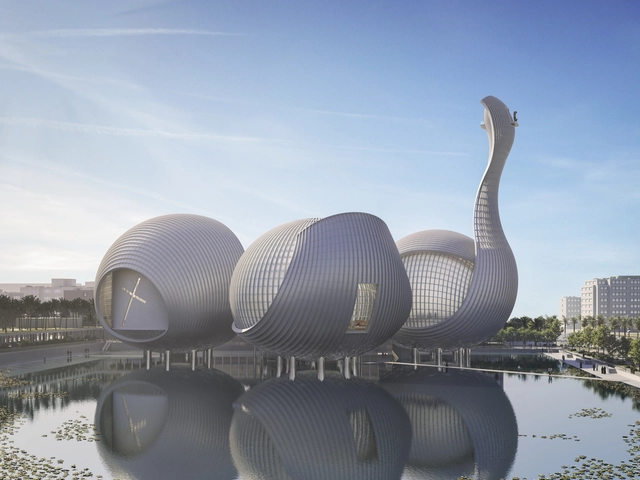
Serie imagines stacked timber pavilion-like offices, Schlaich Bergermann Partner, LAVA, and Latz + Partner design new pedestrian and cycle bridge over the Neckar River in Heidelberg, Germany and Aidia Studio create an Oculus in the Emirati desert. Other competition entries include a landscaped avenue by ZXD Architects in Hangzhou, a community school in Egypt by Hand Over, a winning pavilion for the Singapore’s Archifest 2020 by ADDP Architects and OWIU Design Studio; and a Baha’i House of Worship by SpaceMatters in India.
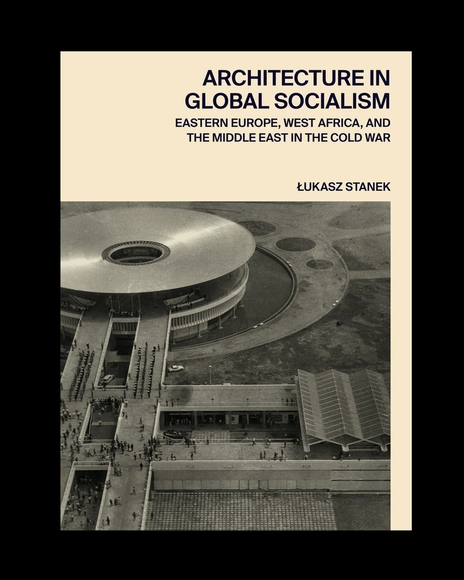
Cover of Architecture in Global Socialism by Łukasz Stanek, Princeton University Press, 2020.
In the course of the Cold War, architects, planners, and construction companies from socialist Eastern Europe engaged in a vibrant collaboration with those in West Africa and the Middle East in order to bring modernization to the developing world. Architecture in Global Socialism shows how their collaboration reshaped five cities in the Global South: Accra, Lagos, Baghdad, Abu Dhabi, and Kuwait City.
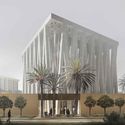
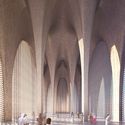
Safdie Architects’ entry for the Abrahamic Family House competition located in the Saadiyat Island Cultural District, in Abu Dhabi, brings together a mosque, a synagogue, and a church within a shared public park.
Between advances in autonomous technology and urban population growth, transit is being reimagined on the street and in the air. From public transit transforming to more user-centric mobility services, to rethinking regulatory and organizational status quos, advances in technology are expanding transit opportunities in cities around the world.
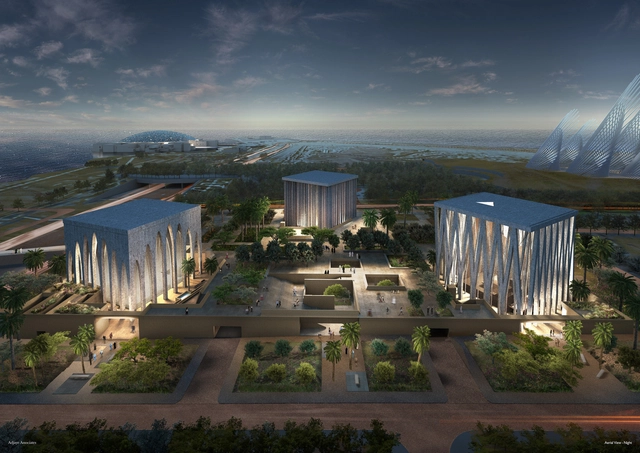
Adjaye Associates have been selected as the winners of The Abrahamic Family House competition, in Abu Dhabi. The landmark project, on Saadiyat Island, is a space where 3 religions will come together with the implementation of a mosque, a synagogue, and a church.
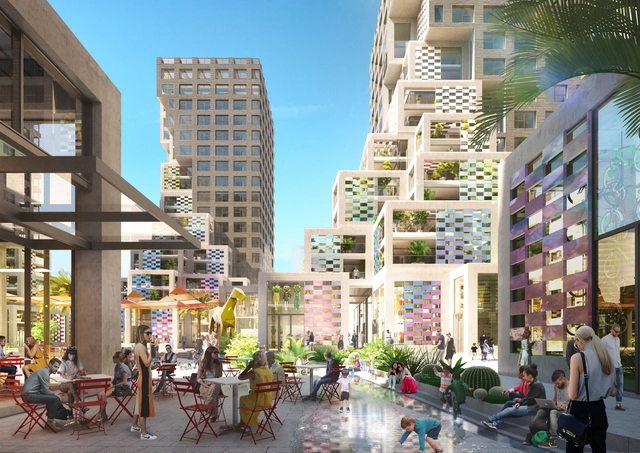
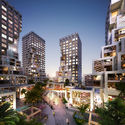
Pixel, the latest project from Dutch firm MVRDV, is now under construction and is expected to be completed by the end of 2021. The community based mixed-used development is the first project in Abu Dhabi’s Makers District, an innovative and cosmopolitan new area, on the Reem Island.
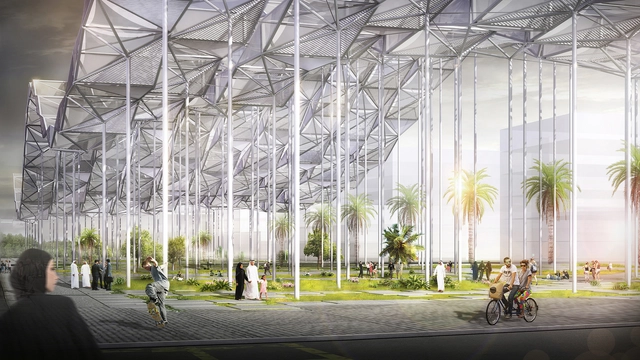
Chinese architect Mingfei Sun has designed an environmentally oriented urban hub for Masdar City, Abu Dhabi. Titled SURGE, its natural aesthetics and technological forwardness are intended to communicate a J.M.W. Turner-esque awe for the power of nature, making it an oasis of high aesthetic and ecological value.
https://www.archdaily.com/922010/surge-combines-high-aesthetics-with-environmentally-oriented-technologyLilly Cao
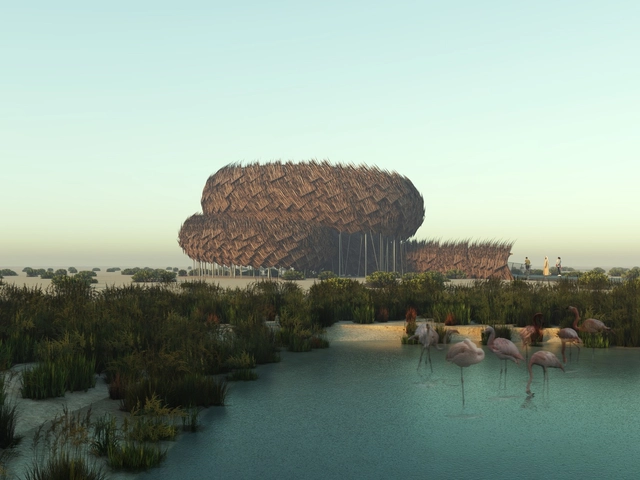
Bee Breeders has announced the winners of the Abu Dhabi Flamingo Observation Tower competition. Situated in the Al Wathba Reserve, 40 kilometers southeast of Abu Dhabi, the competition site oversees five square kilometers of wetlands, salt flats, and fossilized sands and dunes.
https://www.archdaily.com/921556/winning-designs-for-abu-dhabi-flamingo-observation-towerNiall Patrick Walsh
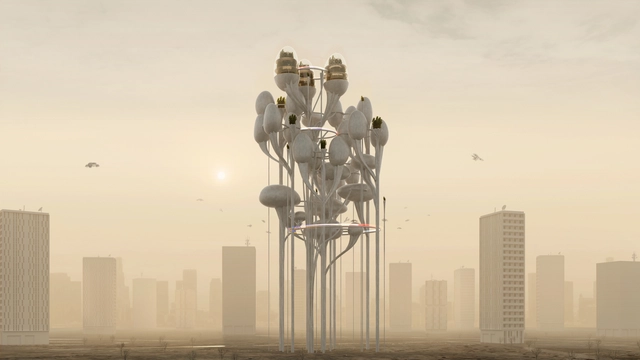
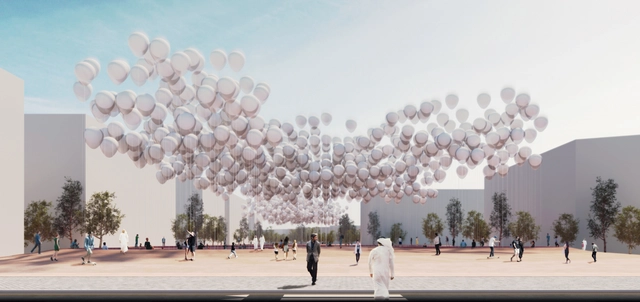
Superspace has designed a system of energy-harvesting balloons for Abu Dhabi. The project, titled “solarCLOUD” formed part of the LandArt generator competition and is intended as the city portal of Masdar City. The system consists of a group of solar balloons woven with solar fabric, creating a shaded park during the day while tracking and harvesting solar energy. At night, the system settles down to become a kinetic light art show.
https://www.archdaily.com/921366/superspace-designs-energy-harvesting-balloons-for-abu-dhabiNiall Patrick Walsh
Videos
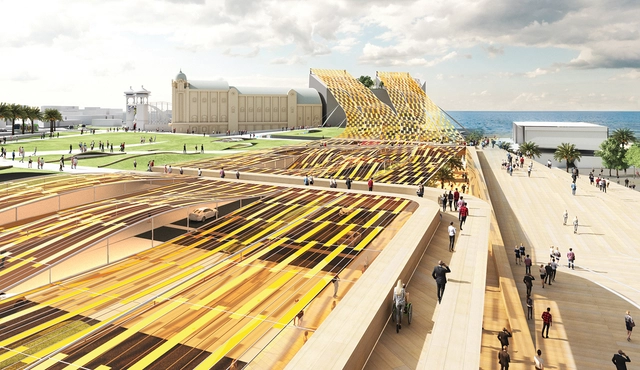
Light Up, by NH Architecture, Ark Resources, John Bahoric Design, and RMIT architecture students is the winner of the 2018 Land Art Generator Initiative design competition for Melbourne, and generates 2,220 MWh of clean energy.
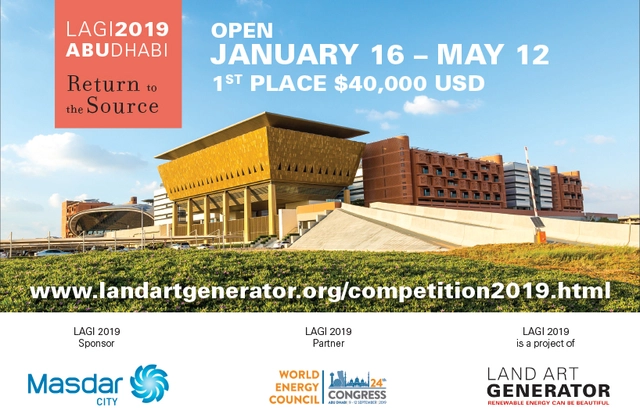
The LAGI 2019 competition offers designers and creatives the opportunity to re-imagine energy infrastructure and demonstrate the beauty of a 100% renewable world.
The LAGI 2019 design site is a landmark public park are within the Masdar City masterplan.
LAGI 2019—Return to the Source—invites you to create an iconic work of art for a landmark site within Masdar City, Abu Dhabi. Your artwork will use renewable energy technology as a medium of creative expression and will provide on-site energy production consistent with the master plan of the city.
The LAGI 2019 design site is a landmark public park are within the Masdar City masterplan.
Design a spectacular renewable energy landscape for Masdar City.
$40,000 First Place Prize
LAGI 2019—Return to the Source—invites you to create an iconic work of art for a landmark site within Masdar City, Abu Dhabi. Your artwork will use renewable energy technology as a medium of creative expression and will provide on-site energy production consistent with the master plan of the city.
The Council on Tall Buildings and Urban Habitat (CTBUH) has named the initial list of speakers for the 2018 Middle East Conference, Polycentric Cities: The Future of Vertical Urbanism. The list features men and women from some of the most influential businesses in the industry, such as HOK, Safdie Architects, Kohn Pederson Fox, Gensler, Perkins+Will, SOM and many more.
The conference will highlight a wide array of subjects and disciplines related to the conference theme, as well as other hot topics in the industry, including smart technologies, modular construction, 3D-printing buildings, net-zeroskyscrapers and much more.
Read on for more about Polycentric Cities and the initial list of speakers.
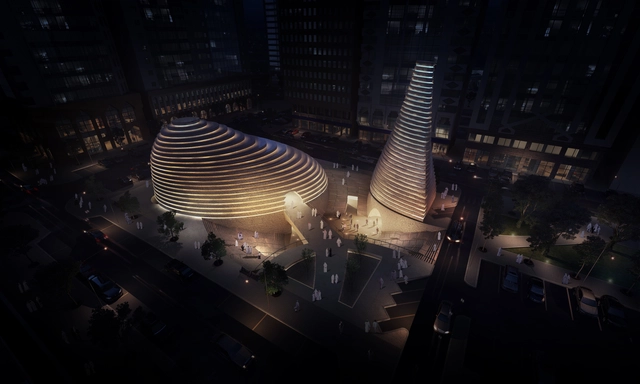
The Dubai-based firm, X-Architects, have found inspiration in the cultural and architectural heritage of Islam for their new design. The Revelation Mosque, a +2500 square meter project, aims to create a new "heart of the neighborhood" in Abu Dhabi, UAE. In creating a generous urban void among a towering context, the proposal offers an immersive escape from everyday life, where the public (regardless of religion) can gather, communicate, and interact with one another.












.jpg?1540402581&format=webp&width=640&height=580)

.jpg?1540402713 "© Jim Stephenson")
.jpg?1540402581)