1. ArchDaily
  2. BIM

BIM: The Latest Architecture and News

Design Intelligence and Workflow Continuity: Autodesk Advances Forma and Revit Integration

 | Sponsored Content

Design teams are not short on tools; they're short on continuity. Project data remains fragmented across files, and decisions often lose context as work moves from planning to design to construction. As a result, teams spend valuable time reconnecting information instead of advancing projects.

This points to the need for workflows that preserve design intent and carry knowledge forward across each stage of the process. Within this framework, the idea of "design and make intelligence" can be understood as a shift toward continuity, where data, decisions, and lessons from planning, design, construction, and operations remain embedded in the project rather than stopping at handover. In this context, AI and automation operate with greater relevance, building on accumulated information instead of isolated inputs.

From Data to Digital Twins: Japan’s PLATEAU Project Offers Open-Access Models of More Than 250 Cities

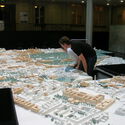
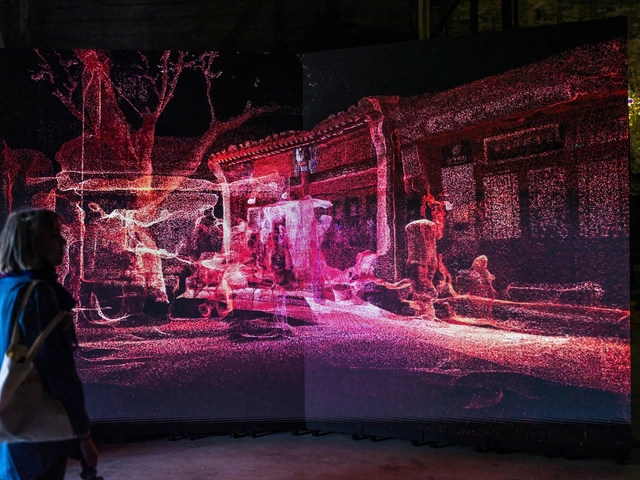
"Map the New World" is the motto of Project PLATEAU, led by Japan's Ministry of Land, Infrastructure, Transport and Tourism (MLIT), to develop and expand access to 3D models representing the diversity of cities across the country. Japan comprises a total of 744 cities, including 14 with populations exceeding one million, 190 with between 100,000 and one million inhabitants, and 540 with populations between 10,000 and 100,000. To date, 3D models of more than 250 cities have been made available as open data through the country's public G-Spatial Information Center, and can also be accessed via an online browser viewer. According to public authorities, the project aims to strengthen urban resilience by providing society with new tools to address local challenges. This involves not only urban space modeling but also collaboration with local governments, private companies, and technology communities. The project also includes a digital reconstruction of the recently closed Osaka World Expo site.

From Data to Digital Twins: Japan’s PLATEAU Project Offers Open-Access Models of More Than 250 Cities - Imagem 1 de 4From Data to Digital Twins: Japan’s PLATEAU Project Offers Open-Access Models of More Than 250 Cities - Imagem 2 de 4From Data to Digital Twins: Japan’s PLATEAU Project Offers Open-Access Models of More Than 250 Cities - Imagem 3 de 4From Data to Digital Twins: Japan’s PLATEAU Project Offers Open-Access Models of More Than 250 Cities - Imagem 4 de 4From Data to Digital Twins: Japan’s PLATEAU Project Offers Open-Access Models of More Than 250 Cities - More Images+ 1

Architecture’s Blind Spot: The Gap Between Design and Construction

 | In Collaboration

Initial sketches in notebooks and tracing paper, conceptual diagrams, perspectives, physical models, and massing studies capture the architectural imagination. But they represent only the beginning of the practice. The real challenge is translating ideas into buildable systems. Every wall, junction, and assembly must be resolved in detail, with systems working together in a way that allows the project to be built as intended. This is where most of the effort, complexity, and risk are concentrated, and where projects are ultimately resolved or begin to stumble.
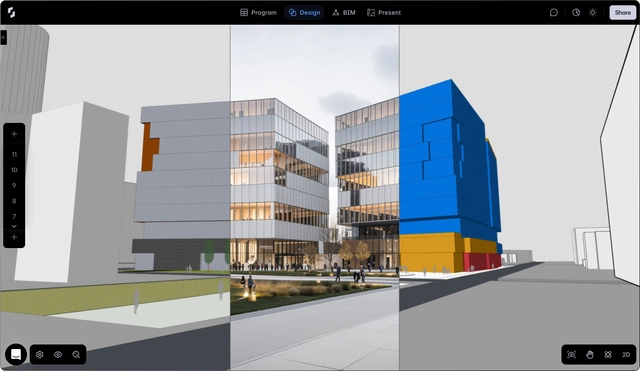
It is in this context that the Design Development (DD) and Construction Documentation (CD) take place, when the project must address the full weight of coordination, components, performance, and constructability. While schematic design defines spatial and formal directions, DD and CD demand answers to a different set of questions: how do systems come together? How is performance maintained at transitions? Which products, tolerances, and sequences will allow the project to hold together as it moves from model to construction?

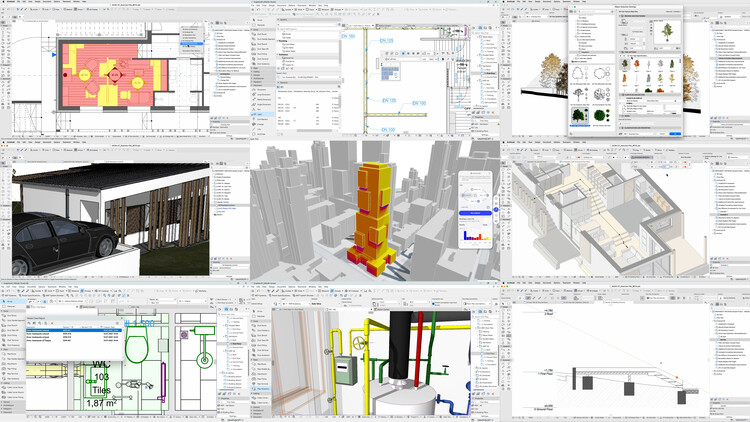
How to Make BIM Agile and Practical for Architects

 | Sponsored Content

In today's competitive design landscape, Building Information Modeling (BIM) is no longer just a trend—it has become a baseline expectation. Yet many practices still struggle to balance the complexity and effort involved with the actual value they receive in return. But what if it were possible to unlock the benefits of BIM without adding unnecessary workload? Exploring a lean approach to BIM—focused on efficiency, clarity, and real project outcomes—can help architectural teams streamline their design workflows, strengthen collaboration, and maintain creative control from concept through delivery.

ATN Summit 2026: From an Online Platform to a New Architecture and Technology Conference

 | Sponsored Content

Founded by Oliver Thomas, the ATN Summit is the first flagship conference of the Archi-Tech Network, marking five years since the platform began as a grassroots initiative to share real-world architectural knowledge. Taking place on March 18–19, 2026, in London, the ATN Summit brings together architects, technologists, and industry innovators to explore how emerging technologies are reshaping architectural practice. Designed as a high-production, ideas-driven event, the Summit reflects ATN's evolution from an informal online conversation into a global platform actively engaging with the future of the built environment.

Snaptrude Launches Free Student Plan to Equip the Next Generation of Architects

 | Sponsored Content

Snaptrude announced the launch of the Snaptrude Student Plan, a free offering that gives architecture students worldwide full access to Snaptrude's professional platform and intelligent AI workflows. The initiative reflects Snaptrude's commitment to strengthening architectural education and ensuring that emerging designers can build real-world skills while still in school. Full access to the professional platform and AI tools empowers students to design faster and build portfolio-ready work.

Integrating Natural Light Through BIM: A Look at the VELUX Library

 | Sponsored Content

Daylight is one of the most effective tools in architecture. It creates atmosphere, improves comfort, and reduces energy demand. However, integrating daylight successfully requires precision at every project stage, from the first sketches to detailed planning. VELUX BIM tools give architects the flexibility and verified data to make that possible.

Offsitewood 2.0: Practical Tools for Architects Exploring Offsite Wood

 | Sponsored Content

The latest release of Offsitewood.org marks a significant step forward in making offsite wood construction more approachable for architects. Version 2.0 introduces a set of digital resources aimed at helping designers model, plan, and collaborate more efficiently.

Free downloadable libraries are a central and expanding feature of the site. Additionally, new applications and services are now available that include wood material e-sample viewers, an advanced panelization and framing toolbar for Revit, and a collaborative workspace for project optimization.

Exploring the Advantages of the Design-Build Method in Real Estate Development

 | Sponsored Content

The Design-Build model is an increasingly attractive project delivery method, offering benefits such as enhanced control, reduced risks, cost efficiencies, and quicker completion times. Central to this approach is teamwork and collaboration, contrasting sharply with the traditional method of separate design and fixed-price bidding by contractors. Design-Build naturally motivates all participants to seek ways to boost productivity and quality, ensuring fairness and transparency in costs.

Early-Stage Design, Elevated: Addressing Common Challenges with New Features

 | Sponsored Content

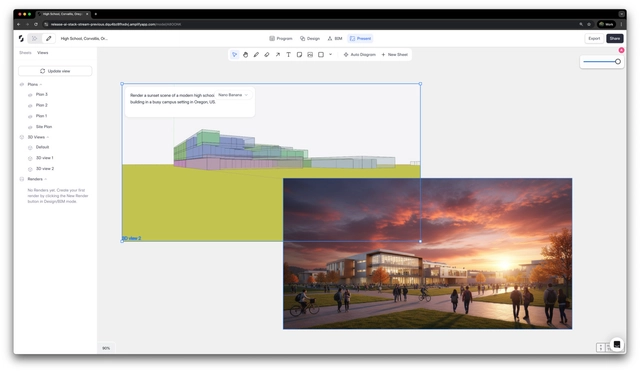
Early-stage design may be where everything begins, but without careful consideration, it's also where everything breaks down. On average, firms report that nearly 15% of all work done generates zero revenue, much of it tied to concept design. Relying on a patchwork of tools like Rhino, Excel, Revit, and Miro, architects often spend weeks swapping between platforms just to get a concept and presentation out the door. Data gets trapped in screenshots, rework piles up, and by the time the model is ready for documentation in Revit, the creative momentum is long gone. Snaptrude 3.0 Was Built to Fix that.

Zaha Hadid Architects Completes the Shenzhen Science & Technology Museum

Zaha Hadid Architects has just revealed that the Shenzhen Science & Technology Museum, located in the Guangming District, has officially opened. Designed as a platform to highlight scientific research and technological innovation, the institution will explore the role of science in shaping the future. Adjacent to Guangming Station on Shenzhen's metro network, the design responds to its location as a solid, spherical volume facing the city, defining the southeast corner of the new Science Park. The museum aims to provide a space for public engagement with current developments in science and technology.

Zaha Hadid Architects Completes the Shenzhen Science & Technology Museum - Image 1 of 4Zaha Hadid Architects Completes the Shenzhen Science & Technology Museum - Image 2 of 4Zaha Hadid Architects Completes the Shenzhen Science & Technology Museum - Image 3 of 4Zaha Hadid Architects Completes the Shenzhen Science & Technology Museum - Image 4 of 4Zaha Hadid Architects Completes the Shenzhen Science & Technology Museum - More Images+ 13

How Emerging Tech is Transforming the Architecture and Construction Industry

 | Sponsored Content

For many years, technology has been shaping the future of various industries, and the architecture, engineering, and construction (AEC) industry is no different. Initially, architects used to draw sketches on paper, which later progressed to 2D drawings, 3D digital blueprints, and now BIM—these technological advancements have changed how modern architects approach design by making it more sustainable and efficient. According to the 2024 RIBA AI study, 57% of architects believe AI will improve design process efficiency, and 54% expect to integrate it into their practice within the next two years.