The art of building a shelter made from blocks of ice is passed on from father to son among the Inuit, native peoples who inhabit the northernmost regions of the planet. The circular plan, the entrance tunnel, the air outlet and the ice blocks form a structure where the heat generated inside melts a superficial layer of snow and seals the gaps, improving the thermal insulation of ice. In a storm, an igloo can be the difference between life and death and perhaps this is the most iconic and radical example of what it means to build with local materials, few tools and lots of knowledge. In this case, ice is all you have.
Taking advantage of abundant resources and local labor are key concepts for sustainable architecture, which are often overlooked at the expense of solutions replicated from other contexts. With new demands and technologies, the globalization of building materials and construction techniques, is there still room for local materials? More specifically in relation to 3D printed constructions, are we destined to erect them only in concrete?
Architecture is a long-standing profession, one that has produced the iconic landmarks we admire around the world, monuments which we revere around the world, and played a part in establishing the organisation of the cities we live in today. This description, however, is architecture in the traditional sense - and there are numerous examples of individuals and firms who have strayed away from traditional architectural practice, either through delving into adjacent fields or 'disrupting' the field with the harnessing of new technologies.
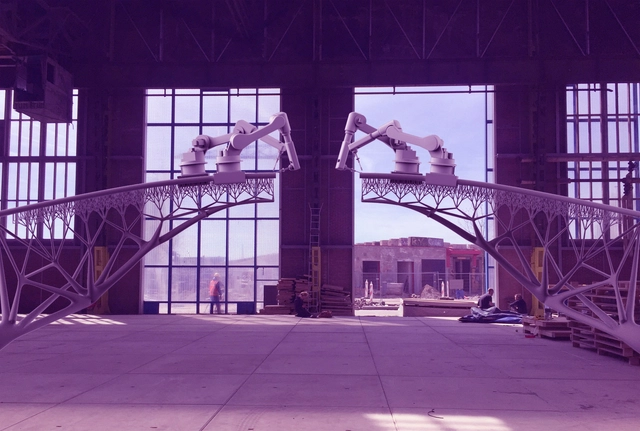
HANNAH office, founded by Leslie Lok and Sasa Zivkovic, is a US-based architecture and research practice that has been experimenting with digital design and fabrication techniques across all types of projects ranging from furniture to urbanism. Both professors at Cornell University College of Architecture, Art, and Planning, Leslie and Sasa lead a studio with a focus on innovative design, where technology plays a crucial role in their work, combined with a sharp study of materials, new applications, and construction techniques, resulting in highly creative projects.
By now, it is clear that technology has taken over almost every aspect of our lives. It has changed the way we communicate, how we connect, how we work and study, and has even modified our buying and eating habits. Architecture and construction were not the exceptions, and technology is also now present in the way it is being thought, designed, and built.
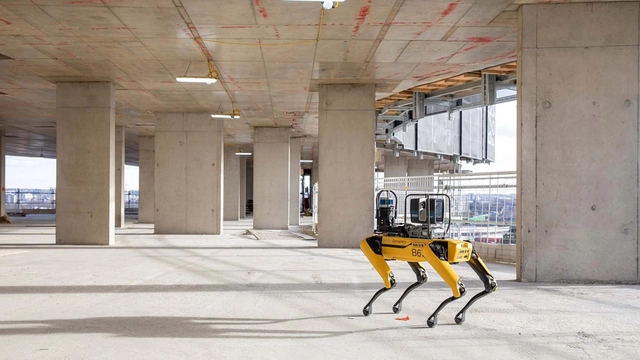
Spot on a Foster+Partners construction site. Image Courtesy of Foster+Partners
For several years, the construction sector has been facing a labour shortage, generating a growing interest in automation. The health crisis has only exacerbated the trend, prompting automation companies to turn their focus from car manufacturing to the construction industry, for which automation is expected to grow up to 30% within the next few years. The following explores present capabilities and future possibilities of automation within the construction process, its integration within the mainstream practice and the impact on design.
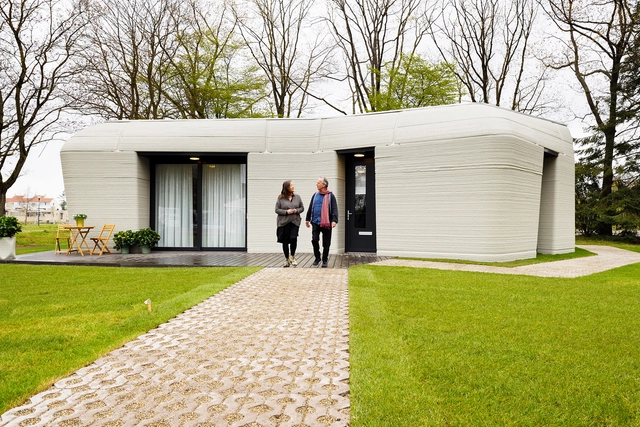
If only a few years ago 3D printing was viewed with a certain suspicion, recent news has shown that it is in fact a viable technology that is here to stay. On April 30, 2021, tenants of the first 3D printed concrete house in the Netherlands received their keys. The house in Eindhoven—the first of five within the 'Milestone Project'—fully complies with all the country's stringent construction requirements.
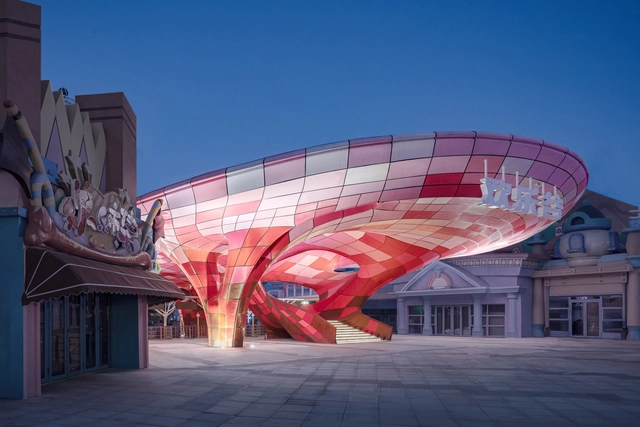
https://www.archdaily.com/960939/beyond-the-geometry-the-worlds-largest-modified-plastic-3d-printing-architecture-archi-union-architects韩双羽 - HAN Shuangyu
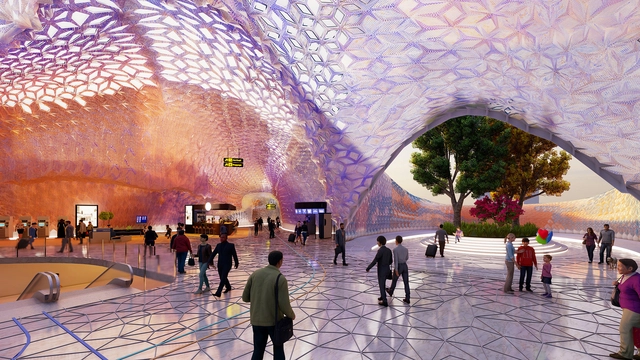
The roof of Euston Station in London is the large-scale architectural setting for the virtual application of the comprehensive Metaplas system, created by students from the Bartlett School of Architecture, UCL. As part of an investigation carried out in Research Cluster 8 (RC8) of the Master's program in Architectural Design, students developed a 3D printed multimaterial system from biodegradable and recyclable thermoplastics. Transforming a series of flat panels into complex three-dimensional forms, students created a structural system with geometric folds that allows for passive control of the lighting of interior spaces.
February 2021 has been a historical month for Mars exploration. While humans have been exploring the red planet for well over 50 years, first landing on its surface in 1971 and then launching the first successful rover in 1997, this year has seen several firsts, namely the first time that three countries (China, United States, and the UAE) have launched three simultaneous probes.
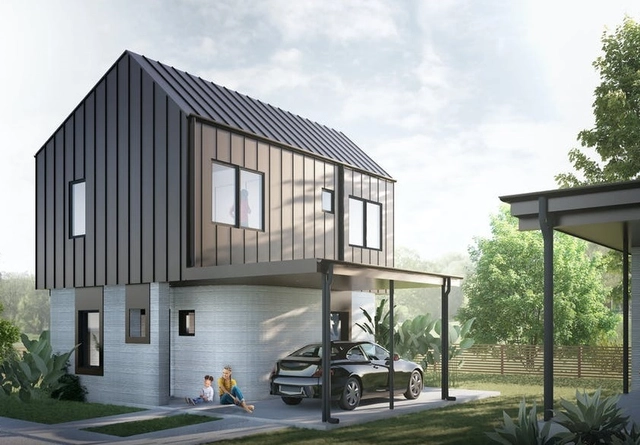
Kansas City developer 3Strands has announced U.S.A’s first 3D printed homes for sale, the company’s first multi-home project in Austin, Texas. Built with construction technology company ICON, the housing development includes two to four-bedroom homes in one of the fastest-growing cities in America. Designed by Logan Architecture, the project utilizes the Vulcan construction system to build each home.
Videos
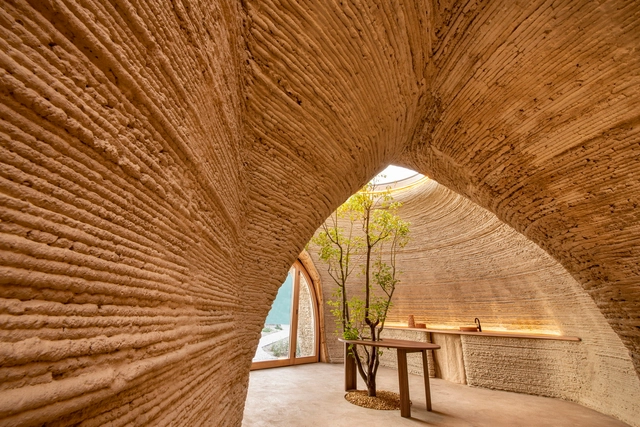
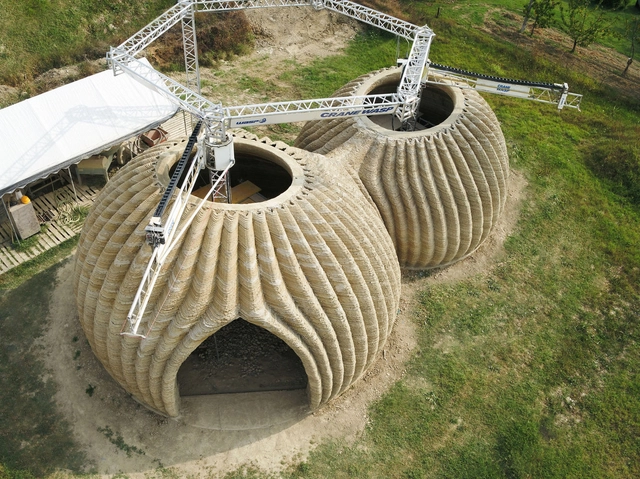
TECLA, 3D Printed Habitat by WASP and Mario Cucinella Architects. Image Cortesía de WASP
A recent collaboration between the team of Mario Cucinella Architects (MC A) and WASP, specialists in 3D Printing in Italy, has resulted in the first 3D-printed construction of a fully natural, recyclable, and carbon-neutral material: raw earth. The circular housing prototype is called TECLA and it was built in Massa Lombarda (Ravenna, Italy) using multiple 3D printers synchronized to work at the same time.
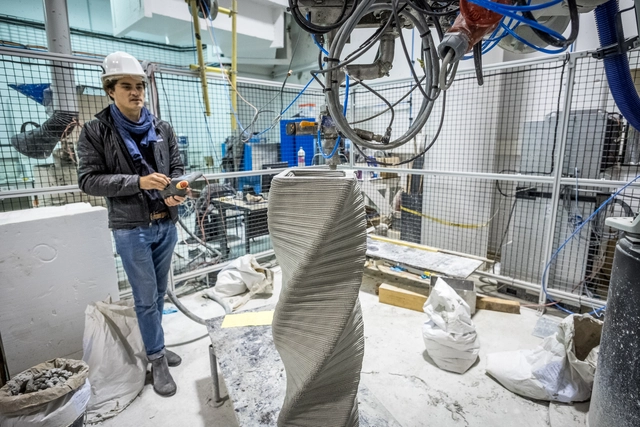
Paul Carneau, Design by Data alumni working with the 3d printing facilities at Ecole des Ponts ParisTech - Photo by Stefano Borghi
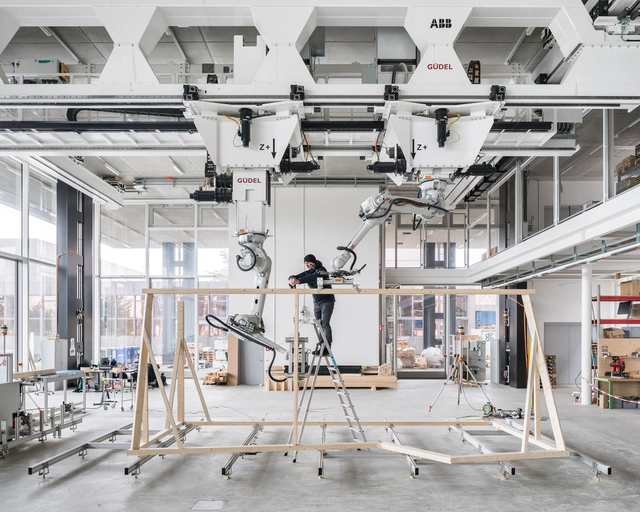
The Advanced Master[1] “Design by Data” in Computation Design & Robotics for Architecture and Construction was launched in 2016 and is one of the latest programs in innovative professional education at l'École des Ponts ParisTech. The program was designed to meet the increasing need of the professional sectors of architecture and engineering for combining architectural awareness and skills in creative engineering. Design by Data trains professionals to master advanced design tools (coding, generative design, machine learning) as well as digital manufacturing and design processes (robotics, 3D printing, and mechatronics) applied to architectural and construction projects.
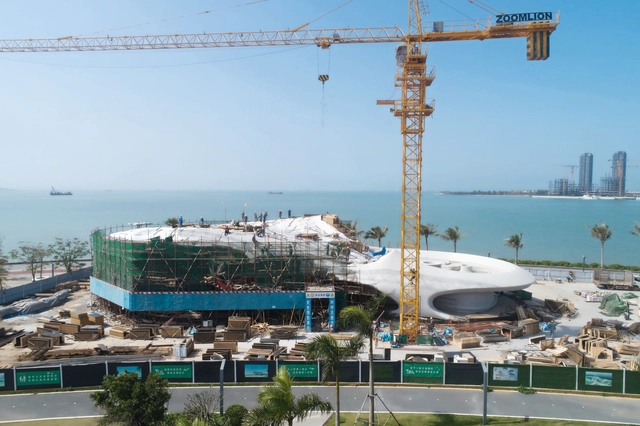
MAD Architects has unveiled that the Wormhole Library, had topped-out in the city of Haikou, China at the end of January 2021. The curved multi-functional structure, cast of white concrete, is scheduled to be completed and operational in the Spring of 2021. Once ready, the project will allow visitors to read, enjoy the sea views and attend open-air performances.
Videos
Art&Fact Innovation: This 12-meter mast is produced by printing six high-performance concrete segment forms, which are then poured and assembled. Image Courtesy of XtreeE
There's no question that 3D printing is here to stay. However, it is still a developing technology that raises certain questions: Is it really effective for massive and large-scale construction? How sustainable is it? Will it go from being an option to becoming the norm in the construction industry?
To help clarify the broader picture of 3D printing's place in architecture and construction, we spoke with Alain Guillen, Managing Director and Co-founder of XtreeE. XtreeE is a platform that allows architects to bring their designs to reality through advanced large-scale 3D printing, which generates quick and precise shapes without material waste. Read below to find out how he and his team envision the future of robotics in architecture and why architects should prepare to embrace this new technology, leading us toward a more efficient yet equally creative future.
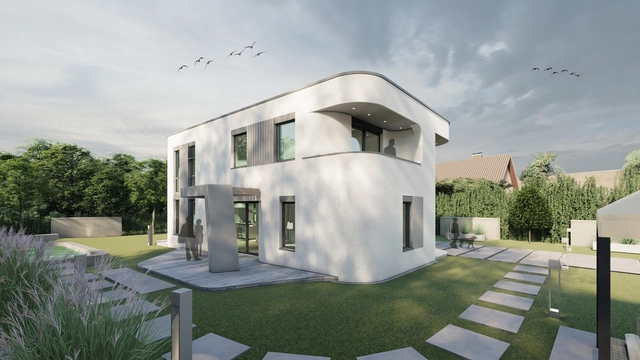
The first 3D printed residential building in Germany, built by PERI GmbH, and designed by MENSE-KORTE ingenieure+architekten is undergoing construction in Beckum, North Rhine-Westphalia. The two-story printed detached house with approx. 80 sqm of living space per floor is using a system put into practice in Germany for the first time. In fact, the construction technique has come through all of the regulatory approval processes over the last few weeks and months.
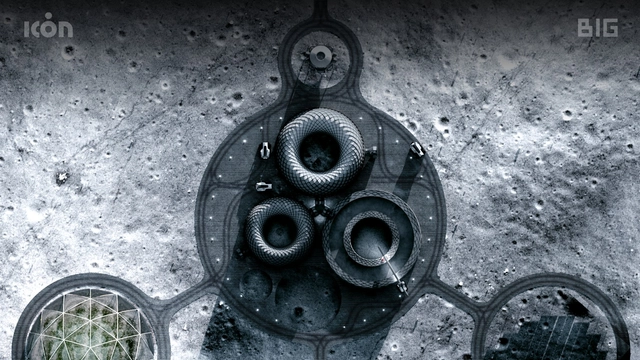
BIG has partnered up with ICON, a developer of advanced construction technologies, and with SEArch+ (Space Exploration Architecture) to imagine humanity’s home in another world. Working with NASA, the collaboration seeks to develop a “space-based construction system that could support future exploration of the Moon”.
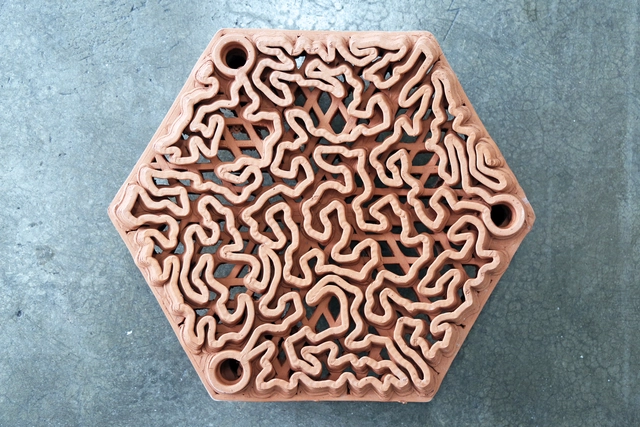
Corals are fundamental to marine life. Sometimes called tropical sea forests, they form some of the most diverse ecosystems on Earth. They serve as a refuge, breeding, and feeding area for dozens of species in the sea, and their absence can negatively affect local biodiversity to a tremendous degree. Yet just as humanity pollutes and destroys, it can also remedy and encourage the creation of more life. This is why shipwrecks of old vessels or the sinking of concrete structures for the creation of artificial reefs are frequently reported as providing immense potential. In Hong Kong, researchers have been developing 3D printed structures using organic materials that can lead to the creation of new opportunities under the sea.




.jpg?1625518957&format=webp&width=640&height=580)
.jpg?1625519477 "© Andy Chen")
.jpg?1625519474 "© Andy Chen")
.jpg?1625518958 "© Andy Chen")
.jpg?1625519242 "Courtesy of HANNAH")
.jpg?1625518957)

_Roman_Keller.jpg?1623778755 "© Roman Keller")
_courtesy_ICD_ITKE.jpg?1623779114 "Courtesy of ICD / ITKE")
_courtesy_Professor_XU_Weiguo's_Team_02.jpg?1623779045 "Courtesy of Professor XU Weiguo's Team")




.jpg?1613994000&format=webp&width=640&height=580)


.jpg?1613994000)








-1.jpg?1611379381&format=webp&width=640&height=580)