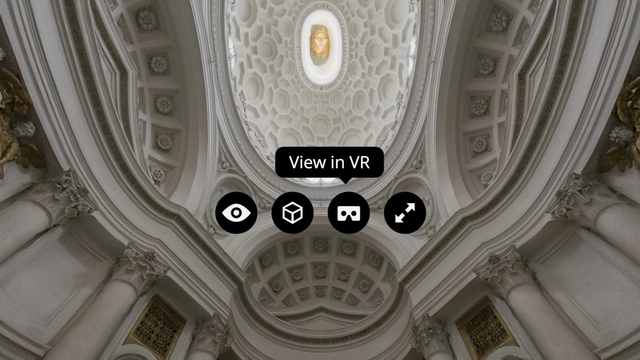
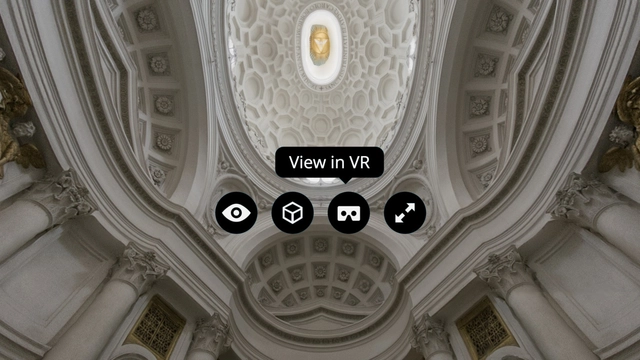
Image adapted from screenshot of San Carlo alle Quattro Fontane model by Matthew Brennan. Image via Sketchfab
One of many companies currently supporting the growing demand for Virtual Reality (VR), Sketchfab, known for being a “Youtube for 3D Models”, has added features to their website, allowing users to exhibit their work in VR. In this recent post, company CEO and co-founder Alban discusses the likelihood of a Virtual Reality renaissance in 2016. Comparing the platform to its predecessors in digital media, audio and video, he notes that the final steps for any new form of media are: easy to use, working technology; affordable interfaces; and user generated content, prefacing that 2016 may be the year that VR reaches this final step.
At ArchDaily, we've said before how sharing 3D models online has the potential to change architecture for the better, allowing viewers to explore a design for themselves rather than being presented only the most flattering views via photographs. At the forefront of this 3D-sharing revolution is Sketchfab, a platform which allows users to upload their model and view it directly in their browser.
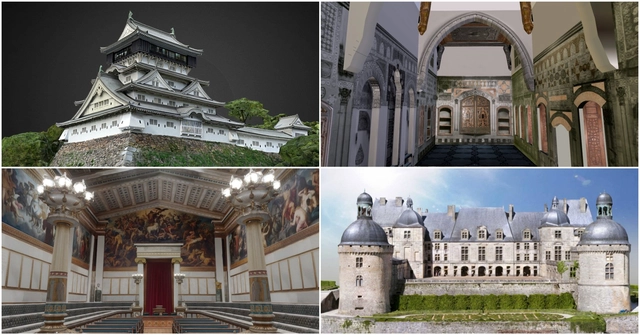
In this new series, ArchDaily is joining forces with with Sketchfab, to present the best architectural models featured on their platform, as selected by staff members at Sketchfab. In this first installment, we're taking a look at some of the best scans of historical buildings - and don't forget, all of these models can be viewed in virtual reality for the maximum architectural experience!
The new digital state of mind has affected almost every industry as we know it, from music to health. Meanwhile, architecture remains unaltered, trapped in its physical container. In our opinion Virtual Reality has come to stay, and it will transform the way we relate to spaces forever.
Our reality is a construction with multiple forms of expression - each culture, economy and geography produces its own model. Multimedia society has created a hybrid and complex reality where material formations are complemented by fictional ones like movies, videogames, advertising, avatars… Special effects are now part of our lives, and VR is one of them. It's not an independent and isolated dimension of actual reality, but part of it. In order to operate in this amplified scene, it is urgent to deploy new architectural skills. Platforms like Oculus Rift, Gear VR, Google Cardboard, HTC Vive, and Hololens combined with softwares like Unity or Unreal open a whole new design field.
Image adapted from screenshot of San Carlo alle Quattro Fontane model by Matthew Brennan
Earlier this month, Sketchfab announced a new feature which would allow any 3D model on their platform to be viewed in virtual reality on a device such as Google Cardboard. At ArchDaily, we think this is a huge step in defining how we will view and share architectural design in the future, and one of the best things about the new feature is how seamlessly it blends into Sketchfab's existing model sharing platform. At the same time, it's worth bearing in mind that creating a model for VR may take some extra consideration. In this post originally published on the Sketchfab Blog as "How to set up a Cardboard VR scene for Sketchfab," Bart Veldhuizen explains what designers can do to make their models as VR-friendly as possible.
With our new Cardboard VR button, Sketchfab has become the easiest way to view your designs in Virtual Reality. You can now literally publish your model to Sketchfab and view it on your Cardboard in under a minute.
As Cardboard relies on mobile devices, there are some extra things to keep in mind. In addition to displaying a regular Sketchfab model on the lighter hardware of your phone or tablet, we now render each image twice (once for each eye). So it won’t come as a surprise that you need to keep some things in mind when designing a Cardboard scene.
This tutorial will give you an overview of the most important limitations and will help you to quickly teleport yourself into your first Cardboard experiment.
Sketchfab, the browser-based platform for sharing and viewing 3D models, has announced a new feature on their software that turns any of their models into a virtual reality experience when viewed on a smartphone and combined with a simple headset like Google Cardboard. Sketchfab allows users to upload a wide variety of 3D model file types that could then be shared and viewed in any web browser, or embedded on websites or social media, without the need for any additional software or plug-ins. As a result, over the past few years they've built up a huge database of over half a million 3D models, and this new VR feature allows viewers to experience those models in a whole new way.
As I have touched on in the past many times, context is what transforms an artistic rendering into a photorealistic visual that accurately portrays a building. Seemingly minute details such as the warmth of interior lighting in night renders can actually make a dramatic impact on how the image is received by a potential client or investor. With this in mind, and in a continual attempt to improve the accuracy of renderings while increasing the value they provide to architects, some rendering artists are now taking advantage of readily available Unmanned Aerial Vehicle (UAV) platforms – more commonly referred to as drones – to gain a unique vantage point of land slated for development.
In the past capturing aerial photographs of an area could only be achieved from planes or helicopters, both of which come at a hefty price tag, even to rent. Drones equipped with the same capabilities can now be purchased for a fraction of the cost, making aerial photography more attainable. Aside from capturing standard video or images, drones have given rendering artists access to software that allows them to accurately map the topography of an area slated for development, adding a new level of context and accuracy to the rendering.
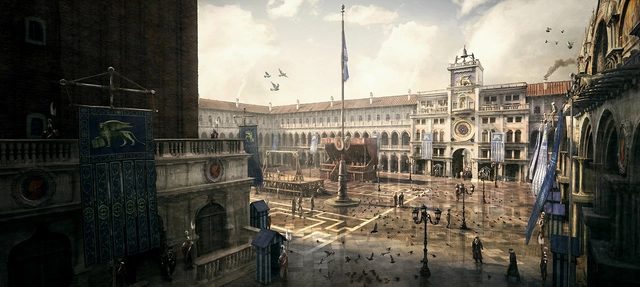
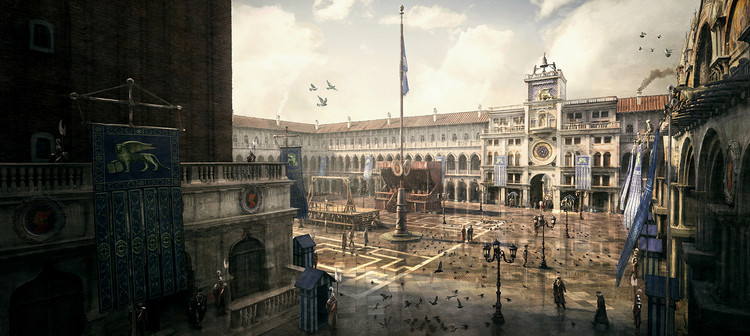
In the following article, originally published in Spanish on MetaSpace as "Assassin's Creed 2 - Arquitectos que hacen videojuegos"(Architects Who Make Video Games), Spanish architect Manuel Saga interviews María Elisa Navarro, a Professor of Architectural History and Theory, who worked with Ubisoft Montreal as a historical consultant on the design team for the video game Assassin's Creed II, from the first rough drafts up to its launch in November of 2009.
While getting her PhD at McGill, María Elisa Navarro was a consultant for the entire development process of the game as part of a research project between the university and Ubisoft Montreal. She worked on the project in complete secrecy with "a small team of 20 people and then later more than 400 in a huge basement in Montreal." Navarro worked on everything from late 15th century wardrobes to the correction of architectural errors in the recreated cities, going over the look and ornamental details of the buildings.
"Sometimes, for gameplay purposes, they needed to have walls with a lot of texture so that Ezio could climb them, but when the time came to lay those parts out, there were some inaccuracies. For example, I remember a balcony with a wrought iron railing that couldn't have existed in that time period. I was responsible for detecting those issues," Navarro noted in her conversation with MetaSpace.
Read the full interview with Navarro after the break.
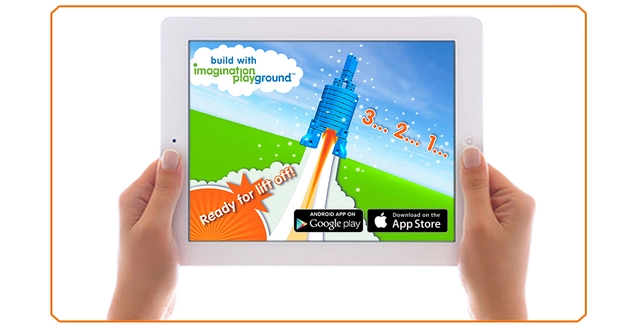
It's no secret that most architects who are also parents want their children to follow in their footsteps. But how can we encourage our children to think like architects – critically, spatially and creatively? For parents in Manhattan, for the past five years Rockwell Group's Imagination Playground has provided an answer. The educational play system consists of large-scale blocks of varying sizes and uses, allowing children to build whatever they can imagine – without the long hours and deadlines. Now, with the release of Imagination Playground 3D Builder, the creative platform is now available digitally, for free.
Sketchfab, an online database for 3D-models, has announced that they will soon begin implementing support allowing users to showcase not only their 3D models, but accompanying animations as well. The site, likened to a “Youtube for 3D models”, has grown tremendously in the short time it’s been active, and the new step adds many possibilities for both new users and veterans of the platform (read more about Sketchfab here).
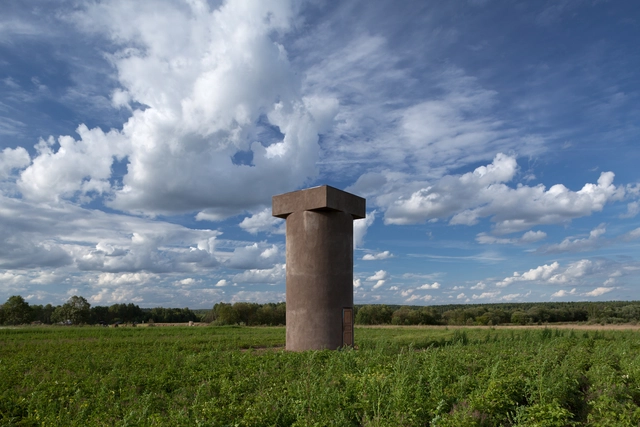
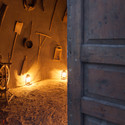
Standing tall in the expansive landscape of Western Russia, the monolithic Museum for Rural Labor is an architectural beacon for the Kaluga Oblast region. Built of local straw and clay, the eight meter tower is comprised of one round sunlit room adorned with the instruments of manual labor. Jarring, unexpected and mysterious, the museum was conceived by Russian architects Sergei Tchoban and Agniya Sterligova to pay homage to the region's deep agricultural history. Defined by a stark and unorthodox form, the tower disrupts the Russian landscape while simultaneously serving as a wayfinding device for residents from the nearby village of Zvizzhi.
Enter the rudimentary world of the Museum for Rural Labour after the break.
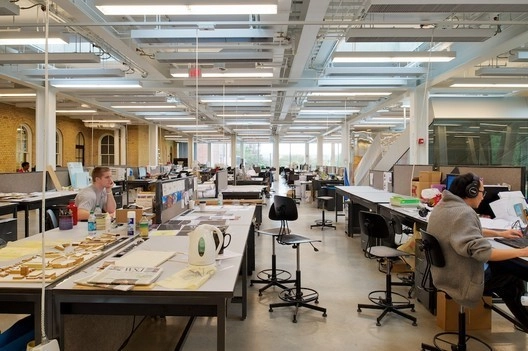
“The programs in this inaugural class exhibited a high degree of creativity, and are focused on strengthening the relationship between schools, the practice community, and licensing boards,” said Licensure Task Force (LTF) Chair Ron Blitch, a Louisiana architect who is a former NCARB President and current member of the NAAB Board of Directors and the Louisiana State Board of Architectural Examiners.
Farnsworth House, the temple of domestic modernism designed by Mies van der Rohe as a weekend retreat for a Chicago doctor, is one of the most paradoxical houses of the 20th century. A perfectionist mirage, it floats like a pavilion in a park, but its history has been beset by plagues, floods and feuds. As the second installment of a series of three modernist classics presented by Archilogic, we’ve modeled the Farnsworth house so that you can see if—in spite of its austere reputation—it can be lived in after all. In this model you can explore the spatial arrangement of the house, and refurnish it with Eames chairs, deck it out with your IKEA favorites, or booby-trap it with children’s toys.
https://www.archdaily.com/770612/a-virtual-look-into-mies-van-der-rohes-farnsworth-houseAdam Jasper & David Tran, Archilogic
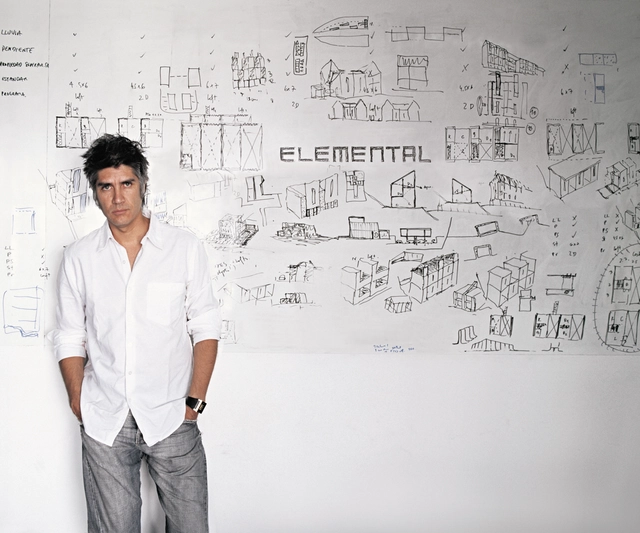
Citing the increasing popularity and success of the previous Architecture Biennales, chairman Paolo Baratta confirmed, "after many years in which the Architecture Biennale has continued to grow, we may now consolidate the decision to make it last six months, given the steady increment in the attendance of architecture schools from all over the world who come to participate in the Biennale Sessions project, and have made the Architecture Biennale a pilgrimage destination for students and teachers from the universities of many countries, from the United States to China.”
https://www.archdaily.com/770446/alejandro-aravena-appointed-director-of-the-2016-venice-architecture-biennaleAD Editorial Team
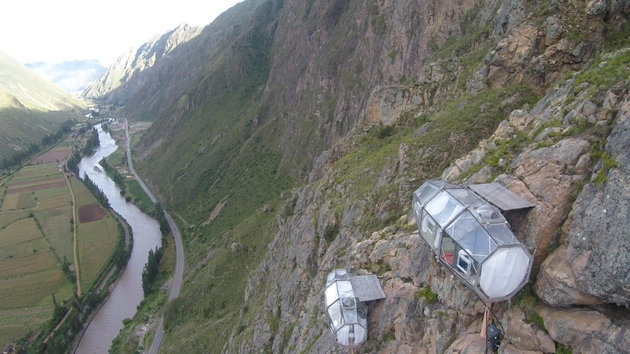
Adventure seekers have yet another reason to visit the Peruvian Andes; Peru-based tour company Natura Vive is now offering a luxurious night's stay 400-feet above the Inca Empire in these glass sky pods. Visitors can access the "Skylodge" by scrabbling up the mountainside. After staying the night, and indulging in some fine dining on top their 192-square-feet room, visitors return Peru's famed Sacred Valley via a series of (terrifying) zip lines.
Architectural Record has named the "Top 300 Architecture Firms" in the United States, ranking the nation's most successful practices based on their architectural revenue from 2014. Gensler, whose annual revenue surpassed one billion USD, maintained the lead for the fourth consecutive year. The firm's recent commissions, such as Los Angeles' Metropolis, help them set new records for revenue. AECOM, who came in second, also recorded significant growth - both internationally and domestically.