The American Institute of Architects (AIA) has selected 11 projects as winners of its 2022 Architecture Awards. The annual Architecture Award program celebrates the best contemporary architecture, and highlights how spaces can cater to their residents and context and include a sense of place, purpose, history, and environmental sustainability. The selected projects include commercial, residential, and civic typologies, all designed by US-licensed architects.
“We need a new spatial contract." This is the call of Hashim Sarkis, curator of the Venice Biennale 2021, as an invitation for architects to imagine new spaces in which we can live together. Between a move towards urban flight and global housing crises, the growth of more low-rise, dense developments may provide an answer in the countryside. Turning away from single family homes in rural areas and suburbs, modern housing projects are exploring new models of shared living in nature.
After being shut down for more than a year, museums across the world are beginning to show signs of reopening. Most architecture and design events that were scheduled for 2020 have been pushed a year or two, depending on the severity of the pandemic in their respective regions. But while museums are open to the public once again, administrators have installed numerous precaution measures to ensure the safety of visitors and curators, and to avoid potential re-closures.
As international travels have been revived by government officials, and tourism is expected to recover gradually, read on to discover 18 museums and exhibitions that have begun welcoming visitors into their exhibition spaces as of May 2021, and the procedures required from the attendees before and during visitations.
Building design today, and throughout the 20th century, has been significantly shaped by fire safety considerations. Architects today are familiar with the wide range of code requirements for a building to be compliant, from materials, to fire extinguisher locations, to fire-rated walls and doors. As buildings have become better-equipped to withstand fire emergencies, however, modern life has simultaneously increased the amount of fire hazards we live with.
If a person were to imagine a setting of complete relaxation, odds are the first image that comes to mind is a place surrounded by nature, be it a forest, the mountains, the sea, or a meadow. Rarely does one imagine an office or a shopping mall as a source of comfort and relaxation. Still, the majority of people spend almost 80-90 % of their time indoors, going back and forth from their houses to their workplaces.
Architects and designers are now searching for design solutions that will resonate well into the future, turning to 'biophilia' as an important source of inspiration that promotes well-being, health, and emotional comfort.
The Brundtland Report, 1987 - "Our Common Future" - introduced the notion that the sustainable use of natural resources must "meet the needs of the present generation without affecting the ability of future generations to meet theirs." Since then, the term sustainability has been popularized and, often, trivialized in our daily lives. In the construction industry, this is no different. As much as we know that to build, we need to destroy, how is it possible to mitigate the effects of construction during the useful life and demolition of buildings? A sustainable building, in its design, construction, and operation, must reduce or eliminate negative effects overall and may even generate net positive impacts on the climate and environment – preserving resources and improving the quality of life of the occupants simultaneously. To say that a building is sustainable is easy and even seductive. But what exactly makes sustainable construction?
Answering this question is not a simple exercise. That is why, in the last 30 years, several building sustainability certifications have been created. Through outsourced and impartial evaluations from different sources, they aim to verify the sustainable aspects of any construction. Each of them addresses particular building elements and is typically focused on certain regions of the world. While there are some certifications that verify whether the building meets certain efficiency criteria, others create different classifications, assigning a score based on these evaluations. Below, we list some of the primary sustainability certifications around the world – ranked alphabetically – and include their main architectural applications alongside a brief explanation:
A new webcast and podcast series, Design Disruption, has been launched by architectural writer Sam Lubell and social entrepreneur Prathima Manohar. In a partnership with ArchDaily, the first episode today at 11 am (EST) on ArchDaily, YouTube and Facebook. This episode explores high density housing with guests Moshe Safdie, founder of Safdie Architects, and Ma Yansong, founder of MAD architects. The goal of the series is to provide an international perspective on disruptive issues with guests from different continents.
The Alchemist / Reid Architects. Manufactured by elZinc. Image Cortesía de elZinc
A lightweight material par excellence, zinc is a non-ferrous metal that provides an effective solution for coating buildings exposed to adverse weather conditions, while simultaneously delivering a creative response to the requirements of a project.
When in contact with humidity during the summer, zinc panels generate a self-protecting layer that isolates heat from indoor spaces. Rain and snow slide easily over its surfaces, and its modular panels can wrap curved shapes or be perforated according to the architectural design, and combined in facades and/or ceilings through different shades, brightness, and colors.
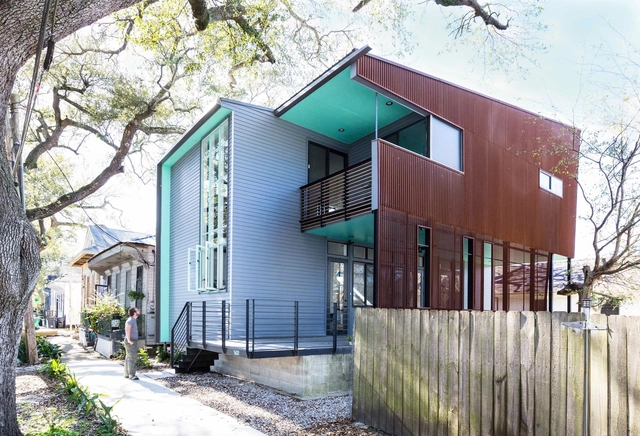
New Orleans is a city unlike any other. Defined by a rich cultural history, the Big Easy has been shaped by it's geography along the Mississippi Delta and the local climate. After the devastation of Hurricane Katrina in 2005, designers and architects looked to the city with a renewed focus to build a better future. From the Lower 9th Ward to the French Quarter and beyond, modern designs were created within a diverse urban fabric.
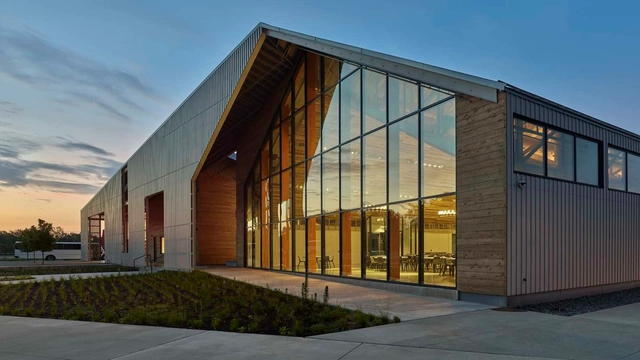
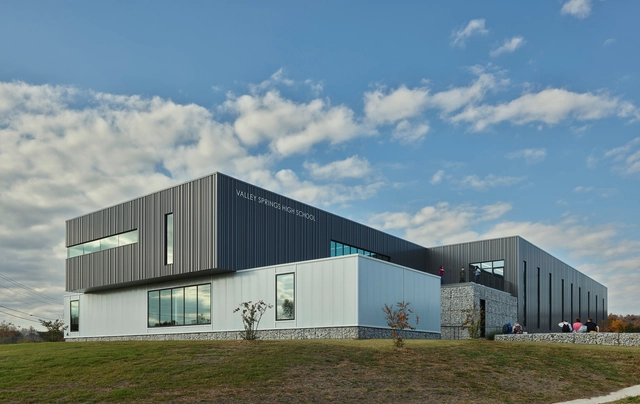
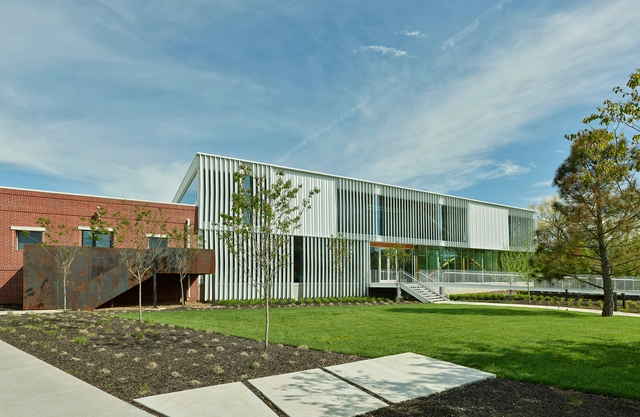
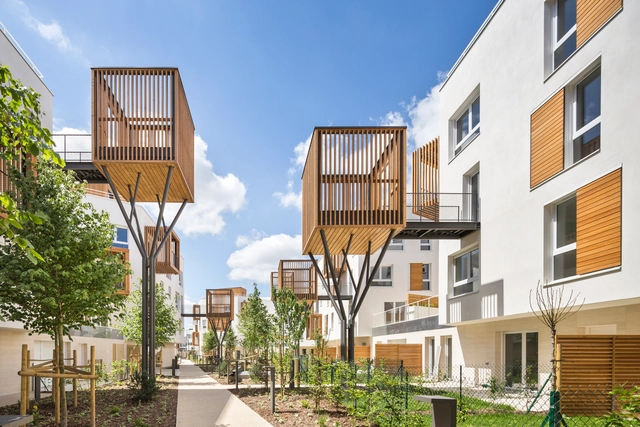
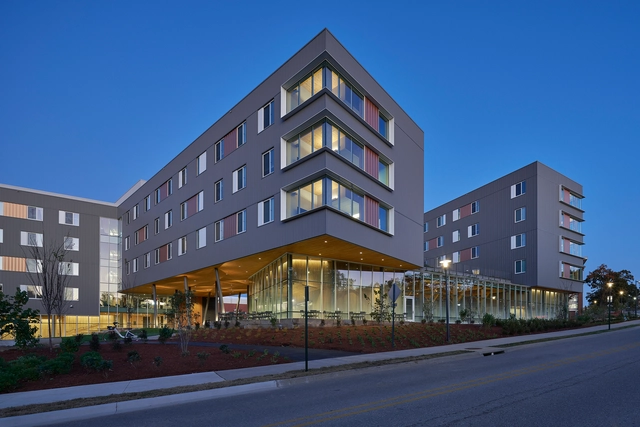
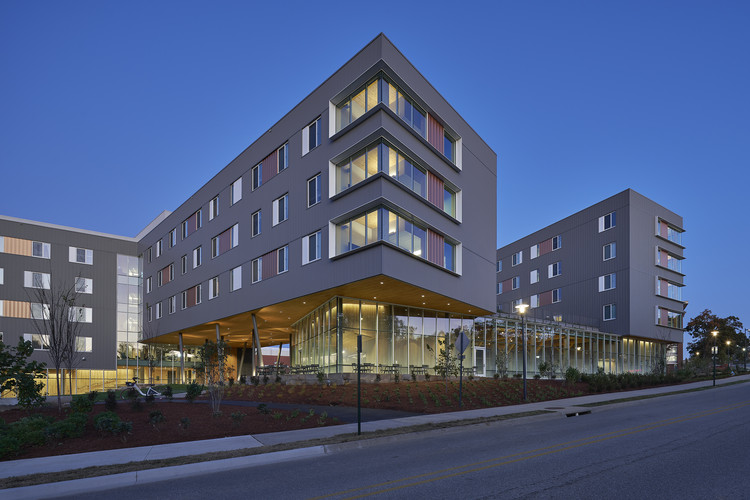
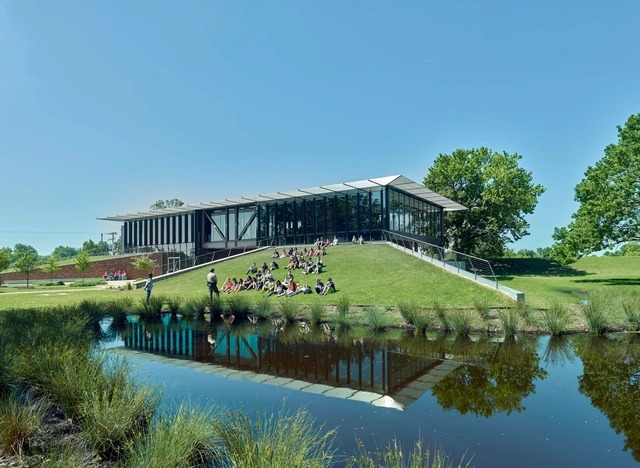
The Board of Directors and the Strategic Council of the American Institute of Architects (AIA) have awarded renowned architect Marlon Blackwell, FAIA, with the 2020 Gold Medal. This prize credits an individual that had a lasting influence on the theory and practice of architecture.

















_(1).jpg?1590374596&format=webp&width=640&height=580)
_(1).jpg?1590374816&format=webp&width=230&height=230&crop=true)
_(1).jpg?1590374859&format=webp&width=230&height=230&crop=true)
_(1).jpg?1590374837&format=webp&width=230&height=230&crop=true)
_(1).jpg?1590374690&format=webp&width=230&height=230&crop=true)
_(1).jpg?1590374596)







.jpg?1576138345 "Fulbright Building Addition. Image © Timothy Hursley")
.jpg?1576138429 "Srygley Office Building . Image © Tim Hursley")
.jpg?1576138391 "St Nicholas Church. Image Courtesy of Marlon Blackwell Architect")
.jpg?1576138404 "The Ruth Lilly Visitors Pavilion . Image © Timothy Hursley")





.jpg?1562382267)