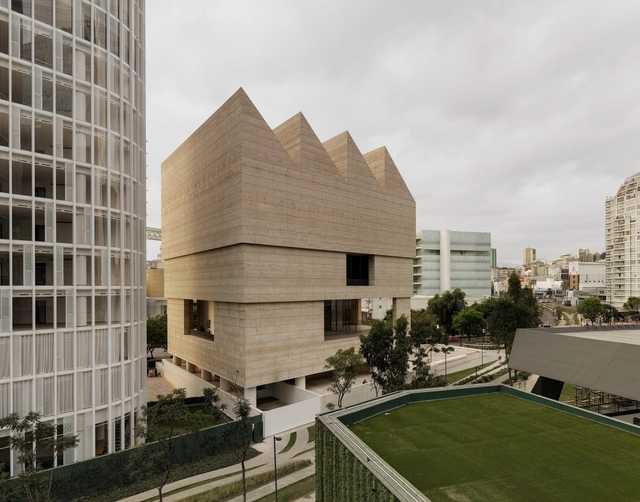
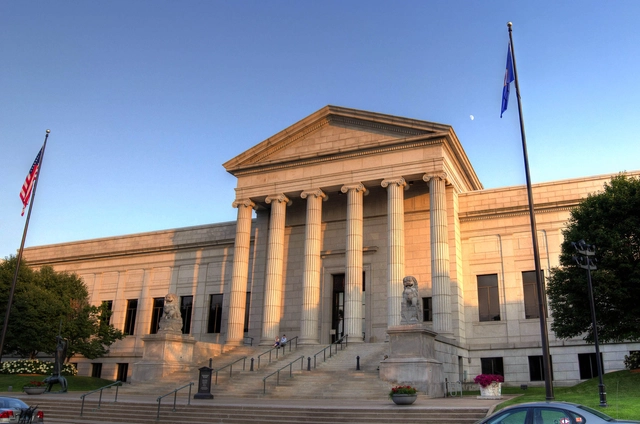
The Minneapolis Institute of Art (MIA) has selected David Chipperfield Architects to lead the design of a new masterplan for the museum that will “enhance the visitor experience and to expand the community’s access to the museum as a community resource.”
The planning process will aim to diagnose potential improvements and provide a conceptual solution for a long-term growth plan for the Museum. Several pressing needs have already been identified, including improved parking facilities, additional art storage and increased and improved public gathering spaces. The Museum also hopes to question the current visitor circulation, as well as consider upgrades to their restaurant and auditorium.
In this episode of GSAPP Conversations, Fabrizio Barozzi—who co-founded the Barcelona-based practice Barozzi/Veiga with Alberto Veiga in 2004—discusses the practice's process and obsessions, including how they position themselves in the architectural landscape and why they are sceptical of defining their own architectural "language". For Barozzi, research and an engagement with history are integral to the way his practice works operates.
https://www.archdaily.com/875918/fabrizio-barozzi-veiga-obsessions-process-and-position-within-the-architectural-landscape-gsapp-conversationsAD Editorial Team
Designing a museum is always an exciting architectural challenge. Museums often come with their own unique needs and constraints--from the art museum that needs specialist spaces for preserving works, to the huge collection that requires extensive archive space, and even the respected institution whose existing heritage building presents a challenge for any new extension. In honor of International Museum Day, we’ve selected 23 stand-out museums from our database, with each ArchDaily editor explaining what makes these buildings some of the best examples of museum architecture out there.
https://www.archdaily.com/871555/23-examples-of-impressive-museum-architectureAD Editorial Team
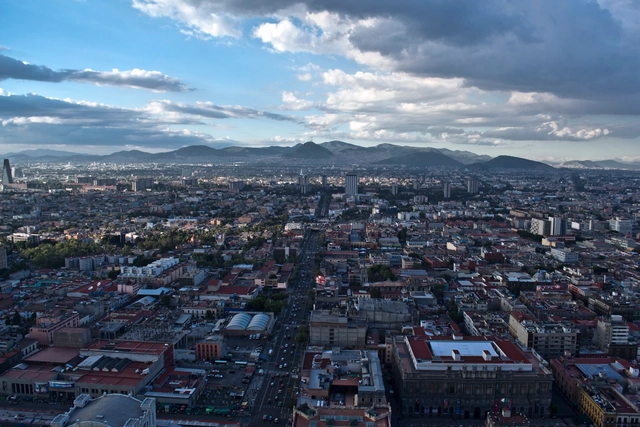
Though the idea of a vacation in Mexico usually brings to mind images of margaritas on white-sand beaches, it seems the country is slowly but surely gaining recognition in other aspects as well. Among the most populated urban cities in Latin America and the world – not to mention The New York Times' number one "Place to Go in 2016" – Mexico City offers a particular cultural diversity evident both in its traditions and in its architecture. Considering it's the main tourist, educational, cultural, economic and political center of Mexico, it makes sense that it's the perfect scenario for the social encounters of its multicultural inhabitants and tourists.
The sites of architectural interest alone are worth the visit, with prehispanic, classic, modern and contemporary examples ranging from Juan O'Gorman and Luis Barragán to Felix Candela and David Chipperfield. Add to that the fact that its gastronomic scene has garnered much praise and attention in recent years, and you've got a perfect combo. Below is a carefully curated list of 30 sites that every architect should know and visit.
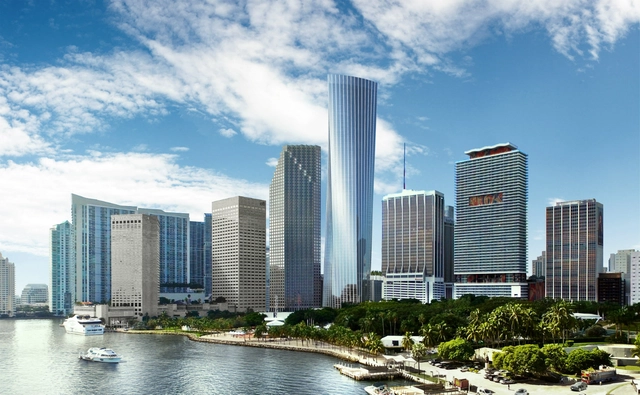
Renderings have been revealed of KPF’s One Bayfront Plaza, a 92-story mixed-use tower in downtown Miami that when completed will reach 1,049 feet tall, becoming one of 5 new buildings that will share the title of Miami's tallest tower.
The project is being developed by Florida East Coast Realty, and will bring 902 apartments, 200 hotels rooms, 532,000 square feet of office space and 104,000 square feet of retail to downtown Miami. Located at 100 South Biscayne Boulevard, the project will total 3.3 million square feet.
AIA New York has announced the winners of their 2017 AIA New York Design Awards, highlighting the best new projects located in the Empire State or completed by AIA NY registered architects across categories of architecture, projects, interior design and urban planning.
Within the four categories, winning projects have been granted either an “Honor” or “Merit” distinction. Each project has been chosen for its “design quality, response to its context and community, program resolution, innovation, thoughtfulness, and technique.” The winners scale in scale from temporary exhibitions to large-scale urban interventions.
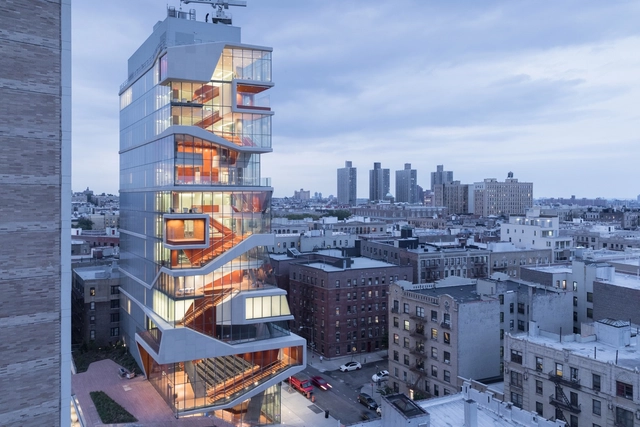
This year 22 of the 35 winners were New York City-located projects, including the grand prize winner, Diller Scofidio + Renfro’s striking Roy and Diana Vagelos Education Center at Columbia University’s medical campus. Continue reading to see the full list of winners.
Observing the architectural landscape today it’s clear that the type of work which is currently ascendant, particularly among young practices, is very different to what came before the financial crisis of 2008. But what, exactly, does that architectural landscape look like? In an essay titled “Well into the 21st Century” in the latest issue of El Croquis, Alejandro Zaera-Polo outlined a 21st-century taxonomy of architecture, attempting to define and categorize the various new forms of practice that have grown in popularity in the years since—and as a political response to—the economic crisis.
The categories defined by Zaera-Polo encompass seven broad political positions: The “Activists,” who reject architecture’s dependence on market forces by operating largely outside the market, with a focus on community building projects, direct engagement with construction, and non-conventional funding strategies; then there are the “Populists,” whose work is calibrated to reconnect with the populace thanks to a media-friendly, diagrammatic approach to architectural form; next are the “New Historicists,” whose riposte to the “end of history” hailed by neoliberalism is an embrace of historically-informed design; the “Skeptics,” whose existential response to the collapse of the system is in part a return to postmodern critical discourse and in part an exploration of contingency and playfulness through an architecture of artificial materials and bright colors; the “Material Fundamentalists,” who returned to a tactile and virtuoso use of materials in response to the visual spectacle of pre-crash architecture; practitioners of “Austerity Chic,” a kind of architectural “normcore” (to borrow a term from fashion) which focuses primarily on the production process, and resulting performance, of architecture; and finally the “Techno-Critical,” a group of practices largely producing speculative architecture, whose work builds upon but also remains critical of the data-driven parametricism of their predecessors.
As a follow-up to that essay, Zaera-Polo and Guillermo Fernandez-Abascal set out to apply the newly-defined categories to the emerging practices of today with a nuanced “political compass” diagram. They invited practices to respond to their categorization in order to unveil the complex interdependencies and self-image of these political stances. For the first time, here ArchDaily publishes the results of that exercise.
Manufacturers: FSB Franz Schneider Brakel, Derix, Deutsche FOAMGLAS®, Knauf, Plaka, +3Sto SE & Co., TRACO, Vereinigte Porphyrbrüche auf dem Rochlitzer Berge-3
The Royal Institute of British Architects (RIBA) has announced the shortlist of six finalist projects in the running for the inaugural RIBA International Prize. The first RIBA Award open to any qualified architect in the world, the International Prize seeks to name the world’s “most significant and inspirational” building. Criteria for consideration include the demonstration of “visionary, innovative thinking and excellence of execution, whilst making a distinct contribution to its users and to its physical context.”
The six finalists were named from a longlist of 30 buildings, from which a further selection of 21 projects have been recognized by the jury for the RIBA Award for International Excellence. The jury has also named the winner of the RIBA International Emerging Architect prize recognizing “the achievement of architects in the earlier stages of their career who are working on global projects.”
"Our panel of jurors have been particularly impressed by the way in which each building reacts to, resolves and assimilates into the varying geographies and contexts - from dense urban cities to a small town in the Arctic Circle," said RIBA President Jane Duncan on the naming of the finalists. "Each project resolves the complex demands of its context with ingenuity, exceptional detail and finishing and a sensitivity to the needs of the users and communities which will inhabit these spaces."
One of the main challenges in adding new spaces to a pre-existing building is in the dialogue that is generated between the original construction and the new proposal. The different possibilities are infinite and it is the architect who will make the final statement through their choice of design language; they must decide to either emulate the existing architecture, reinterpret it, or to propose a whole new language.
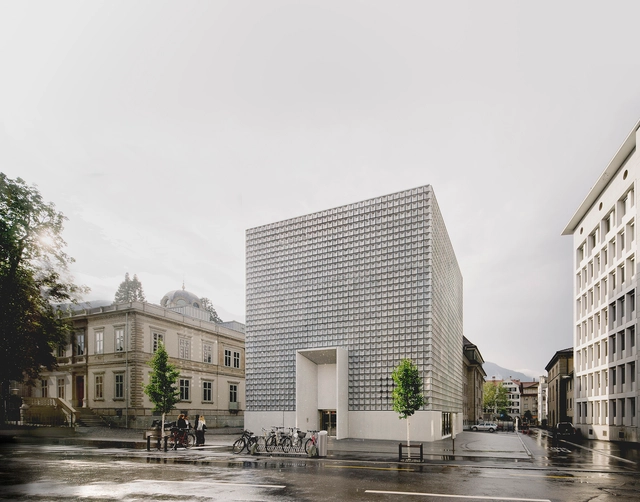
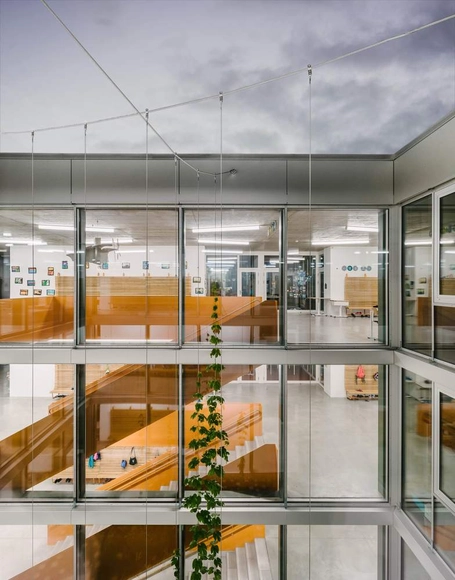
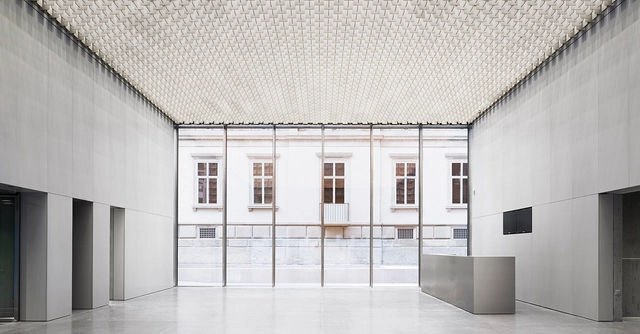
The Fine Arts Museum by Barozzi Veiga is a project that works autonomously, integrating with it’s site in order to generate a dialogue within the public space, while using both ornamentation on the facade and the interior plan composition to establish a common language between the two distinct parts of the museum.
August’s Project of the Month uses this dialogue to produce an equilibrium between the existing and the new construction, reinterpreting the original language and adapting it with detail and delicacy to the urban area which provides it’s context.
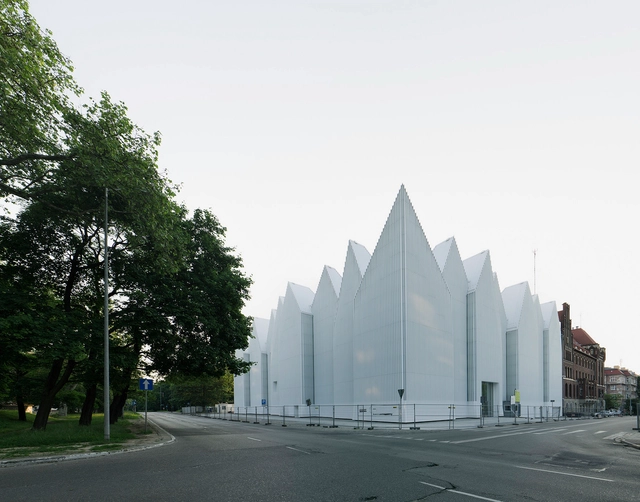
Established in 2004, Spanish studio Barozzi/Veiga have become known for their intellectual approach to design and their precise solutions which draw on both local conditions and a sense of uniqueness - an approach which recently won them the Mies van der Rohe Award for their Philharmonic Hall Szczecin. In this interview, originally published in the August issue of Indian Architect & Builder under the title "Script of Simplicity," Fabrizio Barozzi speaks about the award-winning Philharmonic Hall Szczecin, the connection Barozzi/Veiga keeps between research and design, and how they avoid the generic in their architecture.
Indian Architect & Builder:Tell us a little about Barozzi/Veiga; the ideas, principles and core philosophies of your practice.
Fabrizio Barozzi: We always try to create an "essential" architecture. We understand essential architecture as a public architecture, an architecture that intends to generate some positive changes in the community for which it is built. An architecture that arises in a context without harshness, specific and inspired by its environment. We believe that this kind of approach to architecture is what brings out the characteristics of each site and therefore the diversity of ideas that exist in the world.












_Simon_Menges_14.jpg?1480704219&format=webp&width=640&height=580)
_Simon_Menges_21.jpg?1480704290&format=webp&width=230&height=230&crop=true)
_Simon_Menges_20.jpg?1480704324&format=webp&width=230&height=230&crop=true)
_Simon_Menges_11.jpg?1480704237&format=webp&width=230&height=230&crop=true)
_Simon_Menges_07.jpg?1480704306&format=webp&width=230&height=230&crop=true)
_Simon_Menges_14.jpg?1480704219)