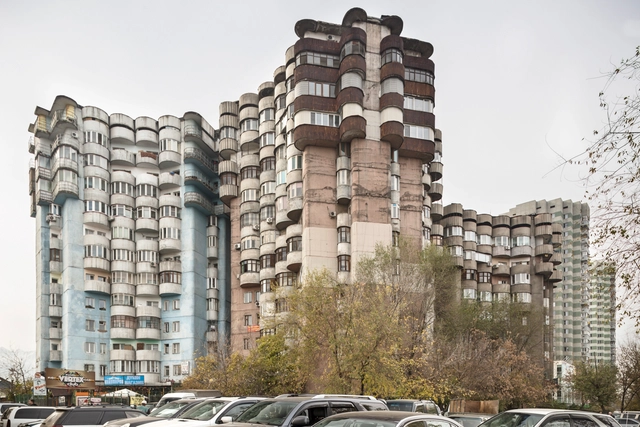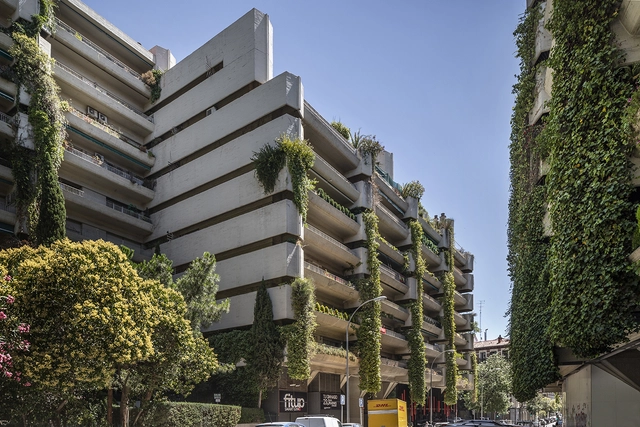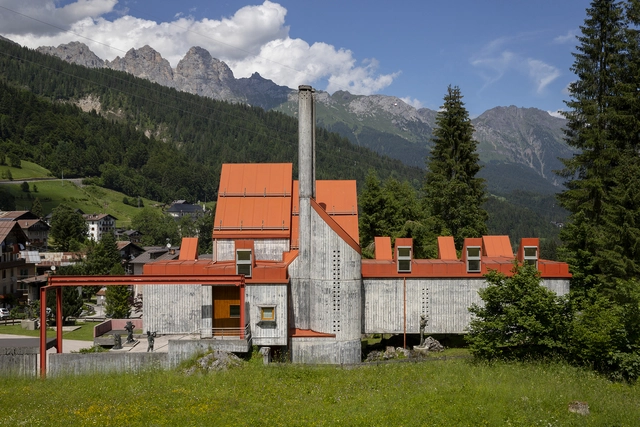
Born in the post-war period in the United Kingdom, the Brutalism movement was first met with skepticism but has found a new appreciation in the last decade, capturing the imagination of new designers fascinated with the interplay between striking geometric shapes and the exposed raw materials in which they are rendered. From Britain, the movement spread throughout Europe, Southeast Asia, and Africa, gathering different variations influenced by the cultural and socio-economic status of each area. In this article, we delve into the particularities that define Italy's contribution to the Brutalist movement, exploring the style through the lens of Roberto Conte and Stefano Perego. The two photographers have also published a photographic essay on the subject, taking the form of a book titled "Brutalist Italy: Concrete Architecture from the Alps to the Mediterranean Sea".
Sometimes sculptural and expressive, sometimes monolithic and monotonous, the Brutalist architectural style is equal parts diverse and divisive. From its origins as a by-product of the Modernism movement in the 1950s to today, Brutalist buildings, in architectural discourse, remain a popular point of discussion. A likely reason for this endurance is — with their raw concrete textures and dramatic shadows, brutalist buildings commonly photograph really well.
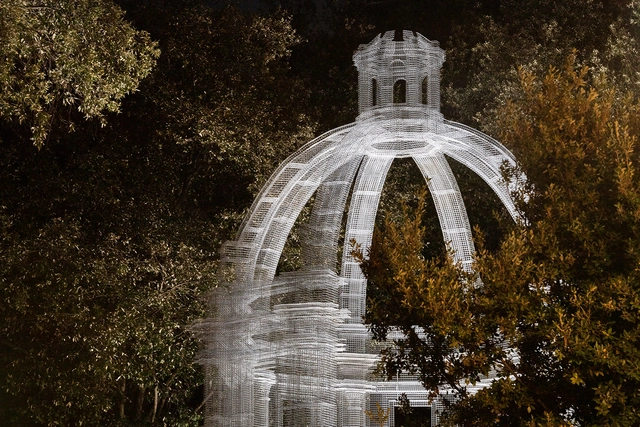
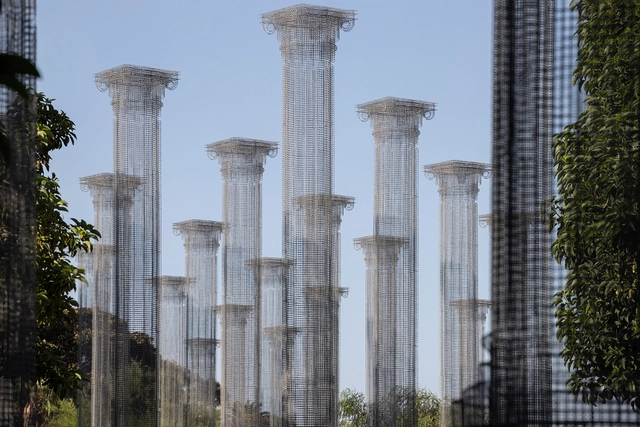
After an extensive five-year restoration carried out by David Chipperfield Architects and Generali, the iconic Procuratie Vecchiein St. Mark's Square has opened again to the city, with an installation by Italian artist Edoardo Tresoldi. Titled "Monumento", the artwork responds to the new socially-driven functions presented by the vast space, "renewing the language of the monumental column and the values to which society aspires in order to reflect its own epoch".
In the second half of the 20th century, Soviet architecture has spread a common aesthetic across highly diverse environments, being an integral part in promoting the totalitarian ideology that disregarded local cultures, envisioning a unified, homogenous society. Nevertheless, in practice, the architecture proved itself susceptible to adaptations and local influences, perhaps nowhere more than in Central Asia. The article looks at the architectural heritage of a geographical area largely excluded from the Western-centric narratives on Soviet Modernism, encouraging a re-reading of a layered and nuanced urban landscape, with images by Roberto Conte and Stefano Perego.
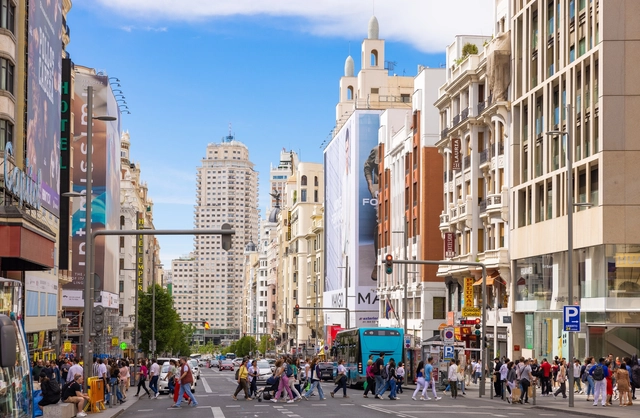
The city of Madrid can be viewed as a place that is representative of all the architectural styles found on the European continent. 16th-century Renaissance buildings and 18th-century Baroque buildings all co-exist in harmony with more modern architectural styles such as Art Deco or the expressive contemporary architecture of recent years. Iconic contemporary architecture firms such as Herzog & de Meuron and Rogers Stirk Harbour + Partners, with projects such as the BBVA Headquarters and Madrid-Barajas Airport Terminal, have all played a part in defining Madrid’s architectural character too, making for a city with highly varied and distinct streetscapes.
Etherea, the installation conceived by Edoardo Tresoldi for the Coachella festival in 2018, has landed in Rome for "Back to Nature”, an exhibition project curated by Costantino d’Orazio. The large transparent mesh sculpture will dialogue with the trees of the Parco dei Daini, in Villa Borghese, until December 13, 2020.
Edoardo Tresoldi has inaugurated a permanent installation on Reggio Calabria’s seafront, in Italy entitled Opera. Commissioned by the local Municipality and the Metropolitan City, the public art intervention “was created to celebrate the contemplative relationship between place and human beings through the language of classical architecture and the transparency of the Absent Matter”.
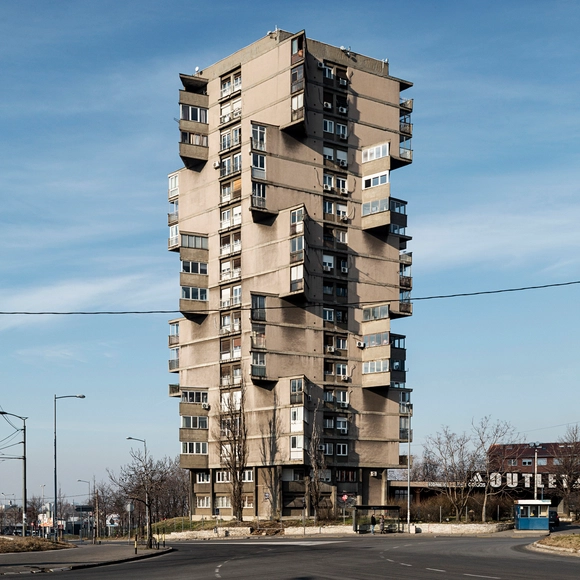
This article is part of "Eastern Bloc Architecture: 50 Buildings that Defined an Era", a collaborative series by The Calvert Journal and ArchDaily highlighting iconic architecture that had shaped the Eastern world. Every week both publications will be releasing a listing rounding up five Eastern Bloc projects of certain typology. Read on for your weekly dose: Eccentric Urban Buildings.
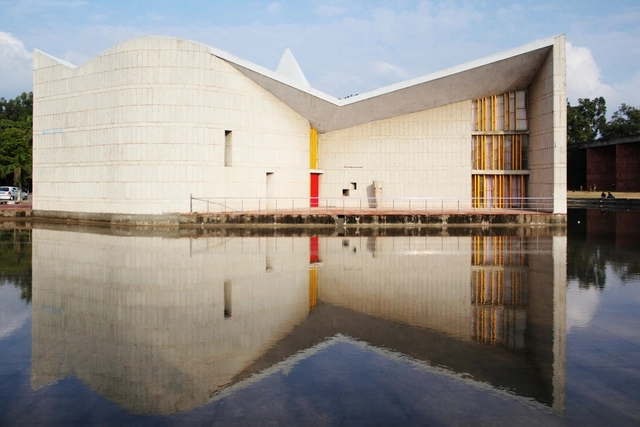
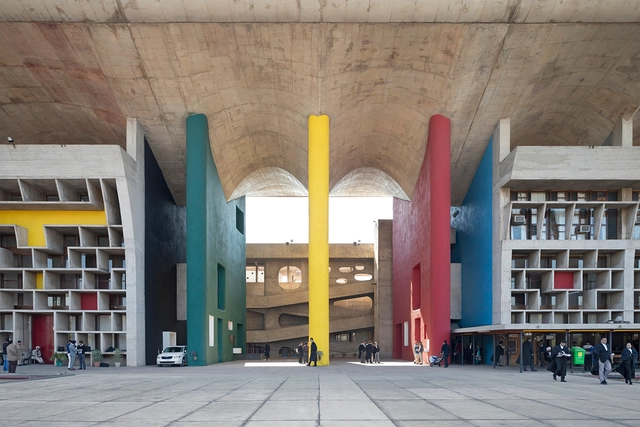
Through its urban planning and civic buildings, Chandigarh represents an iconic fragment of Modernist architecture. This economic and administrative centre was meant to showcase the progressiveness of the 1950s' newly independent India.