There is not enough that can be said about the benefits of incorporating plants in interiors or Plantscaping. Integrating vegetation indoors serves many purposes whether practical, aesthetic or psychological. Although there are basic requirements for incorporating greenery into Homes, well thought out plant selections and placements are characteristically different across the world. By going over recent interior works, a few recurrent plantscaping design patterns arose, each reflective of distinctive climates, building styles and traditional building techniques.
While the type of the chosen plants varies depending on favorable conditions for growth and local availability, the main distinctions are related to the direct environment and display method in which the vegetation is set, as well as its intended purpose. While plants are there to offer mental wellness to some, they are essential for cooling to other or could even be meant for small scale farming.
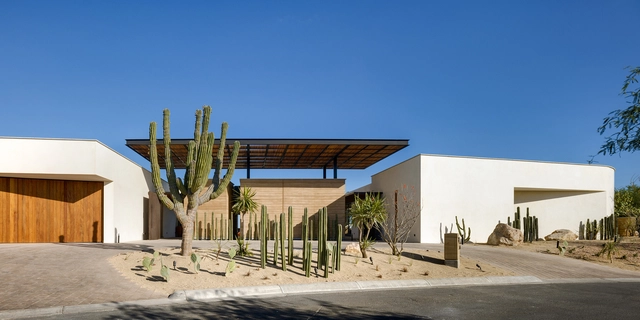
Climate is one of the key factors to take into consideration when designing a space. Of course, this can present a challenge, especially when dealing with extreme climates and the need for insulating materials that are able to adapt to a wide range of conditions. Luckily, for architects operating in Mexico, the country's privileged climate facilitates the creation of microclimates and spaces that blur the line between interior and exterior.
Over the years, interior design has evolved according to the needs that arise, but above all according to the experiences it seeks to evoke in the user. In the last two years we have witnessed a radical change and a special interest in this subject because the pandemic forced us to pay specific attention to the configuration of the places we inhabit. This brought about much more holistic designs that seek to address the wellbeing of the user, combining colours, sensory experiences, technology and natural elements that promote health.
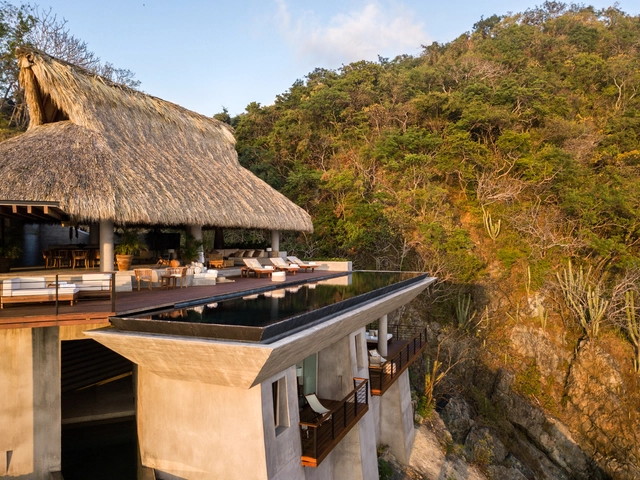
Is there only one way to inhabit the coast? The Pacific coast, the largest ocean on earth, is a vast territory with a great diversity of temperature, winds, and topography, among others. Consequently, it has a great variety of ecosystems, ranging from the freezing point near the poles, vast deserts and forests, to the hot tropical rainforest. Such majestic diversity is no stranger to architecture, responding to the different contexts in which it is placed. As a result, there is a great variety of architectural works, all of which share in framing the views of the sea.
The following list shows 30 residential projects along the Latin American Pacific coastline, revealing the diverse architectural approaches that exist along the coast.
Over the years, interior design has evolved according to the needs that arise, but above all according to the experiences it seeks to evoke in the user. In the last two years we have witnessed a radical change and a special interest in this subject because the pandemic forced us to pay specific attention to the configuration of the places we inhabit. This brought about much more holistic designs that seek to address the wellbeing of the user, combining colours, sensory experiences, technology and natural elements that promote health.
New York City is defined by its architecture, and in turn, diverse ways of living. As the nation's "metropolis," it has also faced some of the most challenging housing problems of any American city. From single-family homes to high-rise residential towers, housing has evolved at different paces and scales throughout the boroughs. In turn, each district and county is home to a wide range of residential styles and housing solutions.