

-
Architects: Zaha Hadid Architects
- Year: 2021
-
Professionals: ASD Hyperstatic Engineering, UNEMEC, Kardorff Lichtplanung Ing.


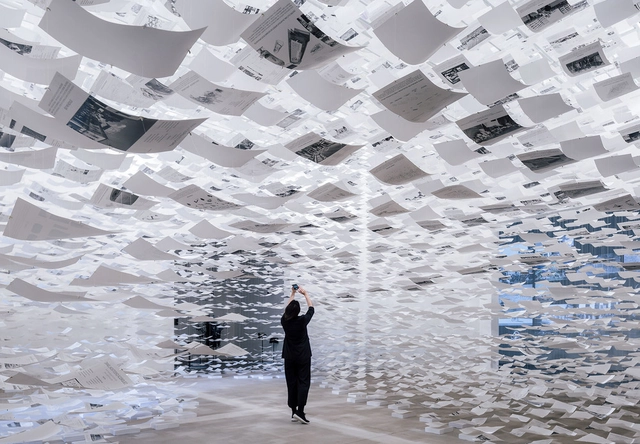
Despite a year-long postponement and strict pandemic regulations, the 17th International Architecture Exhibition of La Biennale di Venezia has finally come to an end with over 300,000 visitors, exceeding the previous edition. Titled "How Will We Live Together", the 2021 edition of the event featured 112 participants and 60 national participations hailing from 46 countries, displayed across the Giardini, Arsenale, and the streets of Venice from May 22nd to November 21st, 2021. UAE's Wetland by curators Wael Al Awar and Kenichi Teramoto took home the Golden Lion for Best National Participation, for presenting an innovative contextual alternative to cement, one of the key emitters of the world's carbon dioxide.
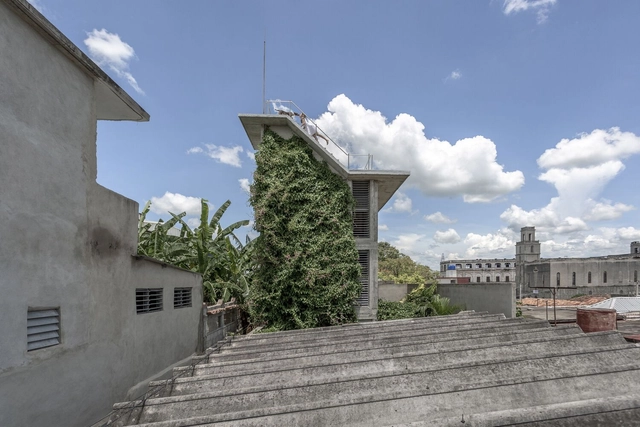
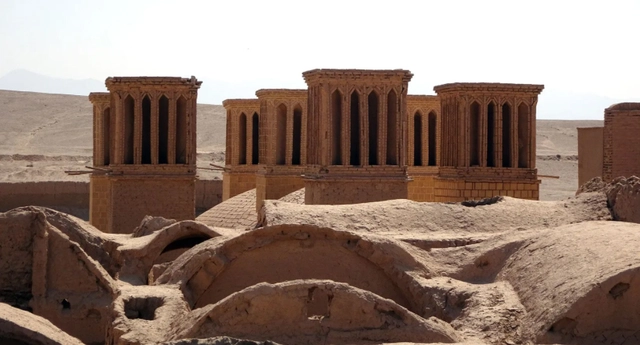
Before fossil-fuel powered air-conditioning became widely available, people living in harsh climates had nothing but natural means to ventilate their spaces and control the interior temperature. To do so, they took into account several external factors such as their location, orientation with respect to the sun and wind, their area's climate conditions, and local materials. In this article, we explore how ancient civilizations in Western Asia and North Africa have used windcatchers to adapt to the region's harsh climate and provide passive cooling solutions that are still being used in contemporary architecture, proving that local approaches to climate adaptability are fundamental to the development of today's built environment.

The 26th UN Climate Change Conference of the Parties (COP 26) debuted yesterday in Glasgow, bringing together more than 190 world leaders, with the aim of accelerating action to reach the goals of the Paris Agreement and UN's Convention on Climate Change. Leading architecture organizations and figures are attending the two-week summit to show the AEC's industry's commitment to reduce carbon emissions and urge decision-makers to implement clear targets to achieve global climate goals.


Architectural events like biennales, urban festivals or the World Expo provide a framework for research and experimentation, allowing architects to showcase their visions on an international stage, with the aim of advancing the practice and driving innovation. World Expos, in particular, allow for these lines of inquiry to unfold at an architectural scale rather than that of an installation. Within these platforms for discourse and knowledge exchange, temporary architecture becomes a medium for communicating ideas about architecture and the city, its challenges and possible lines of development.
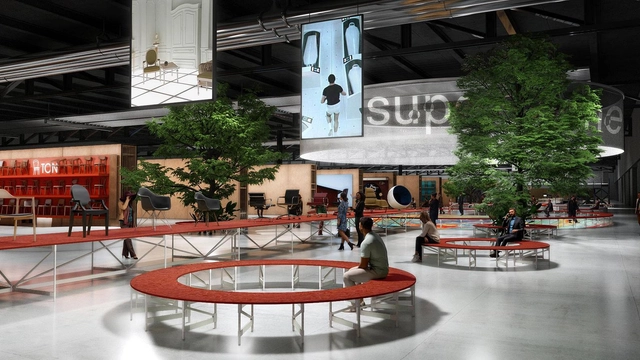
After a year of absence in light of the pandemic, Milan Design Week, one of the most anticipated design events to take place in Italy, will finally open its doors to visitors. From the 5th to the 10th of September, more than 350,000 architects, designers, artists, and craftsmen from all around the world will have the chance to explore new design innovations and exchange ideas about the interior design, furniture, and lighting. During the week-long event, Salone del Mobile, the awaited furniture and interior design event of the year, will be hosting local and international exhibitors at the Fiera Milano, Rho, along with interventions by world-renowned architects across the city.
ArchDaily will be attending the Salone del Mobile so stay tuned for exclusive interviews and collaborations, and read on to discover what to expect during the week-long exhibition and how architects are taking part of the event.
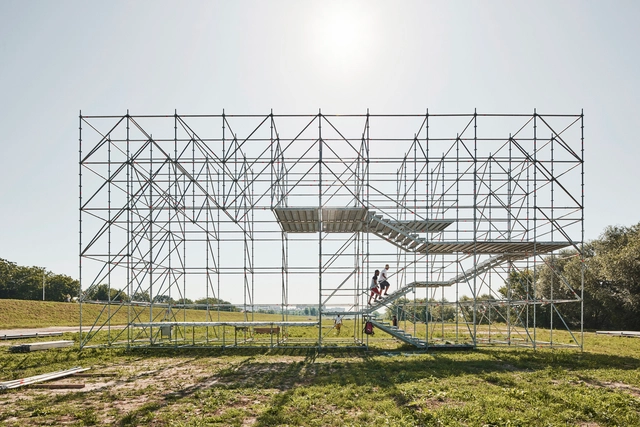
Beyond "experience tourism" and light entertainment, temporary architecture is a fertile ground for testing ideas, examining places, popularizing new concepts and technologies. Taking a wide array of forms, from disaster relief projects and utilitarian structures to design experiments, architectural statements and playful installations, transient structures showcase alternative visions for the built environment, opening up new possibilities and questioning established norms. As temporary architecture now seems at odds with sustainability imperatives, the following discusses the value of temporary architecture as a vehicle of experimentation, advancing design and engaging communities.
.jpg?1624875360&format=webp&width=640&height=580)
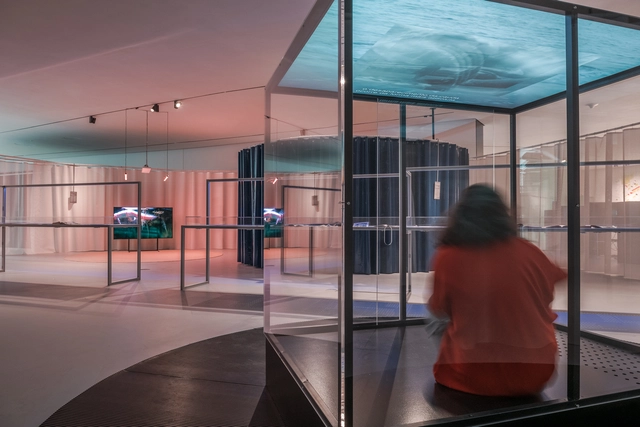
Other than the contribution of national participations, the 2021 Venice Architecture Biennale invites architects and researchers to exhibit their work between the Central Pavilion at the Giardini, the Arsenale, and Forte Marghera, seeking to answer the general theme of “How will we live together?”, set by curator Hashim Sarkis. With 113 Participants from 46 countries, and an increased representation from Africa, Latin America, and Asia, these architectural contributions underline worldwide and contextual challenges as well as present multidisciplinary and inventive solutions.
The 17th International Architecture Exhibition, running from 22 May to 21 November 2021, divides these projects amongst the following titles: Co-Habitats, Stations, Among Diverse Beings, As New Households, As Emerging Communities, Across Borders, and As One Planet, How Will We Play Together? After having explored the recurring qualities observed in the national pavilions, this feature highlights the rest of the interventions through the lens of Laurian Ghinitoiu.
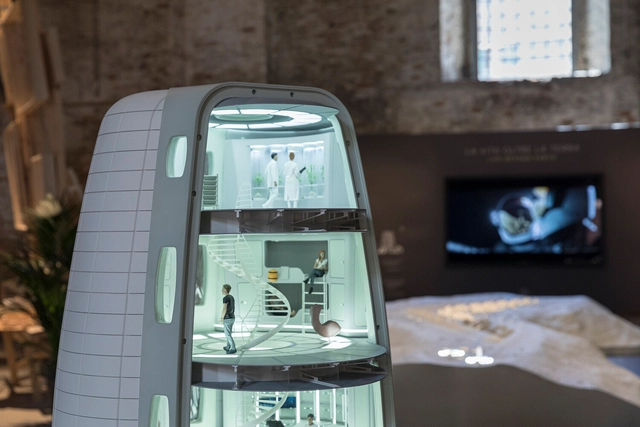
Invited to participate in the 17th International Venice Architecture Biennale, Skidmore, Owings & Merrill (SOM) exhibits Life Beyond Earth, a vision for a Moon Village. Developed together with the European Space Agency (ESA), the installation presents a proposal for a sustainable ecosystem that would support human presence on the Moon, exploring the opportunity of expanding the scope of architecture. The project reaffirms the importance of space exploration while also highlighting its potential to advance knowledge that would help address issues on Earth.
.jpg?1624992493&format=webp&width=640&height=580)
Several recurring qualities and topics were explored at the 17th Venice Architecture Biennale, answering curator Hashim Sarkis' question of "How Will We Live Together". Sarkis called upon architects “to imagine spaces in which we can generously live together”, spaces that are unbound by spatial or social contracts, and are flexible enough to welcome individuals and make them find a sense of belonging in an entirely different habitat. Unlike decades ago, migration today is no longer considered as relocating from rural areas to cities, where people needed to be in proximity to their workplaces. Technological advancements, new work modules, and most notably the pandemic altered the way people perceive spaces, making it possible to complete at least 85% of day-to-day responsibilities from practically anywhere in the world. What we have learned from previous cases, and what we are observing now, is that the built environment needs to be flexible.
.jpg?1622015464&format=webp&width=640&height=580)
Responding to “How will we live together” in 115 different ways, the 2021 Venice Architecture Biennale welcomed, physically, the large public, on May 22nd, 2021. Opening up furthermore to the world, the timeless yet context-sensitive theme engendered a collective imaginary, highlighting a world that would rather come together than stay apart. Building an architectural narrative of the present that reflects on a resilient future, the interrogation, first asked in 2019, gained more relevance with the pandemic that paused the world for a while. With a lot of optimism and love for the craft, the architectural exhibition opened its doors to a longing public and revealed recurring qualities in the showcased interventions.
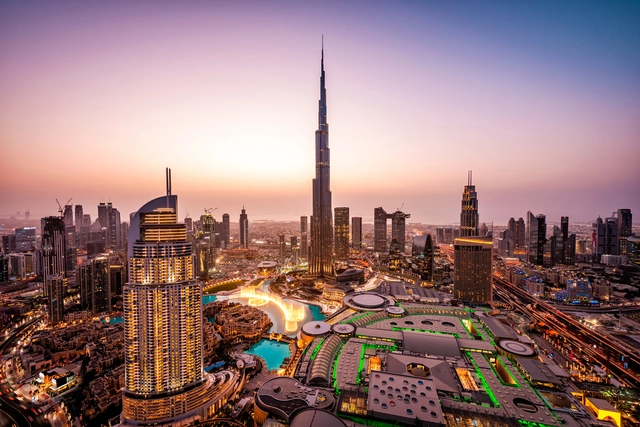
The Dubai Crown Prince has issued a Resolution to form a Supreme Committee for the Urban Planning of Dubai. The decision aims to regulate, ensure, and implement all the required deliverables of the Dubai 2040 Urban Master Plan, to make Dubai the "best city in the world to live in". The urban planning sector will overlook all major infrastructure and urban projects, as well as focus on addressing matters of housing and regulations of the real estate sector to improve the wellbeing of the city's residents.
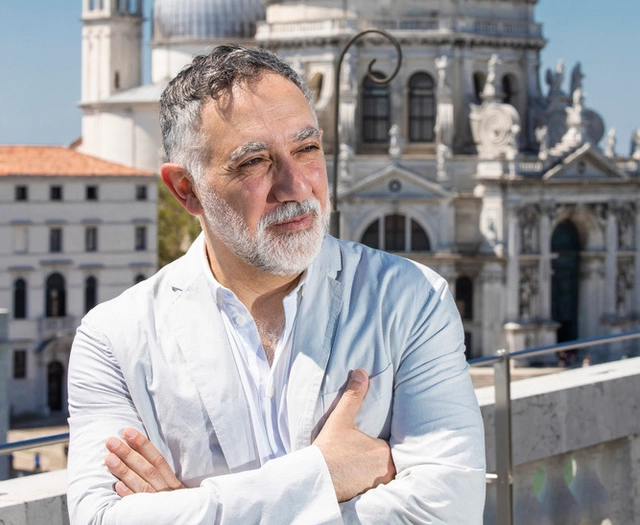
Scheduled originally from August to November 2020, the 17th Venice Architecture Biennale was postponed, like every other event this year, and will be held from May 22nd to November 21st, 2021, due to the pandemic. Questioning “How will we live together?” the original statement of curator Hashim Sarkis, called upon architects “to imagine spaces in which we can generously live together”. Relevant today more than ever, with the current worldwide circumstances, the theme of the Biennale is in fact the focus of interest of the global scene.
After having discussed “How will we live together?” in 2019 with Hashim Sarkis in Venice, ArchDaily had the chance to open the debate once more and re-examine the question of the Architecture Biennale. In a two-part interview, the architect tackles the theme, the Biennale, the present situation, and the future.
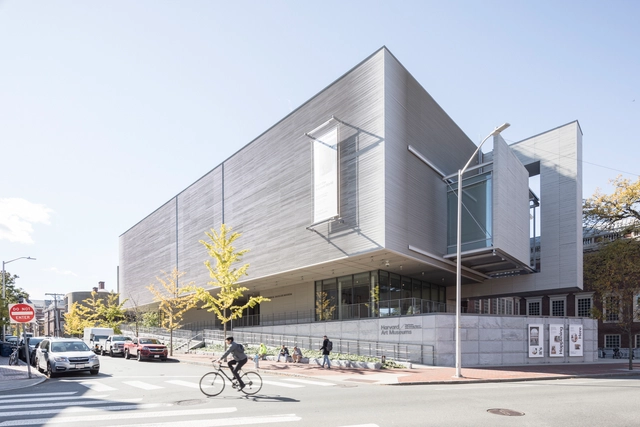
As the oldest institution of higher learning in the United States, Harvard has emerged as one of the world's most well-known universities. Organized into ten academic faculties and the Radcliffe Institute for Advanced Study, it is spread across 200 acres and centers on Harvard Yard in Cambridge. Developed along the Charles River adjacent to the Allston neighborhood of Boston, Harvard has the largest financial endowment of any academic institution. This has supported a number of different campus building projects across the university’s history.
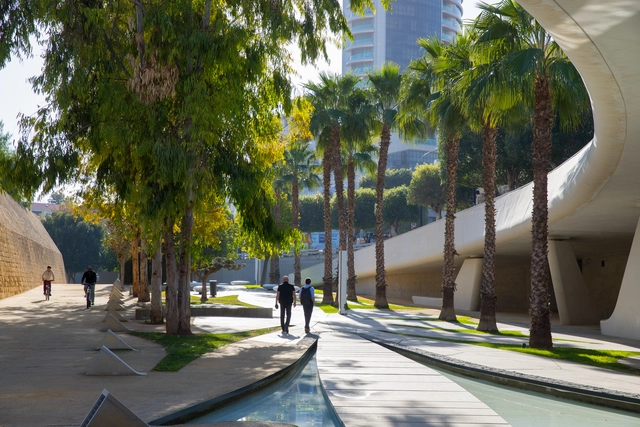
Fred Kent, the founder of the nonprofit organization Project for Public Spaces, once stated that “If you plan cities for cars and traffic, you get cars and traffic. If you plan for people and places, you get people and places." It may sound obvious, nevertheless, our cities today are indeed undergoing a rapid transformation from a car-oriented society to a pedestrian-friendly community.


.jpg?1637575616&format=webp&width=230&height=230&crop=true)
.jpg?1637576323&format=webp&width=230&height=230&crop=true)


.jpg?1624875658&format=webp&width=230&height=230&crop=true)
.jpg?1624875488&format=webp&width=230&height=230&crop=true)
.jpg?1624875439&format=webp&width=230&height=230&crop=true)
.jpg?1624875630&format=webp&width=230&height=230&crop=true)
.jpg?1624875360)


.jpg?1624992580&format=webp&width=230&height=230&crop=true)
.jpg?1624992414&format=webp&width=230&height=230&crop=true)
.jpg?1624992487&format=webp&width=230&height=230&crop=true)

.jpg?1624992493)
.jpg?1622029620&format=webp&width=230&height=230&crop=true)
.jpg?1622015439&format=webp&width=230&height=230&crop=true)
.jpg?1622015472&format=webp&width=230&height=230&crop=true)
.jpg?1622015529&format=webp&width=230&height=230&crop=true)
.jpg?1622015464)